lawn care
How to Get Rid of Crabgrass
 Mark Vance
 is a former professional landscaper and the lead turf enthusiast at Yard Mentor. With over 15 years of experience in soil health, turf management, and residential landscaping, he is dedicated to helping homeowners transform frustrating dead patches into lush, healthy lawns. When he isn't testing new grass seed blends, you can find him enjoying a Saturday morning coffee looking out over his freshly striped yard.
Updated October 17, 2026
Created October 17, 2026
Mark Vance
Mark Vance is a former professional landscaper and the lead turf enthusiast at Yard Mentor. With over 15 years of experience in soil health, turf management, and residential landscaping, he is dedicated to helping homeowners transform frustrating dead patches into lush, healthy lawns. When he isn't testing new grass seed blends, you can find him enjoying a Saturday morning coffee looking out over his freshly striped yard.
Updated October 17, 2026
Created October 17, 2026
Crabgrass is the classic lawn bully. It waits for warm soil, sprouts fast, spreads low, then drops a mountain of seeds right before fall. The good news is you do not need a fancy program to beat it. You need two things: a spring pre-emergent timed to soil temperatures and a summer plan for any breakthrough plants, plus a few small turf habits that make crabgrass a lot less likely to return.
I am going to walk you through a simple seasonal timeline that I have used on my own lawns and for clients over the years. Follow it once, then repeat next season, and crabgrass goes from “everywhere” to “a few stragglers.”
First, make sure it is crabgrass
Before you treat anything, confirm you are fighting the right weed. Crabgrass is an annual grassy weed, so the strategy is heavily about prevention.
Quick ID checklist
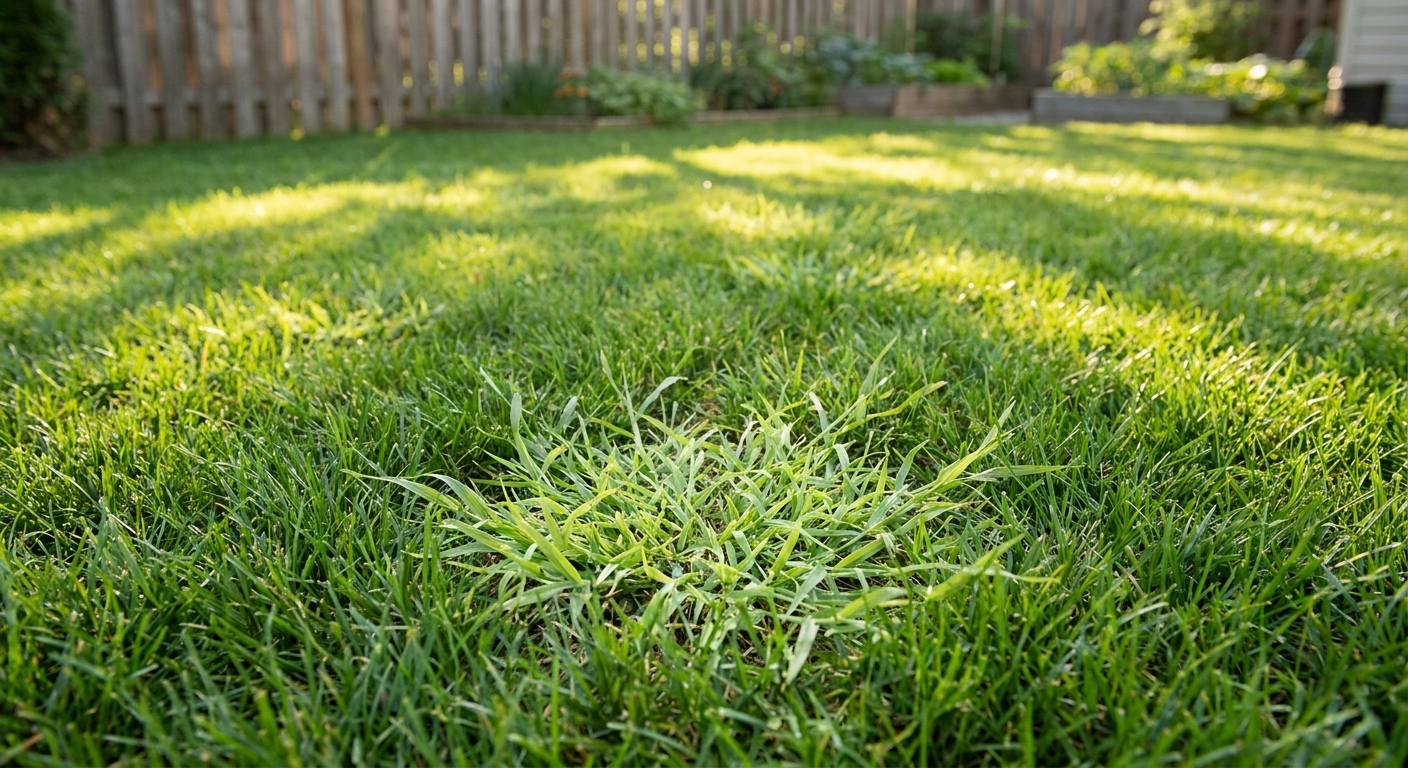
- Growth habit: low and spreading, often forming a wagon-wheel or star shape.
- Color: usually lighter green than the surrounding turf.
- Texture: coarser blades than most lawn grasses.
- Timing: shows up as weather warms, thrives in summer heat.
- Seedheads: late summer, finger-like seed spikes.
If you are seeing bright lime-green clumps in early spring, that might be something else (like annual ryegrass or rescue grass in some regions). If you are unsure, pull one plant and look at the base. Crabgrass tends to sprawl from a central crown with stems that root as they creep.
The crabgrass plan
Think of crabgrass control in three layers. Skip one layer and you will still get results, but you will work harder.
- Layer 1: Pre-emergent in spring to stop seeds from germinating.
- Layer 2: Post-emergent in summer to kill any plants that break through.
- Layer 3: Turf thickening so crabgrass has fewer open spots to exploit.
Step 1 (Early spring): Set up resistance
Crabgrass loves thin turf and bare soil. A few early-season habits reduce how many seedlings can take hold, even before you apply anything.
Mow higher
Most cool-season lawns (Kentucky bluegrass, fescue, rye) do best when you avoid scalping and keep mowing on the taller side through spring and summer. A common homeowner target is about 3 to 4 inches, but check your turf type and cultivar because some bluegrass lawns are managed a bit shorter in certain programs. Taller grass shades the soil surface, which crabgrass hates.
Fix drainage and compaction
Crabgrass is common in compacted spots near driveways, walkways, and dog paths. If the soil is hard and sealed off, plan to aerate in the right season for your grass type (see the aeration timing in Step 5).
Spring fertilizer: do not overdo it
A moderate spring feeding is fine, but heavy nitrogen pushes top growth without fixing density. Dense turf comes more from consistent mowing, correct watering, and the right overseeding window.
Step 2 (Spring): Apply pre-emergent
If you do only one thing for crabgrass all year, do this. Pre-emergent herbicide prevents crabgrass seeds from sprouting. It does not kill existing plants, and it does not stop seeds from being in the soil. It simply blocks germination.
When to apply
Crabgrass typically starts germinating when soil temperatures reach about 55°F at a 2-inch depth for several days (many people use a 3 to 5 day stretch as their trigger). In many areas, that lines up with early to mid spring, but it varies every year.
- Apply too early: you can lose coverage before peak germination if the product wears off.
- Apply too late: you miss the first wave and end up chasing plants all summer.
If you are a “simple calendar” person, aim for spring when consistent daytime highs settle into the 60s to 70s. If you like to be more precise, use a soil thermometer in the top 1 to 2 inches of soil and focus on the 2-inch reading.
Which pre-emergent to use
Most homeowners will run into these common active ingredients:
- Prodiamine: long-lasting, great for season-long prevention.
- Dithiopyr: also effective and can have early post-emergent activity on very young crabgrass seedlings.
Either can work well. What matters most is applying at the right time, getting even coverage, and watering it in.
Important seeding note: Most pre-emergents also prevent grass seed from germinating. Prodiamine in particular can restrict overseeding for a while depending on rate and timing. Always check the reseeding interval on the label before you apply.
How to apply it correctly
- Calibrate your spreader: uneven coverage is why crabgrass shows up in stripes or blotches.
- Apply to dry grass: less mess, better distribution.
- Water it in: follow the label. Many granular pre-emergents call for irrigation after application, often around 0.25 to 0.5 inches, to move the barrier into the soil.
- Do not disturb the soil after: heavy raking or aggressive dethatching can break the protective barrier.
- Keep it off hardscapes: sweep granules off sidewalks and driveways so rain does not wash product into storm drains.

Step 3 (Late spring): Split application
If your crabgrass pressure is heavy, or your summers are long and hot, a split application can keep coverage strong through peak season.
Simple split schedule
- First application: at the normal spring timing.
- Second application: about 6 to 8 weeks later, following the product label so you do not exceed the yearly maximum.
This is especially helpful if you know you get crabgrass along hot edges like sidewalks, driveways, and south-facing slopes.
Step 4 (Summer): Kill what breaks through
Even with great pre-emergent timing, you may get a few breakthrough patches. The goal in summer is to eliminate plants before they set seed. Every crabgrass plant you allow to mature is next year’s problem.
Option A: Hand pull small patches
For isolated clumps, pulling is underrated. Go out after a soaking rain or deep watering when the soil is soft.
- Grab low at the crown and pull steadily.
- Try to get as much of the plant as possible.
- Backfill any bare spot with a little topsoil and plan to seed at the proper time (fall for cool-season lawns).
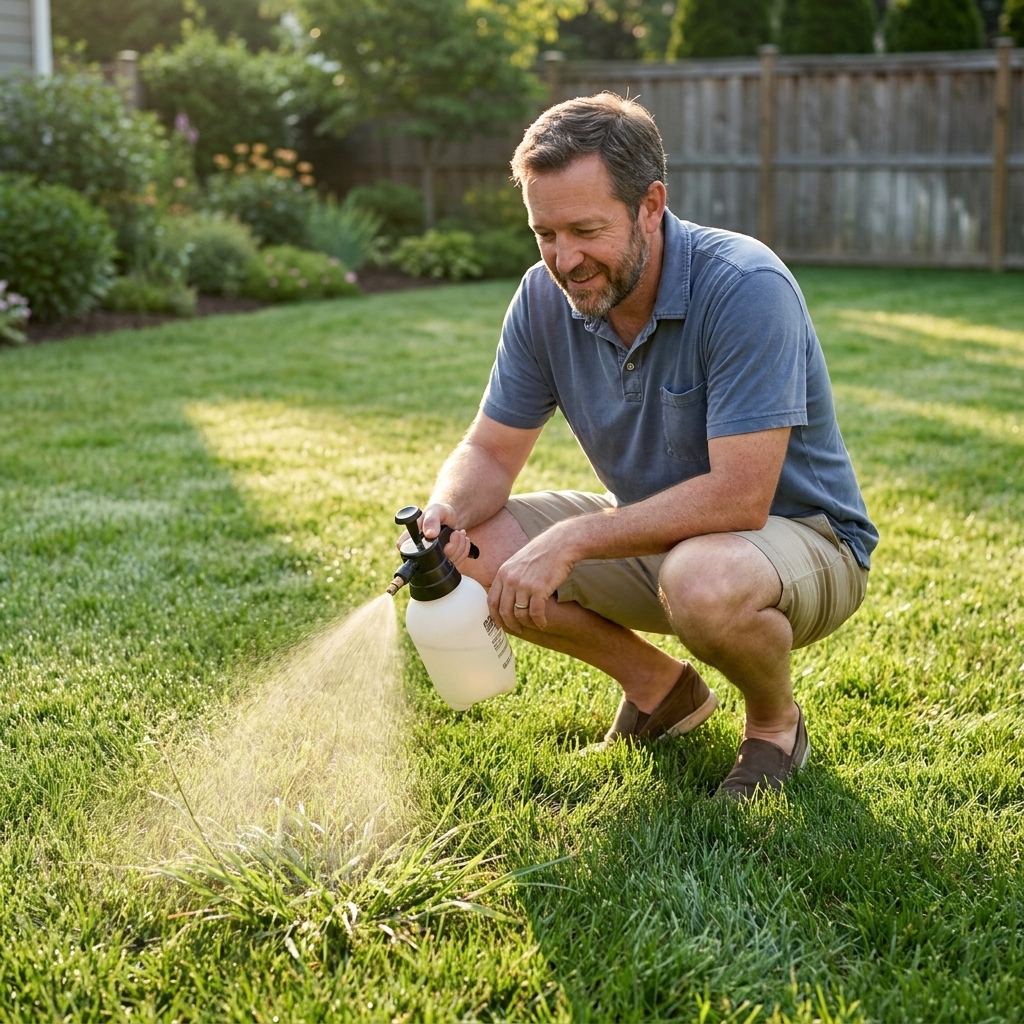
Option B: Spot-spray
For larger patches, use a selective post-emergent labeled for crabgrass in your grass type. Product choice matters a lot for warm-season lawns (especially St. Augustine and centipede), where fewer post-emergent options are safe.
Look for active ingredients commonly sold for crabgrass control such as quinclorac (very common in cool-season lawns) or other crabgrass-labeled actives in homeowner products.
- Target young plants: crabgrass is easiest to kill when it is small and not fully tillered out.
- Spray when the lawn is not stressed: avoid heat waves and drought if possible.
- Mind mowing timing: many labels advise not mowing right before or right after spraying (often 1 to 2 days) so there is enough leaf surface for uptake. Follow the label for your specific product.
- Follow label directions closely: especially for temperature limits, reseeding intervals, and whether a surfactant is recommended.
- Expect a second treatment: many crabgrass patches need a follow-up 7 to 14 days later.
- Avoid windy days: drift is how lawns get damaged and shrubs get accidentally cooked.
Step 5 (Late summer to fall): Thicken turf
Here is the part most people skip. Pre-emergent blocks germination, but it does not make your lawn thicker. Thin turf is an open invitation for crabgrass seeds that blow in or already live in the soil.
Overseed at the right time
Cool-season lawns: Overseed in late summer to early fall. This is the sweet spot because the soil is warm (fast germination), the air is cooling (less stress), and weeds are slowing down.
Warm-season lawns: Focus on thickening in late spring through summer when your turf is actively growing (Bermuda, zoysia, centipede, St. Augustine). Some warm-season grasses are typically established with sod or plugs rather than seed.
One more label reminder: If you used a pre-emergent earlier in the year, double-check the label for how long you need to wait before seeding. This varies by active ingredient and application rate.
Aerate if compaction is recurring
Core aeration helps turf fill in and improves water movement. Timing matters:
- Cool-season grasses: aerate in fall, often right before overseeding.
- Warm-season grasses: aerate in late spring or early summer during active growth.
Water deeply, not daily
Frequent shallow watering keeps the topsoil moist, which can favor weed germination and weak rooting. Instead, aim for deeper, less frequent irrigation that totals roughly 1 inch per week including rainfall, adjusted for your climate and soil.
Special situations
You plan to seed this spring
This is the biggest conflict in crabgrass control. Most pre-emergents also prevent grass seed from germinating.
- If you must seed in spring, choose a product specifically labeled as safe for seeding and follow the label exactly.
- Otherwise, skip pre-emergent, seed the bare areas, and be ready to do careful spot-spraying later once new grass is mature enough per the herbicide label.
Crabgrass along sidewalks and driveways
Heat reflected off concrete speeds germination and stresses turf. Two tips help a lot:
- Do not scalp edges with the mower.
- Be extra consistent with pre-emergent coverage along hardscapes, and consider a split application if allowed by the label.
Crabgrass in new sod
New sod is vulnerable because seams and edges expose soil. Keep mowing height appropriate, avoid overwatering, and use only herbicides labeled safe for your sod type and age. When in doubt, hand-pull and focus on mowing and watering correctly until the sod is well rooted.
Common mistakes
- Putting down pre-emergent after crabgrass is already up: it will not solve the current problem.
- Not watering in granular pre-emergent: no water, no barrier.
- Disturbing soil after application: aggressive raking can create holes in coverage.
- Scalping the lawn: more sunlight hits the soil, and crabgrass loves it.
- Letting patches go until seedheads form: that is next year’s infestation spreading in real time.
- Ignoring thin turf: bare spots are where crabgrass wins first.
- Using the right product the wrong way: grass type, temperature limits, and reseeding intervals are not fine print. They are the difference between success and lawn damage.
Seasonal checklist
Early spring
- Mow on the higher side for your turf type
- Make a plan for compaction and drainage issues
Spring (as soil warms)
- Apply pre-emergent when soil is about 55°F at 2 inches for several days
- Water it in per label
- Sweep product off hardscapes
Late spring
- Optional split pre-emergent application if needed and label allows
Summer
- Hand pull small clumps
- Spot-spray breakthrough patches early (and avoid windy days)
- Mow high and avoid drought stress
Late summer to fall
- Overseed cool-season lawns
- Aerate at the correct seasonal window
- Feed appropriately to build density
FAQ
Will crabgrass die on its own?
Yes. Crabgrass is an annual, so it dies with the first hard frost. The catch is that it usually drops a lot of seed first. Letting it “die naturally” often means more crabgrass next year.
Can I use vinegar or salt to kill crabgrass?
Vinegar can burn back leaves, but it is non-selective, it can injure desirable grass, and it often takes repeat applications. Salt is also non-selective and can create long-term soil problems. In lawns, it is usually better to hand pull small patches or use a selective post-emergent labeled for crabgrass.
Does pre-emergent stop all weeds?
No. It is great for certain annual weeds, especially crabgrass, but not everything. Think of it as one tool in a wider lawn plan.
How long until I see results?
With pre-emergent, the “result” is that you do not see crabgrass coming up. For post-emergent sprays, you may see discoloration within a few days, but full control can take 1 to 3 weeks depending on plant size and weather.
My bottom line
If crabgrass has been wearing out your patience, start with timing. Nail the spring pre-emergent window, then stay on top of any summer survivors before they seed. Pair that with higher mowing and a fall thickening plan, and your lawn stops feeling like a crabgrass nursery and starts looking like turf again.