A homeowner-friendly guide to the most common turf weeds, how to spot them, why they show up, and the best prevention and treatment strategies that work.
lawn care
8 Organic Weed Control Methods That Work
 Mark Vance
 is a former professional landscaper and the lead turf enthusiast at Yard Mentor. With over 15 years of experience in soil health, turf management, and residential landscaping, he is dedicated to helping homeowners transform frustrating dead patches into lush, healthy lawns. When he isn't testing new grass seed blends, you can find him enjoying a Saturday morning coffee looking out over his freshly striped yard.
Updated October 17, 2026
Created October 17, 2026
Mark Vance
Mark Vance is a former professional landscaper and the lead turf enthusiast at Yard Mentor. With over 15 years of experience in soil health, turf management, and residential landscaping, he is dedicated to helping homeowners transform frustrating dead patches into lush, healthy lawns. When he isn't testing new grass seed blends, you can find him enjoying a Saturday morning coffee looking out over his freshly striped yard.
Updated October 17, 2026
Created October 17, 2026
If you have ever stood over a patch of dandelions and thought, “Do I really need to nuke my yard to fix this?”, you are my kind of homeowner. The good news is you can significantly reduce weeds organically. The key is to stop thinking of weed control as one product and start treating it like a system: build dense turf, keep the soil healthy, and use targeted, low-impact tactics for the trouble spots.
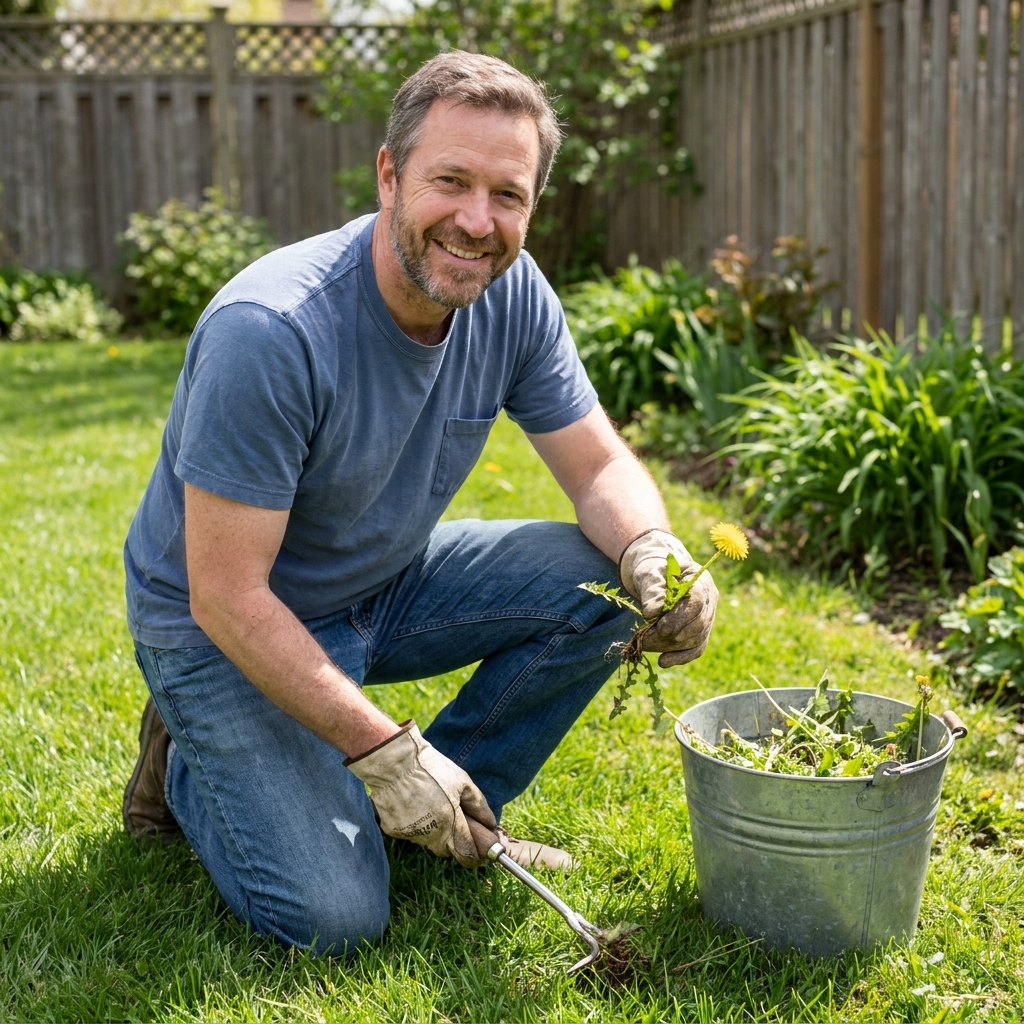
Below are seven organic methods I have used on my own lawn and for clients over the years, plus when to use each one so you get results without the chemical hangover.
1) Mow higher to shade out weeds
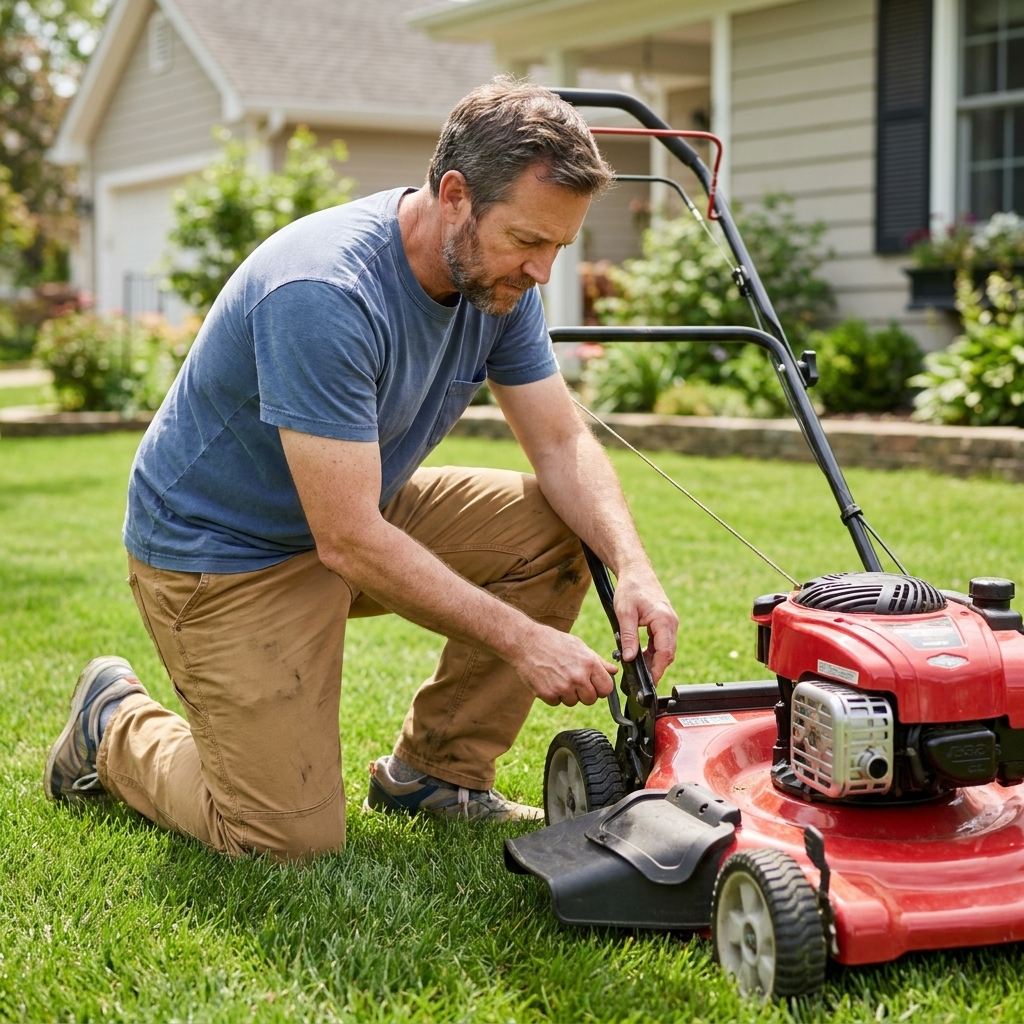
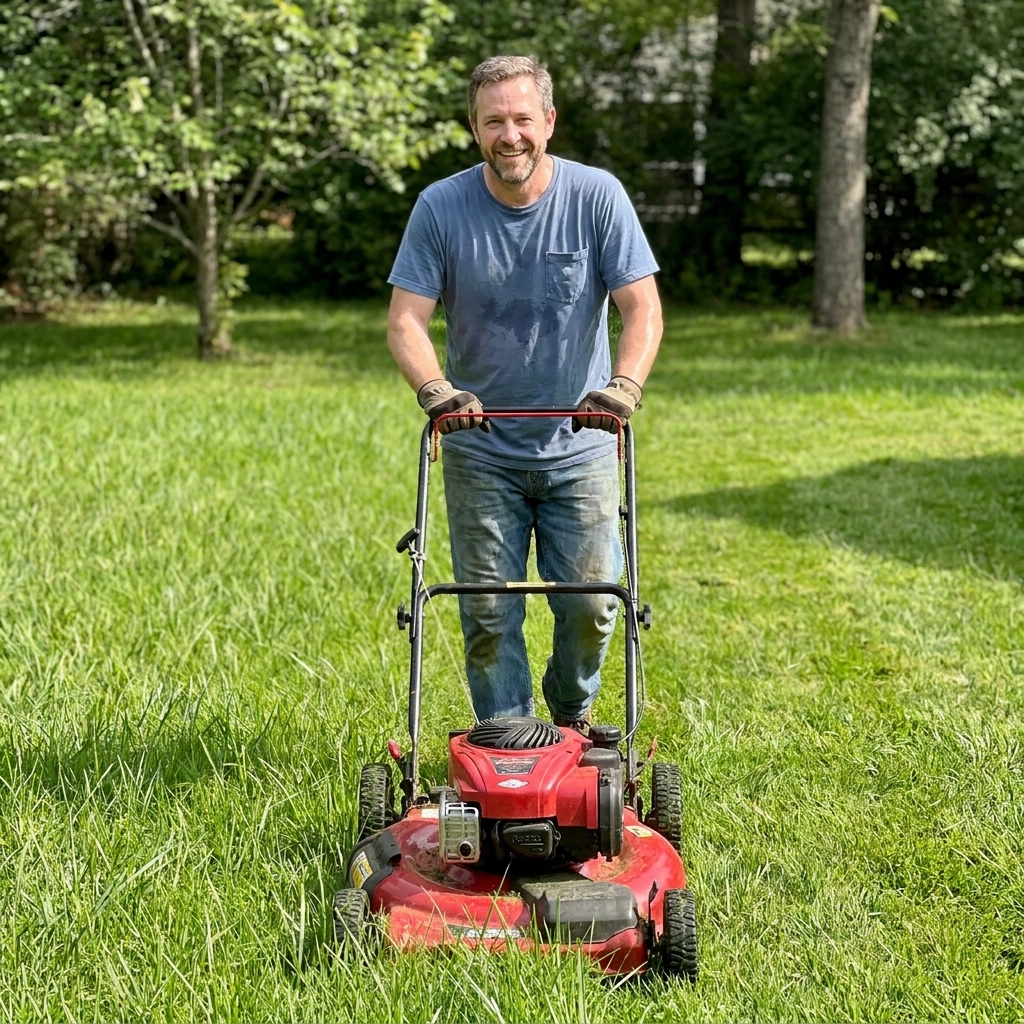
If I had to pick the single most underrated “weed killer,” it would be a mowing height adjustment. Many common lawn weeds thrive when sunlight hits bare soil. Taller grass shades the soil surface, keeps it cooler, and can reduce weed seed germination.
What to do
- Cool-season lawns (Kentucky bluegrass, fescue, rye): mow often around 3.0 to 4.0 inches during active growth, adjusting for your grass type, time of year, and local recommendations.
- Warm-season lawns (bermuda, zoysia, centipede): follow your grass type, but still avoid scalping. Scalped turf invites weeds fast.
- Never remove more than one-third of the blade at once.
- Keep blades sharp. A torn tip stresses grass and opens the door to disease, which leads to thinning, which leads to weeds.
2) Feed the soil, not the weeds
Organic lawn care is soil-first. When your turf has steady, balanced nutrition, it thickens up and crowds weeds out. When fertility is erratic, grass thins, and weeds rush in to fill the gaps.
What to do
- Get a soil test every couple of years if you can. Knowing pH and basic nutrients prevents random guessing.
- Use slow, soil-building inputs like compost, alfalfa meal, soybean meal, or corn gluten meal (more on that below).
- If you use an organic fertilizer, focus on modest, steady applications rather than one heavy dump.
Why it works
Healthy soil supports deeper roots and more vigorous turf. Dense turf is the most reliable “organic herbicide” because it simply leaves fewer openings for weeds to establish.
3) Overseed to crowd out weed seedlings
If your lawn has thin areas, you can hand-pull weeds until your back complains and they will still come back. The real fix is to fill the space with grass.
Best times
- Cool-season lawns: late summer into early fall is prime time because soil is warm and weed pressure starts to drop.
- Warm-season lawns: late spring to early summer when the grass is actively spreading and nights are warm.
Method that works (and stays organic)
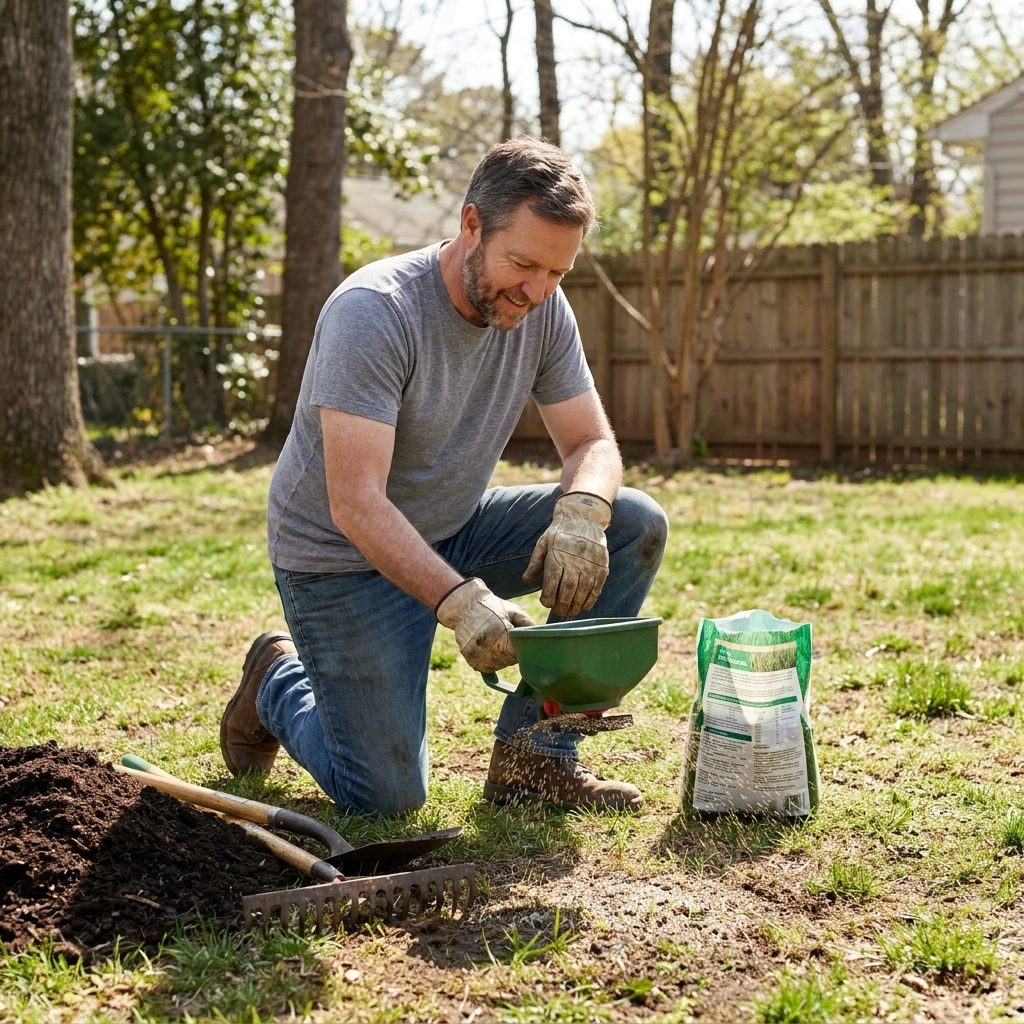
- Right before overseeding, mow a bit lower than usual for that week (not scalped, just tidier).
- Rake out dead material so seed hits soil.
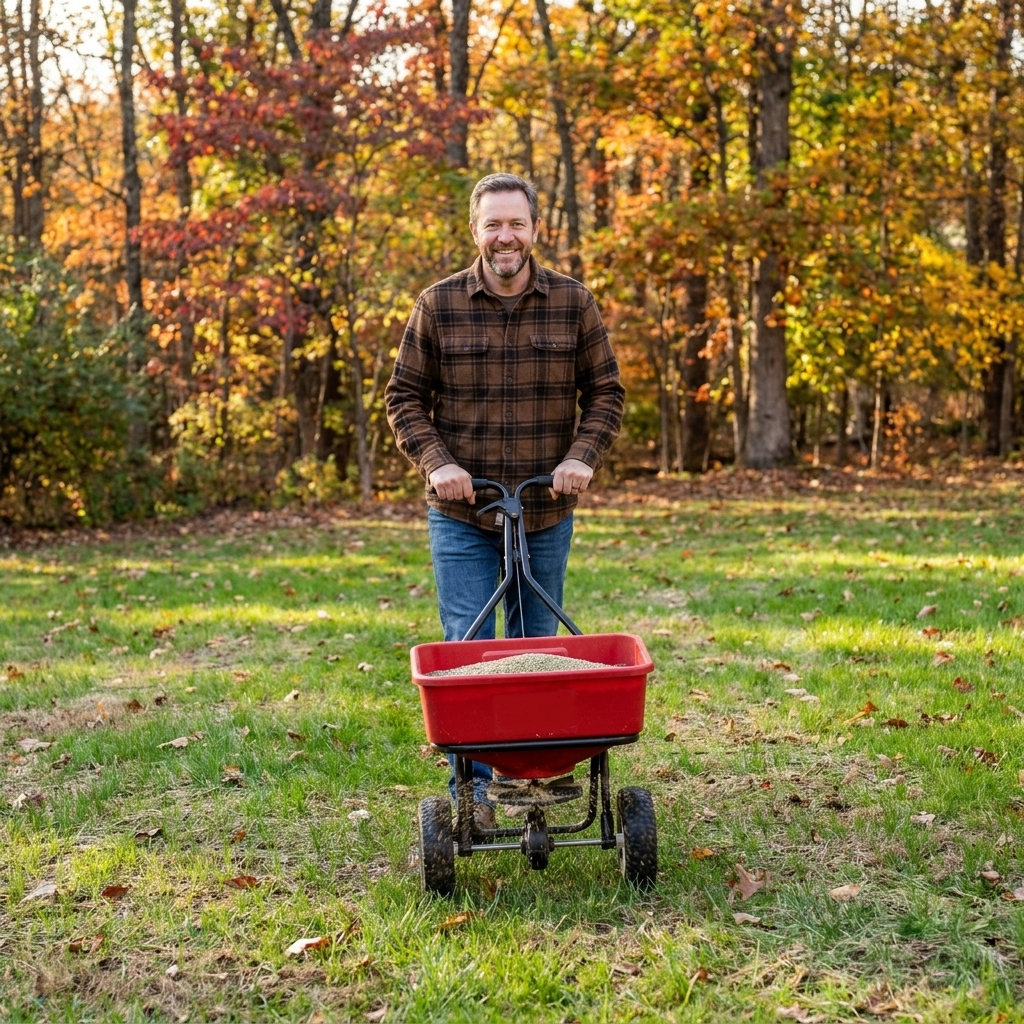
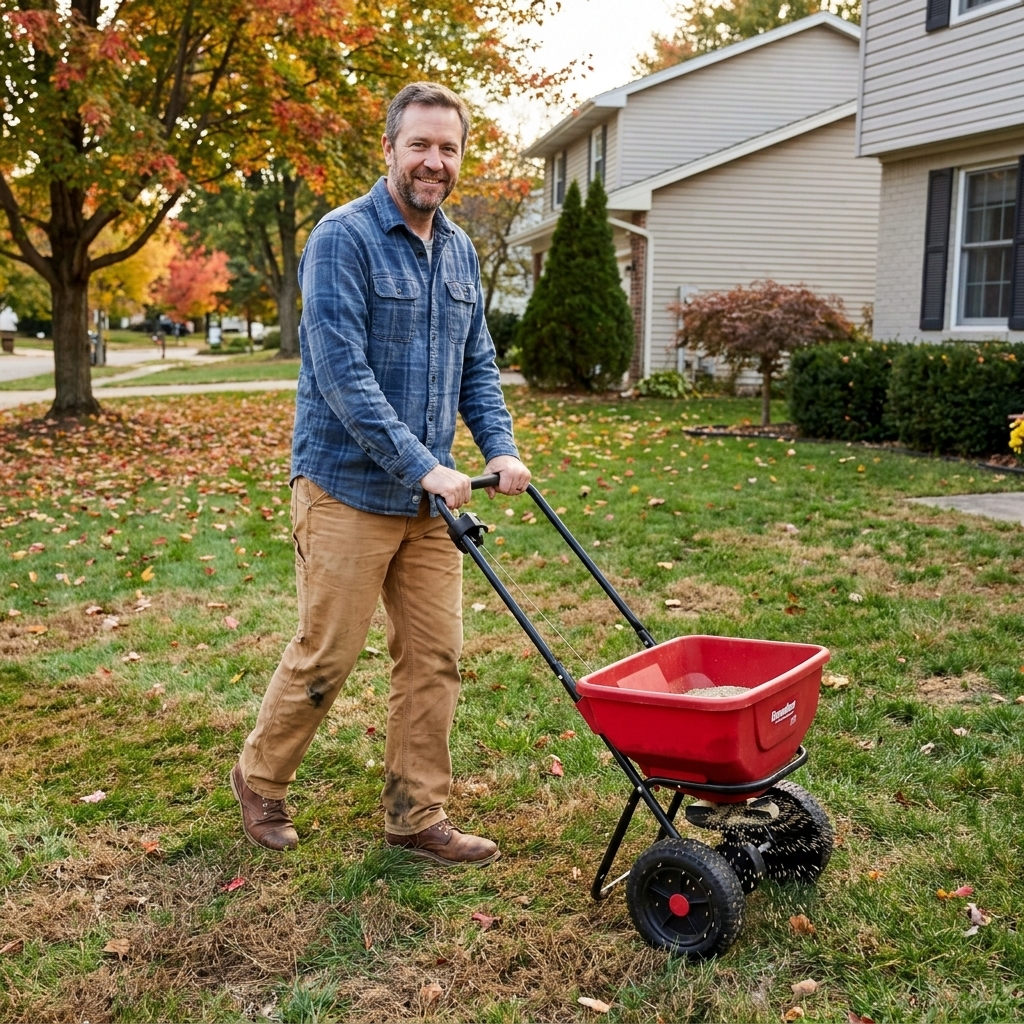
- Spread quality seed for your region and sun exposure.
- Topdress with a thin layer of compost to improve seed-to-soil contact and moisture holding.
- Keep the top half-inch of soil consistently damp until established.
4) Use mulch and groundcovers where grass struggles
Some “weeds” are really just nature pointing out a problem area. If you cannot grow thick turf under a dense tree canopy, along a scorching driveway edge, or in a soggy low spot, weeds will happily volunteer as the groundcover.
What to do
- In beds and around trees, apply 2 to 3 inches of mulch (keep it pulled back from trunks).
- For problem lawn areas, consider converting a strip to a bed, adding stepping stones, or planting a shade-tolerant groundcover instead of fighting it yearly.
- Edge beds cleanly so creeping grasses do not invade, and weeds do not walk back into the lawn.
Organic weed control is not always about winning every square inch. Sometimes it is about putting the right plant in the right place so weeds stop having an opening.
5) Water deeply, not constantly
I see a lot of weed problems that are really watering problems. Frequent, shallow watering encourages shallow roots and a lawn that stresses fast. A stressed lawn thins out, and weeds are happy to move in.
What to do
- Water deeply and less often so moisture moves down into the root zone.
- Water early in the day when possible so the lawn dries out and disease pressure stays lower.
- Let your lawn tell you. Footprints that linger and a blue-gray tint are common “I’m getting dry” signals in cool-season grass.
The goal is not to baby the lawn. It is to encourage deeper roots so the grass competes better all season.
6) Hand-pull smarter
I know, I know. “Hand-pull weeds” is the advice everyone gives when they do not want to get specific. But there is a huge difference between yanking weeds randomly and removing them efficiently so they stay gone.
Do it this way
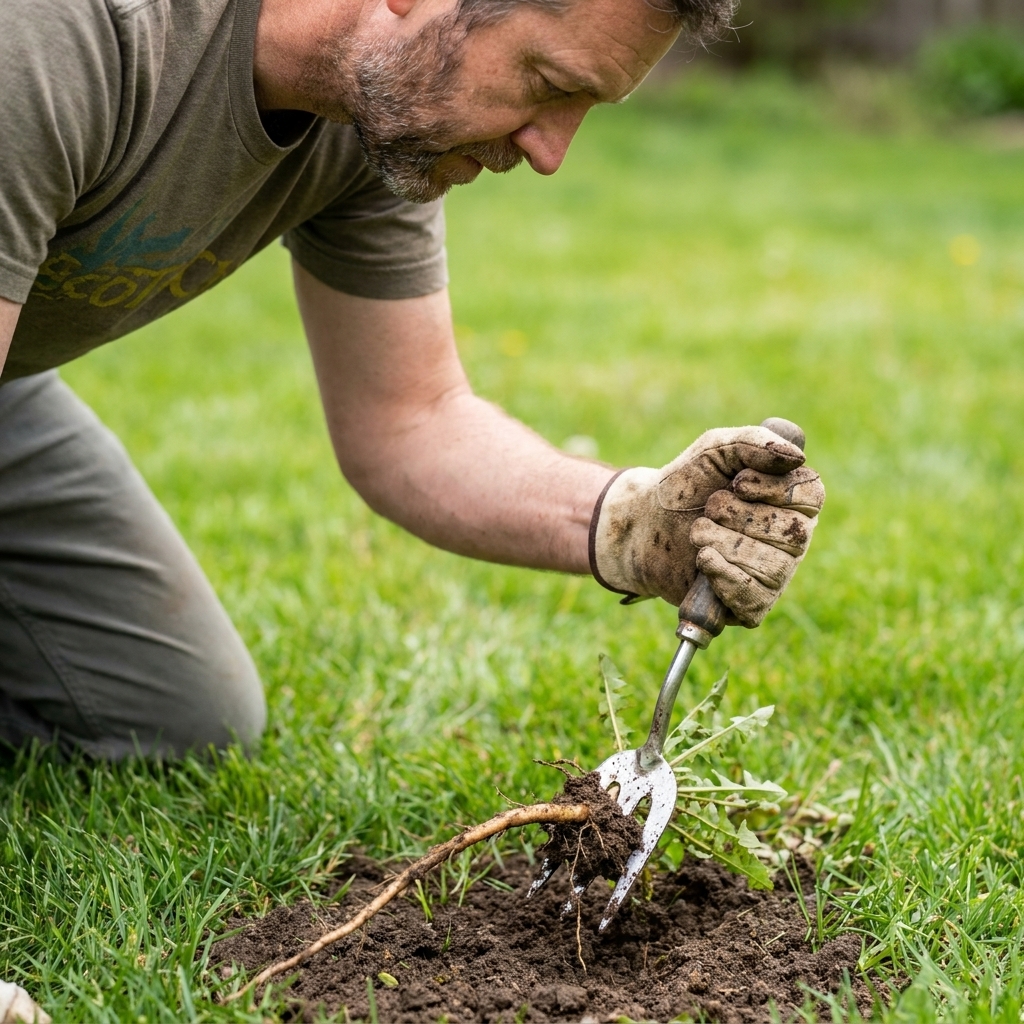
- Pull after rain or after watering. Moist soil releases roots.
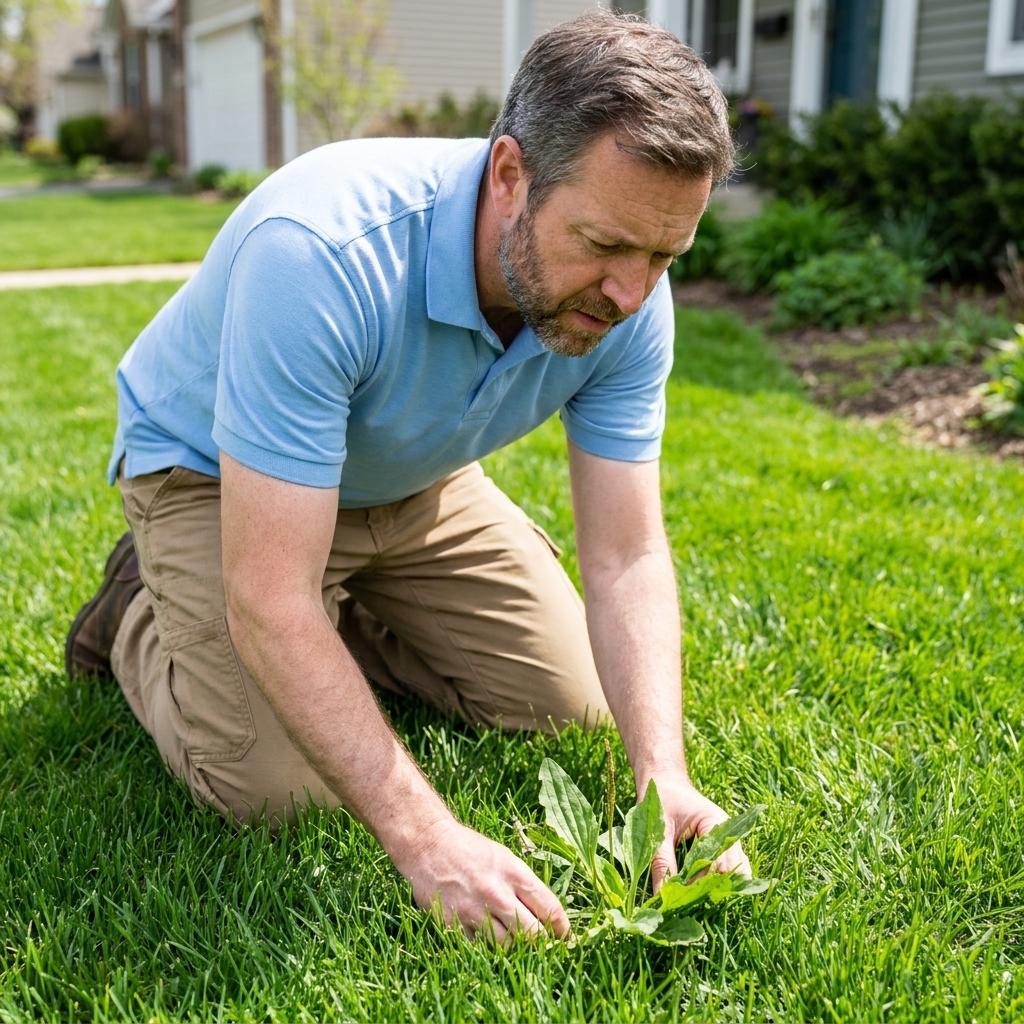
- Use a dandelion weeder or stand-up weed puller for taproot weeds. The goal is root removal, not leaf removal.
- Bag mature seed heads or stalks (crabgrass seedheads, plantain seed stalks, dandelion puffballs) if they are ready to spread. Do not toss them back into the lawn.
- Immediately fill the hole with a pinch of compost and a little seed in cool-season lawns, or encourage warm-season runners to creep in.
7) Solarize small patches
If you have a section that is more weeds than lawn, sometimes the fastest organic move is a reset. Solarization uses the sun’s heat under clear plastic to kill weeds and many weed seeds near the surface.
Where it works best
- Sunny areas in mid-summer
- Patch renovations and garden-to-lawn conversions
- Places you can tolerate being covered for several weeks
How to solarize
- Mow low and rake out debris.
- Water the area well (moisture helps heat travel through soil).
- Cover tightly with clear plastic and secure edges so heat stays trapped.
- Leave in place about 4 to 8 weeks, depending on how hot and sunny your stretch of weather is.
- After removal, rake lightly to prep the seedbed and avoid deep tilling, then add compost if needed and seed or sod.
It is not pretty while it is happening, but it is chemical-free and very effective for sections that keep relapsing.
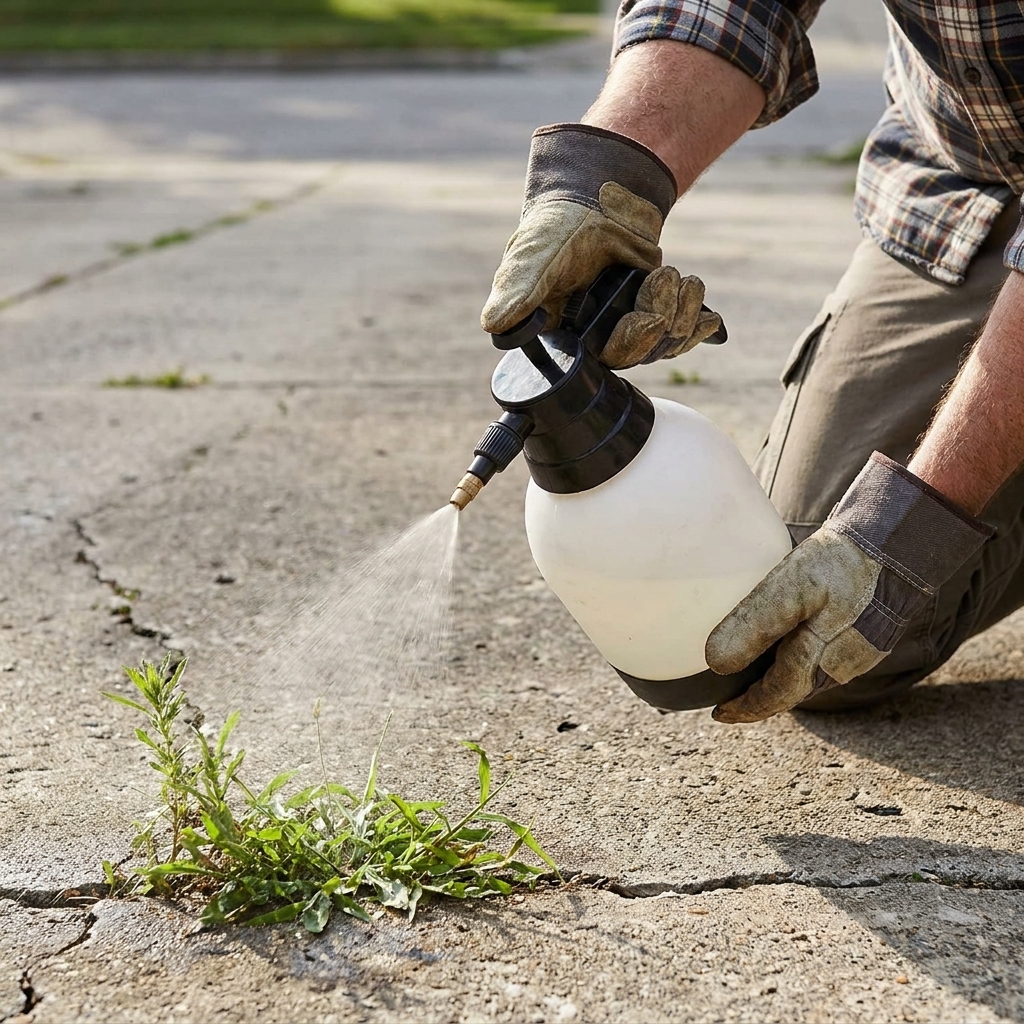
8) Spot-treat with organic sprays
There are times you need a targeted knockdown, especially in cracks, along fence lines, or in gravel where you do not need turf. The trick is choosing the right organic option for the right spot, and understanding what it can and cannot do. Most of these are non-selective, meaning they can damage any plant they touch, including grass.
Options to consider
- Boiling water: great for weeds in sidewalk cracks or driveway seams. Avoid turf because it will cook grass too. Pour carefully and keep kids and pets well away until the area cools.
- Horticultural vinegar (higher-acid vinegar products): burns back top growth. Best on young weeds, and best outside the lawn. It is non-selective and can irritate skin and eyes, so handle carefully.
- Fatty acid soaps (herbicidal soaps): contact burn-down on small, tender weeds. Reapplication is often needed.
How to use spot treatments without damaging your lawn
- Spray on a calm day to prevent drift onto grass.
- Target small, young weeds. Mature perennials with big roots often return.
- Think suppression, not one-and-done miracle. Follow up by thickening turf in that area.
Bonus method: Corn gluten meal
Corn gluten meal is often discussed in organic lawn circles as a pre-emergent style tool. It can inhibit root formation in germinating seeds. That means timing matters, and it also means it can interfere with grass seed you want to grow.
- Use it when you are not overseeding.
- Apply before the main weed germination window in your area.
- Do not expect it to fix established weeds. It is about reducing new seedlings.
- Set expectations: results can be inconsistent in real lawns, and it often takes correct timing, adequate rates, and repeat applications to notice a difference.
If you are renovating or overseeding, skip it that season and focus on turf density instead.
Compaction check: Aerate if needed
If your soil is hard as a parking lot, weeds will always have an advantage. Compaction reduces oxygen and water movement, and grass struggles to root deeply.
What to do
- If water puddles or your lawn feels bouncy and thin, consider core aeration (the kind that pulls plugs) during your grass type’s active growth season.
- Topdress with compost after aeration to help biology and soil structure over time.
- Address the cause too: heavy foot traffic routes, downspouts dumping in one spot, or chronically wet areas.
My simple organic weed-control plan
If you want a methodical approach that does not feel overwhelming, here is the order I recommend:
- Step 1: Raise mowing height and mow consistently.
- Step 2: Water deeply (not daily sprinkles).
- Step 3: Improve soil with compost and steady organic feeding.
- Step 4: Overseed thin areas in the right season.
- Step 5: Hand-pull or tool-pull the big offenders before they seed.
- Step 6: Aerate if compaction is part of the problem.
- Step 7: Use spot treatments only where turf is not the goal, or where weeds are isolated.
Do those steps for one full season and most people notice a big reduction in weeds the following year, along with a lawn that is simply easier to manage.
Quick FAQ
Can I get rid of weeds organically without killing my grass?
Yes, but it is mostly about prevention through turf density. Most organic sprays are non-selective. In the lawn, mowing height, watering habits, soil health, and overseeding do the heavy lifting.
What is the best organic way to kill dandelions?
For dandelions, the most reliable organic method is removing the taproot with a weeding tool when soil is moist, then filling the spot with compost and seed (cool-season) or encouraging spread (warm-season).
Why do weeds keep coming back?
Usually because of one of three things: thin turf, compacted or poor soil, or letting weeds go to seed. Fix the underlying turf conditions and you stop the repeat cycle.