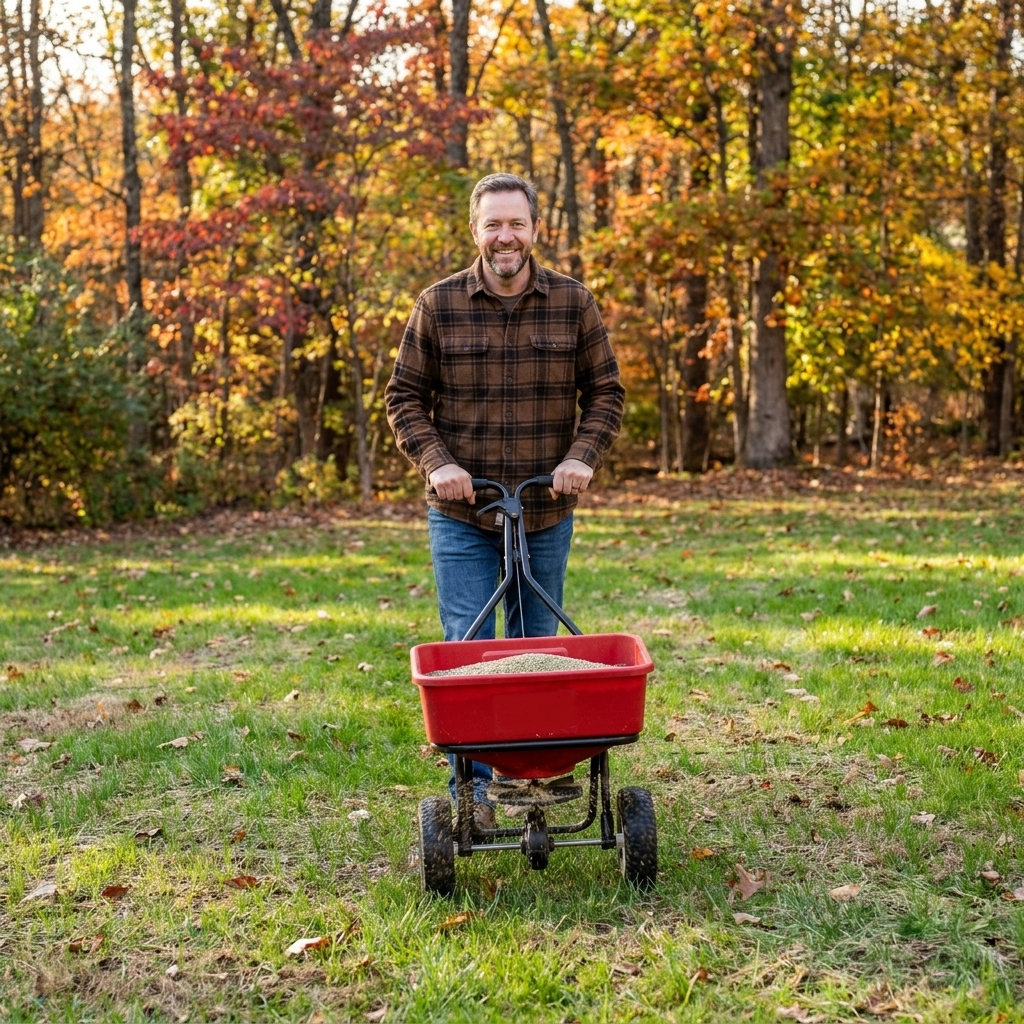
A neighborly, no-till fall overseeding method to thicken thin turf and crowd out weeds. Includes timing, prep, seed selection, topdressing, watering, and a 3...
lawn care
Fall Overseeding for a Thicker Lawn
 Mark Vance
 is a former professional landscaper and the lead turf enthusiast at Yard Mentor. With over 15 years of experience in soil health, turf management, and residential landscaping, he is dedicated to helping homeowners transform frustrating dead patches into lush, healthy lawns. When he isn't testing new grass seed blends, you can find him enjoying a Saturday morning coffee looking out over his freshly striped yard.
Updated October 17, 2026
Created October 17, 2026
Mark Vance
Mark Vance is a former professional landscaper and the lead turf enthusiast at Yard Mentor. With over 15 years of experience in soil health, turf management, and residential landscaping, he is dedicated to helping homeowners transform frustrating dead patches into lush, healthy lawns. When he isn't testing new grass seed blends, you can find him enjoying a Saturday morning coffee looking out over his freshly striped yard.
Updated October 17, 2026
Created October 17, 2026
If your lawn thinned out over summer, fall is your second chance. Cooler nights, warm soil, and fewer weeds create a sweet spot for grass seed to germinate and root. Do it right now, and spring will feel like you “found” a better lawn without paying for a full renovation.
I learned this the hard way on my first Midwest yard. I threw seed down once, watered a little, and hoped. It looked great for two weeks, then disappeared. The difference between “seeded” and “successfully overseeded” is simple: prep, seed-to-soil contact, and consistent moisture.
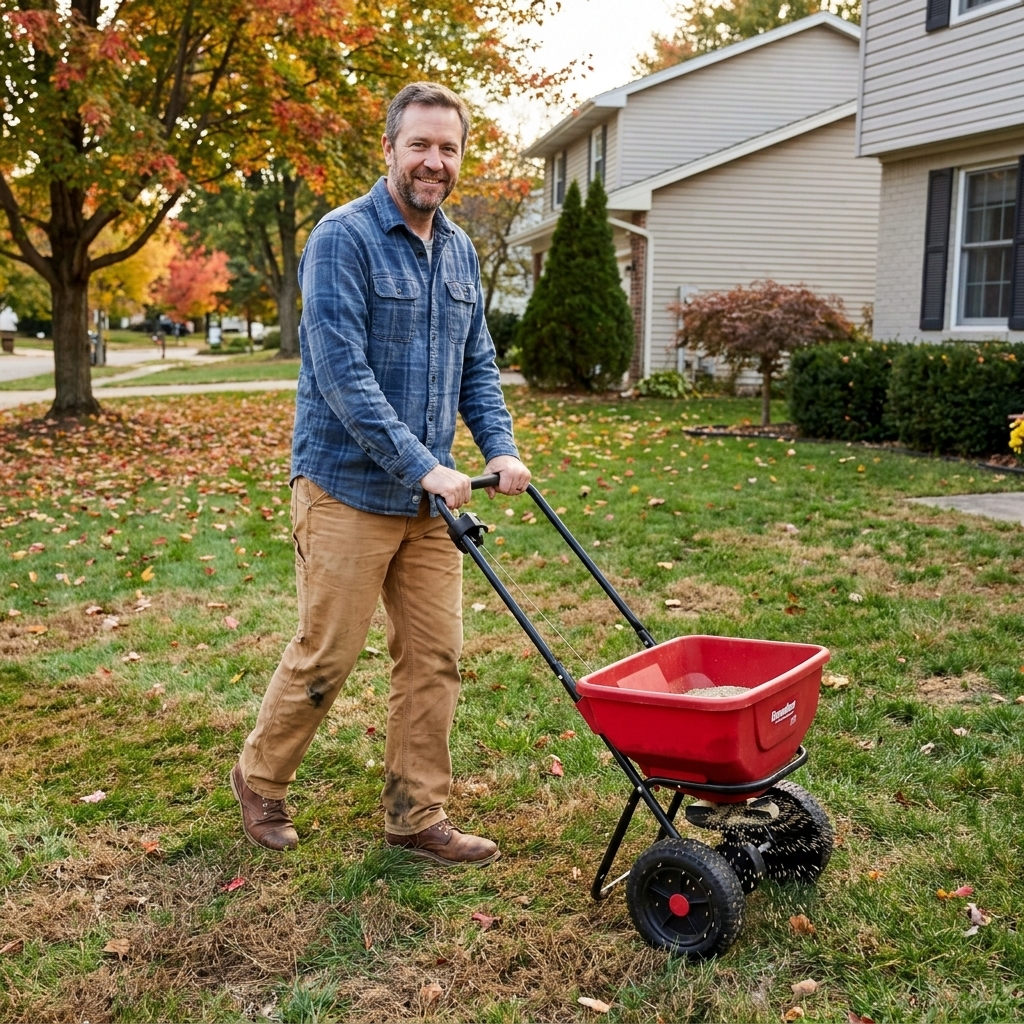
What fall overseeding does
Overseeding means adding new grass seed into an existing lawn without tearing the whole thing out. Done in fall, it can:
- Thicken thin turf so weeds have fewer openings.
- Improve lawn color by adding newer, more vigorous varieties.
- Repair summer damage from heat, drought, grubs, pets, or disease.
- Boost spring green-up because young plants are already established before winter.
It will not fix compacted soil, heavy shade, or drainage problems by itself. If those are your real issues, we can still overseed, but we need to pair it with the right prep.
Timing
Your goal is to give seedlings enough warm days to germinate and enough time to root before winter slows everything down.
Rule of thumb
- Cool-season lawns (most of the northern US): overseed 4 to 8 weeks before your average first hard frost.
- If you are using Kentucky bluegrass: lean toward 6 to 10 weeks if you can, because it is slower to germinate and mature.
- Transition zone: aim for early fall, before nights get too cold and growth stalls.
- Warm-season lawns: fall overseeding usually means overseeding with annual ryegrass for winter color. For permanent thickening of Bermuda, zoysia, or St. Augustine, the main establishment window is typically late spring to summer, and many lawns are improved more reliably with sod or plugs. Seeding success varies by species, cultivar, and region, and some warm-season grasses are commonly established vegetatively.
Soil temperature beats calendar dates
If you remember one thing, make it this: grass seed cares about soil temperature. Use local extension guidance when you can, but these ranges are a practical starting point:
- Perennial ryegrass: germinates when soil is roughly 50°F and up, with quicker results as you move into the 60s.
- Tall fescue: often does best with soil in the 60°F to low 70°F range (it will still germinate cooler, just slower).
- Kentucky bluegrass: similar preferred soil temps to fescue, but it is slower, so it needs a longer runway.
In many areas, that aligns with early September through mid-October, but local weather can swing it. If the 10-day forecast is still giving you warm days and cool nights, you are usually in business.
Pick the right seed
This is where a lot of homeowners waste money. The “best” seed is the one that matches your sun, traffic, and maintenance level, not the one with the flashiest bag.
Quick seed chooser
- Sunny, high-traffic lawns: turf-type tall fescue blend, or tall fescue plus a touch of perennial rye for faster fill.
- Sunny lawns where you want a very fine, dense look: Kentucky bluegrass mix, but start earlier and be ready for a longer germination period.
- Part shade: fine fescues (chewings, creeping red, hard fescue) mixed with tall fescue can do well.
- Need fast results: perennial ryegrass is the sprinter, great in blends to reduce bare-soil time.
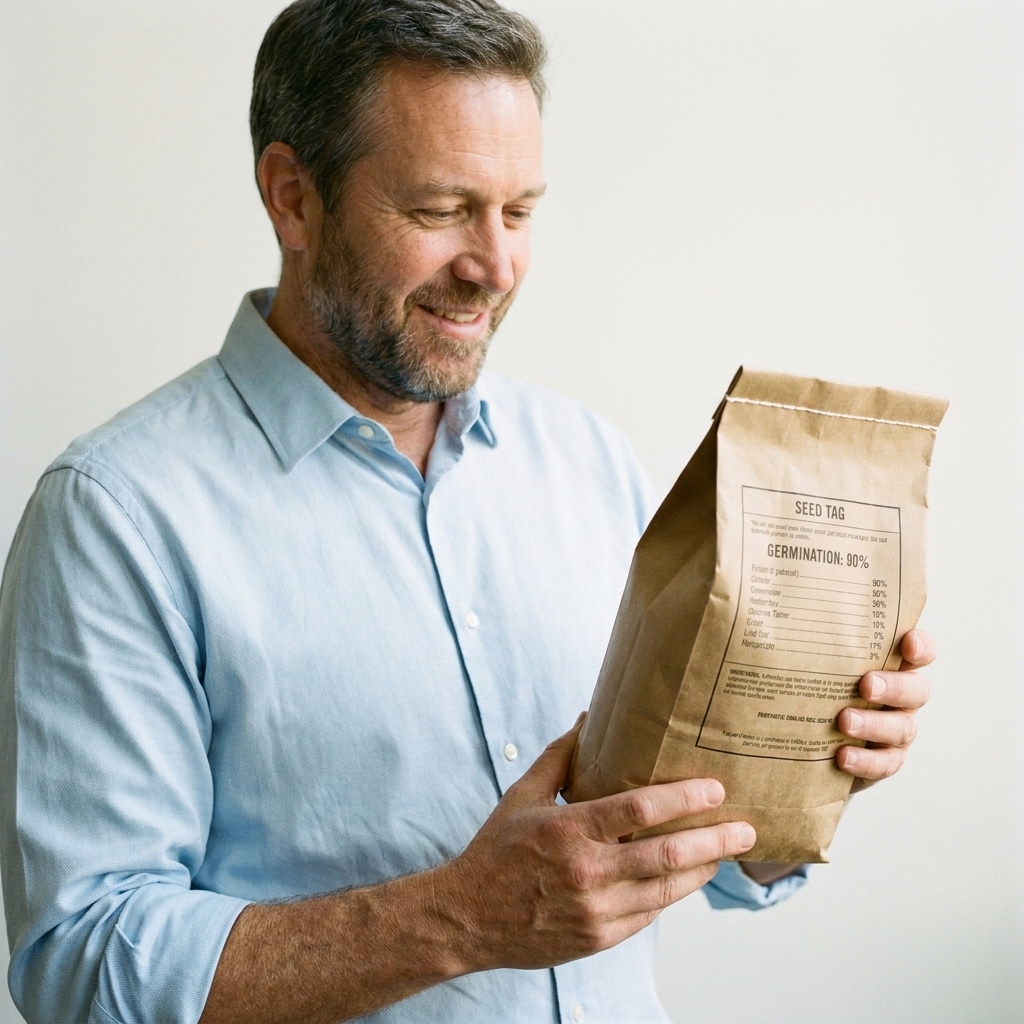
Read the label
Flip the bag over. Look for:
- Named varieties (not “common”).
- High germination and low weed seed.
- Low inert matter.
If your lawn has chronic disease pressure (like recurring brown patches), choose varieties noted for improved disease resistance. You cannot breed out every problem, but good genetics help.
Tools and materials
You can overseed with basic gear, but having the right tools makes a big difference in germination.
- Broadcast spreader (or drop spreader): for even seed distribution.
- Core aerator (rental) or manual aerator: to relieve compaction and create holes for seed to fall into.
- Dethatching rake or power dethatcher (only if needed): to open up heavy thatch.
- Leaf rake: for light soil scratching and cleanup.
- Starter fertilizer (optional): helpful for establishment, especially if your soil test says you need phosphorus.
- Topdressing material (optional): compost, peat moss, or a screened topsoil blend for moisture retention and coverage.
- Sprinkler and timer: consistency is everything.
If you are choosing between spending money on more seed or renting an aerator, I will take the aerator almost every time. The main exception is a lawn that already has excellent seed-to-soil contact because you just power-raked, slit-seeded, or the soil is already very open. Seed that cannot touch soil is just bird food.
How to overseed
1) Mow shorter, then clean up
Mow your lawn a bit shorter than normal, typically around 2 to 2.5 inches for cool-season turf, and bag the clippings. Shorter grass lets seed reach the soil and reduces competition for light.
2) Fix the “why” behind thin spots
Before you seed, take five minutes and be honest about what caused the thinning:
- Shade: choose a shade-tolerant mix and raise mowing height later.
- Compaction: aerate.
- Dog spots: plan to flush areas with water and reseed small patches often.
- Drainage: consider topdressing and grading fixes, or you will reseed forever.
- Grubs: confirm with a quick soil peel test before spending on seed.
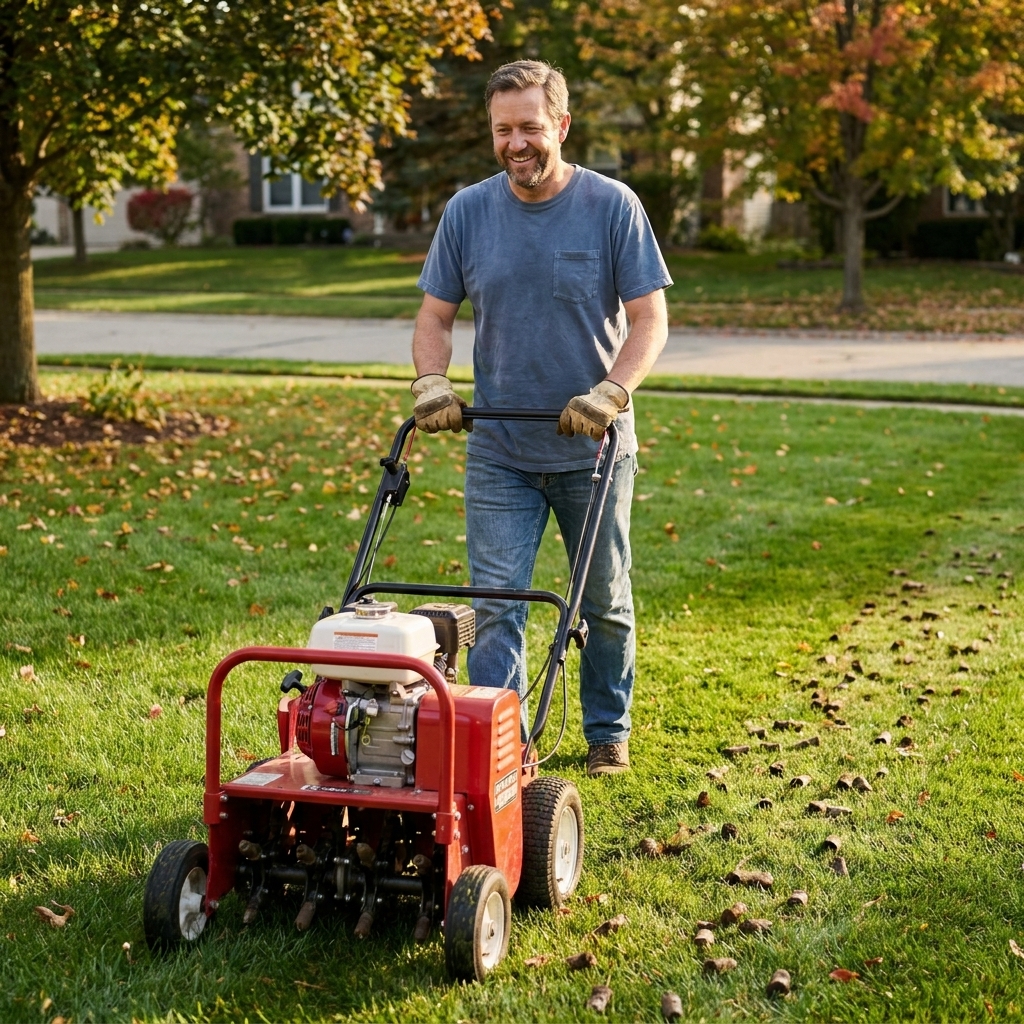
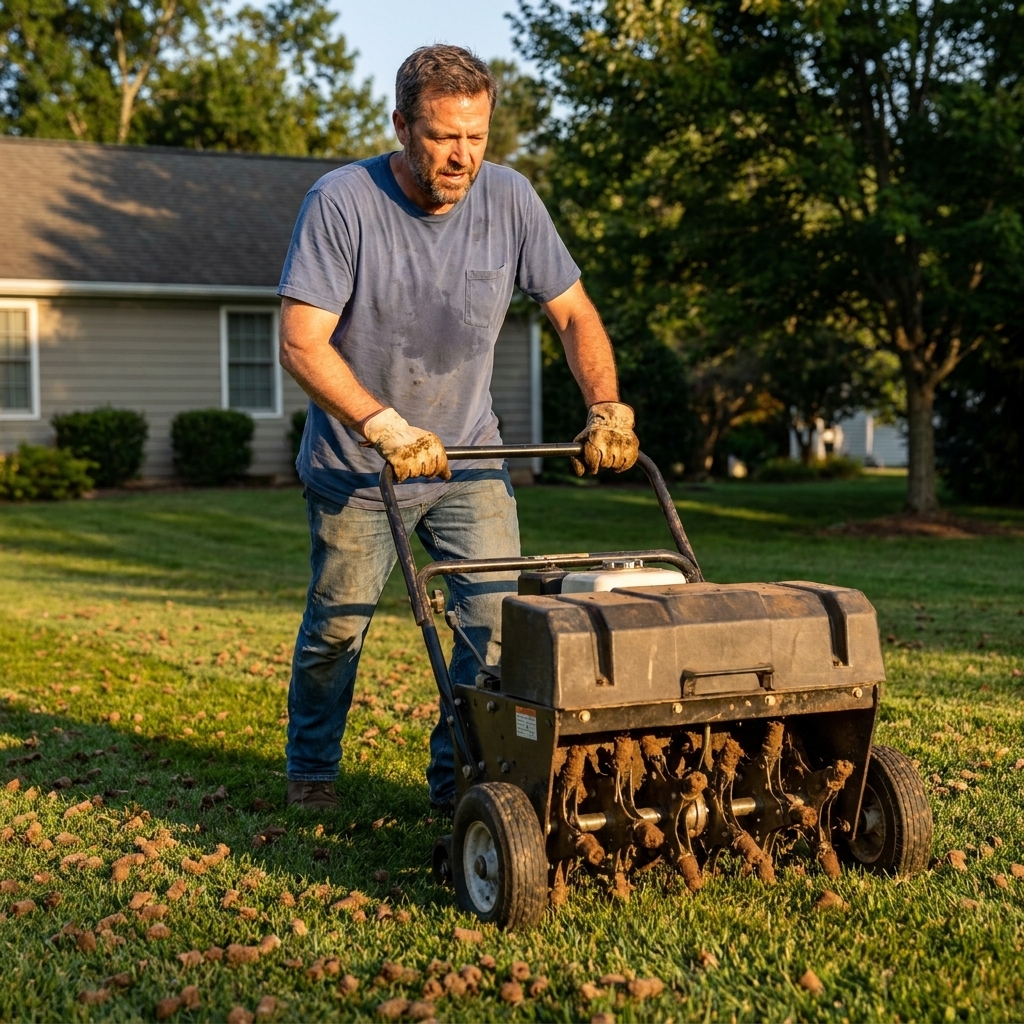
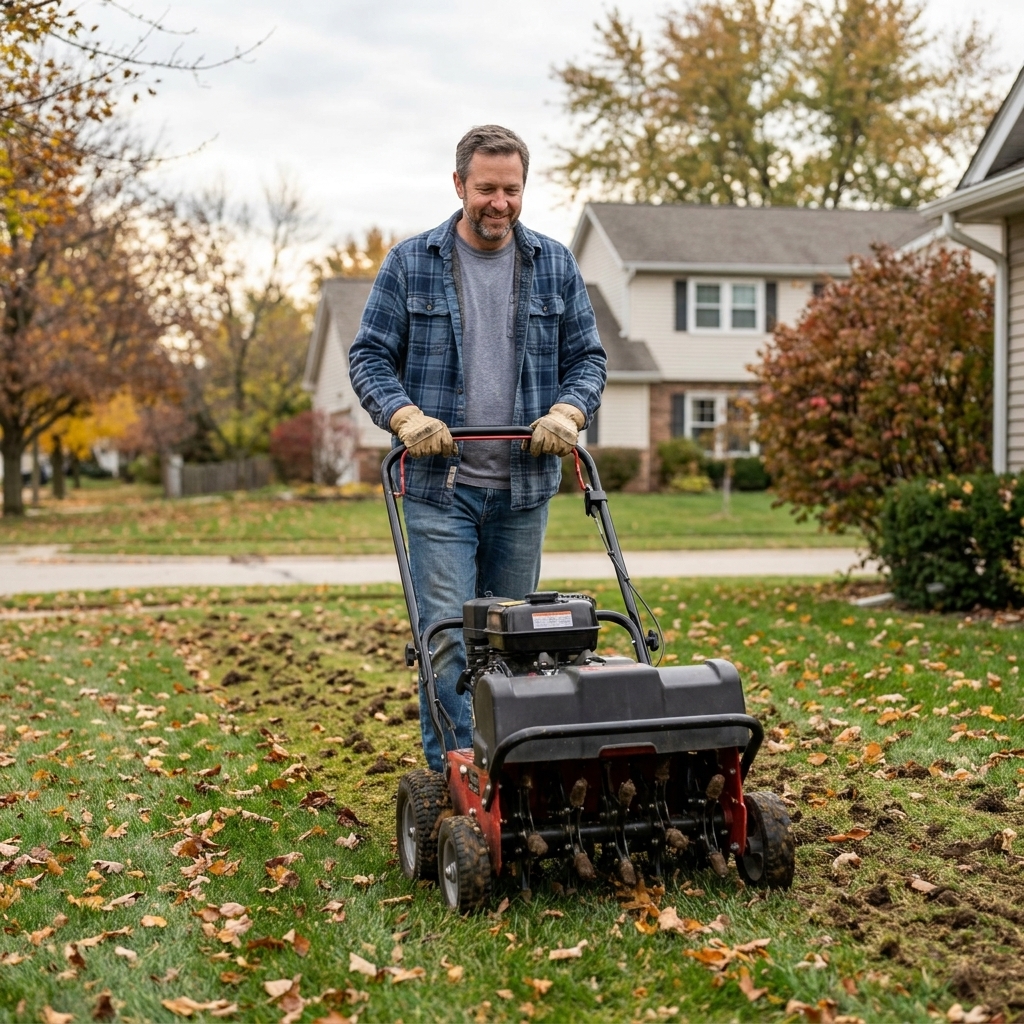
3) Aerate (strongly recommended)
Core aeration pulls plugs and opens the soil. It improves oxygen flow, water penetration, and creates perfect little pockets for seed. Make 1 to 2 passes in different directions for compacted lawns.
Do you leave the plugs? Yes. Let them break down naturally. A mow before aeration keeps plugs from sitting on tall grass, and the plugs usually disappear with watering and mowing.
4) Dethatch only if you need it
A little thatch is normal. A thick, spongy layer that blocks seed from reaching soil is the problem. If water beads up or you can peel back a thick mat, dethatch lightly before seeding. If you are unsure, aeration alone often provides enough opening for overseeding.
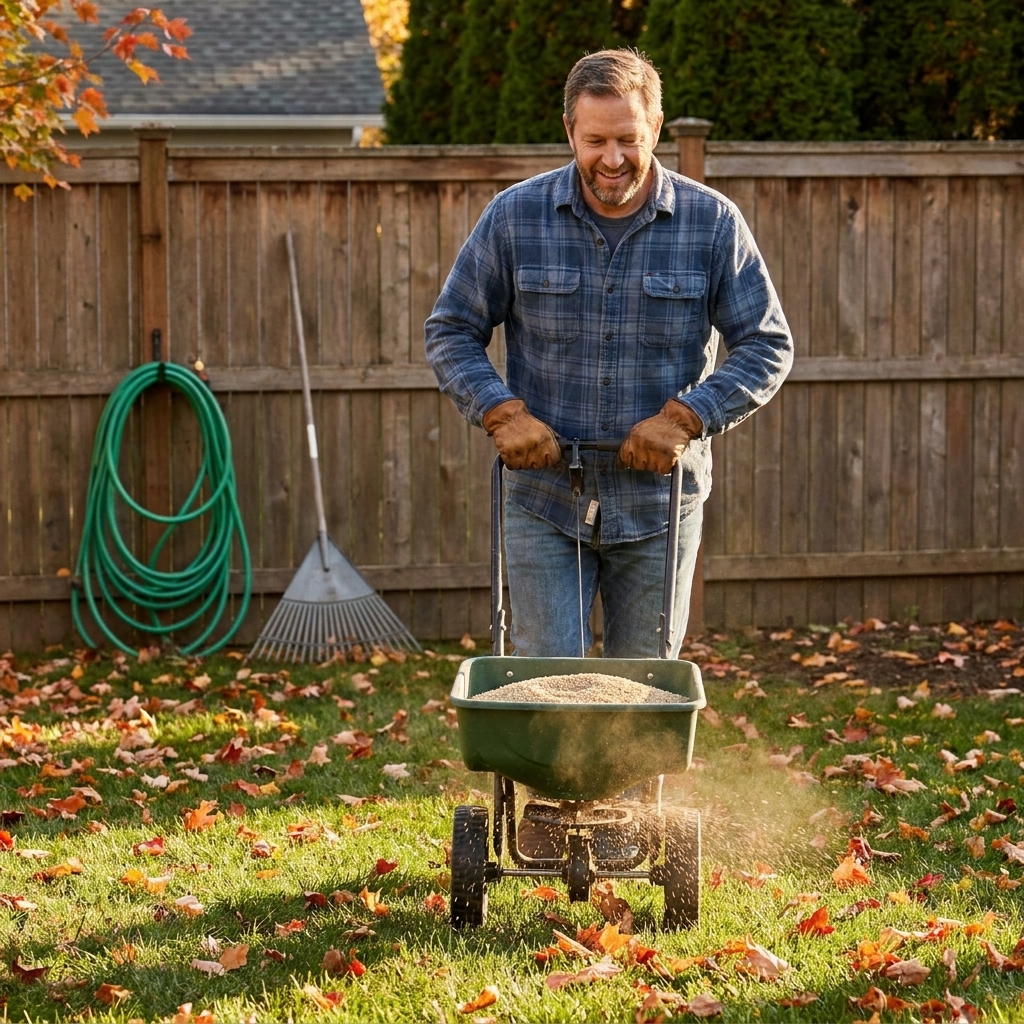
5) Apply seed at the right rate
Use the overseeding rate on the bag, not the new-lawn rate. For thin lawns, you can lean toward the higher end of the overseeding range, but do not assume “more is better.” Overcrowding can lead to weak seedlings.
If you want a baseline to sanity-check the label, here are common ballpark overseeding ranges for cool-season lawns:
- Turf-type tall fescue: about 4 to 8 lb per 1,000 sq ft.
- Perennial ryegrass: about 3 to 6 lb per 1,000 sq ft.
- Kentucky bluegrass: about 1 to 3 lb per 1,000 sq ft (small seed, slow establishment).
Pro tip: Apply half the seed walking north-south, then the other half east-west for more even coverage.
6) Press seed into soil
Seed-to-soil contact is the whole game. After spreading seed:
- Rake lightly to work seed down through holes and between grass blades.
- If you have one, roll with a light lawn roller, or simply walk the area in a grid pattern.
7) Consider slit-seeding for very thin lawns
If your lawn is so thin that you can see a lot of bare soil, or you keep failing with “spread and pray,” renting a slit-seeder (also called a power seeder) can be a cheat code. It cuts grooves, drops seed, and improves seed-to-soil contact fast. It is louder and heavier than a spreader, but the results can be worth it.
8) Topdress for better moisture (optional but powerful)
A thin topdressing helps keep seed damp and reduces washout.
- Compost: my favorite option for most lawns. It helps moisture, adds organic matter, and is forgiving.
- Peat moss: holds moisture well, but use lightly. If you can get by with compost, that is usually the better long-term pick.
- Screened topsoil: helpful for low spots, but avoid heavy, unscreened soil that can clump, crust, or smother seed.
Keep it thin. You should still see grass blades poking through. A heavy layer can reduce germination.
9) Starter fertilizer, if appropriate
A starter fertilizer can help new seedlings establish, especially in poor soils. In many areas, phosphorus is restricted unless a soil test shows a need, so check your local rules and your soil report if you have one. Follow label rates. If you already fertilized recently, do not double up.
10) Water consistently (for about two weeks)
For germination, the surface must stay consistently moist. The exact schedule depends on your soil type, sprinkler output, sun, and wind.
- Days 1 to 14: water often enough to keep the top 1/4 to 1/2 inch of soil from drying out. That is commonly 2 to 4 short cycles per day, but your yard may need less or more.
- After germination: switch to fewer, deeper waterings to encourage roots.
You are not trying to soak the lawn all day. You are trying to prevent the seedbed from crusting over and drying out between cycles.
Aftercare
When can you mow?
Mow when the new grass reaches about 3 to 3.5 inches. Make sure the ground is firm, use a sharp blade, and avoid aggressive turns that can pull seedlings. For that first mow, I like to mow when the lawn is dry and take no more than one-third of the height.
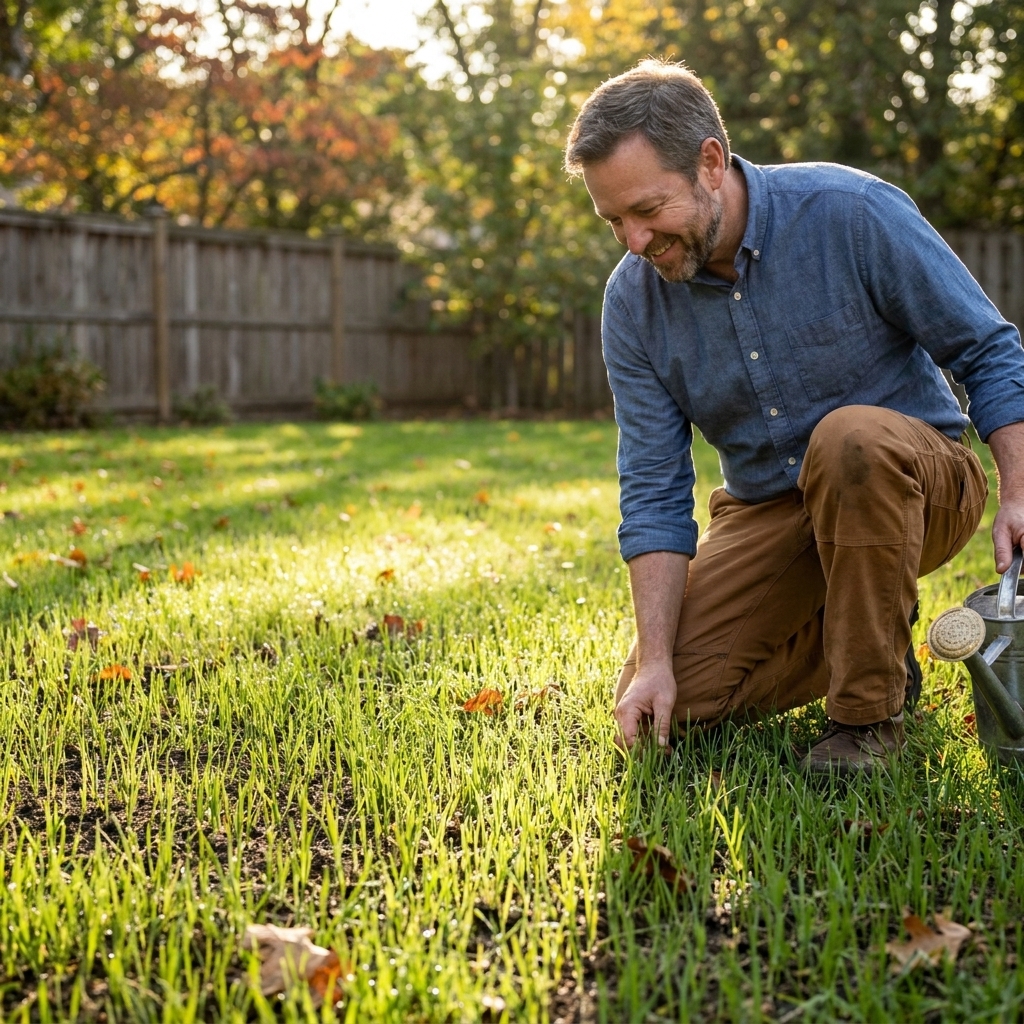
Keep feet and pets off new seedlings
Limit traffic for the first few weeks. Those tiny roots are easy to tear out. If you have dogs, consider temporarily fencing the worst thin areas and doing smaller patch repairs where needed.
When to switch watering to “normal”
Once seedlings are established, transition toward your normal schedule, typically about 1 inch of water per week including rainfall, delivered in deeper, less frequent cycles.
Weeds and herbicides
This is where a lot of good intentions go sideways.
Avoid most weed killers near seeding
Many common broadleaf herbicides and crabgrass preventers interfere with germination or stress young seedlings.
- Do not apply a standard pre-emergent crabgrass preventer and expect seed to grow.
- If you need both seeding and some weed prevention, look for a starter fertilizer that includes mesotrione, which is commonly used at seeding time on many cool-season lawns. Always follow the label for your grass type and timing.
How long to wait (real-world guidance)
Products vary, so the label is the law, but these rules keep most people out of trouble:
- After a typical pre-emergent (prodiamine, dithiopyr): plan on waiting until the next proper seeding window unless the label explicitly allows earlier seeding. This is why spring pre-emergent and spring seeding often clash.
- After overseeding: hold off on standard pre-emergent until the new grass is established. For many lawns, that means at least after several mows or waiting until the next season, depending on product and grass type.
- Broadleaf weed sprays: if you must spray, wait until the new grass has been mowed a few times and then spot-treat, not blanket spray, unless the product label says it is safe on seedlings.
What about existing broadleaf weeds?
If weeds are scattered, you can often overseed now and spot-treat later once the new grass has been mowed a few times. If weeds are dominating the lawn, it may be smarter to control weeds first, then seed at the right window, or be prepared for a more involved renovation plan.
Common mistakes
- Mistake: Throwing seed on top of grass and hoping. Fix: Aerate and rake for seed-to-soil contact.
- Mistake: Watering once a day. Fix: Keep the top layer consistently moist until germination.
- Mistake: Seeding too late. Fix: Aim 4 to 8 weeks before hard frost, earlier for Kentucky bluegrass.
- Mistake: Letting leaves smother seedlings. Fix: Blow or rake leaves off gently and often.
- Mistake: Using bargain seed with lots of filler. Fix: Buy named varieties with strong germination and low weed seed.
- Mistake: Ignoring soil issues. Fix: Aerate, topdress, and consider a soil test.
Weekend schedule
If you like a simple plan, here is a reliable rhythm for most cool-season lawns.
Day 1
- Mow shorter and bag clippings
- Rake out debris and loosen thin areas
- Core aerate (rental)
Day 2
- Spread seed in two directions
- Lightly rake to settle seed
- Apply a thin topdressing if using one
- Water immediately
Days 3 to 14
- Keep the surface consistently moist with short cycles
- Remove leaves as needed
Weeks 3 to 6
- First mow when tall enough
- Transition to deeper watering
- Keep traffic low
FAQ
Can I overseed without aerating?
You can, especially if the lawn is already fairly open and you can rake seed into soil. But if your lawn is compacted or thin areas are hard-packed, aeration dramatically improves results.
Should I put topsoil over grass seed?
A light cover helps, but avoid burying seed deeply. A thin dusting to about 1/8 inch is plenty. Too much soil can reduce germination.
How long does fall overseeding take to germinate?
It depends on grass type and temperatures. Perennial ryegrass can pop in under a week in good conditions. Tall fescue often takes around 7 to 14 days. Kentucky bluegrass can take 14 to 30 days.
Can I overseed and fertilize at the same time?
Yes, often. A starter fertilizer can be applied at seeding if your lawn needs it and the product is appropriate for new seedlings. In many places, phosphorus use is tied to soil test requirements, so check local rules and avoid unnecessary applications.
What if I miss the fall window?
If you are too close to frost, you can still improve your odds by waiting for spring, or by planning a dormant seeding after the ground is cold and seed will not germinate until spring. Dormant seeding can work, but it is more weather-dependent than classic fall overseeding.
My neighbor-fence advice
If you only do three things, do these: aerate, use quality seed, and keep that seedbed consistently moist until germination. Fall overseeding does not need fancy products or perfection. It needs a method.
Put in a couple focused weekends now, and next spring you will be the one sipping coffee, looking out at a lawn that finally looks like it belongs to your house.