A step-by-step fall overseeding guide with timing, seed selection, watering, and weed-control do's and don'ts to fill thin spots before frost and get a thick...
lawn care
How to Overseed a Thin Lawn in Fall Without Tilling
 Mark Vance
 is a former professional landscaper and the lead turf enthusiast at Yard Mentor. With over 15 years of experience in soil health, turf management, and residential landscaping, he is dedicated to helping homeowners transform frustrating dead patches into lush, healthy lawns. When he isn't testing new grass seed blends, you can find him enjoying a Saturday morning coffee looking out over his freshly striped yard.
Updated October 17, 2026
Created October 17, 2026
Mark Vance
Mark Vance is a former professional landscaper and the lead turf enthusiast at Yard Mentor. With over 15 years of experience in soil health, turf management, and residential landscaping, he is dedicated to helping homeowners transform frustrating dead patches into lush, healthy lawns. When he isn't testing new grass seed blends, you can find him enjoying a Saturday morning coffee looking out over his freshly striped yard.
Updated October 17, 2026
Created October 17, 2026
If your lawn looks thin, patchy, or just tired, fall is your best shot at fixing it without ripping everything up. Cool nights, warm soil, and less weed pressure give new grass seedlings a fighting chance. And the best part is you do not need a tiller. You just need good prep and great seed-to-soil contact.
I have revived plenty of “crabgrass and mud” yards (including my own first one) with the exact approach below. Follow it step by step and you will be amazed how much thicker your turf looks by late fall, and how much better it wakes up next spring.
Why fall overseeding works so well
Grass seed does not need fancy tricks. It needs three things: warm soil, consistent moisture, and decent sunlight. Early-to-mid fall delivers all three.
- Soil is still warm, which speeds germination.
- Days are cooler, so seedlings lose less water and suffer less heat stress.
- Weed competition drops compared to spring, so your seed gets more room to establish.
Overseeding also thickens the canopy, which naturally crowds out many weeds next season. Think of it as raising the lawn’s immune system instead of chasing problems later.
Timing: when to overseed in fall
Aim to seed when you still have a runway of mild weather ahead. A practical target for most lawns is about 6 to 8 weeks before your average first hard frost. If you are seeding a faster grass (like perennial ryegrass) or your fall stays warm for longer, 4 to 6 weeks can still work, but earlier is usually safer.
- Cool-season lawns (Kentucky bluegrass, perennial ryegrass, fescues): Fall overseeding is ideal.
- Warm-season lawns (Bermuda, zoysia, centipede, St. Augustine): Fall overseeding is usually done with annual ryegrass or perennial ryegrass for winter color. Just know winter overseeding can mean more mowing, more disease pressure in cool, wet stretches, and sometimes slower spring green-up for the warm-season turf underneath.
What you need (no tiller required)
Most homeowners already have half of this in the garage. Here is my basic, no-till kit.
- Quality grass seed (matched to your region and sun exposure)
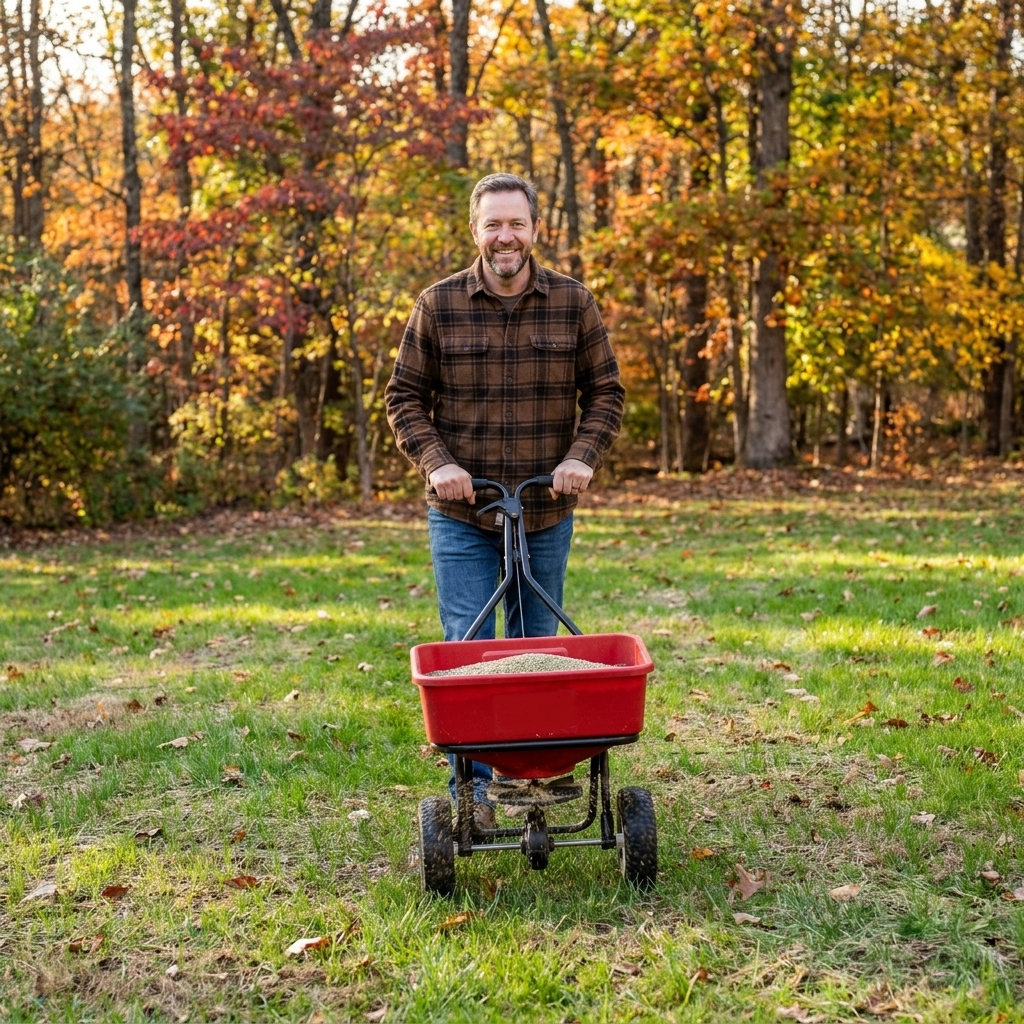
- Broadcast spreader or drop spreader
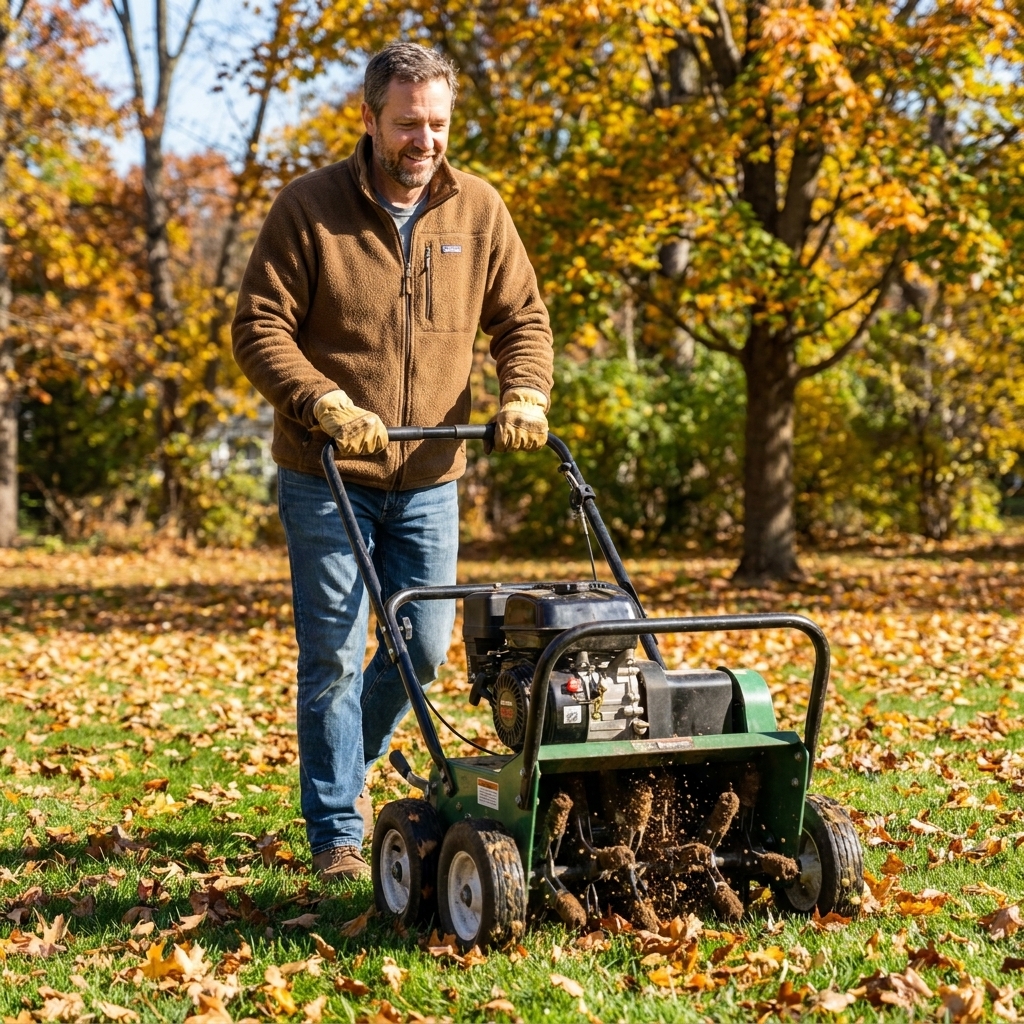
- Leaf rake or dethatching rake (or a power dethatcher for bigger lawns)
- Core aerator (optional but very helpful on compacted soil)
- Starter fertilizer (optional but often worth it)
- Compost or screened topsoil for topdressing (optional but recommended)
- Hose-end sprinkler or irrigation and a timer
Step 1: Figure out why the lawn is thin
Overseeding works best when you also remove the reason the lawn got thin in the first place. Take five minutes and do a quick diagnosis:
- Shade: Under roughly 3 to 4 hours of sun, results are limited. In those areas, lean toward fine fescue blends, and keep expectations realistic. Grass needs light.
- Compaction: If a screwdriver is hard to push into the soil, you will benefit from core aeration.
- Grubs: If turf peels back like carpet and you see C-shaped larvae, solve that first or seedlings may fail.
- Dog spots: You can overseed, but you also need to rinse areas after urine or train to a mulch zone.
- Low mowing: Scalping weakens turf and invites weeds. Plan to mow higher going forward.
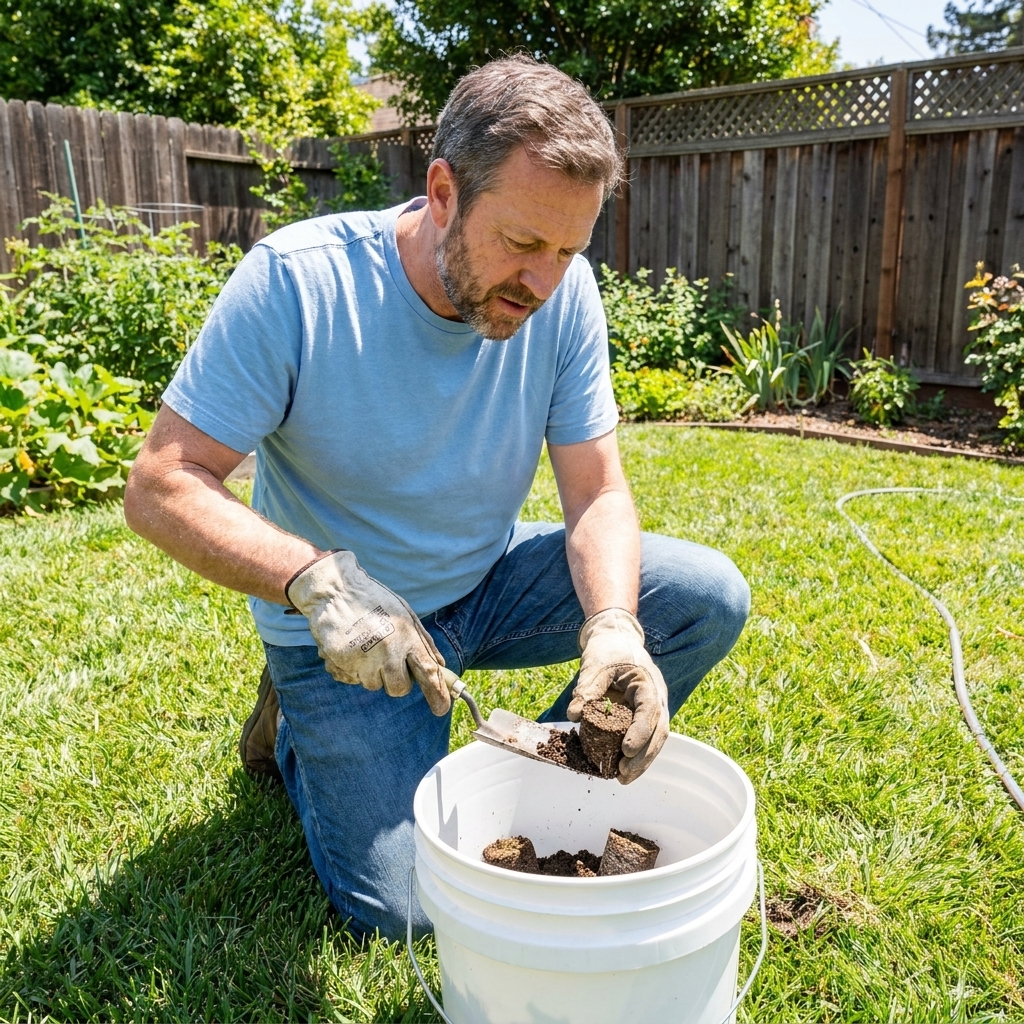
Quick soil reality check: If your lawn has struggled for years, consider a basic soil test (pH and nutrients). A pH that is way off can make overseeding feel impossible, no matter how good your seed and watering are.
Step 2: Mow low and clean up
Right before you overseed, mow a bit shorter than normal to help sunlight reach the soil surface. For most cool-season lawns, I like about 2 to 2.5 inches for this one mow.
- Bag clippings if they are heavy.
- Blow off leaves and debris. Seed needs to touch soil, not a layer of fluff.
After seedlings are established, you will raise mowing height again (more on that below).
Step 3: Create seed-to-soil contact
If there is one place homeowners miss, it is this. Seed that sits on top of dead grass and thatch dries out fast and becomes bird food.
Option A: Rake hard or dethatch (only if you need it)
Not every lawn needs dethatching. In fact, aggressive dethatching can beat up healthy turf and dry out the seedbed. Use it when you have a real thatch problem, like a springy, spongy layer that is roughly over 1/2 inch, or when a rake test pulls up a surprising amount of matted material.
If thatch is light, an aggressive leaf rake pass to scratch up the surface is often enough.
- Rake up the debris after dethatching or aggressive raking.
- If you fill multiple bags, that is usually a sign you needed this step.
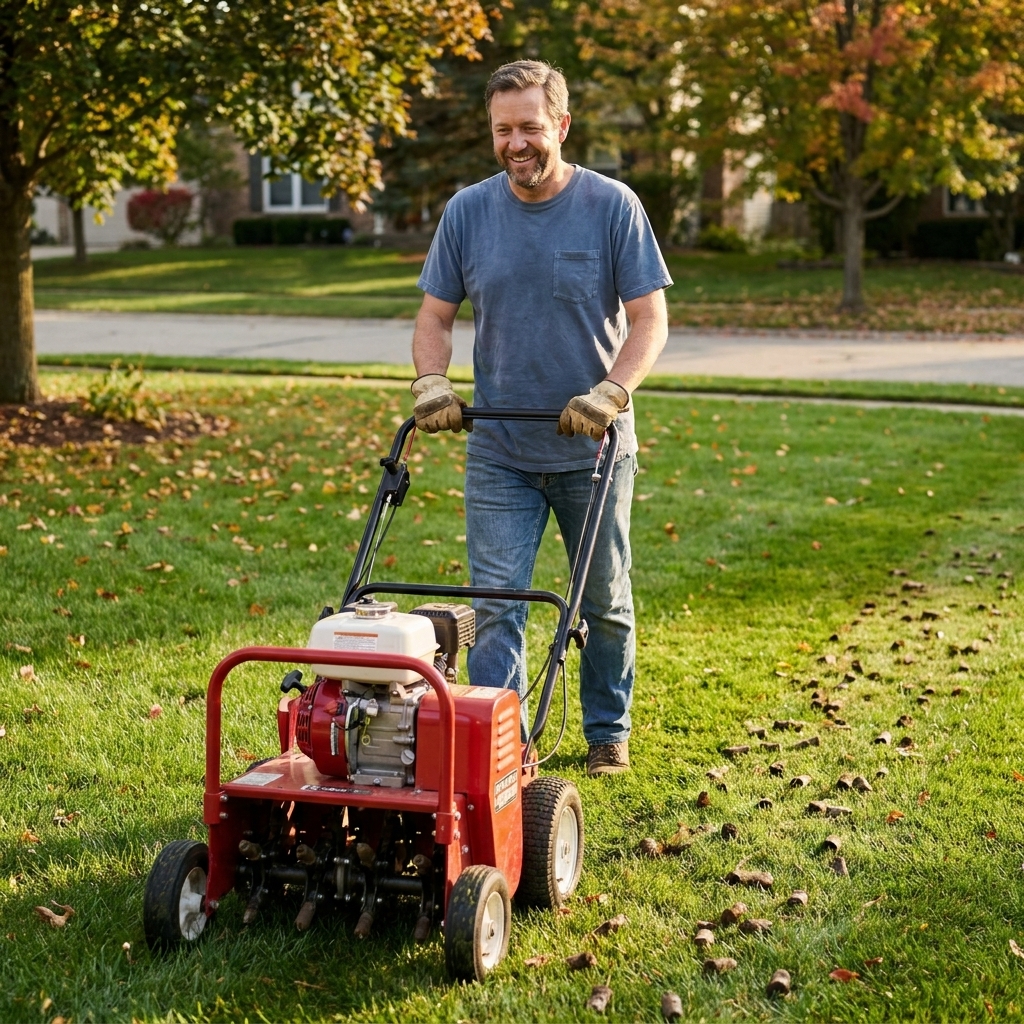
Option B: Core aerate (best for compacted lawns)
Core aeration punches holes and pulls plugs, giving seed a protected place to land while improving water and air movement. If your lawn gets heavy traffic, this is worth doing the same week you seed.
Pro tip: If you can only do one, choose aeration for compaction and raking or dethatching for thatch buildup. Some lawns benefit from both, but do not go overboard and leave the soil beat up and drying out.
Step 4: Choose the right seed (and how much to use)
Seed choice matters more than most people think. The right grass for your yard is the one that matches your light, climate, and how much attention you want to give it.
Quick seed picks
- Perennial ryegrass: Fast germination, great for quick fill-in, likes sun, needs regular watering during establishment.
- Tall fescue: Tough, drought tolerant once established, great for many Midwest and transition-zone lawns, good in sun to partial shade.
- Fine fescue: Better for shade and lower-input areas, not ideal for heavy foot traffic.
- Kentucky bluegrass: Beautiful and self-repairing, but slower to germinate and higher maintenance for many homeowners.
How much seed? Use the label’s overseeding rate, not the new-lawn rate. As a rule, thin lawns often do well with about half the new-lawn rate, but always default to the bag instructions for your specific blend.
Avoid the bargain-bin mystery mix. Look for seed with low weed seed percentage and a named variety list. In plain language: you want grass seed, not surprises.
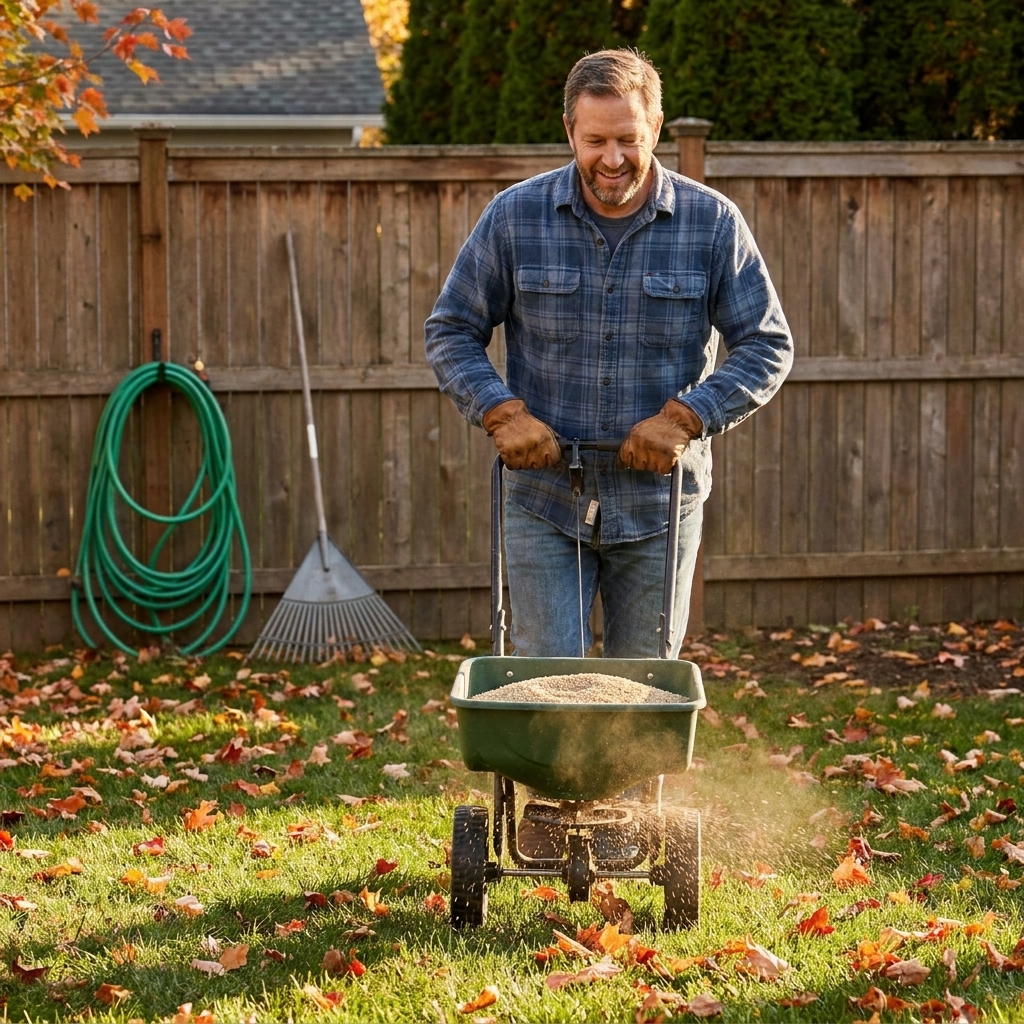
Step 5: Spread seed in two passes
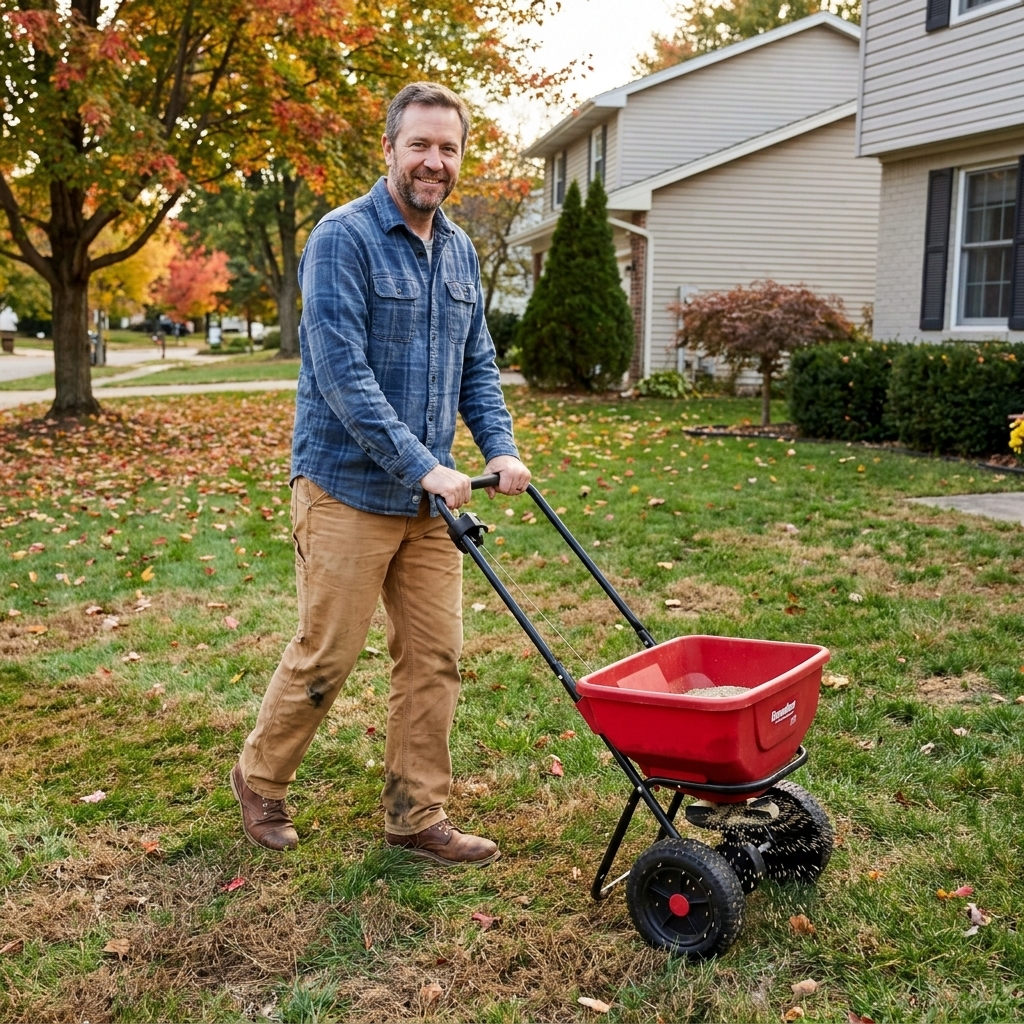
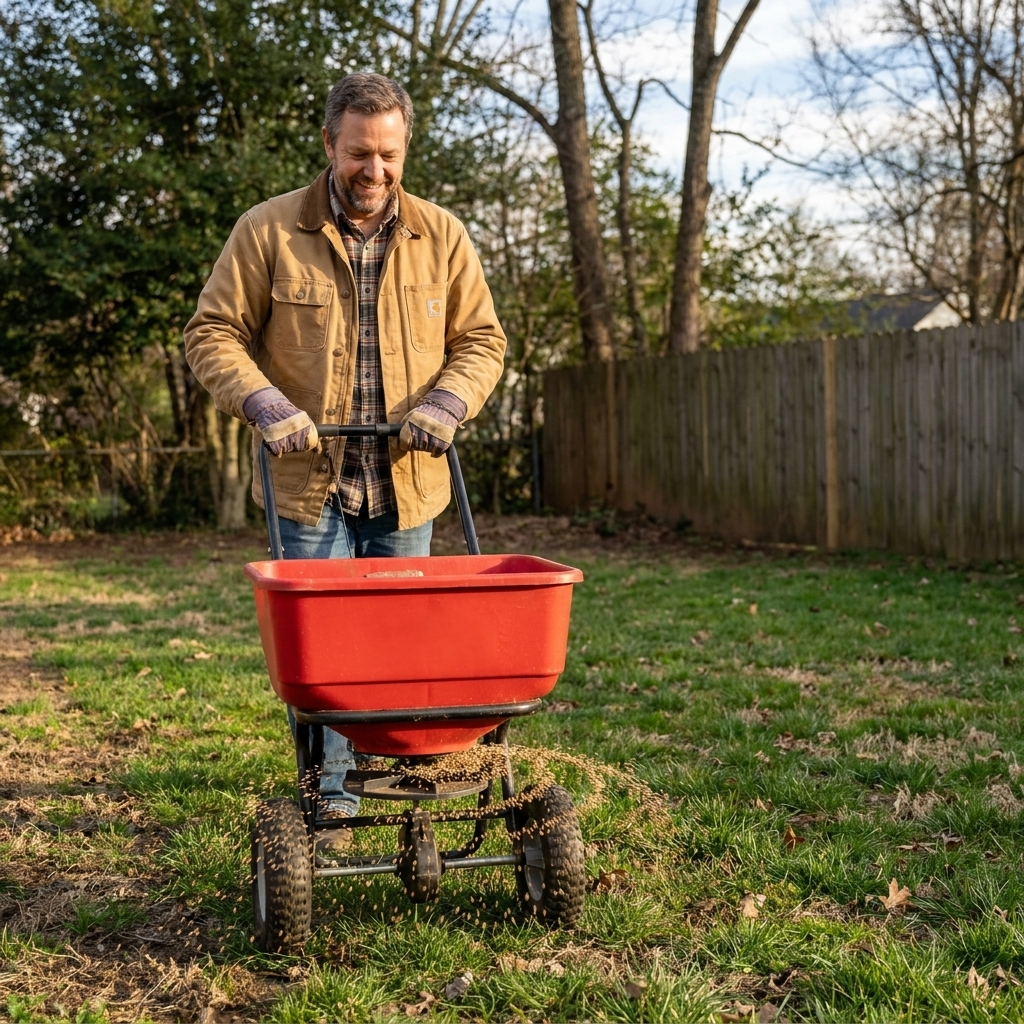
Calibrate your spreader, then apply seed in two directions: one pass north to south, one pass east to west. This prevents stripes and missed areas.
- Split your seed in half. Apply the first half in one direction, the second half in the other direction.
- Keep the spreader moving when you open the gate so you do not create seed piles.
Step 6: Press it in (optional, helpful)
If you are not topdressing, a light press can improve contact. You are not trying to compact the yard, just snug the seed against the soil.
- Lightly roll with a lawn roller (filled only partway), or
- Drag a section of chain-link fence or a stiff lawn rake over the surface.
Step 7: Topdress lightly (optional, but it boosts success)
A thin layer of compost or screened topsoil helps hold moisture, protects seed from birds, and improves soil biology over time. It is one of my favorite quiet upgrades because it makes overseeding more forgiving.
- Apply about 1/4 inch over existing turf.
- Go thicker (up to about 1/2 inch) only in bare or very thin spots, and feather the edges so you do not smother surrounding grass.
- You should still see grass blades poking through. If you bury the lawn, you can smother it.
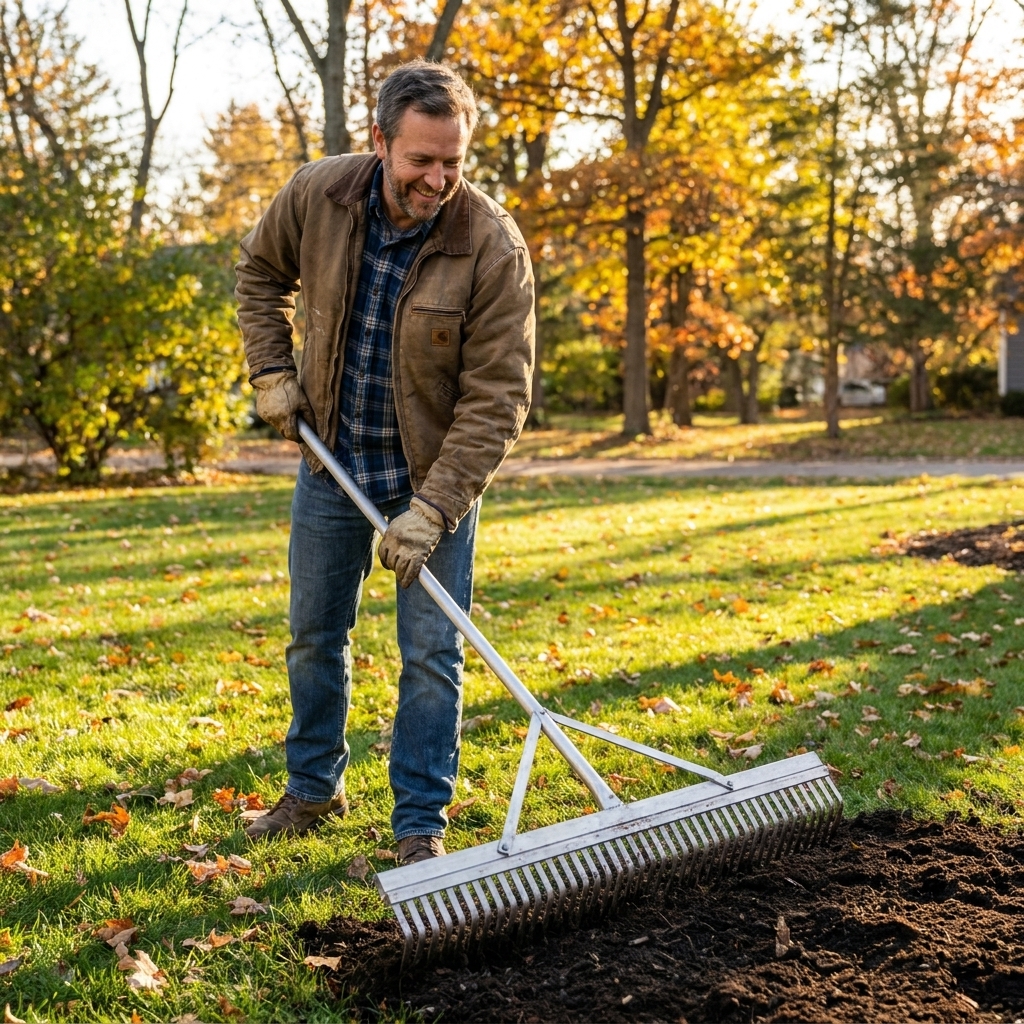
- Use a rake or lawn leveling rake to work it in lightly.
Step 8: Add starter fertilizer (when it makes sense)
Starter fertilizer can help seedlings establish faster, especially in lawns that have not been fertilized properly. Look for a starter that includes phosphorus if your area allows it, since phosphorus supports early root development. (Some states restrict phosphorus unless a soil test shows need.)
If you are unsure, a soil test is the best money you can spend on fertilizer decisions. Otherwise, follow the label exactly and do not double up “just to be safe.” Over-fertilizing is how you end up with disease, burn, or weak growth.
Watering: the simple schedule that gets seed up fast
Water is what turns seed into grass. The goal is to keep the top half inch of soil consistently damp until germination, then gradually transition to deeper, less frequent watering.
Early stage (until most seed germinates)
- Water 2 to 4 times per day for short bursts.
- Target 5 to 10 minutes per zone, depending on your sprinkler output and weather.
- The soil surface should look damp, not flooded. Puddles wash seed away.
Typical germination windows: Perennial ryegrass often pops in 4 to 7 days, fescues often take 7 to 14 days, and Kentucky bluegrass can take 14 to 30 days. Use what you see on the ground, not the calendar, to decide when to back off.
Middle stage (after germination, while seedlings thicken)
- Shift to once per day, a bit longer, once most of the seed is up.
- If it is cool and cloudy, you may be able to skip a day. If it is windy and dry, you may need more.
Later stage (transition to normal lawn watering)
- Move toward deeper watering 1 to 2 times per week.
- The goal is deeper roots, not daily surface sips.
My neighbor-fence reminder: Seed fails from drying out far more often than from anything else. If you can only nail one part of this whole project, nail the watering.
When to mow after overseeding
Mowing at the right time helps new grass tiller, which means it starts producing more shoots and thickening the stand.
- First mow when the new grass reaches about 3 to 3.5 inches.
- Mow to around 2.5 to 3 inches on that first cut.
- Use a sharp blade. A dull blade can yank seedlings out.
- Avoid sharp turns with the mower until seedlings are better rooted.
After a couple of mows, raise your height to your normal setting. Many cool-season lawns look and perform best at 3 to 4 inches through most of the growing season.
Weed control: what not to do right after seeding
This is where people accidentally sabotage their work.
- Do not apply typical weed-and-feed products when you seed. Many herbicides interfere with germination or seedling growth.
- Avoid pre-emergent herbicides unless the product specifically states it is safe with seeding and you follow the label precisely.
- If weeds pop up, mow them. Most annual weeds hate regular mowing, and your new grass needs time to mature before you spray anything.
If you must use a post-emergent herbicide, wait until the new grass has been mowed at least 2 to 3 times and then follow label guidance for newly seeded lawns.
Common fall overseeding mistakes (and how to avoid them)
- Skipping prep: Seed on top of thatch rarely thrives. Rake, and aerate and/or dethatch when needed for contact.
- Planting too late: Seedlings need time before hard freezes. Give yourself that 6 to 8 week window when you can.
- Watering once a day from day one: The surface dries out and germination stalls. Start with light, frequent watering.
- Using the wrong seed: Shade area? Use shade-tolerant blends. Sunny front yard? Do not force fine fescue to be something it is not.
- Overseeding into a lawn with active disease or pests: Fix the underlying issue first.
- Letting leaves pile up: In heavy leaf-drop yards, blow or rake often. New seedlings smother easily.
30-day no-till overseeding checklist
Weekend 1
- Mow low and clean up
- Dethatch and/or core aerate (as needed)
- Overseed in two passes
- Press seed in (optional)
- Topdress lightly (optional)
- Apply starter fertilizer (optional)
- Start frequent watering
Weeks 2 to 3
- Stay consistent with watering
- Keep foot traffic minimal
- Watch for germination and fill-in
- Keep leaves off the seedlings
Weeks 3 to 4
- First mow when seedlings hit 3 to 3.5 inches
- Shift watering toward longer, less frequent cycles
FAQ
Can I overseed without aerating?
Yes, as long as you still create seed-to-soil contact by aggressive raking, and by dethatching if you have a true thatch problem. Aeration is most important when soil is compacted or traffic is heavy.
Should I put straw over grass seed on an existing lawn?
Usually no. Straw can block light and create uneven coverage on established turf. A thin compost topdressing is more consistent and easier to manage.
How soon will I see results?
Perennial ryegrass can sprout in under a week in good conditions. Fescues often take 7 to 14 days. Kentucky bluegrass can take 14 to 30 days. Visual thickening typically becomes obvious after a couple of mows.
What if I have bare spots, not just thin turf?
The same steps apply, but you can increase seed rate in bare areas, topdress those spots a bit more (feathered in), and be extra disciplined with watering.
My final tip: treat overseeding like a short season
Overseeding is not hard, but it is a process. The prep sets the stage, the seed does its part, and watering is the daily discipline that makes it all work. Stick with it for a month and you will head into winter with a noticeably thicker lawn and fewer open invitations for weeds next spring.
If you have a weird trouble area that never fills in, take note of its sun hours, drainage, and traffic. Those three clues usually explain the whole mystery, and they point you to the right seed and the right fix.