A step-by-step homeowner guide to timing pre-emergent herbicides for crabgrass and other spring weeds, plus application tips, watering-in, and common mistake...
lawn care
10 Common Lawn Weeds: Identification and Control
 Mark Vance
 is a former professional landscaper and the lead turf enthusiast at Yard Mentor. With over 15 years of experience in soil health, turf management, and residential landscaping, he is dedicated to helping homeowners transform frustrating dead patches into lush, healthy lawns. When he isn't testing new grass seed blends, you can find him enjoying a Saturday morning coffee looking out over his freshly striped yard.
Updated October 17, 2026
Created October 17, 2026
Mark Vance
Mark Vance is a former professional landscaper and the lead turf enthusiast at Yard Mentor. With over 15 years of experience in soil health, turf management, and residential landscaping, he is dedicated to helping homeowners transform frustrating dead patches into lush, healthy lawns. When he isn't testing new grass seed blends, you can find him enjoying a Saturday morning coffee looking out over his freshly striped yard.
Updated October 17, 2026
Created October 17, 2026
If your lawn is getting bullied by weeds, you are not alone. Most “mystery patches” I get asked about end up being a handful of repeat offenders that thrive when turf is thin, soil is compacted, or mowing and watering habits accidentally give weeds the upper hand.
This guide will help you identify 10 of the most common lawn weeds and choose a control plan that fits your grass type, season, and comfort level. I will keep it neighbor-simple: what it looks like, why it shows up, and what to do next.
One quick reality check up front: weeds and best practices vary by region and turf type. Also, herbicides are label-driven. Always confirm the product is labeled for your exact grass species (especially St. Augustine, centipede, bermuda, and zoysia) and follow local rules.
Before you spray: 3 rules
1) Confirm the weed type
Weed killers are not one-size-fits-all. Broadleaf weeds (like dandelion and clover) need different products than grassy weeds (like crabgrass) or sedges (like nutsedge).
2) Pick the right timing
Most weeds are easiest to control when they are young and actively growing. Broadleaf weeds are often easiest in spring and especially early fall. Summer annual grassy weeds like crabgrass and goosegrass typically germinate in late spring as soils warm (often around the mid-50s Fahrenheit range), then explode through summer.
3) Fix the “why”
Weeds are often a symptom: compacted soil, low mowing height, bare spots, poor drainage, or underfeeding. Herbicides help, but thick turf is what keeps weeds out long-term.
- Mow higher: cool-season lawns often do best when maintained on the taller side (commonly around 3 to 4 inches, depending on species and site).
- Water deeper, less often: encourages roots, discourages shallow-rooted invaders.
- Fertilize appropriately: not too much, not too little, and timed to your grass type.
- Overseed thin areas: bare soil is basically an invitation to weeds.
10 common lawn weeds
1) Dandelion
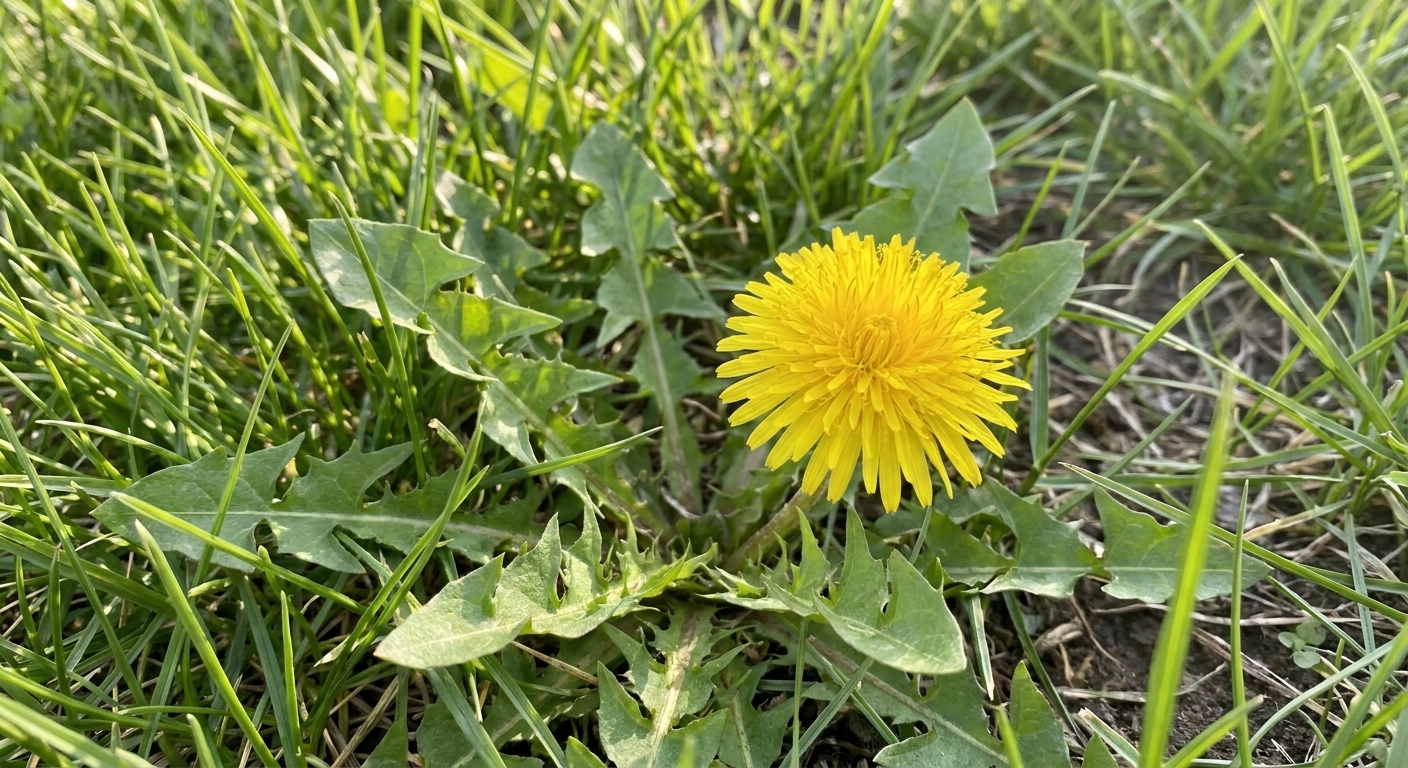
Quick ID: Bright yellow flower, jagged “lion tooth” leaves in a rosette, and a hollow stem that oozes milky sap when snapped. Seed heads turn into the familiar white puffball.
Why it shows up: Thin turf, compacted soil, and low mowing heights. Dandelions also love sunny lawns where grass is struggling.
Control that works:
- Hand pull after rain or watering, aiming to remove as much of the taproot as possible.
- Spot spray with a selective broadleaf herbicide (common actives include 2,4-D, MCPP, dicamba, triclopyr). Follow the label for temperature limits and reentry.
- Prevention: thicken turf with proper fertilizing and mowing height.
2) White clover
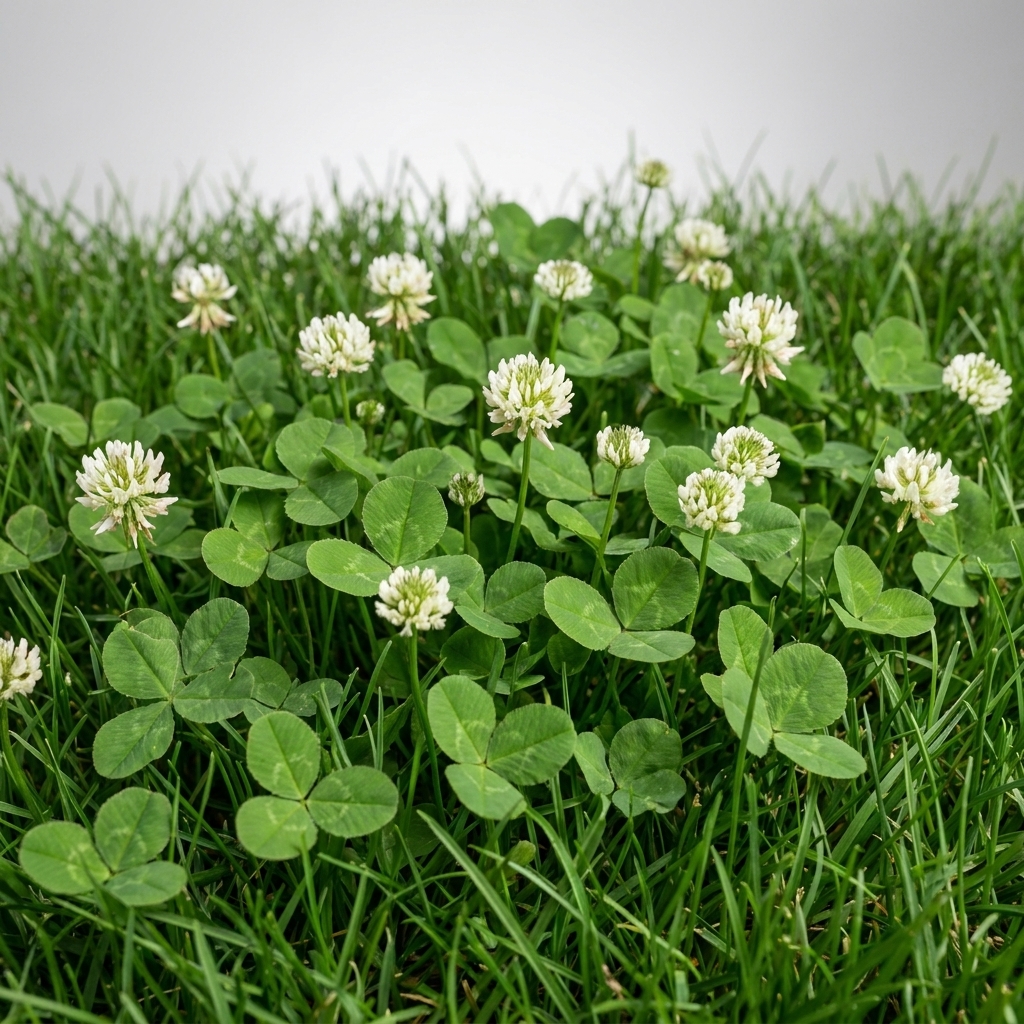
Quick ID: Three round leaflets, often with a pale crescent mark, plus small white flower clusters. Grows in low mats.
Why it shows up: Clover is strongly associated with low nitrogen and thin turf. Compaction can contribute, but the “big two” are usually low fertility and open space where grass is not competing well.
Control that works:
- Feed the lawn: many clover problems improve dramatically when nitrogen is brought back to a reasonable level for your turf.
- Spot treat with a selective broadleaf herbicide labeled for clover. It can take a second application, spaced per label, because clover is stubborn.
- Prevention: keep turf dense, and aerate if the soil is hard and sealed over.
3) Crabgrass
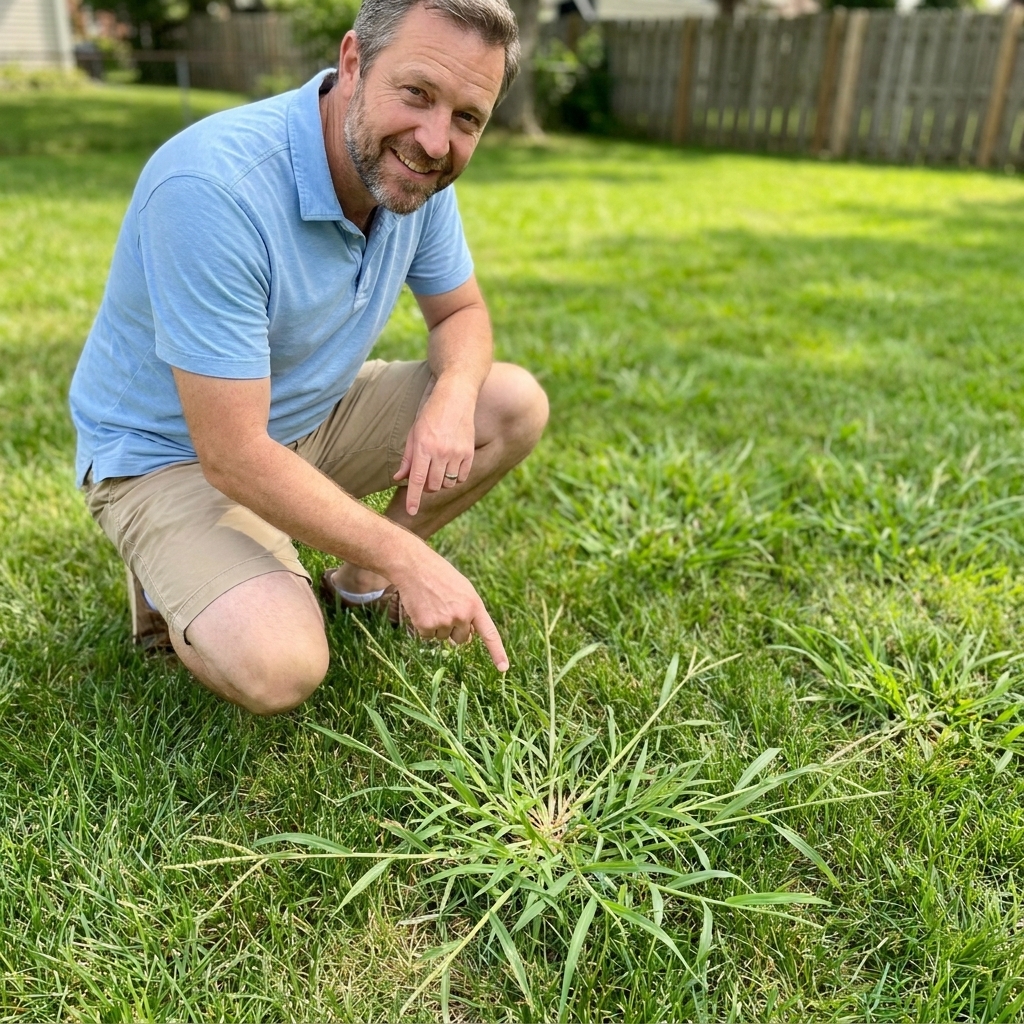
Quick ID: Light green, coarse blades that sprawl outward like a star. Often hugs the ground and crowds out turf in summer. Many types have noticeable hairs on leaves or stems.
Why it shows up: Crabgrass is an annual that takes advantage of bare spots and hot, stressed turf. Once it seeds, it sets up next year’s outbreak.
Control that works:
- Best move: pre-emergent in spring before crabgrass germinates. Common actives include prodiamine, dithiopyr, and pendimethalin. Timing matters more than the brand.
- Post-emergent options are limited and grass-type dependent. Products with quinclorac are common for certain cool-season lawns. Always check label compatibility with your turf.
- Prevention: overseed thin areas in early fall (cool-season) and avoid mowing too short.
My neighbor tip: If you fight crabgrass every year, you probably have a thin-lawn problem more than a chemical problem.
4) Goosegrass
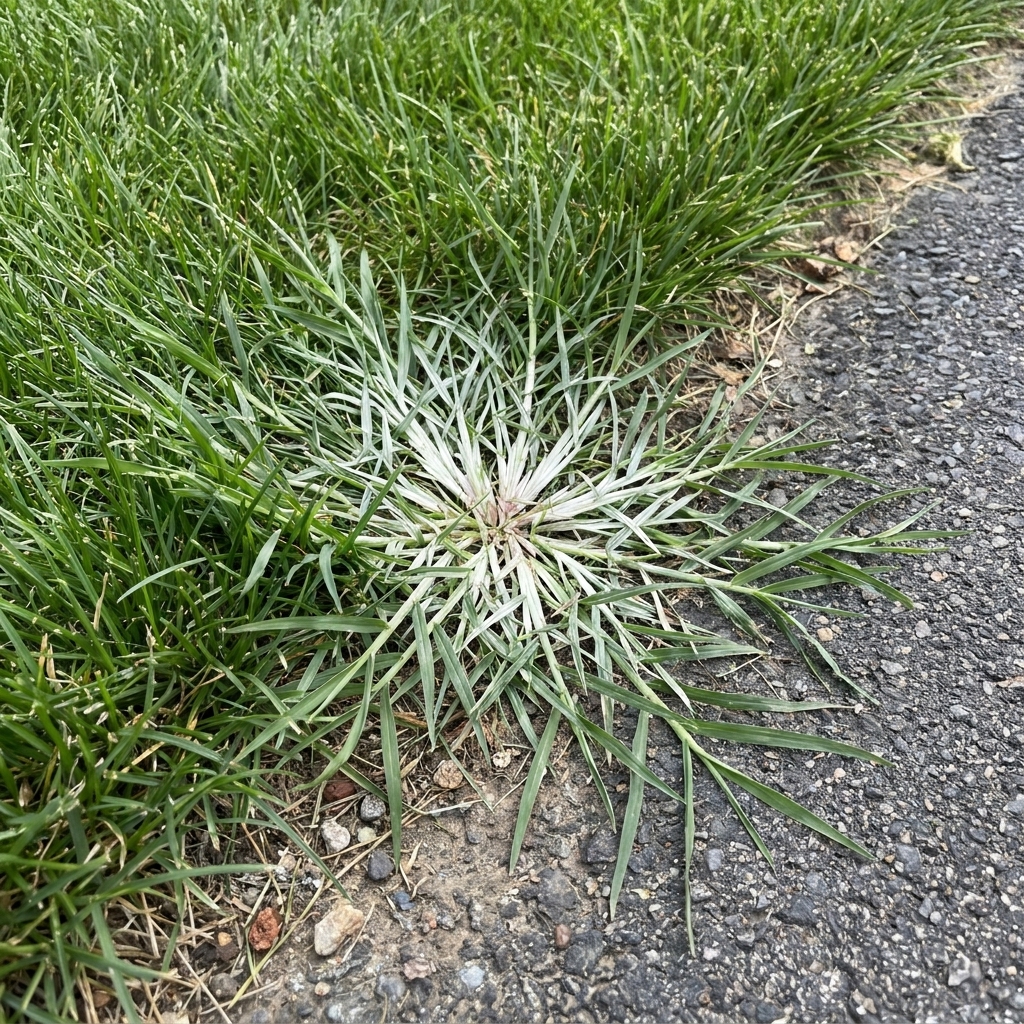
Quick ID: Clumpy, flattened growth with a silvery or whitish center. Common along driveways, sidewalks, and compacted spots. Looks like crabgrass at first glance but tends to be stiffer and more “wagon wheel” shaped.
Why it shows up: Compaction and heat. Goosegrass loves tough, beaten-down soil where turf roots struggle.
Control that works:
- Aerate compacted areas and adjust foot traffic patterns if possible.
- Pre-emergent helps, but goosegrass timing is often a bit later than crabgrass in many areas. In practice, that can mean you need to be covered when crabgrass is starting too, or plan a second window if the label and your program allow.
- Post-emergent control can be tricky and turf-specific. Read labels carefully or lean on manual removal for small infestations.
5) Nutsedge (yellow or purple)
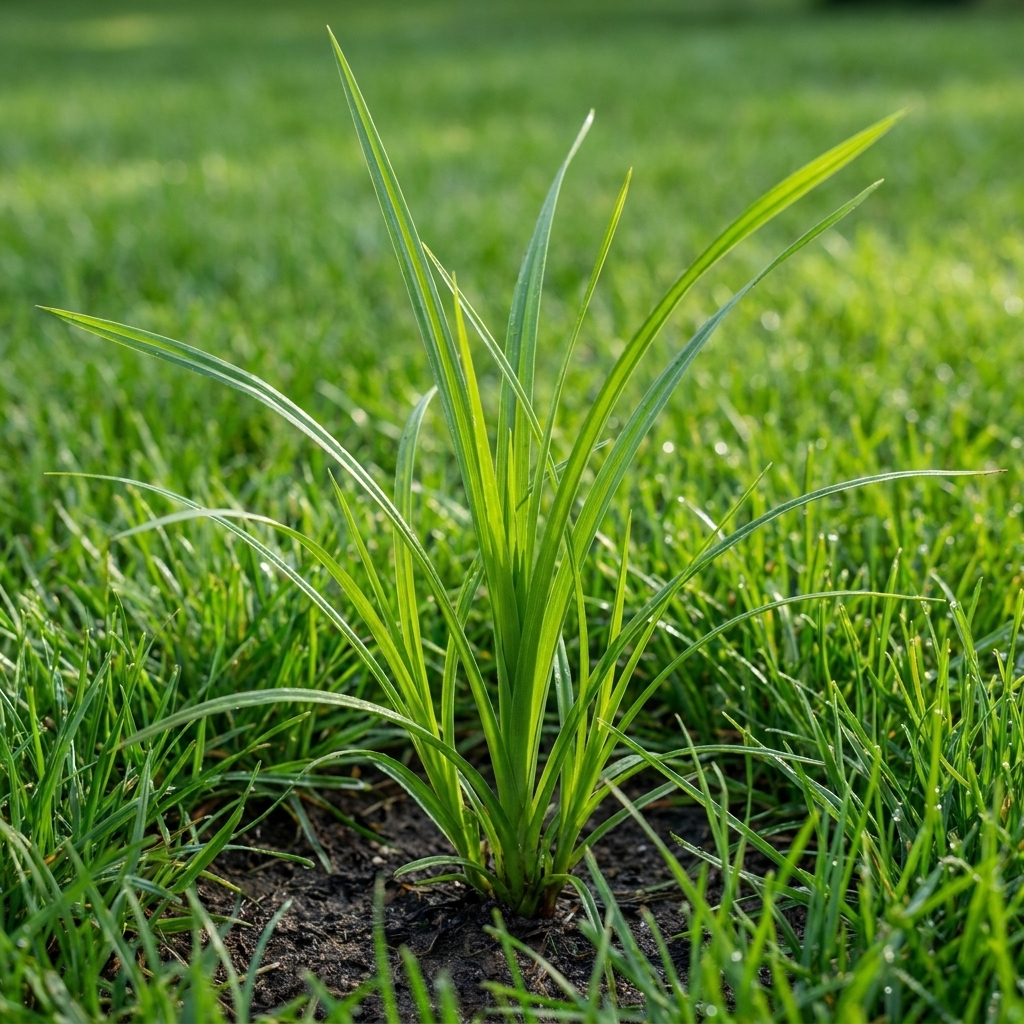
Quick ID: Bright, glossy green shoots that grow faster than the lawn. If you roll the stem between your fingers, it often feels triangular. Usually shows up in wetter spots.
Why it shows up: Overwatering, poor drainage, and compacted clay. Nutsedge spreads via underground tubers, so it is persistent.
Control that works:
- Do not rely on pulling: it rarely solves nutsedge because tubers remain and the plant regrows.
- Use a sedge-specific herbicide labeled for nutsedge (common actives include halosulfuron or sulfentrazone). It usually takes follow-up.
- Prevention: correct drainage and water only when the lawn needs it.
6) Creeping Charlie (ground ivy)
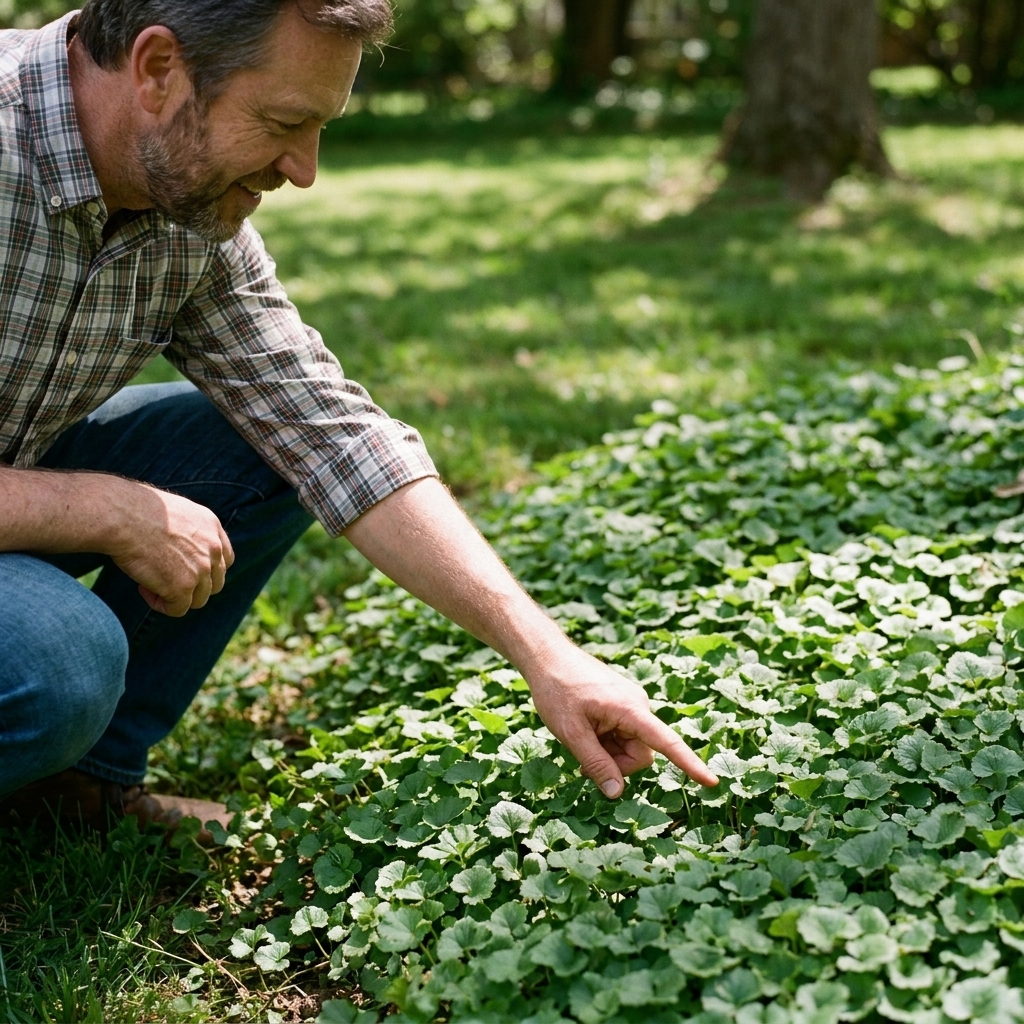
Quick ID: Low, creeping vine with round to kidney-shaped leaves that have scalloped edges. Often forms dense mats, especially in shade. Can have small purple flowers in spring. Crushed leaves often have a minty odor.
Why it shows up: Shade, moisture, and thin turf. It is a classic “under the tree” invader.
Control that works:
- Improve sunlight and airflow if possible: prune lower tree limbs, reduce irrigation in shade, and avoid heavy spring nitrogen in shady areas.
- Spot spray with a broadleaf herbicide effective on ground ivy (triclopyr is commonly used). Fall applications are often more effective than spring.
- Prevention: overseed with a shade-tolerant grass mix and mow correctly for your turf.
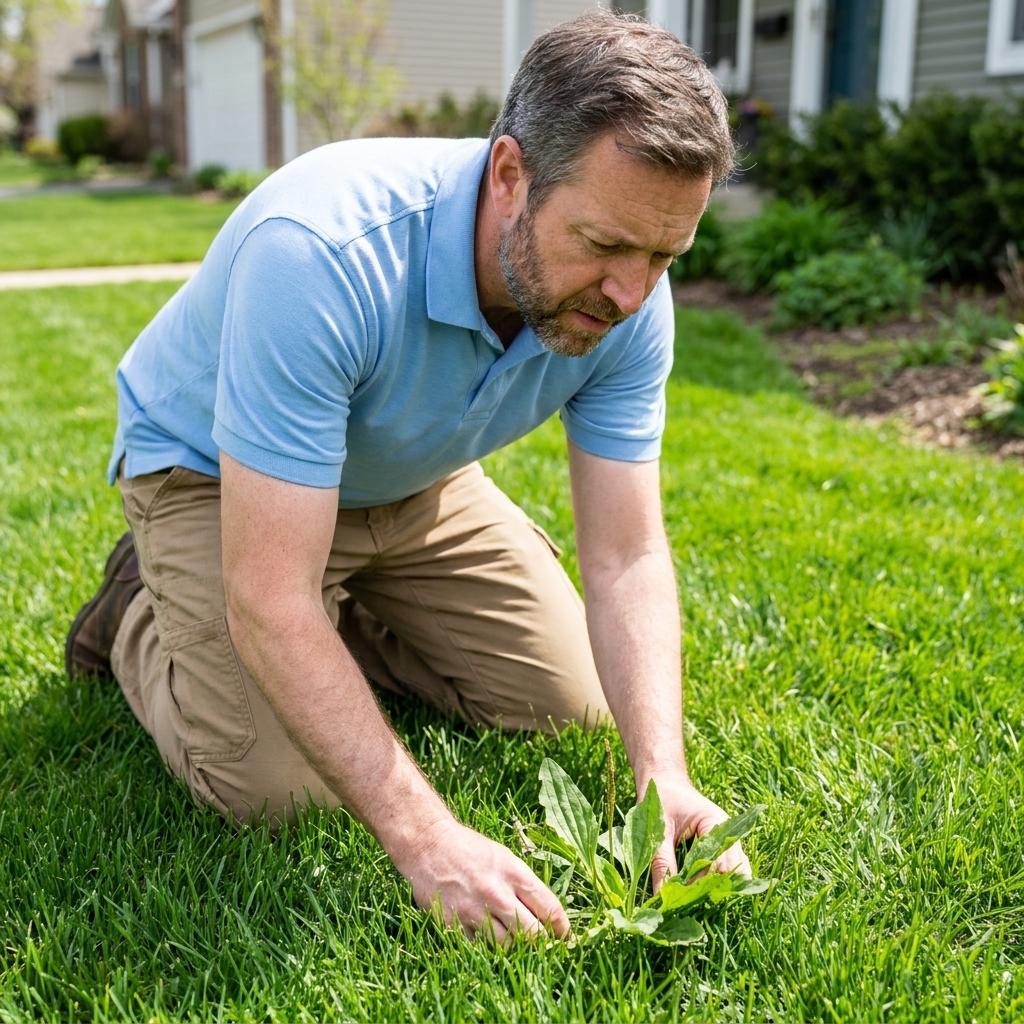
7) Plantain (broadleaf or buckhorn)
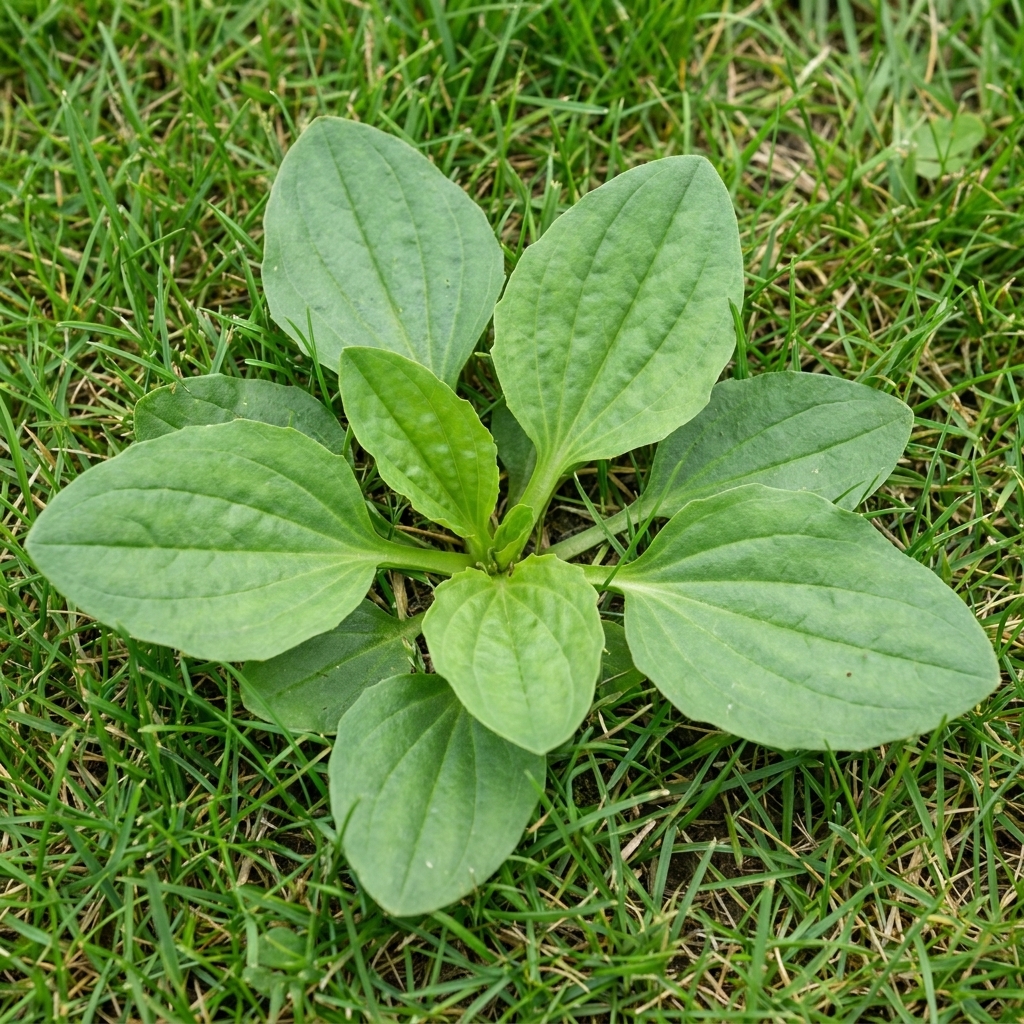
Quick ID: A rosette of leaves with strong parallel veins. Broadleaf plantain has wide oval leaves, while buckhorn plantain has narrower, strap-like leaves. Seed stalks shoot up when it matures.
Why it shows up: Compacted soil and heavy traffic. It is basically a “my lawn is packed down” indicator.
Control that works:
- Aerate and topdress with compost in problem zones to improve soil structure.
- Selective broadleaf herbicide spot treatments work well when the plant is actively growing.
- Prevention: raise mowing height and thicken turf where foot traffic is highest.
8) Chickweed (common or mouse-ear)
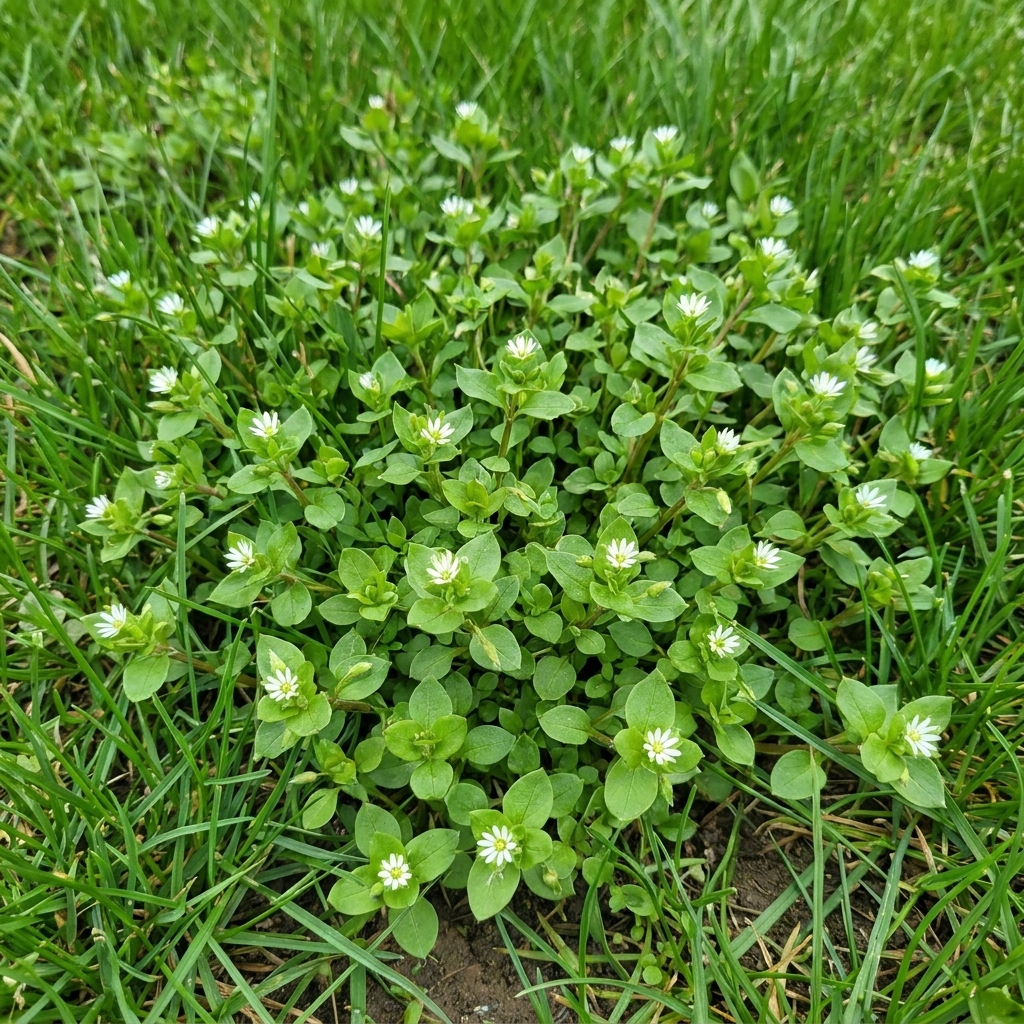
Quick ID: Low-growing, soft green mats with small leaves. Often has tiny white star-like flowers. A common ID clue is a single line of fine hairs running down one side of the stem.
Why it shows up: Thin turf and cool-season moisture. Spring and fall are prime chickweed seasons.
Control that works:
- Hand pull small patches when the soil is moist.
- Selective broadleaf herbicide spot spray for larger areas.
- Prevention: improve drainage and overseed thin turf so chickweed cannot carpet the soil.
9) Wild violet
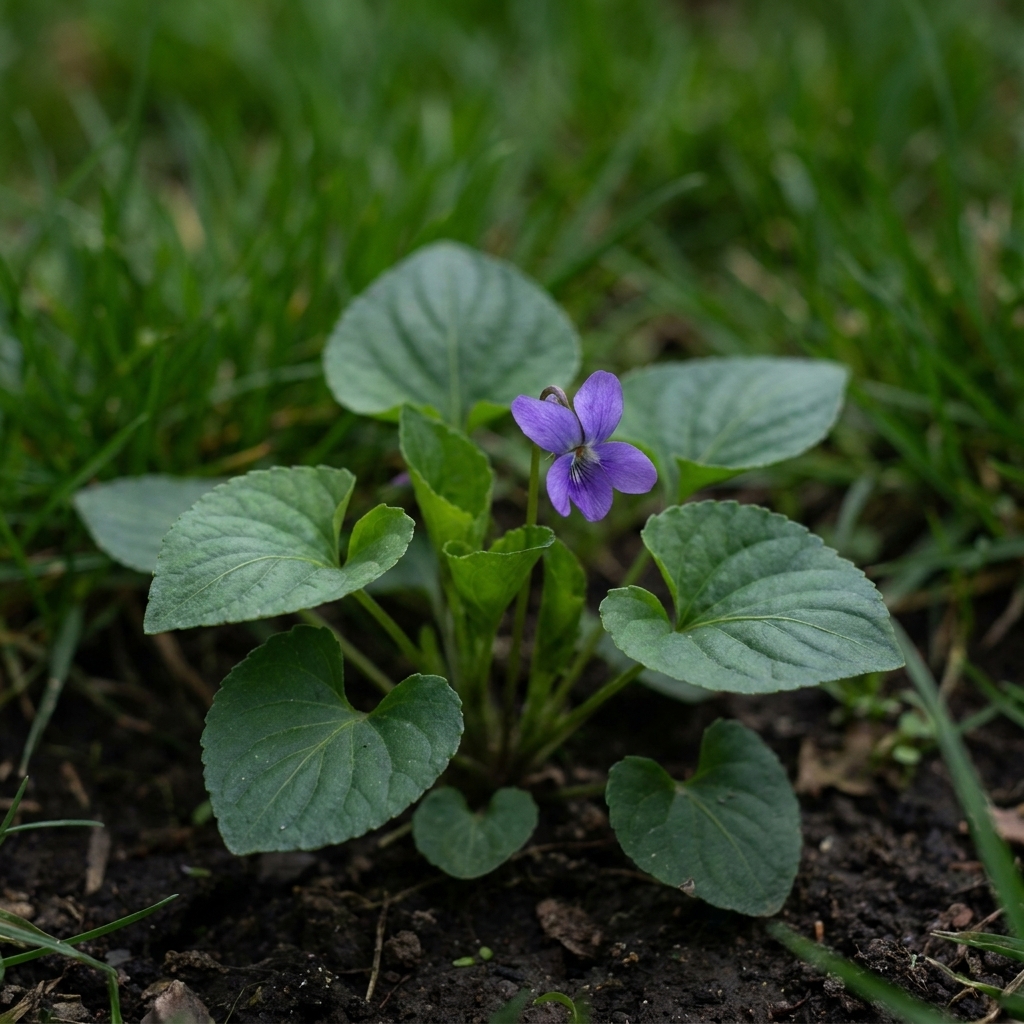
Quick ID: Heart-shaped leaves that can look thick and slightly waxy, plus small purple flowers (often in spring). Spreads in colonies and can be very persistent.
Why it shows up: Shade and moist soil. It also spreads through underground structures, so it can keep coming back even after a partial kill.
Control that works:
- Be patient: wild violet often requires multiple spot treatments across a season.
- Select a product labeled for wild violet. Triclopyr-based options are common, and fall treatments are often more effective.
- Prevention: increase turf density in shady areas with appropriate grass species and better cultural practices.
10) Oxalis (yellow woodsorrel)
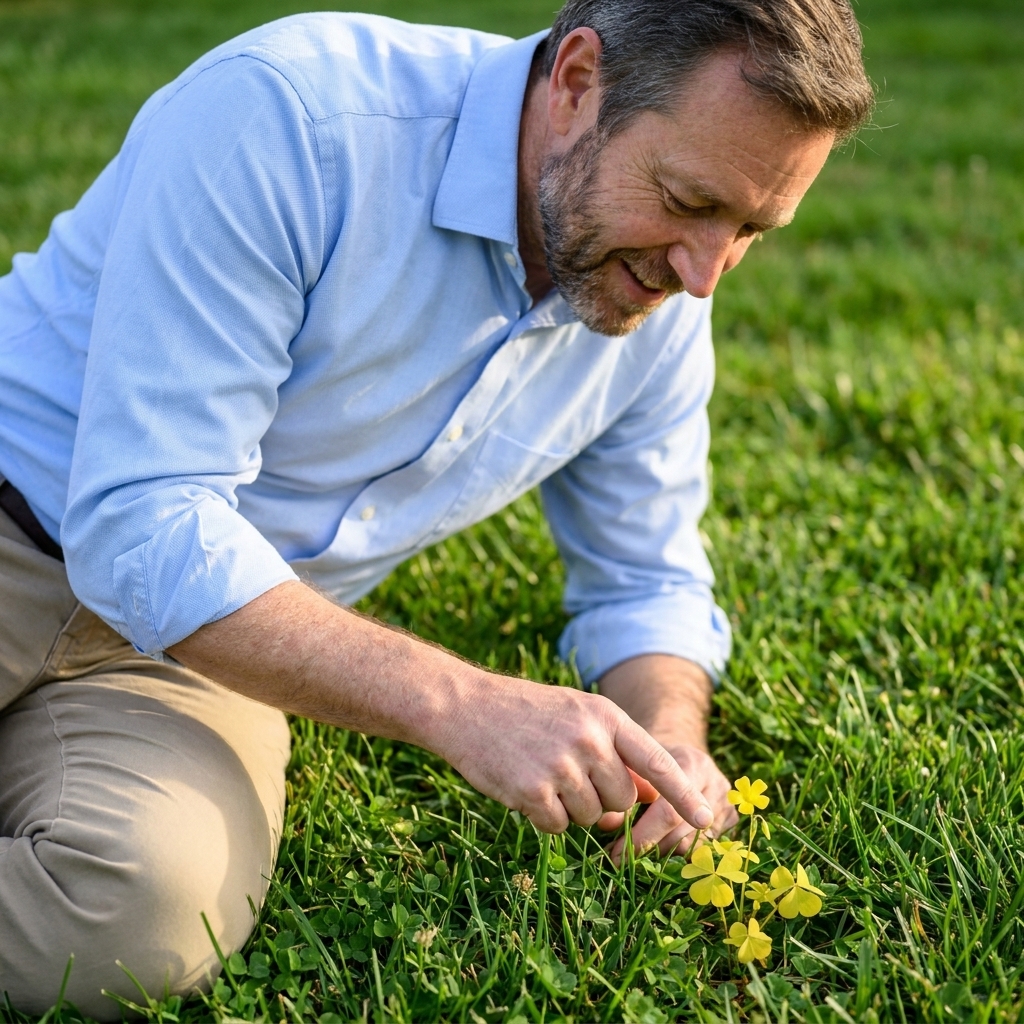
Quick ID: Three heart-shaped leaflets (often confused with clover) and small yellow flowers. Seed pods can pop and spread seed when disturbed.
Why it shows up: Thin turf, dry soil, and areas that get heat-reflected stress (near sidewalks and driveways).
Control that works:
- Hand pull carefully before it seeds, especially after watering.
- Spot treat with a selective broadleaf herbicide labeled for oxalis.
- Prevention: fix bare spots, keep mowing height up, and avoid letting stressed edges go dormant and thin.
Choosing a control method
Option A: Manual removal
Pulling works great for dandelion, small clover patches, chickweed, and young oxalis. The key is timing: pull after rain or irrigation so the roots come up cleaner.
Option B: Spot spraying
Spot treating keeps you from blanketing the yard and reduces stress on turf. For most broadleaf weeds, a selective broadleaf herbicide will do the heavy lifting. Use a pump sprayer and treat the weed, not the whole yard.
Option C: Blanket applications
If more than about a third of the lawn is weeds, a broadcast application may be warranted. Just remember: if the lawn is that weedy, you also need a turf recovery plan (fertility, mowing, and overseeding) or the weeds will simply fill back in.
Option D: Pre-emergent defense
Pre-emergents do not kill existing weeds. They prevent new seedlings, especially annual grassy weeds like crabgrass. If you only do one “next-level” thing this year, make it a properly timed pre-emergent, then keep the lawn thick.
Spraying and seeding cautions
- New seed and herbicides do not always mix: many weed killers have waiting periods before and after seeding. Check the label before you spray or overseed.
- Weather matters: spray on a mild, calm day, and avoid windy conditions or imminent rain unless the product label says it is rainfast by then.
Stop weeds from coming back
- Mow high and often enough: never remove more than one-third of the blade at a time.
- Sharpen your blade: ragged cuts stress grass and open the door to problems.
- Fix soil compaction: core aerate high-traffic zones, especially for plantain, goosegrass, and clover-prone lawns.
- Overseed strategically: cool-season lawns get their best results overseeding in early fall. Warm-season lawns often do best plugging, sodding, or timing seed to appropriate soil temperatures.
- Water with intention: early morning, deep soak, then wait until the lawn actually needs it again.
- Feed the grass: follow a seasonal fertilizer plan that matches your turf type and region.
If I could only give you one weed-prevention tip: raise your mowing height. Taller turf shades soil, and shaded soil is a terrible place for many weed seeds to germinate.
FAQ
What is the easiest way to identify a weed?
Start with category: broadleaf (wide leaves and flowers), grassy (looks like grass but grows differently), or sedge (often triangular stem, loves moisture). Then check growth habit: rosette, clump, mat, or creeping vine.
Should I pull weeds or spray them?
Pull small infestations. Spot spray when patches are spreading faster than you can pull. For nutsedge, pulling rarely solves it. A sedge-labeled product plus drainage fixes is the usual path.
When should I treat weeds, spring or fall?
For many broadleaf weeds, fall is the most effective time because plants move sugars (and herbicides) down into roots. Spring works too, especially on young weeds, but may require follow-up.
Will overseeding get rid of weeds?
Overseeding does not kill weeds, but it is one of the best ways to outcompete them. Pair overseeding with targeted weed control and good mowing, and the lawn usually starts winning.
A simple weekend plan
Walk the lawn with a phone and take close-up photos of the top 2 to 3 weeds you see most.
Spot treat broadleaf weeds on a mild day when the lawn is actively growing. Keep the sprayer off desirable plants.
Raise mowing height by one notch and keep it there for a month.
Schedule aeration if the lawn is compacted or if plantain and goosegrass are common.
Plan the next step: fall overseeding for cool-season lawns, or a turf thickening plan for warm-season lawns.
If you want, tell me your grass type (or your region if you are not sure) and which weeds you are seeing most. I can help you pick the most sensible control combo without overdoing it.