A clean mower blade cut keeps turf healthier and greener. Follow this safe, step-by-step guide to remove, sharpen, balance, and reinstall mower blades the ri...
lawn care
Lawn Mowing Heights by Grass Type
 Mark Vance
 is a former professional landscaper and the lead turf enthusiast at Yard Mentor. With over 15 years of experience in soil health, turf management, and residential landscaping, he is dedicated to helping homeowners transform frustrating dead patches into lush, healthy lawns. When he isn't testing new grass seed blends, you can find him enjoying a Saturday morning coffee looking out over his freshly striped yard.
Updated October 17, 2026
Created October 17, 2026
Mark Vance
Mark Vance is a former professional landscaper and the lead turf enthusiast at Yard Mentor. With over 15 years of experience in soil health, turf management, and residential landscaping, he is dedicated to helping homeowners transform frustrating dead patches into lush, healthy lawns. When he isn't testing new grass seed blends, you can find him enjoying a Saturday morning coffee looking out over his freshly striped yard.
Updated October 17, 2026
Created October 17, 2026
If I could change just one habit for most lawns I see, it would be mowing height. Not fertilizer. Not seed. Not some fancy “secret” product. Just cutting at the right height, at the right time, often enough that you are not scalping the plant every weekend.
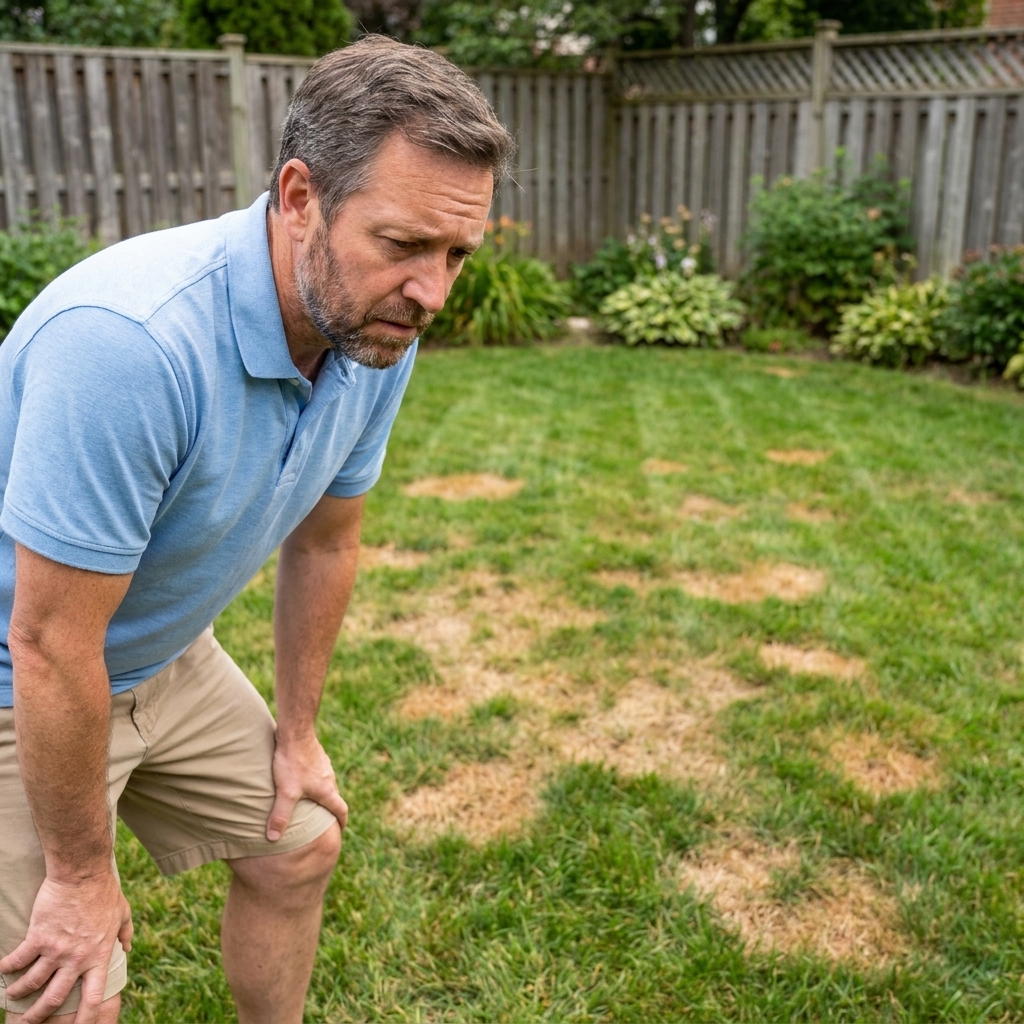
Grass is basically a solar panel with roots attached. Cut too low and you shrink the solar panel, which forces the plant to spend energy regrowing leaves instead of deepening roots. That is when weeds move in, brown patches show up, and summer stress hits harder than it needs to.
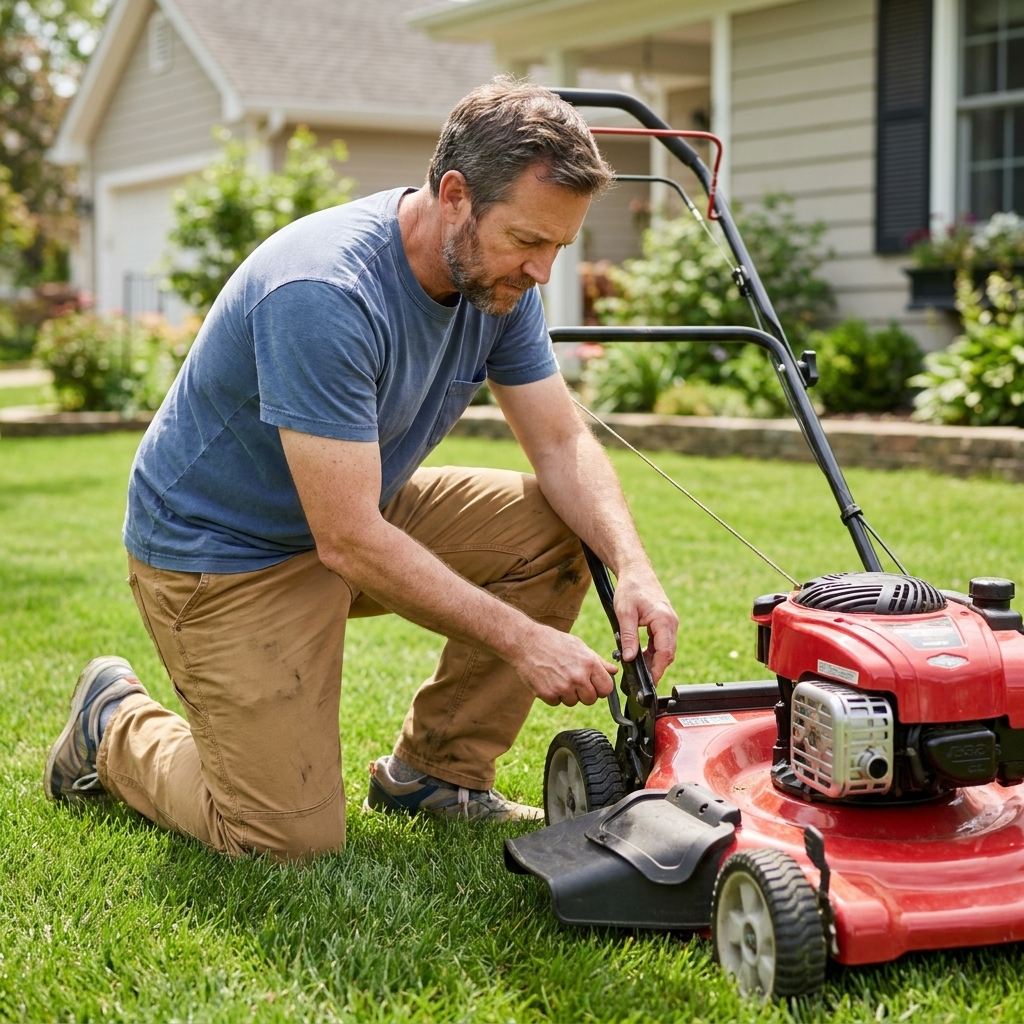
This guide gives you exact mowing heights by grass type, plus seasonal adjustments and a simple mowing frequency rule you can follow without getting lost in lawn jargon.
The two rules that fix most mowing problems
Rule 1: Follow the one-third rule
Never remove more than one-third of the grass blade in a single mow. If you do, you are stressing the plant and you will often see a color change within a day or two, especially in heat or drought.
- Example: If your lawn is 3 inches tall, mow it down to about 2 inches, not 1 inch.
- If you got behind, raise the mower and take it down in two mows spaced a few days apart.
Rule 2: Mow higher during stress
Heat, drought, shade, heavy foot traffic, and disease pressure all call for a higher cut. Taller grass shades the soil, cools the crown of the plant, and helps the turf compete with weeds.
One important exception: some warm-season lawns (especially bermuda and certain zoysias) are meant to be maintained on the shorter side. “Higher during stress” still applies, but it means raising within the recommended range, not mowing them like tall fescue.
Clippings: mulch them unless they are clumping
Healthy clippings recycle nutrients back into the lawn, including some nitrogen and potassium. Mulch mowing is great when you are cutting often enough that clippings disappear into the canopy.
- Bag only when the lawn is overgrown and clippings form piles, or if you are dealing with heavy seedheads or certain disease situations.
- If clumps happen, they usually mean you mowed too much off at once, the grass was wet, or the blade is dull.
Quick mower-height tip
Mower height settings are not standardized. “Setting 3” on one mower is not “setting 3” on another.
To verify your actual cut height:
- Set the mower where you think it should be.
- Mow a small strip on flat ground.
- Measure the remaining blade height with a ruler in a few spots.
- Adjust and recheck until you hit your target.
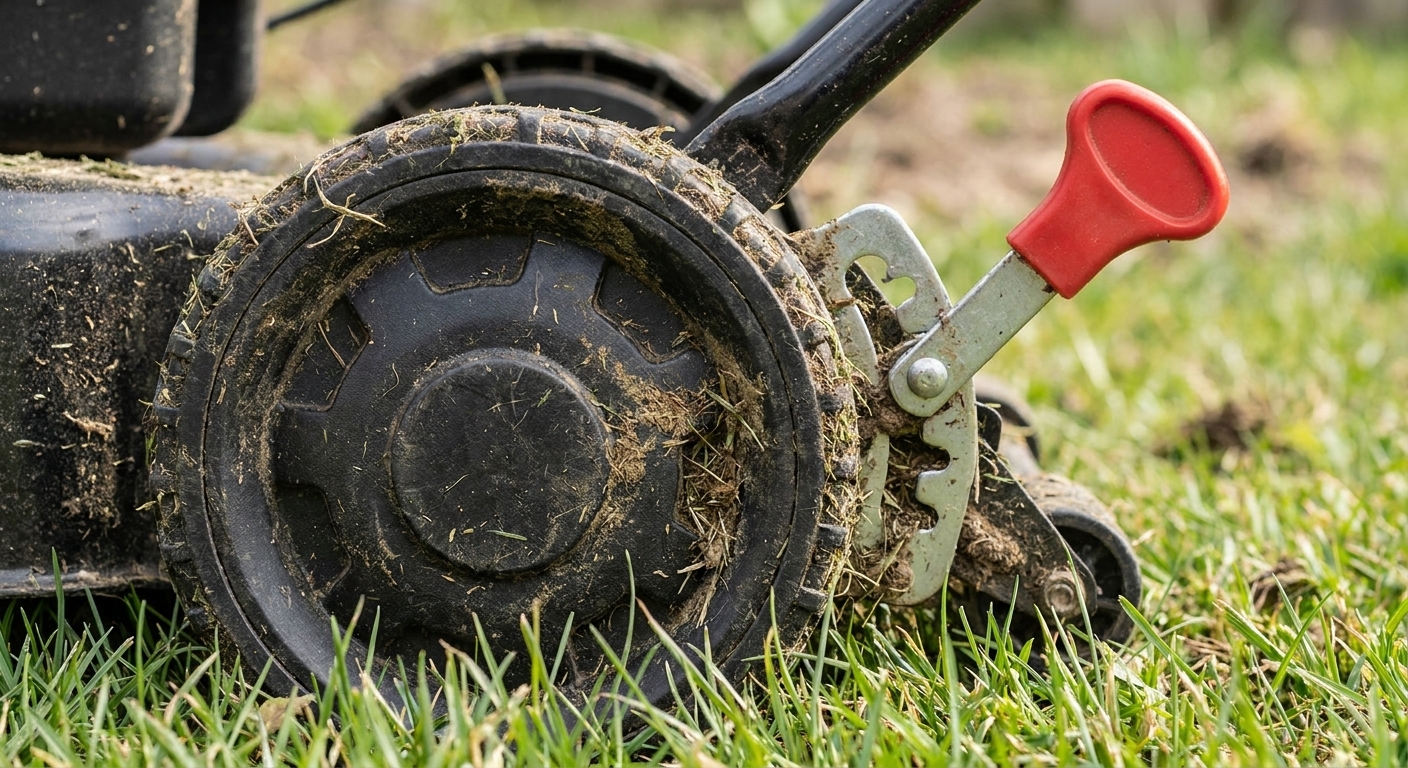
Equipment reality check: most rotary mowers struggle to cut cleanly below about 1.5 inches, especially on uneven ground. If you try to force a very low cut with the wrong mower (or on a bumpy yard), scalping is almost guaranteed.
Cool-season grasses
Cool-season lawns thrive in spring and fall, then struggle more in summer heat. The right mowing height helps them keep roots as deep as possible before summer arrives.
Kentucky bluegrass (KBG)
- Ideal height: 2.5 to 3.5 inches
- Spring: 2.5 to 3 inches (helps density without stressing)
- Summer: 3 to 3.5 inches (higher for heat and drought tolerance)
- Fall: 2.5 to 3 inches; keep it consistent for overseeding season
- How often to mow: Typically every 5 to 7 days in peak growth, every 7 to 10 days in slower periods
Neighbor tip: KBG spreads by rhizomes, so it can recover from damage, but it still hates scalping. If you want that “striped ballpark” look, you will get it more reliably at 3 inches than at 2 inches.
Perennial ryegrass
- Ideal height: 2 to 3 inches
- Spring: 2 to 2.5 inches
- Summer: 2.5 to 3 inches
- Fall: 2 to 2.5 inches
- How often to mow: Every 4 to 7 days during fast growth (rye can surge after fertilizer and rain)
Ryegrass looks great when it is mowed often. Let it get tall and you will notice it gets “leggy” and can lay over.
Tall fescue (turf-type)
- Ideal height: 3 to 4 inches
- Spring: 3 to 3.5 inches
- Summer: 3.5 to 4 inches (this is where fescue shines)
- Fall: 3 to 3.5 inches
- How often to mow: Every 5 to 7 days in spring and fall; 7 to 10 days in summer if growth slows
If you remember one thing about tall fescue: cutting it too low is a fast path to thin turf and summer brown-out. Taller fescue builds deeper roots and shades out a lot of weed pressure.
Fine fescues (chewings, creeping red, hard fescue)
- Ideal height: 2.5 to 4 inches
- Spring: 3 inches
- Summer: 3.5 to 4 inches (especially in shade)
- Fall: 3 inches
- How often to mow: Every 7 to 10 days (fine fescue does not love being cut constantly)
Fine fescues are a great “low-input” choice and handle shade well. They tend to look best when you mow a bit higher and do not chase a super short, golf-course cut.
Cool-season mixes
Most Midwest and Northeast lawns are blends. In that case, mow for the grass that prefers the highest setting in the mix.
- Typical safe range for mixed cool-season lawns: 3 to 3.5 inches
Warm-season grasses
Warm-season grasses love heat and grow aggressively in summer. The big mistake I see is mowing them like cool-season lawns, usually too high for the low-cut types and too low for St. Augustine.
Bermudagrass (common and hybrid)
- Ideal height: 0.5 to 1.5 inches with a reel mower or very frequent, level mowing; 1 to 2 inches is a more realistic target for many common bermuda home lawns cut with a rotary mower
- Spring green-up: Start around 1 to 1.5 inches, then lower gradually if you want a tighter look
- Peak summer: 0.5 to 1.5 inches (reel) or 1 to 2 inches (rotary), depending on your lawn and how often you mow
- Early fall: Raise slightly (about 0.25 to 0.5 inch) as growth slows
- How often to mow: Every 3 to 7 days in peak growth; bermuda rewards frequent mowing
Important: if you cut bermuda low, you must cut it often. Let it get tall and then chop it down and you get scalping, brown stems, and weeks of ugly recovery.
Zoysiagrass
- Ideal height: 1 to 2.5 inches
- Spring: 1.5 to 2 inches
- Summer: 1 to 2 inches for dense turf; up to 2.5 inches in partial shade
- Fall: 1.5 to 2 inches
- How often to mow: Every 5 to 10 days (zoysia is dense and slow-growing compared to bermuda)
Zoysia cultivars vary. Some finer-bladed types can be maintained lower with the right equipment, while others look better closer to 2 inches. The safest move is to start near 2 inches and adjust based on how your lawn responds.
Zoysia’s density is a weed-fighter, but it also means dull blades tear it up. Keep your blade sharp and do not mow when it is wet.
St. Augustinegrass
- Ideal height: 2.5 to 4 inches
- Spring: 3 to 4 inches
- Summer: 3.5 to 4 inches (especially in full sun heat)
- Fall: 3 to 3.5 inches
- How often to mow: Every 5 to 7 days in summer growth; 7 to 14 days as it slows
St. Augustine is one of the easiest grasses to scalp by accident. Keep it tall, keep it fed appropriately, and it will shade its own soil like a living mulch.
Quick cultivar note: standard cultivars are commonly kept taller (often 3.5 to 4 inches). Some dwarf types can handle the lower end of the range, but they still hate sudden scalp cuts.
Centipedegrass
- Ideal height: typically 1.5 to 2 inches; up to 2.5 inches in shade or during stress
- Spring: 2 inches
- Summer: 1.5 to 2 inches (raise a bit during drought)
- Fall: 2 inches
- How often to mow: Every 7 to 14 days (centipede is slower and prefers low inputs)
Centipede likes to be left alone. Over-fertilizing and mowing too low is where people get into trouble.
Bahiagrass
- Ideal height: 3 to 4 inches
- Spring: 3.5 to 4 inches
- Summer: 3 to 4 inches
- Fall: 3.5 to 4 inches
- How often to mow: Every 7 to 14 days (or when seedheads annoy you)
Bahiagrass is built for toughness, not perfection. Keeping it a bit taller helps it stay thick and reduces weed openings.
Buffalograss
- Ideal height: 2.5 to 4 inches
- Spring: 3 inches
- Summer: 3 to 4 inches
- Fall: 3 inches
- How often to mow: Every 10 to 21 days (it is a low-mow-frequency grass)
If you are aiming for a lower-maintenance lawn, buffalograss looks best when you do not manicure it weekly.
Seasonal mowing plan
Spring: set your rhythm
Spring growth is fast. Your goal is consistency. Mow often enough to obey the one-third rule and avoid letting the lawn get puffy and uneven.
- Cool-season lawns: start in the recommended spring range, usually 2.5 to 3.5 inches depending on grass type.
- Warm-season lawns: as they green up, mow frequently and avoid taking too much off at once.
Summer: adjust for stress
For most homeowners, summer is when mowing height makes or breaks the yard. Higher mowing protects crowns, shades soil, and reduces evaporation. For warm-season lawns that prefer a shorter cut, “higher” simply means bumping up within their range when conditions get rough.
- Cool-season lawns: raise to the top end of the range.
- Warm-season lawns: stay in-range, but raise slightly during drought or heat stress.
Fall: keep it steady
Fall is repair season for cool-season grasses. Maintain a steady height that supports photosynthesis and does not smother new seed if you are overseeding.
- For overseeding: mow existing turf a bit shorter than usual just before seeding, then return to normal recommended height once seedlings are established.
Late fall: avoid extremes
A common myth is that you should mow very short right before winter. In reality, you want to avoid extremes. Too tall can mat under snow, too short reduces energy storage.
- Cool-season lawns: in heavy-snow areas, many homeowners step the height down slightly for the final mow (often about 0.5 to 1 inch lower than normal) to reduce matting risk. Do not scalp.
- Warm-season lawns: follow your normal range until dormancy, then stop mowing when growth stops.
How often to mow
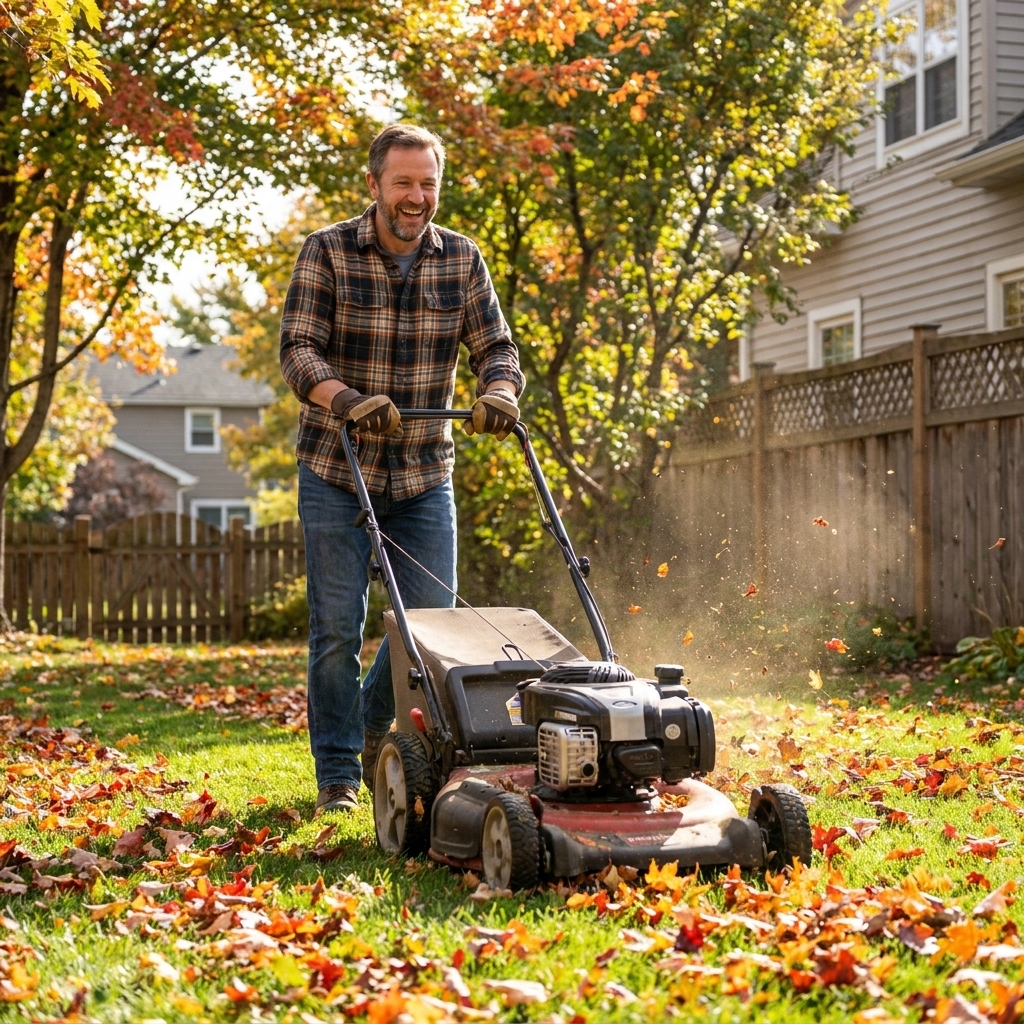
Instead of guessing a weekly schedule, let the grass tell you. Frequency depends on growth, and growth depends on rain, temperature, fertility, and sunlight.
- Pick your target height from the grass-type sections above.
- Mow when the lawn reaches about 30 to 40 percent taller than that (this keeps you close to the one-third rule).
- Mow back down to your target height.
Example: If your target is 3 inches, mow when it hits about 4 to 4.25 inches.
During spring flush this may mean mowing twice a week. During summer stress it might be every 10 days. Both can be right if you are not taking too much off at once.
Cutting height and weeds
Most lawn weeds love sunlight hitting bare soil. Taller grass helps in three big ways:
- Shade: Less light reaches weed seeds trying to germinate.
- Density: A fuller canopy leaves fewer openings for weeds to establish.
- Root depth: Deeper roots tolerate heat and drought better, so turf stays competitive when weeds typically surge.
If you are battling crabgrass in a cool-season lawn, raising mowing height into the 3 to 3.5 inch range is one of the simplest cultural fixes you can make.
Common mistakes
Scalping after a busy week
Fix: Raise the mower and mow more often for a couple weeks. If needed, mow in two passes separated by a few days.
Mowing too low in shade
Fix: Raise height by 0.5 to 1 inch, reduce traffic, and consider a shade-tolerant seed blend if you have a cool-season lawn.
Dull blades tearing the grass
Torn tips turn brown, making the whole lawn look stressed even when it is not.
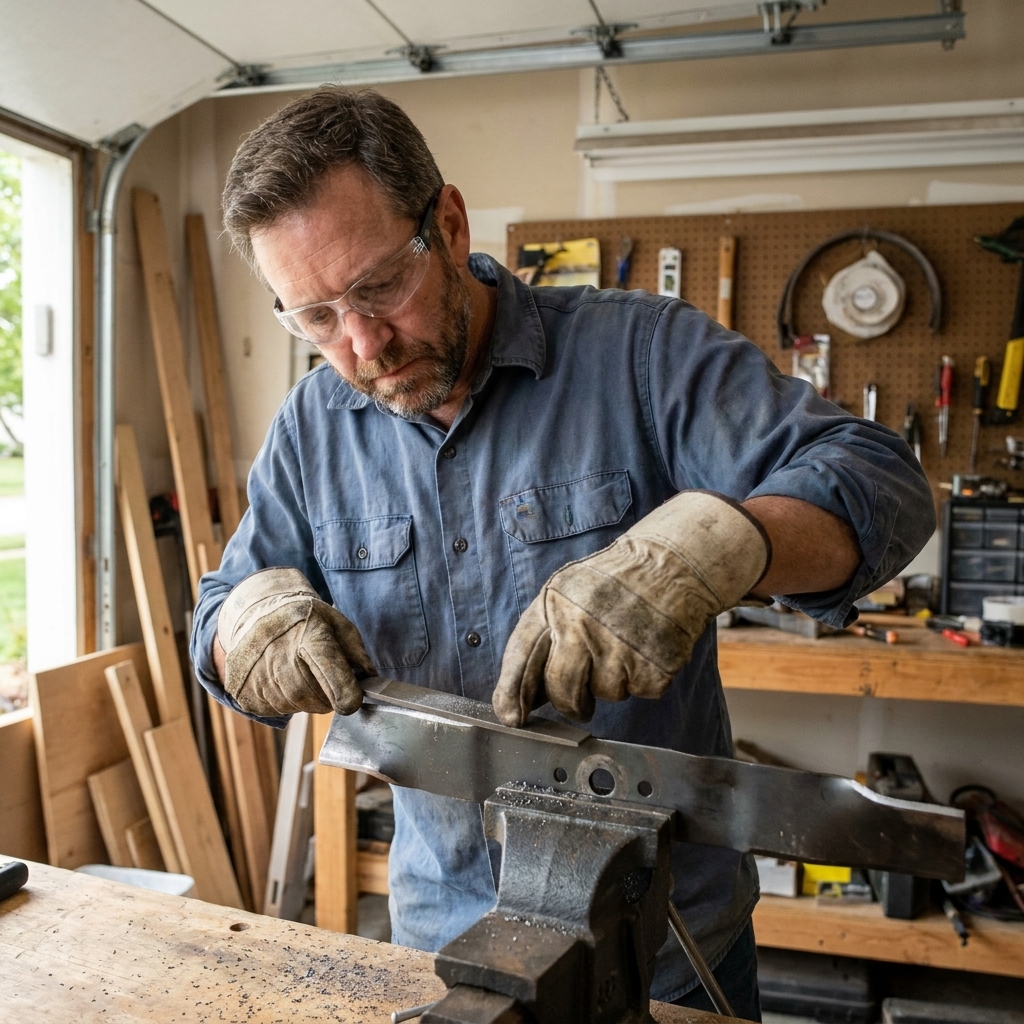
Fix: Sharpen the blade every 20 to 25 mowing hours, or anytime you see frayed leaf tips.
Cutting warm-season lawns at the wrong height
Fix: Confirm your grass type and reset your target. Bermuda and many zoysias usually look best lower than most homeowners expect. St. Augustine needs to stay tall.
Always mowing the same direction
Fix: Alternate your mowing pattern. It helps prevent ruts, reduces leaning, and can improve how evenly the lawn stands up, especially on bermuda and zoysia.
Letting warm-season grass get too tall
Fix: Do not “let it grow” and then chop it down. On bermuda and zoysia, extra height can turn into puffiness, more visible stems, and a scalped look on the next cut. Keep it in-range and mow often enough to stay there.
Grass type cheat sheet
If you just want the targets, here is a quick reference. Use the higher end of the range in summer stress.
- Kentucky bluegrass: 2.5 to 3.5 in
- Perennial ryegrass: 2 to 3 in
- Tall fescue: 3 to 4 in
- Fine fescue: 2.5 to 4 in
- Bermudagrass: 0.5 to 1.5 in (reel); 1 to 2 in (typical rotary home lawns)
- Zoysiagrass: 1 to 2.5 in
- St. Augustinegrass: 2.5 to 4 in
- Centipedegrass: 1.5 to 2 in (up to 2.5 in in shade)
- Bahiagrass: 3 to 4 in
- Buffalograss: 2.5 to 4 in
FAQ
What if I do not know my grass type?
Start with your region and what you observe. Cool-season grasses stay greener in spring and fall and struggle more in high summer heat. Warm-season grasses love summer and go tan or brown in cool weather dormancy. If you are still unsure, take a close photo of the grass blades and any runners, then compare it to your state extension service photos or bring a sample to a local garden center.
Should I mow shorter to reduce mowing frequency?
It feels logical, but it usually backfires. Short mowing weakens roots, increases heat stress, and invites weeds. You might mow less often for a month, then spend the rest of the season trying to fix thin turf.
Is it okay to mow when the grass is wet?
When you can, wait for it to dry. Wet mowing causes clumping, uneven cuts, and can spread certain diseases. If you must mow, raise the deck, slow down, and plan to clean clippings off hard surfaces afterward.
Do I change mowing height after overseeding?
Yes. Before overseeding, it helps to mow the existing lawn a bit shorter than normal to let light hit the seed. After germination, return to your normal recommended height once the new grass can handle mowing. As a rule, do not mow new seedlings until they are about one-third taller than your intended cut height.
The takeaway
If you want a thicker lawn with fewer weeds, set your mowing height based on your grass type, then protect the plant during stress by adjusting within the recommended range and following the one-third rule. It is not flashy, but it is one of the most powerful, budget-friendly upgrades you can make to your lawn.