A turf pro’s take on patch kits vs. DIY: cost, germination, watering, soil contact, timing, and the best method for small spots, big bare areas, and high-t...
lawn care
Best Grass Seed for High-Traffic Lawn Repair
 Mark Vance
 is a former professional landscaper and the lead turf enthusiast at Yard Mentor. With over 15 years of experience in soil health, turf management, and residential landscaping, he is dedicated to helping homeowners transform frustrating dead patches into lush, healthy lawns. When he isn't testing new grass seed blends, you can find him enjoying a Saturday morning coffee looking out over his freshly striped yard.
Updated October 17, 2026
Created October 17, 2026
Mark Vance
Mark Vance is a former professional landscaper and the lead turf enthusiast at Yard Mentor. With over 15 years of experience in soil health, turf management, and residential landscaping, he is dedicated to helping homeowners transform frustrating dead patches into lush, healthy lawns. When he isn't testing new grass seed blends, you can find him enjoying a Saturday morning coffee looking out over his freshly striped yard.
Updated October 17, 2026
Created October 17, 2026
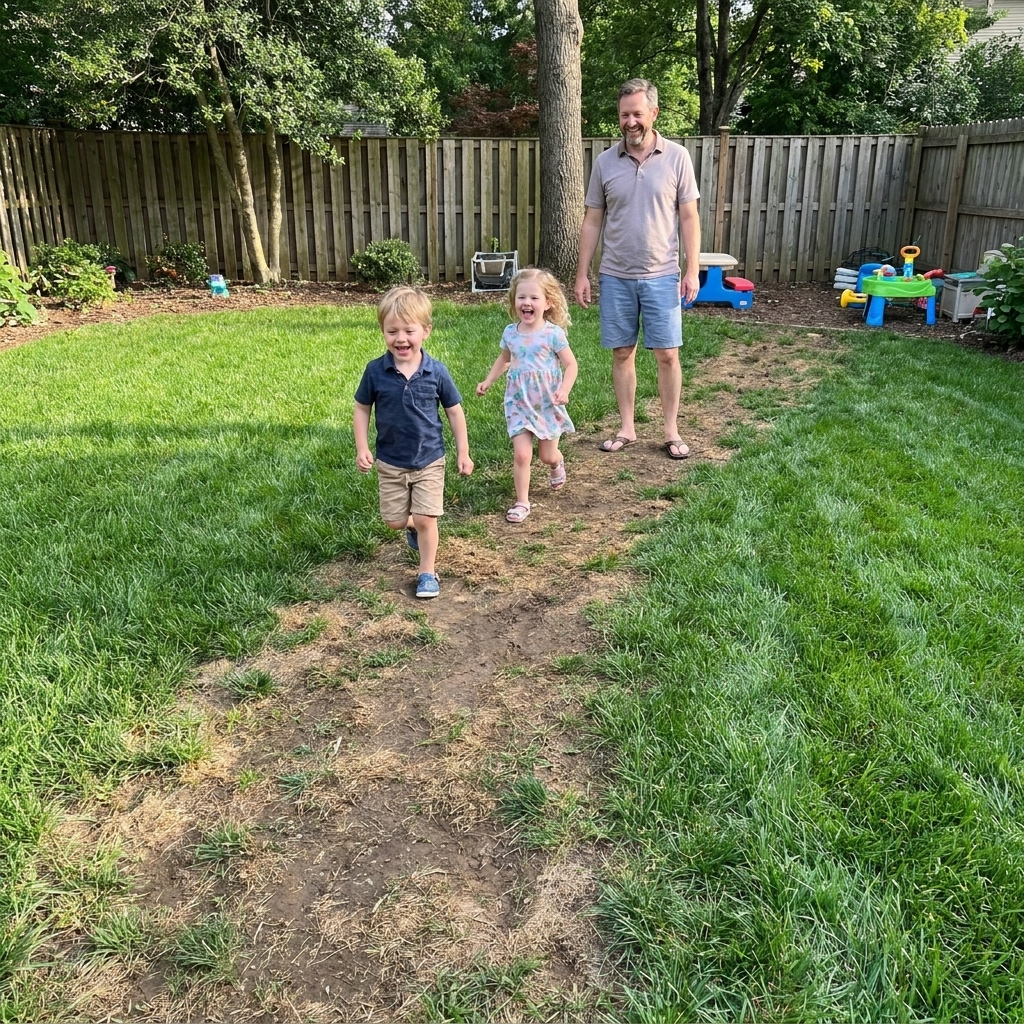
If your lawn has a “soccer goal mouth” that never grows in, a muddy shortcut to the garage, or a dog track that looks like a tiny racetrack, you are not alone. High-traffic lawns fail for one simple reason: grass plants get crushed faster than they can regrow.
The fix is not just “any seed.” The best results come from matching the right grass type to your climate and your traffic pattern, then planting it in a way that protects it long enough to root.
What makes grass handle traffic
When I’m choosing seed for a busy yard, I’m looking for a few traits that matter more than marketing labels.
- Wear tolerance: how well the grass blades and crowns handle being stepped on repeatedly. Crown damage is usually what kills the plant.
- Recovery: how quickly it fills back in after damage. Grasses that spread by rhizomes or stolons usually win here.
- Germination speed: faster sprouting means less time for seed to wash away, dry out, or get eaten.
- Rooting strength: deeper roots hold soil together and help a “path” area resist turning into mud.
- Season fit: cool-season grasses dominate in northern lawns, warm-season grasses dominate in southern lawns. Forcing the wrong type almost always creates a weak spot.
Best seed for traffic (cool-season)
If you’re in the Midwest, Northeast, Pacific Northwest, or higher elevations where lawns stay green through spring and fall, you’re generally in cool-season territory. These are my go-to options.
Turf-type tall fescue (TTTF)
Best for: family yards, dog traffic, sunny to part-shade areas, drought-prone lawns
Turf-type tall fescue is the “work boot” grass. It handles wear well because it grows in sturdy bunches with deeper roots than many other cool-season grasses. It is also forgiving if your watering is not perfect.
- Strength: excellent durability and drought tolerance
- Tradeoff: it does not spread aggressively, so worn spots need overseeding to fill back in
- My blend tip: choose modern “turf-type” varieties, not old pasture tall fescue
Perennial ryegrass
Best for: fast patching, play areas you need green quickly, overseeding before a party or season
Perennial ryegrass is the sprinter. In good conditions, it often germinates in about 5 to 10 days, especially when soil temps are roughly 50 to 65°F and the seed stays consistently moist. That speed makes it incredibly useful for stabilizing soil in high-traffic repair zones.
- Strength: very fast germination and good wear tolerance
- Tradeoff: can be less heat tolerant than tall fescue in hot summers, and some lawns need reseeding over time
- My blend tip: use it as 10 to 30 percent of a mix to get quick cover while slower grasses establish
Kentucky bluegrass (KBG)
Best for: lawns that get torn up but have time to heal, sunny yards, homeowners who want self-repair
Kentucky bluegrass is the classic “fills itself in” grass because it spreads by rhizomes. In high-traffic zones, that spreading habit matters. If the crown survives, it can knit back together over time.
- Strength: strong recovery and a dense, carpet-like lawn when established
- Tradeoff: slow germination, typically 14 to 30 days, and it needs consistent moisture during establishment
- My blend tip: pair KBG with perennial ryegrass for quicker early cover
Fine fescues (use strategically)
Best for: light to moderate traffic in shade, low-input side yards
Fine fescues can be great in shade, but I do not lean on them for heavy kid and pet traffic. If your high-traffic spot is also shaded, a mix that includes fine fescue can help, but keep expectations realistic.
Best seed for traffic (warm-season)
If your lawn thrives in summer heat and tends to go tan or dormant in winter, you’re likely working with warm-season turf. Traffic repair can be excellent, but timing matters more. Warm-season grasses want warm soil, usually 65 to 70°F and rising.
Bermudagrass
Best for: the toughest play zones, full sun, dog runs, athletic-yard conditions
Bermuda is one of the best traffic grasses on the planet once it’s established. It spreads aggressively and recovers fast in heat.
- Strength: outstanding wear tolerance and recovery
- Tradeoff: needs sun, can creep into beds, and can look rough in winter dormancy
- Seed note: seeded bermuda is common, but do not expect overnight results. Germination is often around 7 to 21 days depending on soil warmth and moisture. Many premium hybrid bermudas are not available as seed and are typically installed as sod or sprigs.
Zoysiagrass (seeded options are limited)
Best for: moderate to heavy traffic, heat, a denser “cushion” feel underfoot
Zoysia forms a tight, durable turf that holds up well to activity. The catch is establishment speed. Only some cultivars are sold as seed, and many zoysia lawns are started from sod or plugs because seed is slower and can be finicky.
- Strength: dense turf and good wear tolerance
- Tradeoff: slow establishment, especially from seed, and it needs warmth
Bahia grass
Best for: sandy soils, low-maintenance areas, sunny yards in warmer regions
Bahia can handle tough conditions and moderate foot traffic, especially where other grasses struggle in poor soils. Under constant, concentrated wear it can still thin out, but for utility areas it is dependable.
My favorite approach: use a blend
High-traffic repair is one of the best places to use a blend because you are hedging your bets. One grass brings speed, another brings toughness, another brings long-term recovery.
Blend ideas that work
- Cool-season sunny traffic: turf-type tall fescue + perennial ryegrass, with a little Kentucky bluegrass for recovery over time
- Cool-season “beaten path” areas: heavier on perennial ryegrass for quick cover, plus tall fescue for deep roots
- Cool-season shade traffic: tall fescue + shade-tolerant fine fescues, accepting that shade plus traffic is always a challenge
When you shop, look for seed that lists named cultivars (not just “KBG” or “ryegrass”), and avoid mixes that are padded with cheap annual ryegrass unless you specifically need temporary cover.

Traffic management comes first
I love a good seed mix, but I’ll be honest: some routes in a yard are simply too popular for grass to win long-term.
- Move the path: shift a gate opening, add a small fence opening somewhere else, or block the “shortcut” with a planter for a month.
- Create a runway: stepping stones, pavers, or a narrow gravel lane in the true travel line can save you from reseeding the same strip forever.
- Give dogs a dedicated lane: mulch, gravel, or artificial turf along the fence can be a sanity saver if you have a committed dog track.
- Rotate play: if kids always wear one corner down, moving goals and sprinklers around helps.
Seed works best when you are not asking it to survive constant pounding from day one.
Pick seed for your traffic problem
Dog runs
Most dog “paths” fail from a mix of wear and urine stress. For cool-season lawns, I usually start with turf-type tall fescue as the backbone, then add perennial ryegrass for speed. In warm-season lawns with sun, bermuda is hard to beat.
If you can reroute traffic even slightly, do it. A simple mulch or paver lane along the fence can save you years of reseeding.
Kids playing soccer and tag
In cool-season areas, a TTTF + KBG + perennial ryegrass blend is my favorite. In warm-season areas, bermuda is the play-lawn king if you have enough sun.
The shortcut path
If everyone takes the same line, grass will always struggle. Seed can help, but consider adding stepping stones or a small gravel strip. If you want grass anyway, prioritize fast germination (ryegrass in cool-season, bermuda in warm-season) and commit to keeping people off it until it is established.
How to repair spots so seed survives
This is the part most people skip. Seed choice matters, but installation is what turns seed into grass.
1) Fix the soil
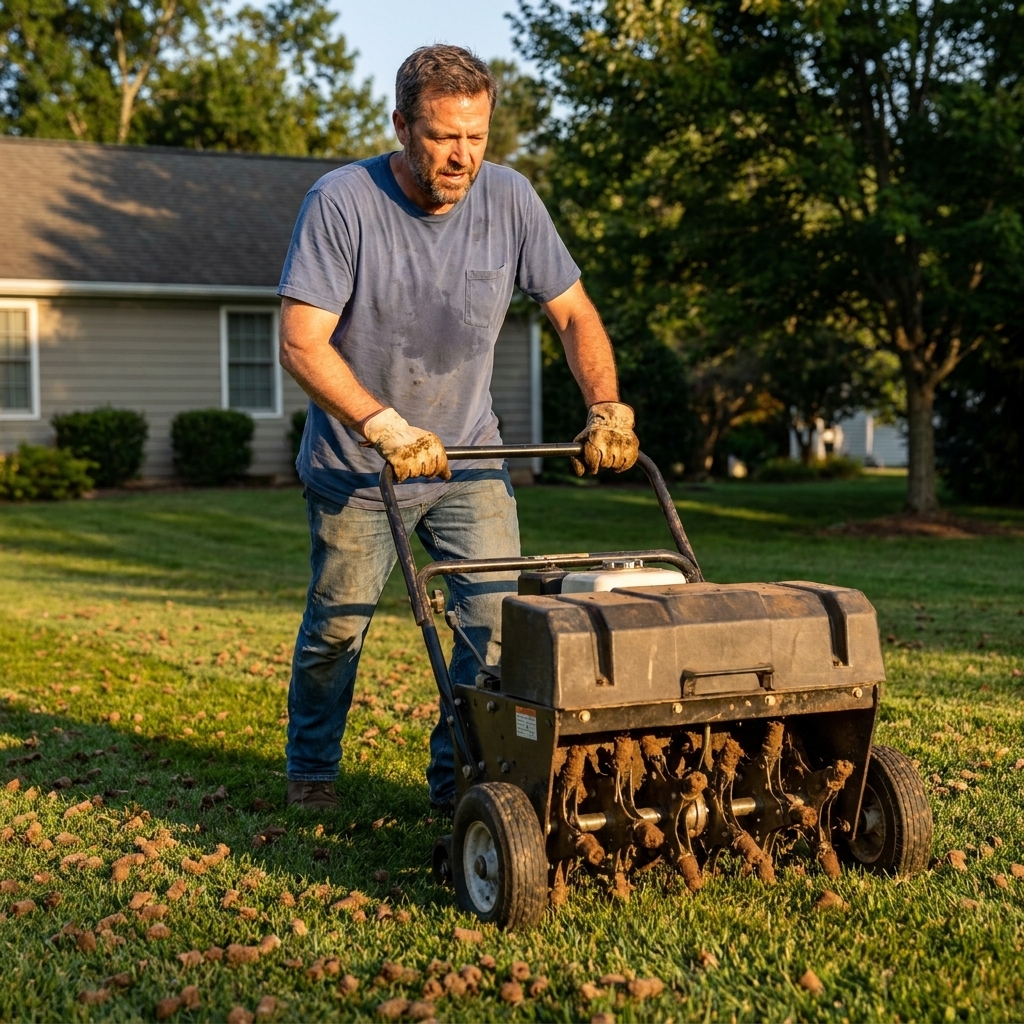
High-traffic areas often have compacted soil, and compacted soil is basically a brick with a green paint job. Also, if your area stays soggy or muddy, compaction might not be the only issue. Poor drainage, downspouts dumping water, or a low spot in the yard can keep grass from ever getting established.
- Loosen the top 1 to 2 inches with a hand cultivator or metal rake.
- If the area is hard as concrete, core-aerate nearby and work some compost into the top layer.
- Topdress with a thin layer of compost or screened topsoil so seed has something to nest into.
2) Seed a little heavier
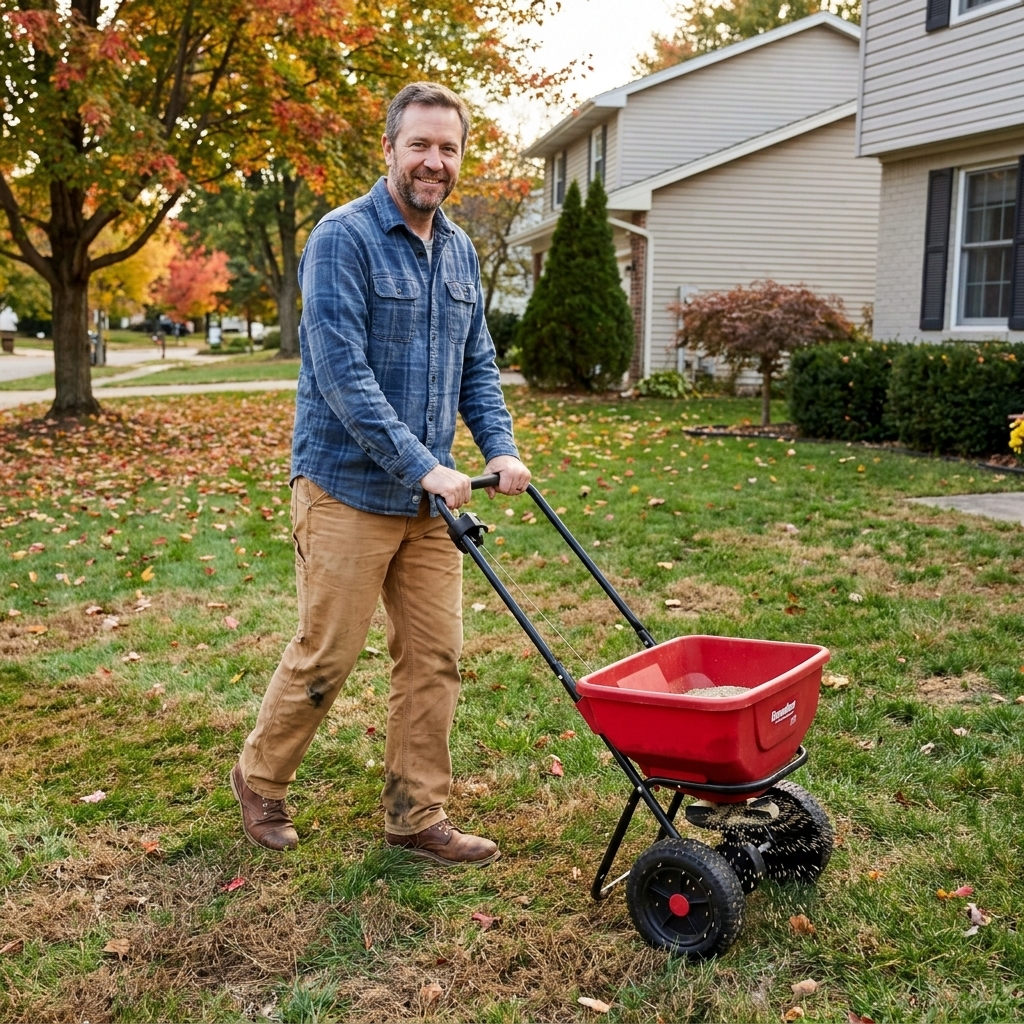
For repair patches, I like to seed about 10 to 25 percent heavier than the bag’s full-lawn rate. More than that can backfire because seedlings crowd each other and stay weak.
3) Get seed to soil contact
Rake the seed in lightly. Then press it down with your shoes, a lawn roller, or even a flat shovel used carefully. If the seed is sitting on top like bird feed, it will fail.
4) Cover and protect
In traffic zones, a light cover makes a huge difference.
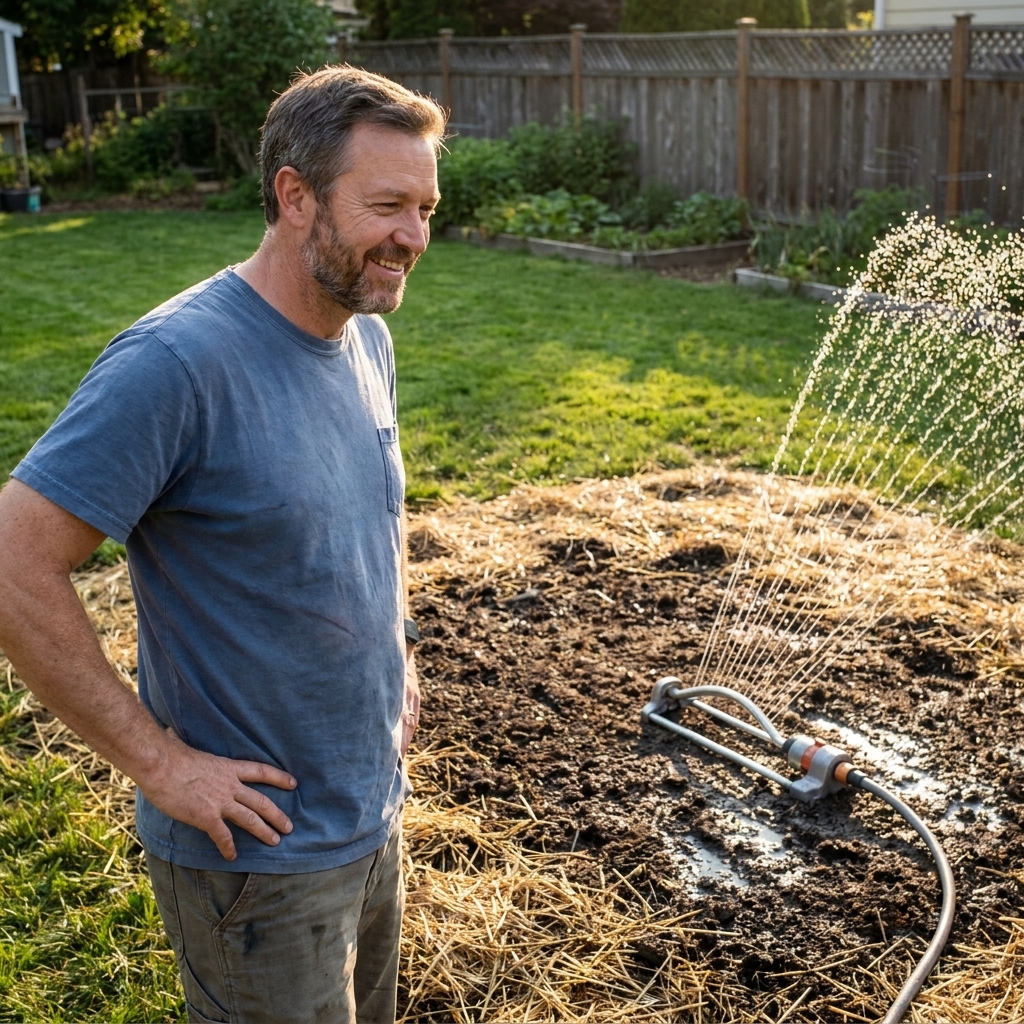
- Use clean straw sparingly, or a seed-starting mulch product.
- For tiny patches, burlap can work well, just remove it once sprouts are established.
- Consider temporary fencing or a few stakes and string to keep feet off new seedlings.
5) Water like you mean it
Keep the top layer consistently moist until germination, then gradually water deeper and less often. Most repair jobs fail because the surface dries out for a day or two and the seedlings never recover.
6) Feed and mow smart
If you have results from a soil test, follow them. If you do not, a light starter fertilizer at seeding can help, but do not overdo nitrogen in a fragile new patch.
Hold off on traffic until the new grass has been mowed 2 to 3 times. For the first mow, make sure the ground is firm (not muddy), use a sharp blade, and avoid scalping. New grass is tougher when you keep it a bit higher.
Timing
Cool-season lawns
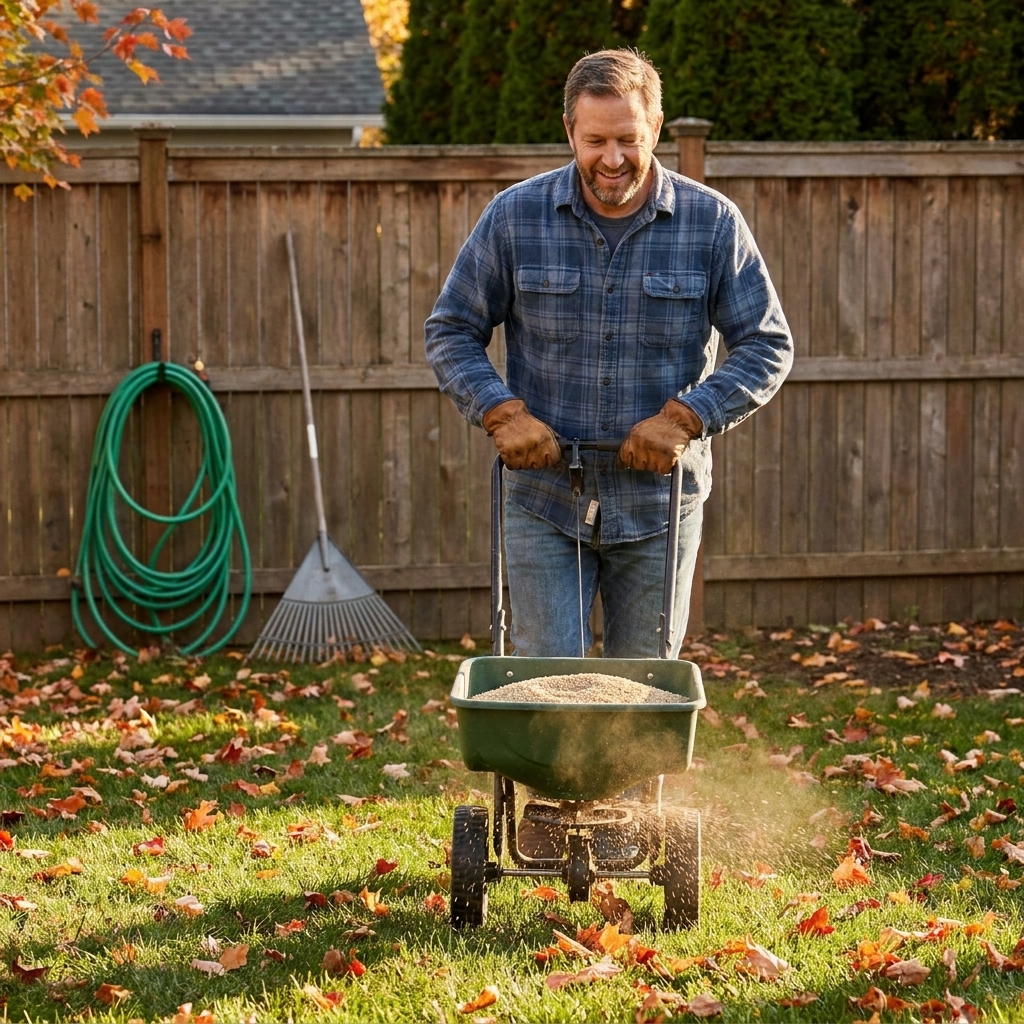
Early fall is the sweet spot: warm soil, cooler air, fewer weeds, and lots of time to root before summer stress. Spring can work too, but you will fight summer heat sooner. A practical cue is to seed when soil temps are roughly 50 to 65°F and trending cooler.
Warm-season lawns
Seed when the lawn is actively growing and soil is warm, typically late spring through summer. Planting too early leads to slow germination and more washouts. Aim for soil temps consistently around 65 to 70°F or warmer.
Quick buying checklist
- Choose the right season type: cool-season vs warm-season for your region.
- Look for “turf-type” tall fescue if you want durability in cool-season lawns.
- Use perennial ryegrass for speed in cool-season repairs.
- Include Kentucky bluegrass if you want self-repair and can wait for it to establish.
- Avoid high weed seed content: quality bags list purity and weed seed percentage.
- Skip bargain “contractor mix” for front-yard repairs. Those mixes are often cheap for a reason.
FAQ
What is the toughest grass seed for heavy foot traffic?
For cool-season lawns, turf-type tall fescue is my go-to for toughness, often blended with perennial ryegrass for quick cover. For warm-season lawns in full sun, bermudagrass is one of the toughest options available.
What grass seed fills bare spots the fastest?
In cool-season lawns, perennial ryegrass is typically the fastest to germinate, often around 5 to 10 days in good conditions. Kentucky bluegrass is much slower, usually 14 to 30 days. In warm-season lawns, seeded bermuda can germinate in roughly 7 to 21 days when soil is truly warm.
Should I use sod instead of seed for high-traffic areas?
If the area is constantly used and you cannot block it off for a few weeks, sod can be a better bet. Seed needs protection while it germinates and roots. A lot of homeowners do a hybrid approach: seed most areas, then sod the narrow choke points like gate entrances.
Why does my repaired patch die again in the same spot?
Usually it is one of these: compacted soil, shade plus traffic, not enough water during establishment, or the path is simply taking more wear than grass can handle. Persistent mud can also be a drainage issue. Sometimes the best “repair” is a walkway, stepping stones, or a mulched dog run that saves you repeated frustration.
My simple recommendation
If you want one practical starting point for a busy cool-season yard, I would pick a quality turf-type tall fescue blend with some perennial ryegrass. You will get toughness plus faster germination, and it holds up well to real life.
If you are in warm-season country with full sun, bermuda is the traffic solution I trust most for long-term recovery.
And no matter what seed you choose, give it two gifts: loosened soil and enough time without feet to establish. If you can keep traffic off until after a couple mowings, you are doing it right.