A step-by-step fall overseeding guide with timing, seed selection, watering, and weed-control do's and don'ts to fill thin spots before frost and get a thick...
lawn care
Dethatching vs. Aerating: What Your Lawn Needs This Fall
 Mark Vance
 is a former professional landscaper and the lead turf enthusiast at Yard Mentor. With over 15 years of experience in soil health, turf management, and residential landscaping, he is dedicated to helping homeowners transform frustrating dead patches into lush, healthy lawns. When he isn't testing new grass seed blends, you can find him enjoying a Saturday morning coffee looking out over his freshly striped yard.
Updated October 17, 2026
Created October 17, 2026
Mark Vance
Mark Vance is a former professional landscaper and the lead turf enthusiast at Yard Mentor. With over 15 years of experience in soil health, turf management, and residential landscaping, he is dedicated to helping homeowners transform frustrating dead patches into lush, healthy lawns. When he isn't testing new grass seed blends, you can find him enjoying a Saturday morning coffee looking out over his freshly striped yard.
Updated October 17, 2026
Created October 17, 2026
Every fall, I get the same question from neighbors leaning over the fence: “Do I need to dethatch or aerate?”
The honest answer is that they solve two different problems. Dethatching helps when a lawn is smothered by built-up dead material near the surface. Core aeration helps when grass is struggling because the soil is packed tight and roots cannot breathe, drink, or spread.
If you pick the right one, fall is a great season to do it because cool nights, warm soil, and steadier moisture help turf bounce back fast. Let’s make it simple to diagnose what your lawn is asking for.
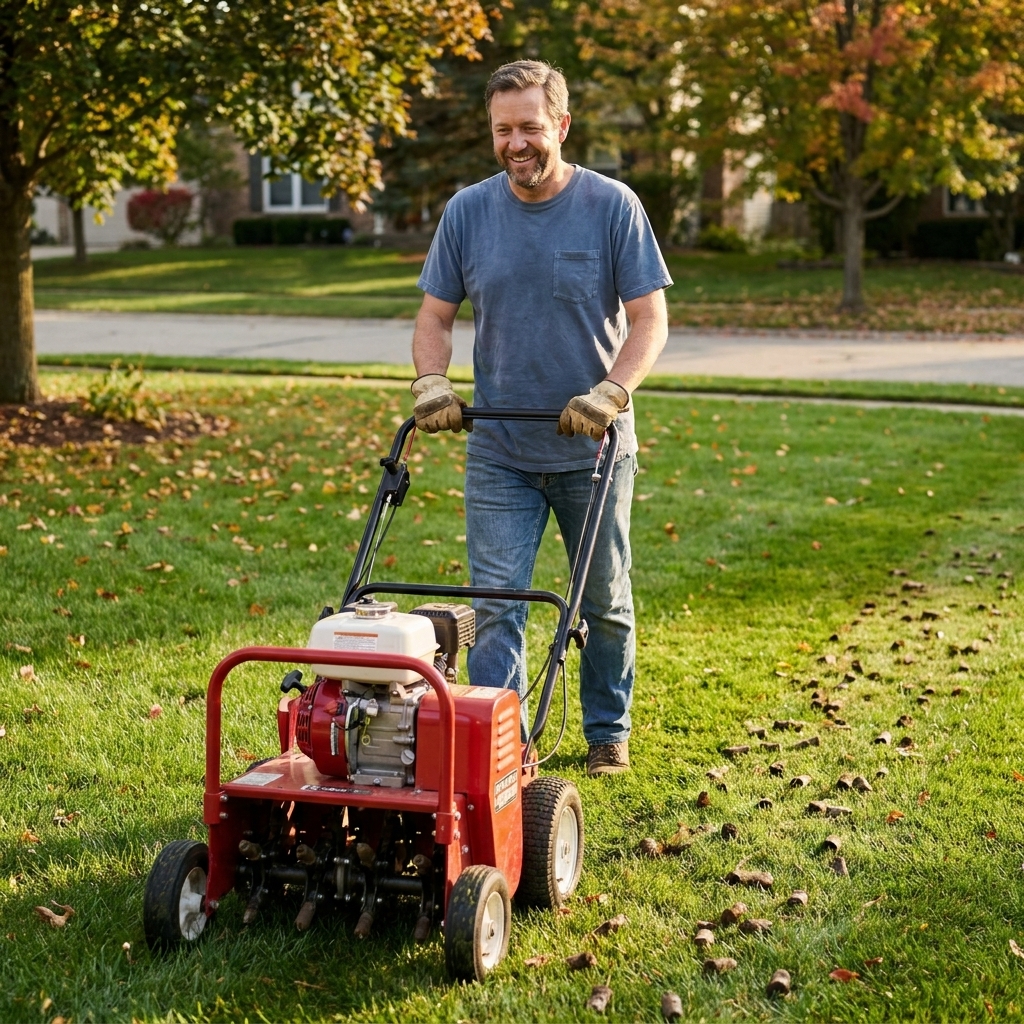
Dethatching vs. aerating
What dethatching does
Thatch is the layer of living and dead stems, roots, and debris that sits between the green grass blades and the soil surface. A little thatch is normal and even helpful, but too much can become a spongy, water-shedding mat that blocks sunlight, air, and fertilizer from getting where they need to go.
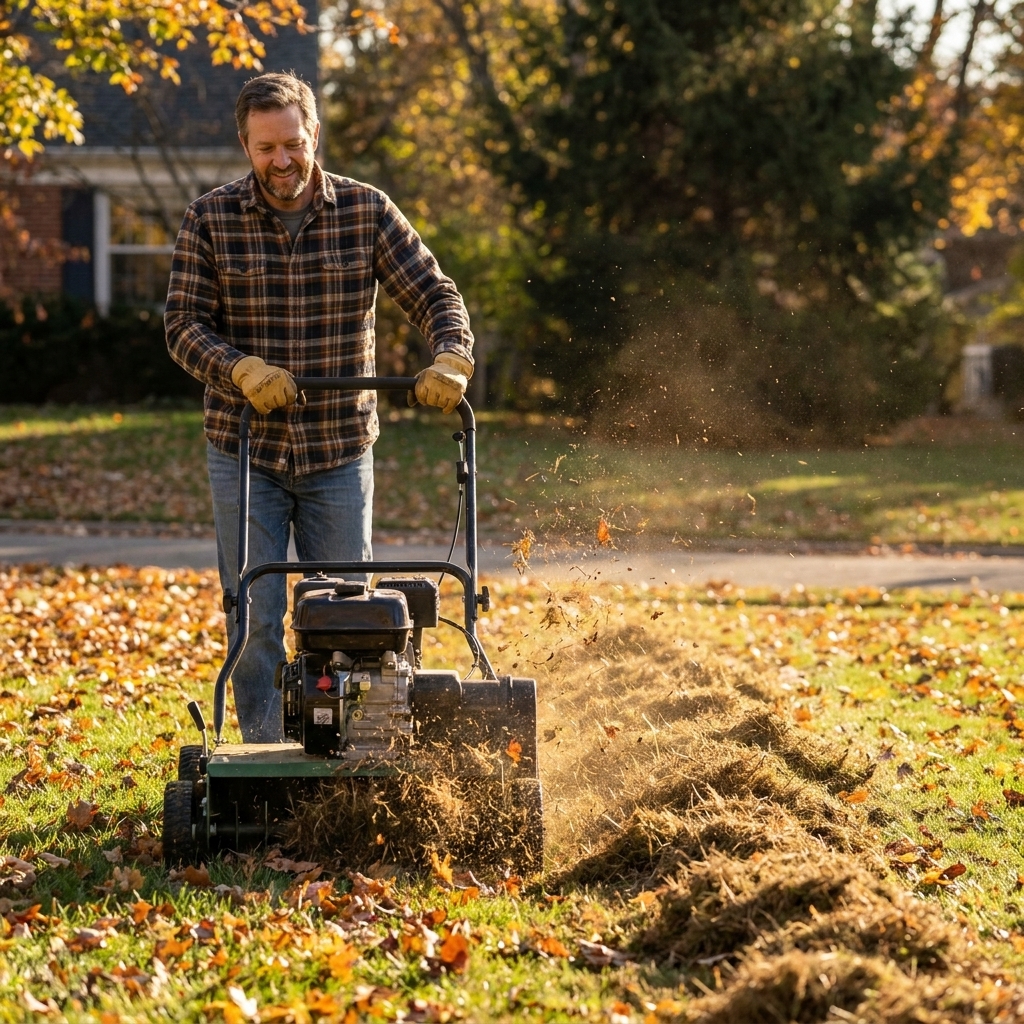
Dethatching is the process of pulling or slicing that layer up so the lawn can breathe again.
What core aeration does
Soil compaction happens when the ground is pressed tight from foot traffic, clay-heavy soil, new construction, or just years of mowing and weather. Compacted soil has fewer air spaces, which means roots struggle.
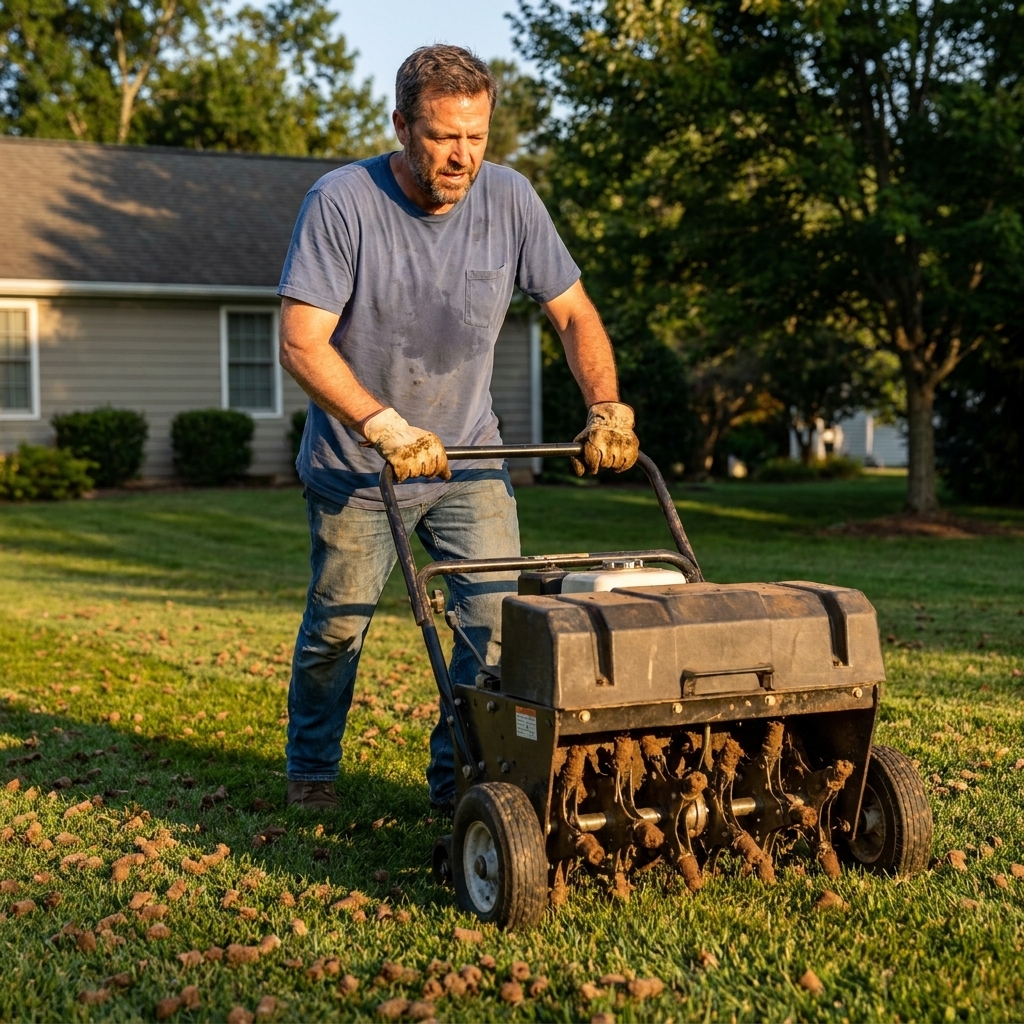
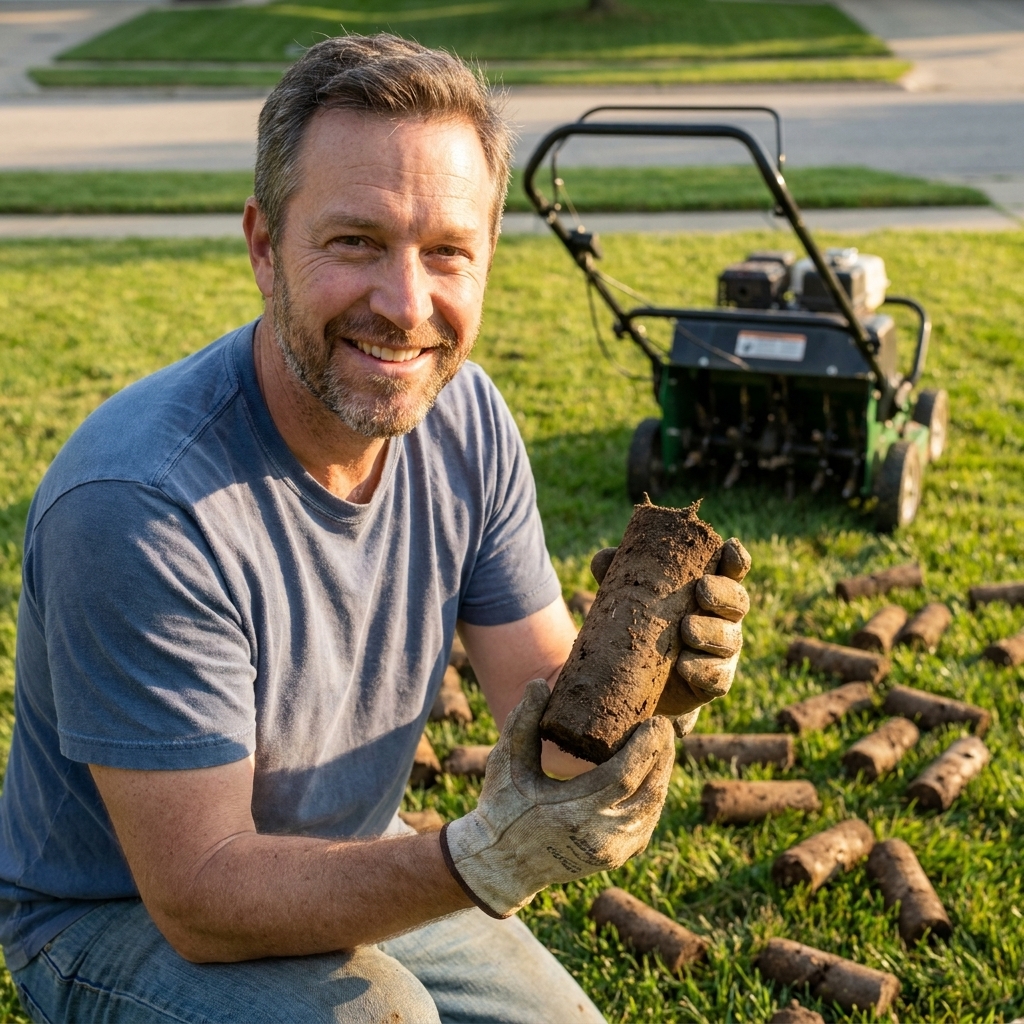
Core aeration removes small plugs of soil so air, water, and nutrients can move back down into the root zone. Those holes also create perfect little pockets for seed to settle if you are overseeding.
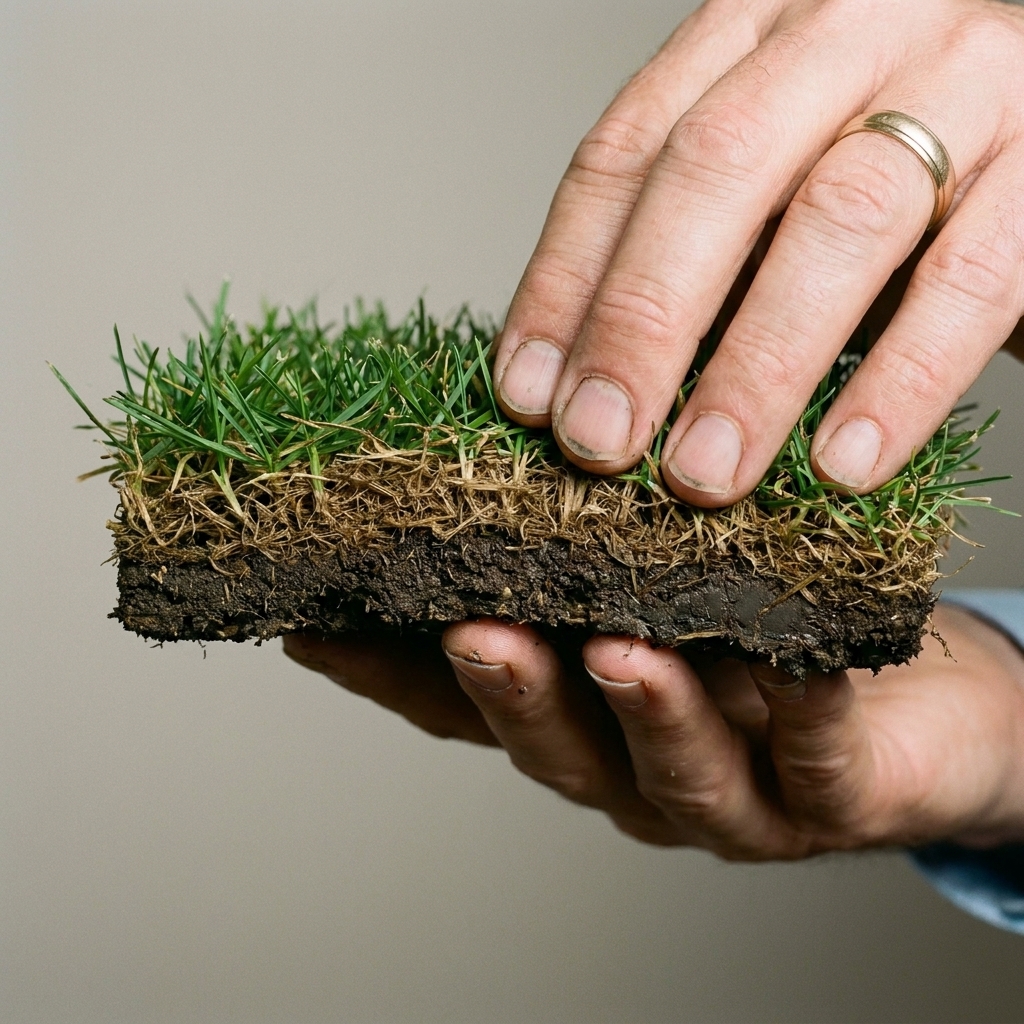
Quick test
Step 1: Thatch check
Grab a shovel or a sturdy trowel and cut a small wedge of turf like you are taking a slice of cake. Look at the brown layer between the green grass and the soil.
- Rule of thumb good: about 1/4 inch or less.
- Rule of thumb concerning: around 1/2 inch.
- Often time to dethatch: about 3/4 inch or more, especially if it feels spongy when you walk on it.
These thresholds are general guidance. Grass type, soil, and local conditions can shift the “right” number, so use the feel of the lawn and how it performs as part of the decision.
Step 2: Compaction check
After a normal watering or a good rain, try pushing a long screwdriver into the lawn.
- Easy to push in several inches: compaction is probably not your main problem.
- Hard to push in, stops quickly, or takes real force: your soil is compacted and aeration will help.
Step 3: Check the symptoms
- Spongy feel, water runs off, lots of surface-level roots: lean toward dethatching.
- Puddles after rain, thin growth even with fertilizer, high-traffic paths, clay soil that bakes hard: lean toward aerating.
- Recurring fungus or disease: excess thatch can worsen the damp, low-airflow conditions disease likes, but it is rarely the only cause. Also look at shade, airflow, watering timing, mowing height, and nitrogen timing.
- Both tests look bad: you can do both, but timing and intensity matter. More on that below.
When to dethatch
Dethatching is a great fall move if your lawn has a true thatch problem, not just a few leaves and clippings.
Best candidates
- Lawns with aggressive spreading grasses that build thatch faster, especially Bermuda and zoysia (more common in warm-season areas).
- Lawns that have been overwatered and overfed for years, especially heavy nitrogen schedules that push lots of top growth.
- Lawns with a thick, cushiony surface that makes it hard for water to soak in.
A quick grass-type caution
Many cool-season lawns, especially tall fescue and perennial ryegrass, do not need aggressive power dethatching very often. If your thatch layer is modest, a lighter approach (good mowing, consistent watering, and occasional core aeration) is usually safer than tearing the lawn up “just because it is fall.”
What dethatching improves
- Better water penetration and less runoff
- More oxygen at the crown and upper roots
- Less smothering so grass can spread and thicken
- Better seed-to-soil contact if you overseed afterward
Common mistakes
- Going too hard on a healthy lawn: dethatching is stressful. If your thatch layer is modest, you may not need it this year.
- Dethatching during drought or heat: fall is good, but only if you can keep the lawn evenly moist for recovery.
- Confusing raking leaves with dethatching: cleaning debris is great, but it does not fix a thick thatch layer.
What to use
- Light thatch: a dethatching rake can be enough for small areas.
- Heavier thatch: a power rake or dethatcher (and in some cases a verticutter) does the real work.
- Warm-season lawns: dethatching is often done with vertical mowing or scarifying, and timing matters more because recovery is tied to active growth.
When to core aerate
If I could pick just one big-impact fall task for most homeowners, it is core aeration. Compaction is incredibly common, and aeration pairs perfectly with overseeding and fall fertilizing.
Best candidates
- Clay soils that get hard and tight
- Newer lawns after construction or grading
- High-traffic areas where kids, dogs, and backyard hangouts wear paths into the turf
- Lawns that puddle or drain slowly
What aeration improves
- Root growth and depth
- Water infiltration and drainage
- Fertilizer efficiency
- Microbial activity in the soil (the quiet engine behind a healthy lawn)
Core vs. spike aeration
For real compaction, you usually want core aeration, not spikes. Spike aeration pokes holes but, in heavy clay or tightly compacted soil, it can press soil sideways and make compaction worse. Spikes can be fine for mild compaction or as a quick, temporary boost, but core aeration is the workhorse when the ground is truly tight.
When not to aerate
- Very wet soil: you can smear and tear the soil instead of cleanly pulling plugs.
- Severe drought stress: water first, then aerate once the lawn is no longer crispy.
- If you just applied certain herbicides: follow the label. Some products have waiting periods before seeding or aggressive cultivation.
- If you rely on a pre-emergent barrier: aeration can disrupt it, which matters if weed prevention is your top priority.
Can you do both?
Sometimes, yes. But I recommend a simple rule: only stack them if your lawn is healthy enough to recover and you are ready to water and follow through.
Best order
- Dethatch first (it clears the surface and reduces the mat).
- Core aerate second (it opens the soil).
- Overseed third (seed falls into the holes and onto exposed soil).
- Topdress lightly with compost or a thin layer of quality soil if you can, especially on thin spots.
When not to stack them
- Very thin lawns that are already struggling
- Late fall when growth is slowing and recovery time is limited
- Active disease pressure or severe drought stress
If you are on the fence, aerate and overseed. It solves the most common underlying issue and gives you visible results next spring.
Fall timing
Fall timing depends on your grass type, but the goal is always the same: do the work when the grass can recover quickly.
Cool-season lawns
- Best window: late summer through early-to-mid fall, when days are warm but nights cool.
- Sweet spot: about 4 to 6 weeks before your first hard frost.
Warm-season lawns
- Usually best in late spring to early summer: warm-season grasses recover fastest when they are actively growing.
- Early fall can work in some climates: in warmer areas or transitional zones, light aeration or dethatching may be fine if there is plenty of runway before dormancy and the first frost.
- If you do it in fall: keep it early and keep it on the lighter side so the turf can recover before slowing down.
Aftercare
After dethatching
- Rake and bag the debris: dethatching pulls up a lot of brown material. A thin dusting is fine, but piles can smother the lawn again.
- Water lightly for a few days: keep the surface moist while the lawn recovers.
- Overseed if thin: dethatching exposes soil, which is great for new seed.
- Fertilize appropriately: a fall fertilizer for cool-season lawns helps recovery and root growth.
After core aeration
- Leave the plugs: they typically break down over a couple of weeks (longer if it is dry) and return organic matter to the soil.
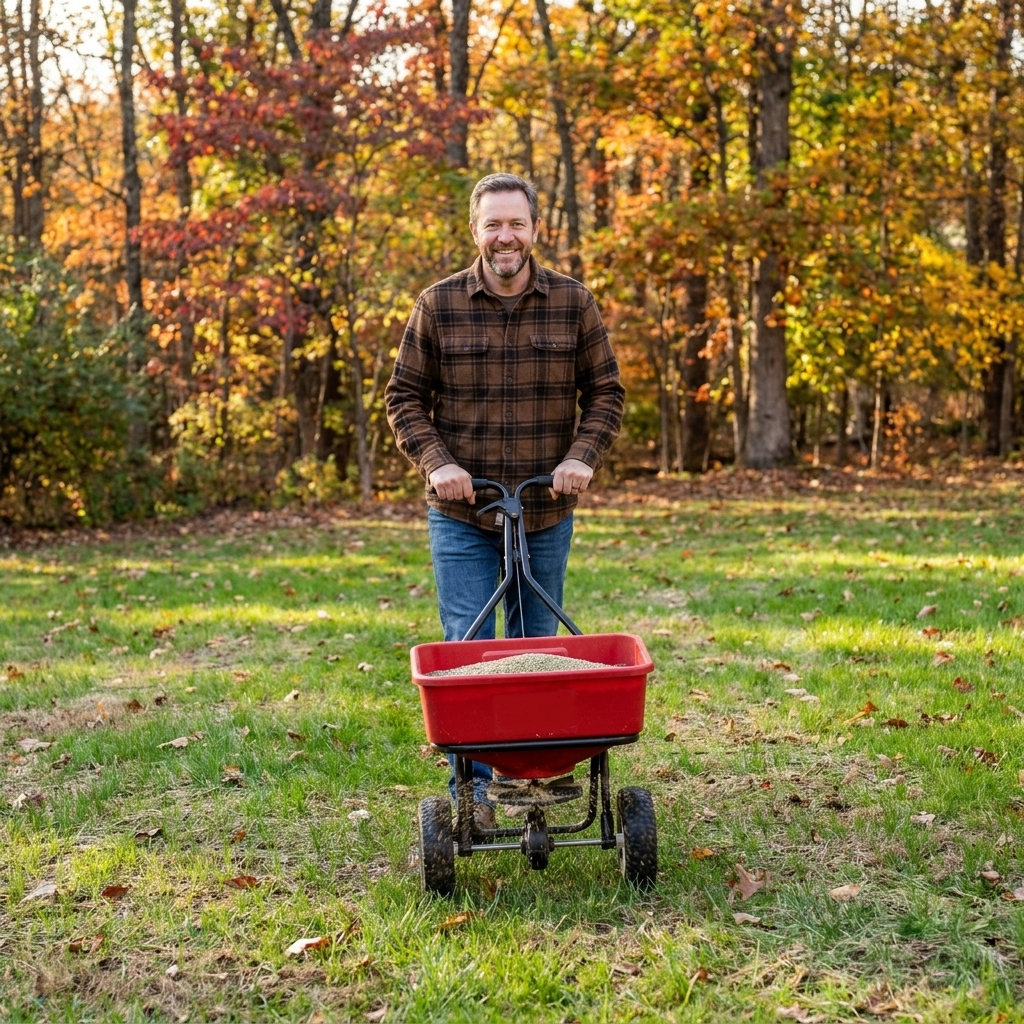
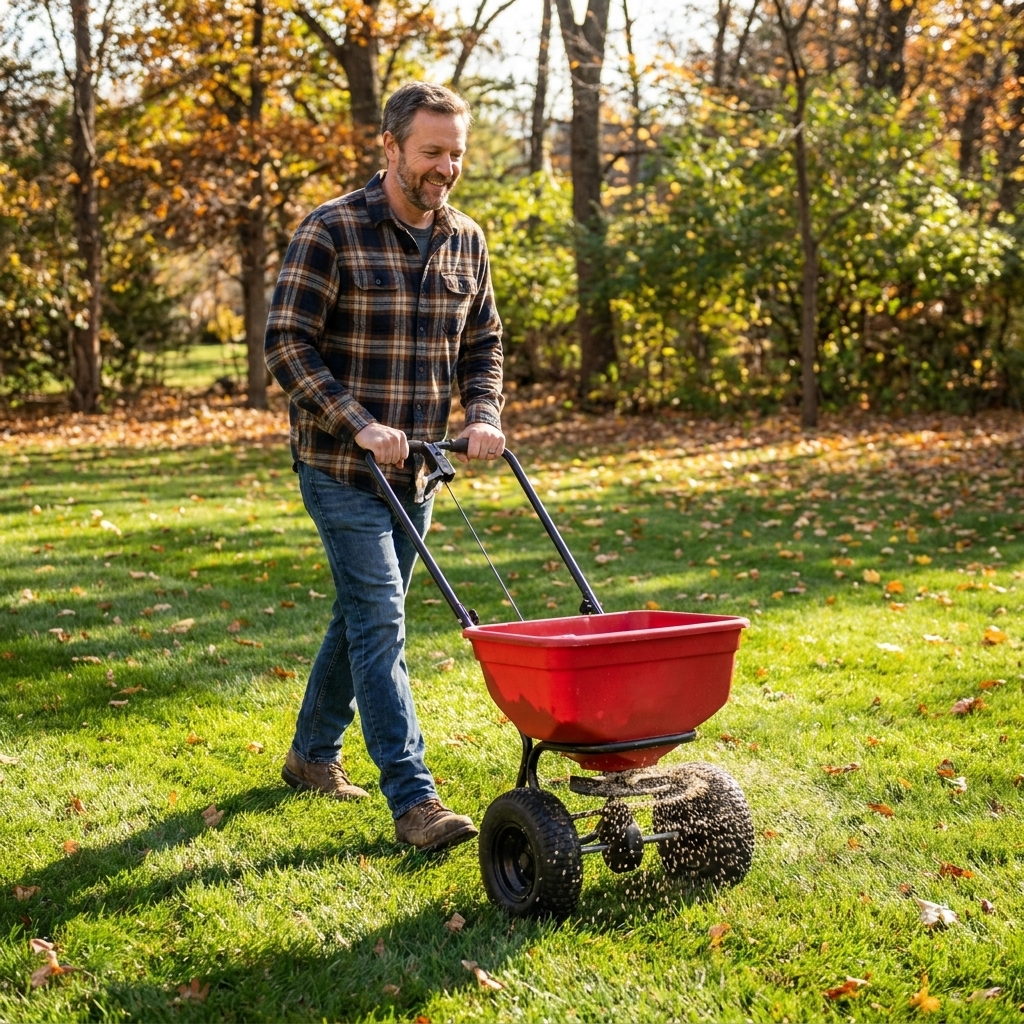
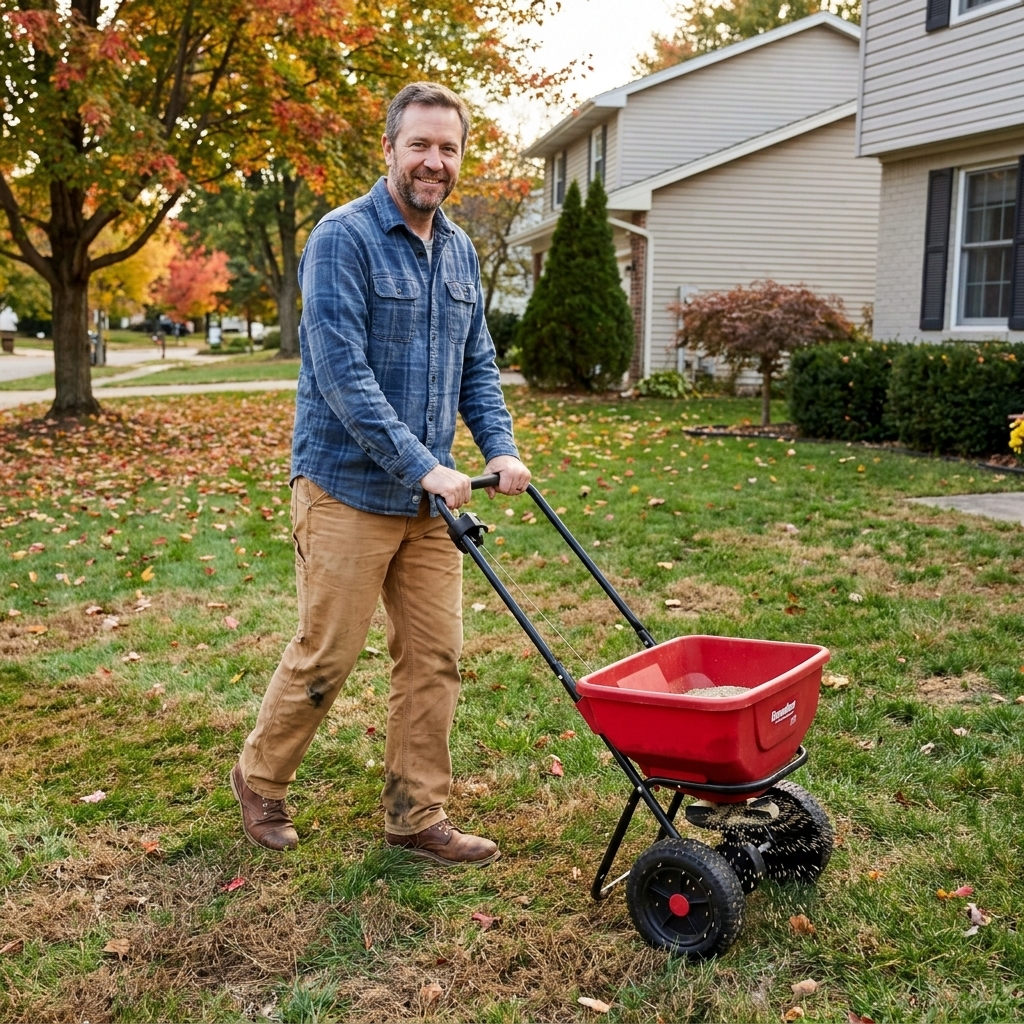
- Overseed the same day: especially on cool-season lawns. Seed loves those holes.
- Water like you mean it: for most overseeding, that means keeping the top layer consistently moist with 2 to 3 light waterings per day until germination, then tapering to deeper, less frequent watering as seedlings establish.
Mowing tip: If you are overseeding, mow a little shorter right before you aerate (not scalped, just shorter) so seed can reach the soil and seedlings get light.
Decision cheat sheet
- If your lawn feels spongy and you measure about 3/4 inch of thatch: dethatch.
- If a screwdriver will not push in after watering: core aerate.
- If you are overseeding and your soil is even a little tight: core aerate first.
- If you can only do one this fall: core aeration is the safer bet for most lawns.
FAQ
Will dethatching remove dead grass?
It will pull up some dead grass and debris, but the real target is the thatch layer. If your lawn is mostly dead, dethatching alone will not fix it. That is an overseeding or renovation conversation.
Does aeration help with brown patches?
It can, especially when brown patches are caused by shallow roots, poor drainage, or compacted soil. If the issue is disease, pet urine, or grubs, aeration is not the direct fix, but stronger roots still help recovery.
How often should I aerate?
Most established home lawns benefit from core aeration every 1 to 3 years. Heavy clay, high traffic, or new construction lawns can benefit from annual aeration until the soil loosens up.
How often should I dethatch?
Only when needed. Many cool-season lawns rarely need aggressive dethatching if mowing height, watering, and fertilizing are reasonable. Measure the thatch layer and let that decide, not the calendar.
My recommendation
If you want the simplest fall win, core aerate and overseed. It is the combo that turns a tired lawn into a thicker one without chasing miracle products.
If your lawn has that spongy, matted feel and you can see a thick brown layer when you cut a plug, dethatching can be the missing step. Just do it with a plan to water and recover, not as a random weekend project.
When in doubt, do the two quick tests. Your lawn will tell you what it needs.