Follow this beginner-friendly fertilizing plan for spring, summer, and fall. Includes cool-season vs warm-season timing, safe application rates, and burn-pro...
lawn care
Fall Lawn Fertilization: Winterizer Timing, Rates, and Mistakes to Avoid
 Mark Vance
 is a former professional landscaper and the lead turf enthusiast at Yard Mentor. With over 15 years of experience in soil health, turf management, and residential landscaping, he is dedicated to helping homeowners transform frustrating dead patches into lush, healthy lawns. When he isn't testing new grass seed blends, you can find him enjoying a Saturday morning coffee looking out over his freshly striped yard.
Updated October 17, 2026
Created October 17, 2026
Mark Vance
Mark Vance is a former professional landscaper and the lead turf enthusiast at Yard Mentor. With over 15 years of experience in soil health, turf management, and residential landscaping, he is dedicated to helping homeowners transform frustrating dead patches into lush, healthy lawns. When he isn't testing new grass seed blends, you can find him enjoying a Saturday morning coffee looking out over his freshly striped yard.
Updated October 17, 2026
Created October 17, 2026
Fall is the season that separates “pretty good” lawns from the ones that pop in spring. When temperatures cool, grass naturally shifts energy below ground. If you feed it at the right moments, you are basically stocking the pantry for winter and setting up a faster green-up when the snow melts or the rainy season ends.
I learned this the hard way on my first Midwest lawn. I kept throwing fertilizer at it in spring like that would fix everything. What finally moved the needle was getting fall fertilization dialed in: right product, right timing, and a consistent spreader routine.
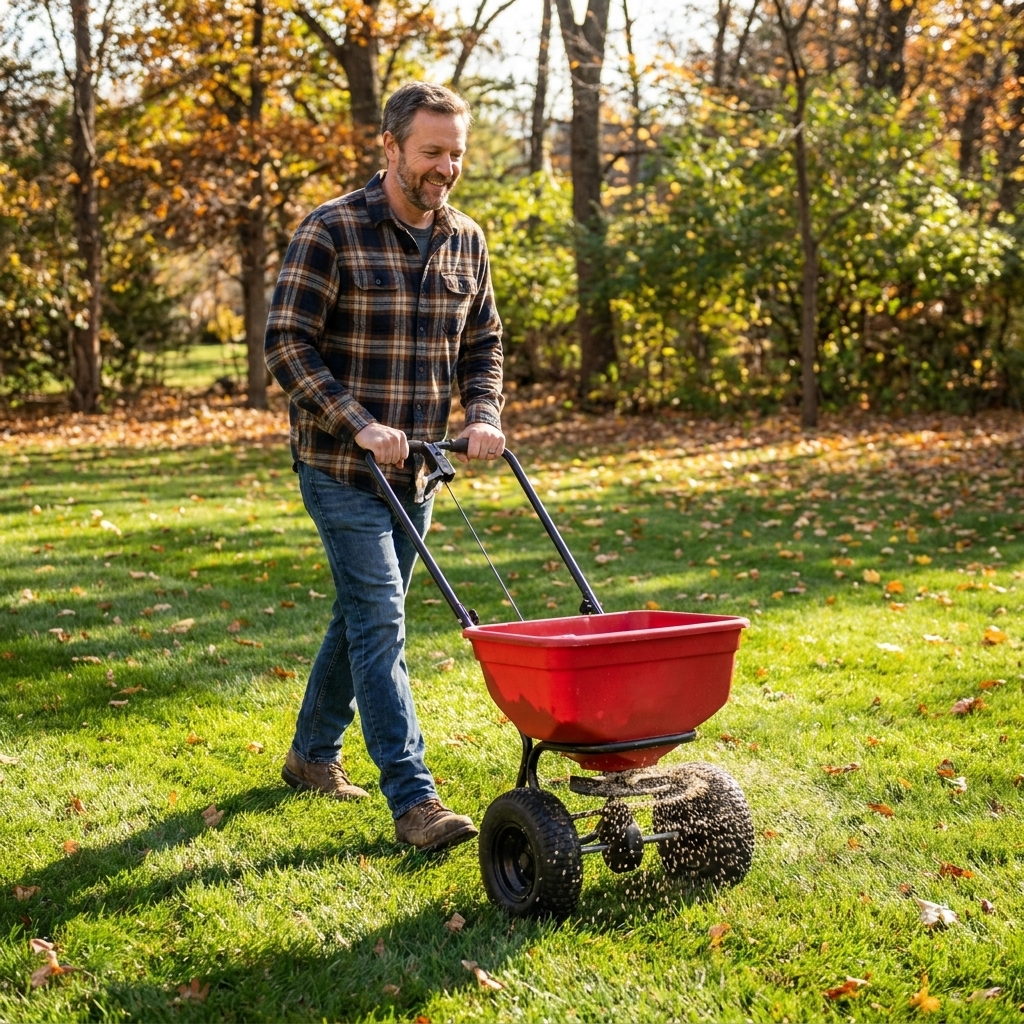
What fall fertilization does
Think of fall fertilizer as root work, not leaf work. Yes, you will see color improvement, but the real payoff is underground.
- Builds deeper roots so grass can access moisture longer and handle winter stress better.
- Restores carbohydrates (stored energy) that grass uses to survive winter and rebound in spring.
- Improves density, which helps crowd out weeds the following year.
- Reduces winter injury risk by keeping growth steady instead of forcing soft, tender top growth at the wrong time.
If your lawn struggled with summer heat, drought, dog spots, or thin areas, fall is your best window to repair it.
Know your grass type first
Timing and product choice depend on whether your lawn is cool-season or warm-season. If you are not sure, look at when your lawn naturally looks best.
Cool-season grasses
Kentucky bluegrass, perennial ryegrass, tall fescue, and fine fescue thrive in spring and fall. Fall fertilization is the most important feeding of the year for these lawns.
Warm-season grasses
Bermuda, zoysia, St. Augustine, and centipede love summer heat and start slowing down as nights cool. Warm-season lawns still benefit from fall nutrition, but late “winterizer” nitrogen can be a mistake as dormancy begins and growth has essentially stopped.
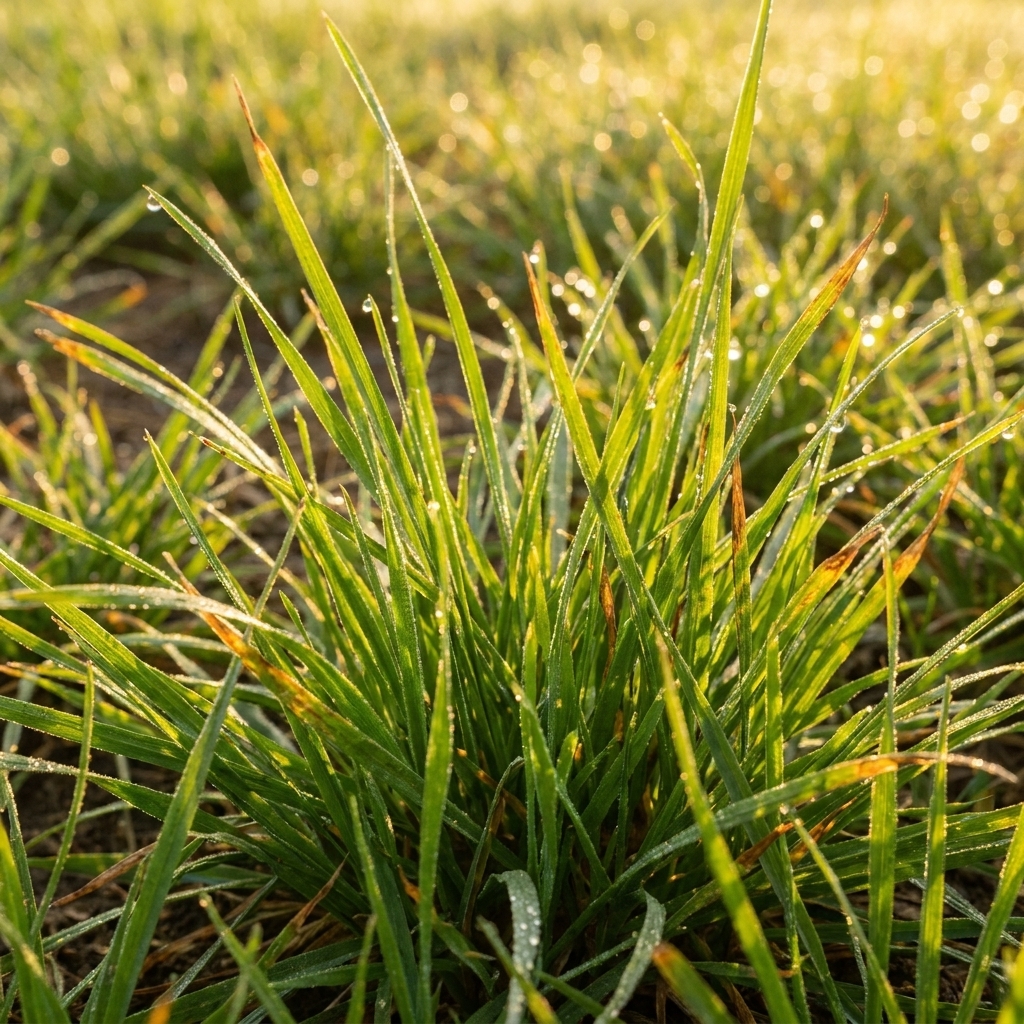
When to fertilize in fall
Instead of chasing a specific date, follow temperature and growth cues. That gets you consistent results year after year, even when the weather does not cooperate.
Cool-season lawns: two feedings
- Early fall feeding: when daytime highs are mostly 60 to 75°F and the lawn is actively growing again. For many areas, that is late August through September.
- Late fall “winterizer”: when top growth slows and you are mowing less often, but the grass is still not fully dormant. This is commonly October into early November depending on region.
My rule of thumb: apply the winterizer when you have likely one or two mows left. If you wait until you are done mowing entirely, you are often too late.
Warm-season lawns: finish earlier
- Early fall feeding: early September in many regions, while the lawn is still growing.
- Stop high-nitrogen applications once nights cool and growth noticeably slows. Pushing nitrogen too late can increase disease risk, delay dormancy, and raise the odds of winter injury.
If you want a fall boost on warm-season turf, lean toward lower nitrogen and consider a soil test to see whether potassium or micronutrients are the real need.
What “winterizer” means
“Winterizer” is more marketing than science, but the idea is valid: a late-season application designed to support root energy storage and winter toughness.
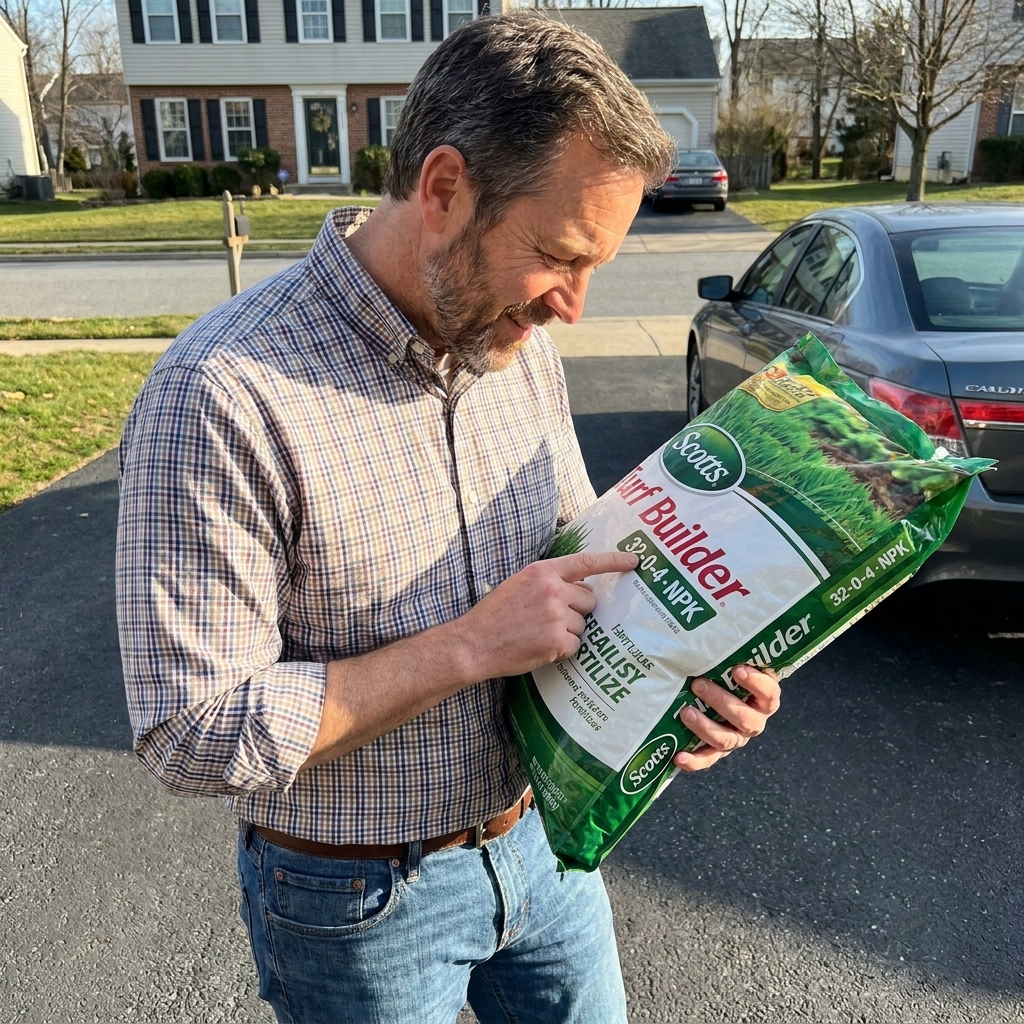
Here is what matters on the bag:
- Nitrogen (N): Drives recovery and spring green-up. For cool-season lawns, late-fall nitrogen is often the key ingredient.
- Potassium (K): Supports stress tolerance, cold hardiness, and overall plant function.
- Phosphorus (P): Usually not needed unless a soil test says you are low or you are establishing or overseeding and your local rules allow it.
A classic winterizer label often looks like 24-0-10, 26-0-6, 30-0-10, or similar. Do not obsess over the exact ratio. Focus on applying the right amount of actual nitrogen evenly.
How much to apply
The clean way to plan fertilizer is by pounds of nitrogen per 1,000 square feet. For many established home lawns, these ranges are common starting points that are often effective:
- Early fall (cool-season): about 0.5 to 0.75 lb of N per 1,000 sq ft
- Late fall winterizer (cool-season): about 0.75 to 1.0 lb of N per 1,000 sq ft
Warm-season lawns vary more by species and region, but a conservative fall approach is typically 0.25 to 0.5 lb of N per 1,000 sq ft earlier in fall, then stop as growth slows.
One important note: local extension recommendations, annual nitrogen limits, and fertilizer ordinances can be stricter than general guidance. If your area has rules or your lawn is sensitive, follow local guidance first.
Quick math example
Let’s say you want 0.75 lb N per 1,000 sq ft and your fertilizer is 24-0-10 (24% nitrogen).
- 0.75 ÷ 0.24 = 3.1 lb of product per 1,000 sq ft
If you do not know your lawn size, measure it. Even a rough measurement is better than eyeballing. Overapplication is the fastest route to streaks, burn, and wasted money.
Best fertilizer types for fall
Walk any garden center aisle and you will see “quick release,” “slow release,” “poly-coated,” “stabilized,” and more. Here is how I’d simplify it.
Granular, slow-release blends
These provide steadier feeding and reduce burn risk. Look for some portion of nitrogen listed as slow-release or water-insoluble nitrogen on the label.
Fast-release nitrogen
Fast-release nitrogen can be great for late fall on cool-season lawns because it gets into the plant quickly when growth is slowing. The key is timing: use it while the turf is still active enough to take nutrients up (you are still mowing occasionally) and you can water it in. If the lawn is fully dormant or the ground is freezing, hold off.
Organic fertilizers
Organics feed soil microbes, which can improve soil structure over time. They work best when soil temps are still warm enough for microbial activity. In very late fall, results may be slower.
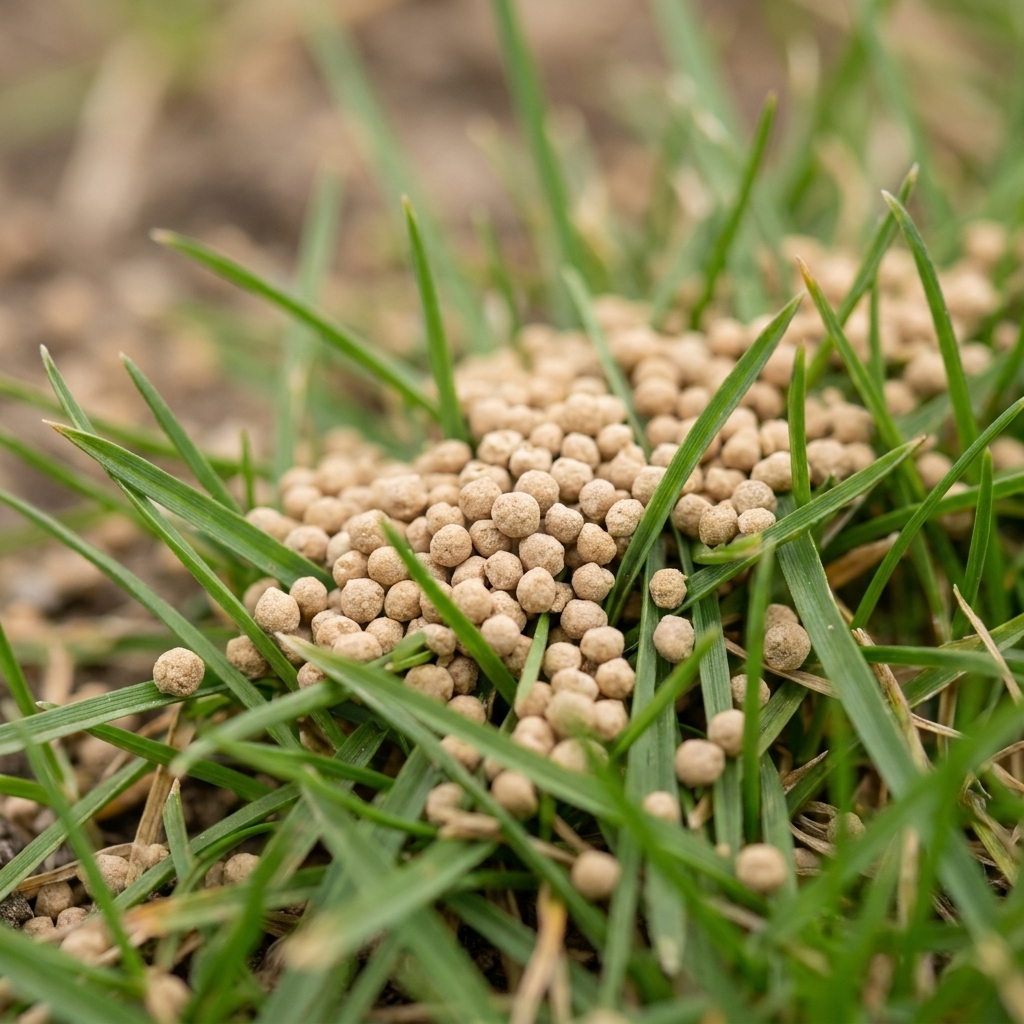
How to apply it evenly
This is the part that makes or breaks results. The goal is an even application at the correct rate.
1) Mow first, then clear the surface
Mow to your normal height and blow off heavy leaves and debris. Fertilizer needs to reach the soil surface, not sit on a mat of leaves.
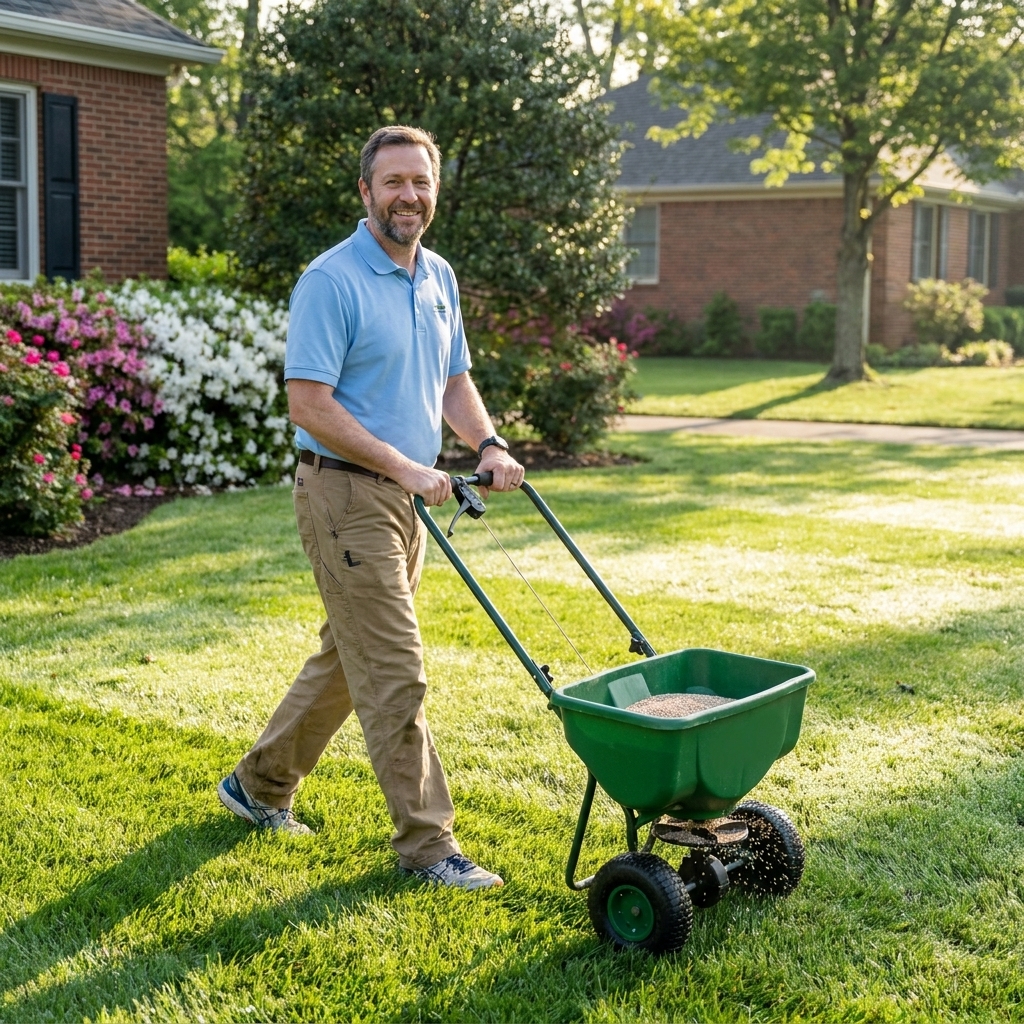
2) Use a spreader you trust
A broadcast spreader is faster for medium and large lawns. A drop spreader can be more precise along edges, but it is easier to stripe if you are inconsistent.
3) Calibrate with the bag rate, then verify
Start with the spreader setting recommended on the bag as a baseline. For better accuracy:
- Weigh or estimate the fertilizer you plan to use.
- Apply half your rate in one direction, then the other half perpendicular. This crosshatch pattern evens out missed spots.
4) Keep the edges clean
Sweep or blow granules off sidewalks and driveways back into the lawn. Besides waste, it can wash into storm drains.
If you are near a pond, creek, or lake, leave a small buffer strip and do not broadcast fertilizer right up to the water’s edge.
5) Water it in (unless rain is imminent)
Most granular fertilizers should be watered in with a light irrigation, often about 1/4 inch, unless the label says otherwise. If you have steady rain in the next 24 hours, you can often skip irrigation. Avoid applying right before a downpour that could cause runoff.
Also skip fertilizing on frozen ground or when a hard freeze is imminent. That is when nutrients are more likely to sit, move, or be lost instead of being used by the turf.
Pair it with these tasks
Fall fertilization is powerful on its own, but it is even better when it is part of a simple fall plan.
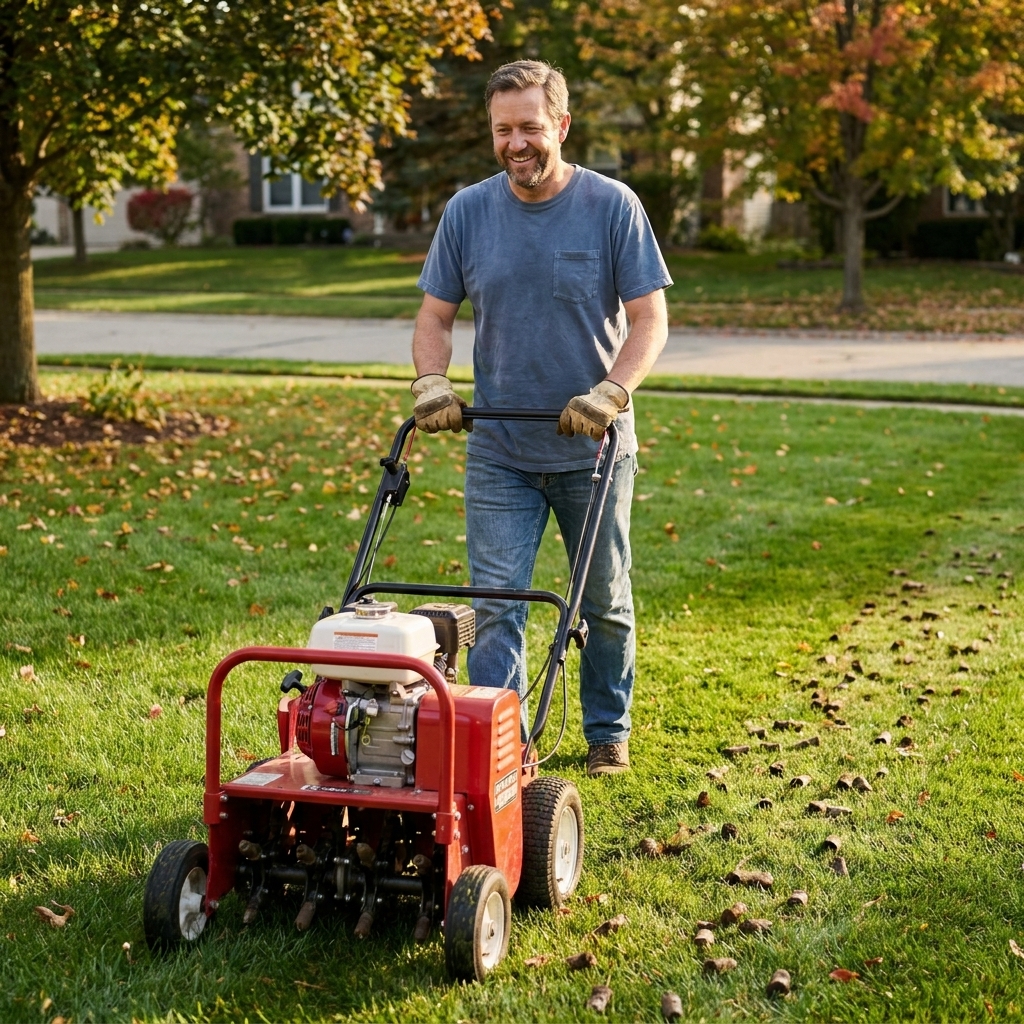
Aeration
If your soil is compacted, aeration helps fertilizer, water, and oxygen move into the root zone. For cool-season lawns, core aeration in early fall pairs beautifully with the first fall feeding.
Overseeding
Thin lawn? Early fall is prime time for overseeding cool-season turf. If you overseed, choose a fertilizer that is safe for new grass. Many “starter” fertilizers include phosphorus, but only use it when permitted and when your soil test supports it.
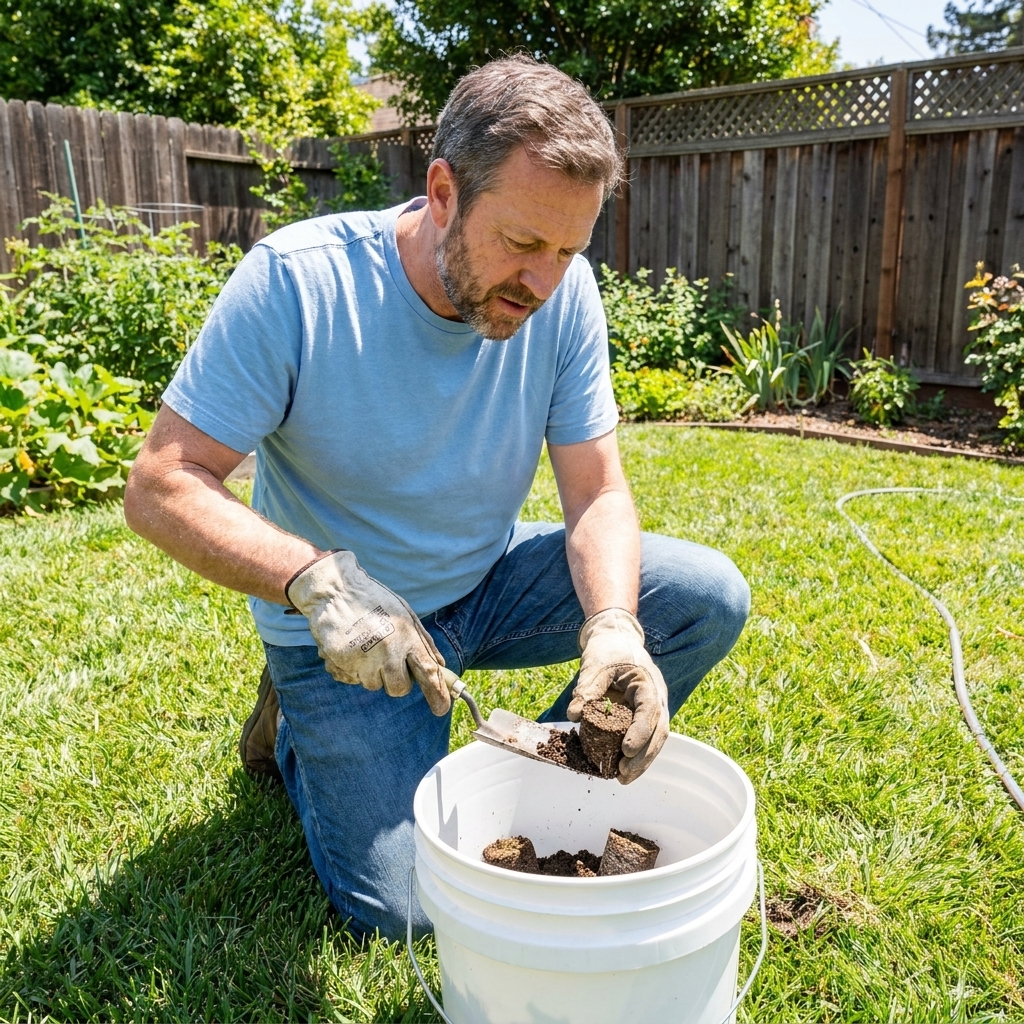
Soil test and pH adjustment
If your lawn has been stubborn for years, do a soil test. Getting pH into the right range makes every fertilizer dollar work harder. Many Midwest and Northeast lawns benefit from lime over time, but test first.

Common mistakes
Fertilizing too late
For cool-season lawns, you want late-fall nitrogen while the grass can still take it up. For warm-season lawns, late nitrogen as dormancy begins can raise winter issues. Watch growth, not the calendar.
Overapplying because the lawn looks pale
Pale turf in fall can be nitrogen, but it can also be drought stress, compaction, low iron, or disease. Do not double the rate. Apply the planned amount and reassess in 10 to 14 days.
Skipping watering when it is needed
Granular fertilizer sitting dry on leaf blades is a recipe for uneven results and potential burn. Water it in per label directions.
Fertilizing a drought-stressed lawn
If the lawn is crispy and not growing, pause. Water first, let it recover, then fertilize once it is actively growing again.
Ignoring leaves
Leaf cover blocks sunlight and airflow and prevents fertilizer from contacting soil. Mulch-mow small leaf amounts, but do not let a thick layer sit for weeks.
Schedule by region
Every yard is a microclimate, but these are reliable guardrails.
Upper Midwest, Northern Plains, Mountain regions
- Early fall feeding: late August to September
- Winterizer: late September to October, sometimes early November depending on first hard frost
Midwest, Mid-Atlantic, Northeast
- Early fall feeding: September
- Winterizer: late October to early November in many areas
Transition zone
- Cool-season lawns: follow cool-season timing, but do not wait too long
- Warm-season lawns: wrap up nitrogen earlier, usually September to early October depending on temperatures
Deep South and coastal warm-season areas
- Warm-season lawns: light fall feeding early, then focus more on potassium and soil health as growth slows
- Cool-season overseeding (ryegrass) is a separate topic and should be managed as its own seasonal lawn plan
FAQ
Should I fertilize right before winter?
If you have a cool-season lawn, a late-fall winterizer application is often the most important feeding of the year, as long as the grass is still taking up nutrients. If you have a warm-season lawn, avoid late heavy nitrogen once growth slows significantly and dormancy is approaching.
Can I fertilize after the first frost?
A light frost does not automatically mean “stop.” What matters is whether the lawn is still actively growing. If you are still mowing occasionally and the turf is not fully dormant, fertilizer can still be beneficial. If the ground is freezing regularly and growth has stopped, it is time to wait.
Is winterizer fertilizer high in potassium?
Sometimes, but not always. Many winterizers are primarily about timing and nitrogen strategy. Potassium is helpful for stress tolerance, but the best ratio for your lawn is easiest to confirm with a soil test.
Will fall fertilizer make my lawn grow too fast?
If you apply the correct rate and choose a product with some slow-release nitrogen, you typically get steady growth, better color, and thicker turf, not a wild growth surge. If you push high nitrogen early in fall and keep mowing very low, you can create more top growth than you want. Stick to recommended nitrogen rates and mow at the right height.
Can I apply fall fertilizer and weed control together?
Many “weed and feed” products can work, but they are often a compromise. In fall, I prefer separating tasks: fertilize for roots, and spot-treat weeds as needed. If you do use a combo product, follow the label closely, especially watering instructions and temperature limits.
A simple fall plan
If you want a no-fuss approach that works for most homeowners with cool-season lawns:
- Early fall: mow, clean up leaves, aerate if needed, then apply 0.5 to 0.75 lb N per 1,000 sq ft.
- Mid fall: keep mowing high enough for your grass type and stay on top of leaves.
- Late fall: apply a winterizer at 0.75 to 1.0 lb N per 1,000 sq ft when you have about one or two mows left, then water it in.
Do that, and spring gets dramatically easier. Your lawn wakes up with more stored energy, fewer thin spots, and a head start on the neighbor who only fertilizes when the first crocuses show up.