A homeowner-friendly, step-by-step guide to diagnosing brown lawn patches, repairing dead spots with seed, sod, or plugs, and preventing them from coming back.
lawn care
Fall Armyworms in Lawns
 Mark Vance
 is a former professional landscaper and the lead turf enthusiast at Yard Mentor. With over 15 years of experience in soil health, turf management, and residential landscaping, he is dedicated to helping homeowners transform frustrating dead patches into lush, healthy lawns. When he isn't testing new grass seed blends, you can find him enjoying a Saturday morning coffee looking out over his freshly striped yard.
Updated October 17, 2026
Created October 17, 2026
Mark Vance
Mark Vance is a former professional landscaper and the lead turf enthusiast at Yard Mentor. With over 15 years of experience in soil health, turf management, and residential landscaping, he is dedicated to helping homeowners transform frustrating dead patches into lush, healthy lawns. When he isn't testing new grass seed blends, you can find him enjoying a Saturday morning coffee looking out over his freshly striped yard.
Updated October 17, 2026
Created October 17, 2026
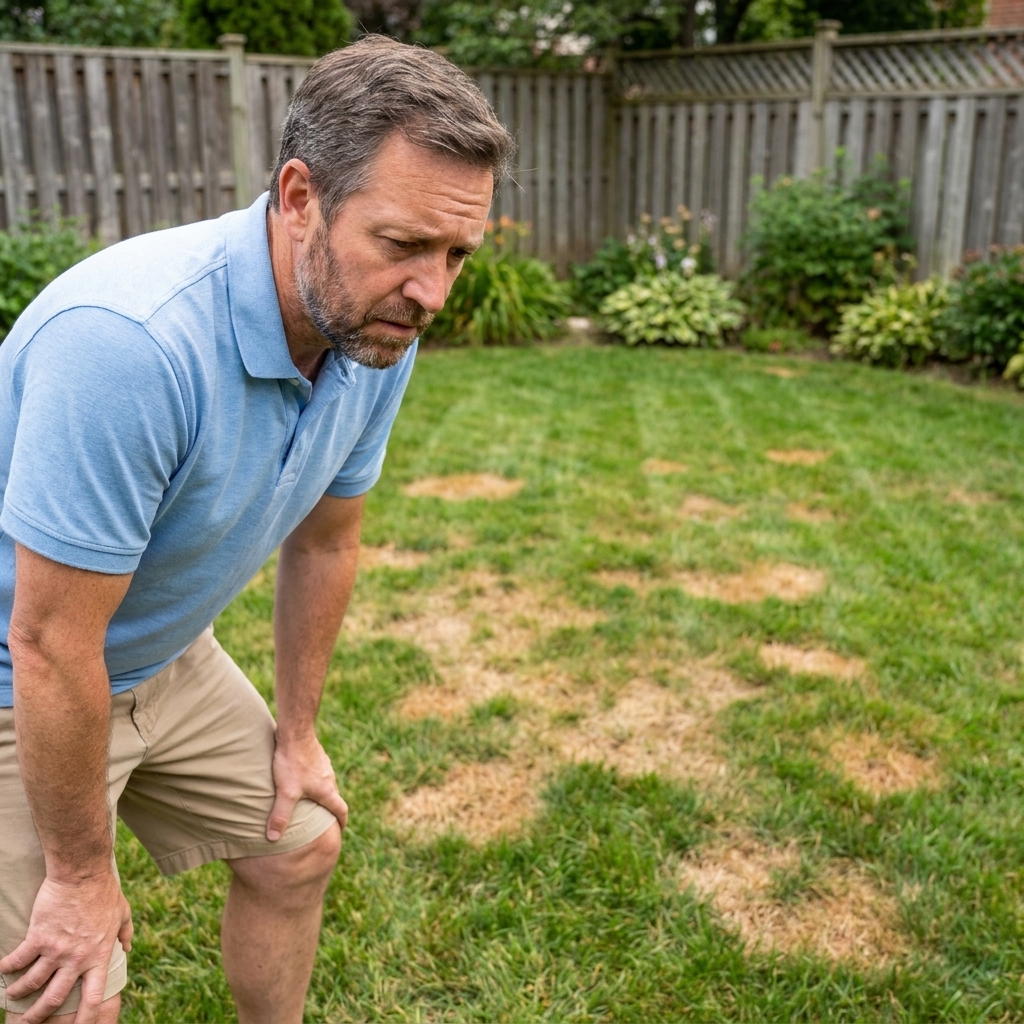
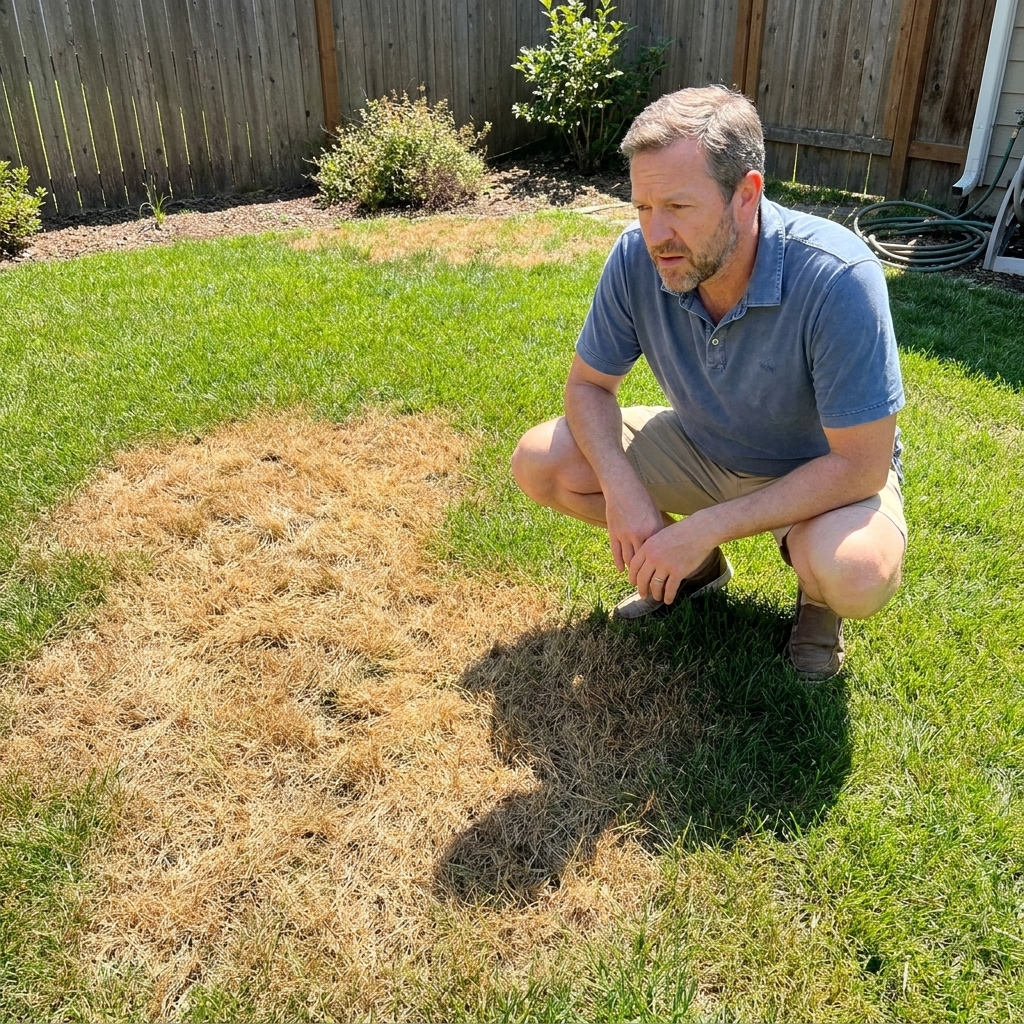
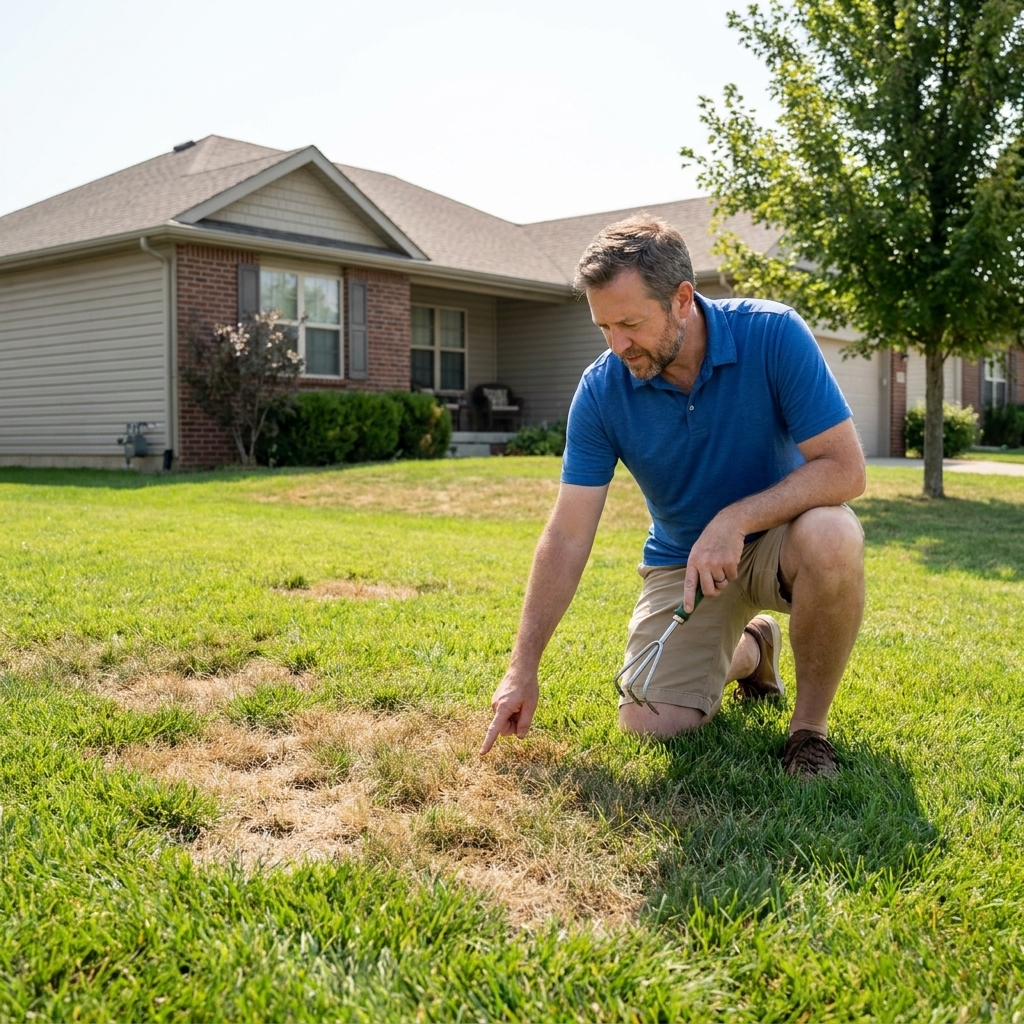
If your lawn looked fine a day or two ago and now it has ragged brown patches spreading like a spilled drink, do not assume drought or fungus just yet. Fall armyworms can turn a healthy yard into a chewed-up mess fast, especially in late summer and early fall when caterpillars feed hard.
This is my emergency, neighbor-over-the-fence guide to spotting them early, confirming what you are dealing with, and knocking them down quickly before they mow through your turf.
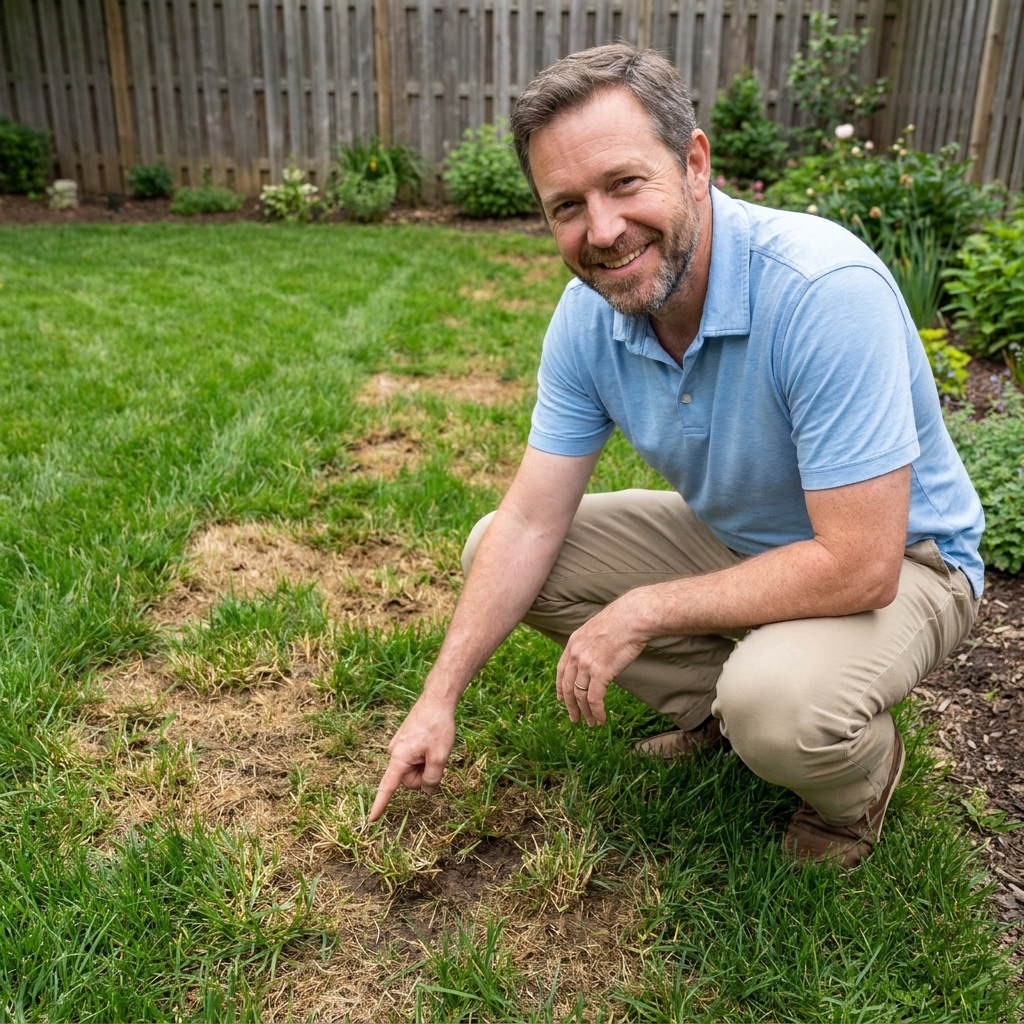
Why they are a lawn emergency
Fall armyworms are caterpillars that feed mostly at night and in the early morning, then hide down in the thatch and soil during the day. When pressure is high or skies are cloudy, they can stay active longer. That “feed hard, hide well” behavior is why damage seems to appear overnight.
They do not usually kill the crown of healthy turf instantly, but they can strip leaf tissue so thoroughly that the lawn looks scorched. If the infestation is heavy, stressed turf can thin out badly and invite weeds to move in.
Lawns they hit most
- Bermudagrass and zoysiagrass often show dramatic damage because feeding can be intense.
- Tall fescue and ryegrass can be hit too, especially if the lawn is lush and fertilized.
- New seedlings and recently overseeded areas are especially vulnerable because they do not have much leaf area to spare.
Severity varies by region, weather, and how the lawn is managed. In many years, outbreaks are most common in the South first, then can surge northward later in the season.
Early signs people miss
By the time you see big brown areas, armyworms may already be large and close to finishing their feeding. Catching the subtle signs buys you time.
What to look for
- Ragged, shredded leaf tips (not cleanly cut like mowing damage).
- Windowpaning, where blades look scraped and papery because the surface tissue has been eaten.
- Small bare spots that expand quickly across a few days.
- Heavy bird activity (robins, starlings) pecking and hopping in one area more than normal.
- Moths flushing up as you walk, especially at dusk. The adult moths are not the problem, but they hint eggs may be present.
Timing clues
Most feeding happens after sunset through early morning. If you check at mid-day and do not see anything, that does not rule them out.
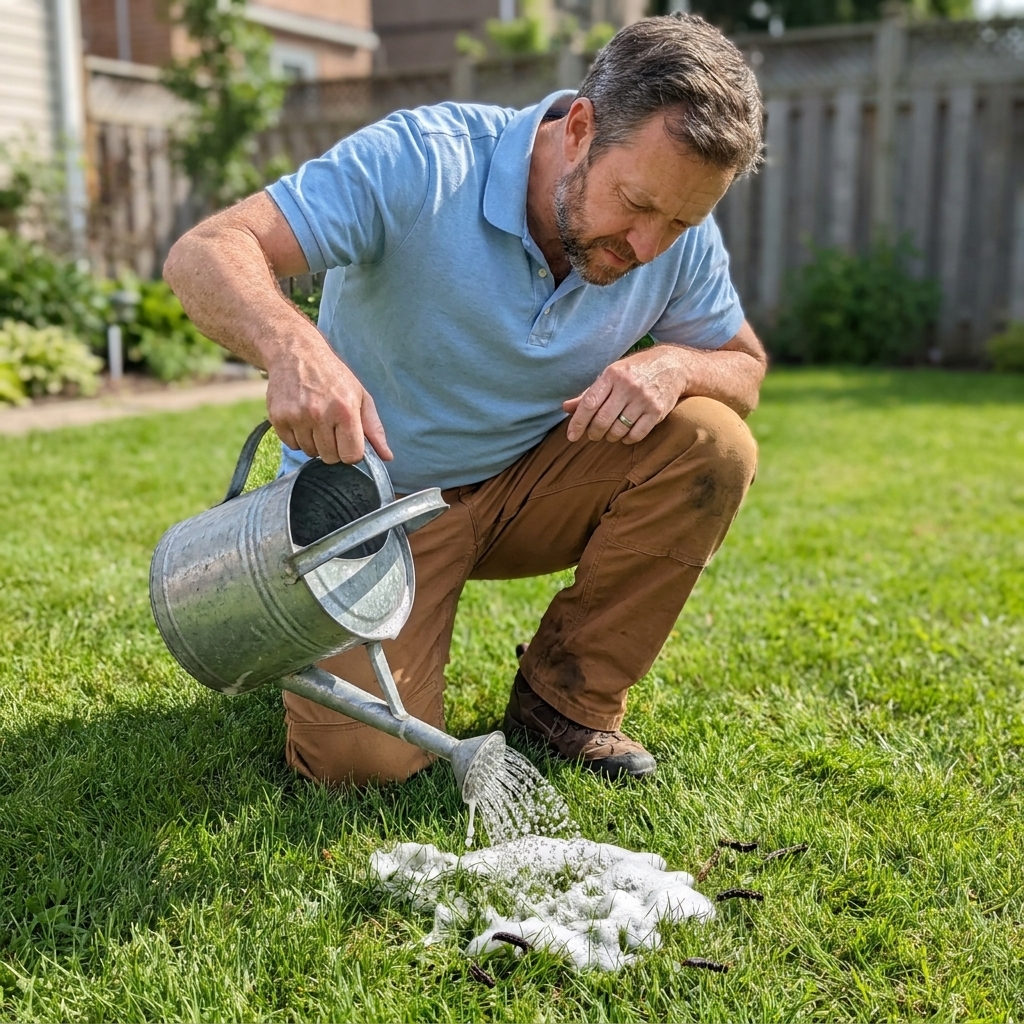
Confirm fast: soap flush
If you suspect fall armyworms, do not guess. Do a quick soap flush and you will know what you are dealing with.
What you need
- A bucket or watering can
- Water (about 1 gallon)
- Liquid dish soap (about 1 to 2 tablespoons)
How to do it
Pick a suspicious area on the edge of damage, where green meets brown.
Mix soap and water (1 to 2 tablespoons per 1 gallon).
Apply it evenly over about 1 square yard (roughly a 3 by 3 foot patch). If you only have room for a smaller test, a 2 by 2 foot patch still works. Just keep the application thorough.
Wait 5 to 10 minutes. Caterpillars will wriggle up to the surface.
Count what you see. Finding several caterpillars in that area is a strong sign you need to act. As a practical rule, 2 to 3 or more per square foot is enough to justify treatment in most home lawns, especially if damage is actively expanding.
Tip: Check at dusk if you can. You may spot them feeding on the surface without even flushing.
How to ID fall armyworms
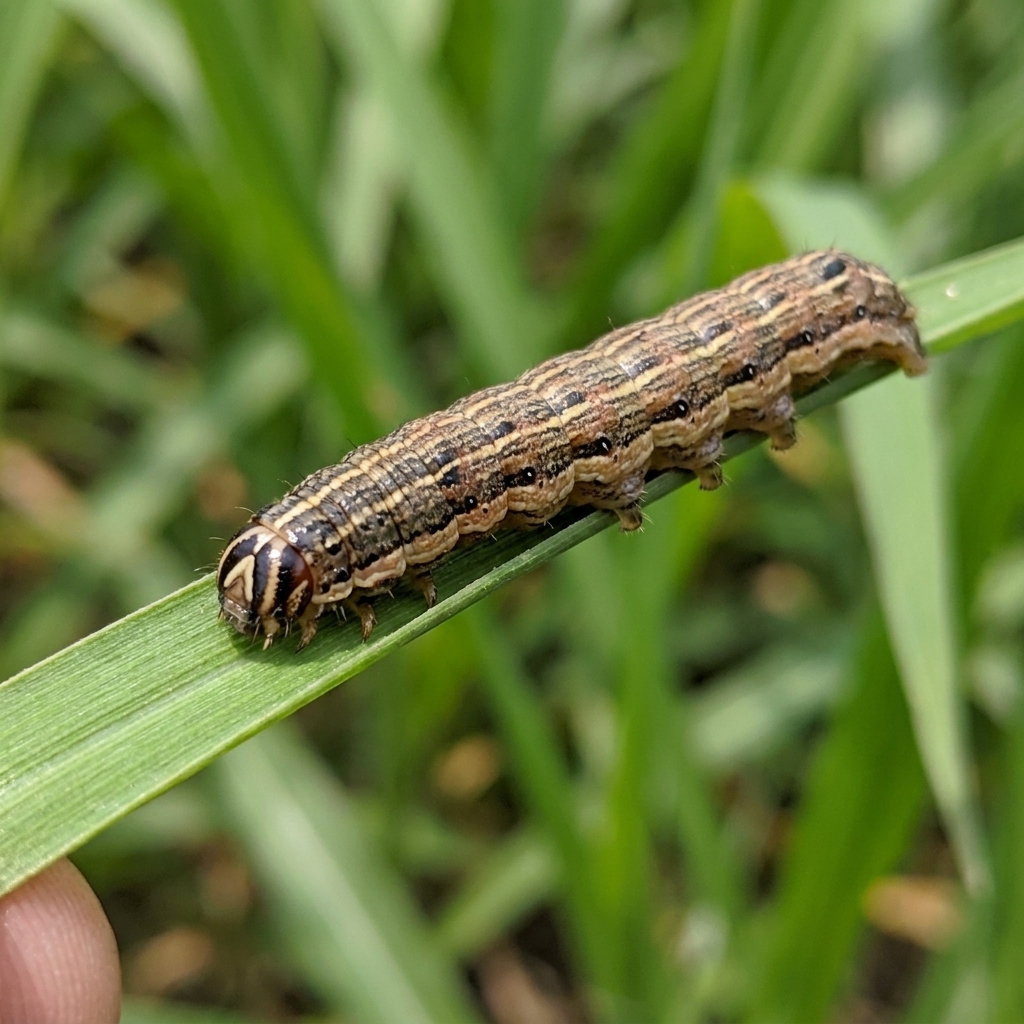
There are several turf-feeding caterpillars, and they all look wormy at first glance. Fall armyworms have a few telltales that help separate them from cutworms and other look-alikes.
Key markers
- Size: small at first, but can reach about 1.5 inches when mature.
- Color: variable (green to brown to nearly black) with stripes along the body.
- Head marking: often shows a pale, upside-down Y on the front of the head capsule.
- Four-spot pattern: on larger larvae, look for four dark spots arranged in a rough square on the back end (toward the rear segments). This is one of the more reliable field clues.
- Behavior: they curl or thrash when disturbed, then try to hide fast.
If you are unsure but you flush up chewing caterpillars and the damage is moving, treat it like an armyworm emergency. The turf damage timeline is too short to wait around once you confirm active feeding.
Look-alikes that confuse people
- Sod webworms: usually smaller and the damage can look like general thinning. You may see silk and small pellets in the thatch.
- Cutworms: tend to hide in the soil and chew in a more localized way. Some are active at night like armyworms, but the armyworm damage often spreads faster across a larger area.
- Chinch bugs: not caterpillars. They suck plant juices and damage often shows up in hot, sunny areas. A soap flush can bring them up too, but they look like tiny bugs, not worms.
What to spray that works
With armyworms, speed matters. You want a product that acts quickly on caterpillars, and you want it on the lawn while they are actively feeding.
Fast homeowner options
Look for these active ingredients on the label (common in lawn-ready hose-end or pump sprayer products):
- Bifenthrin (a pyrethroid): quick knockdown for active infestations.
- Lambda-cyhalothrin (a pyrethroid): quick knockdown, widely available.
- Cypermethrin (a pyrethroid): quick knockdown, common in lawn and perimeter products.
- Spinosad: effective on caterpillars and often considered reduced-risk in many settings, but it can still harm pollinators on contact. Do not spray blooming weeds like clover, and follow label directions closely.
Biological options
- Bacillus thuringiensis var. kurstaki (Bt-k): works best on small caterpillars. If your worms are already big and damage is moving fast, Bt may be too slow on its own.
Granules vs. liquids
If I have to pick one for an active outbreak, I prefer a liquid spray because it coats the leaf surface where the caterpillars feed. Granules can work, but they often need watering-in, and armyworms usually do most of their feeding on the blades.
When to apply
- Late afternoon to early evening is ideal, so product is fresh when feeding starts.
- Do not automatically mow right before application. More leaf surface can mean better contact. That said, some labels recommend mowing 1 to 2 days before treatment for certain products or formulations, so follow the label.
- Avoid irrigation right after unless the label specifically instructs you to water-in.
Why mid-day tends to disappoint: caterpillars are often tucked down in thatch and you get less contact and coverage. Some products also break down faster in strong sun.
Label trumps everything: follow the lawn rate, target pests list, PPE guidance, re-entry time, and any watering instructions on the product you choose.
Safety and pollinator basics
I am going to say this plainly because it matters: use the least amount needed, apply only to the lawn area that needs it, and follow the label.
- Keep kids and pets off until the label re-entry interval is met and the lawn is dry (or as directed).
- Avoid drift onto flowers, vegetable gardens, and water features.
- Do not spray blooming weeds (clover and dandelions are common) if you want to protect bees and other pollinators. Mow blooms off first and wait, or spot-remove them.
My 24-hour action plan
Confirm with a soap flush in two spots: one at the damaged edge and one in nearby green turf.
Mow only if you have to, and bag clippings if the lawn is shaggy. Otherwise, skip mowing for a day unless your product label tells you otherwise.
Apply a fast caterpillar insecticide in the late afternoon, covering the whole affected zone plus a buffer of healthy grass around it.
Re-check the next morning with another quick flush. You should see dramatically fewer live caterpillars.
Plan a follow-up only if needed, based on label interval and what your re-check shows. A second wave can happen if eggs hatch after the first spray.
If you only spot a few, treat the whole area anyway. Armyworms rarely respect neat boundaries, and they move.
Mistakes that let them win
- Waiting for more proof. The proof is the chewing. Confirm with a flush, then act.
- Spraying at mid-day. Worms are often hidden, so contact and coverage drop.
- Using only fungus products. Brown patches from armyworms can resemble disease, but fungicides will not touch caterpillars.
- Missing coverage. Spot-spraying one dead patch often fails because the worms are already in the surrounding green turf.
- Assuming one treatment always ends it. Egg hatch can create a second surge, especially in warm weather.
After control: turf recovery
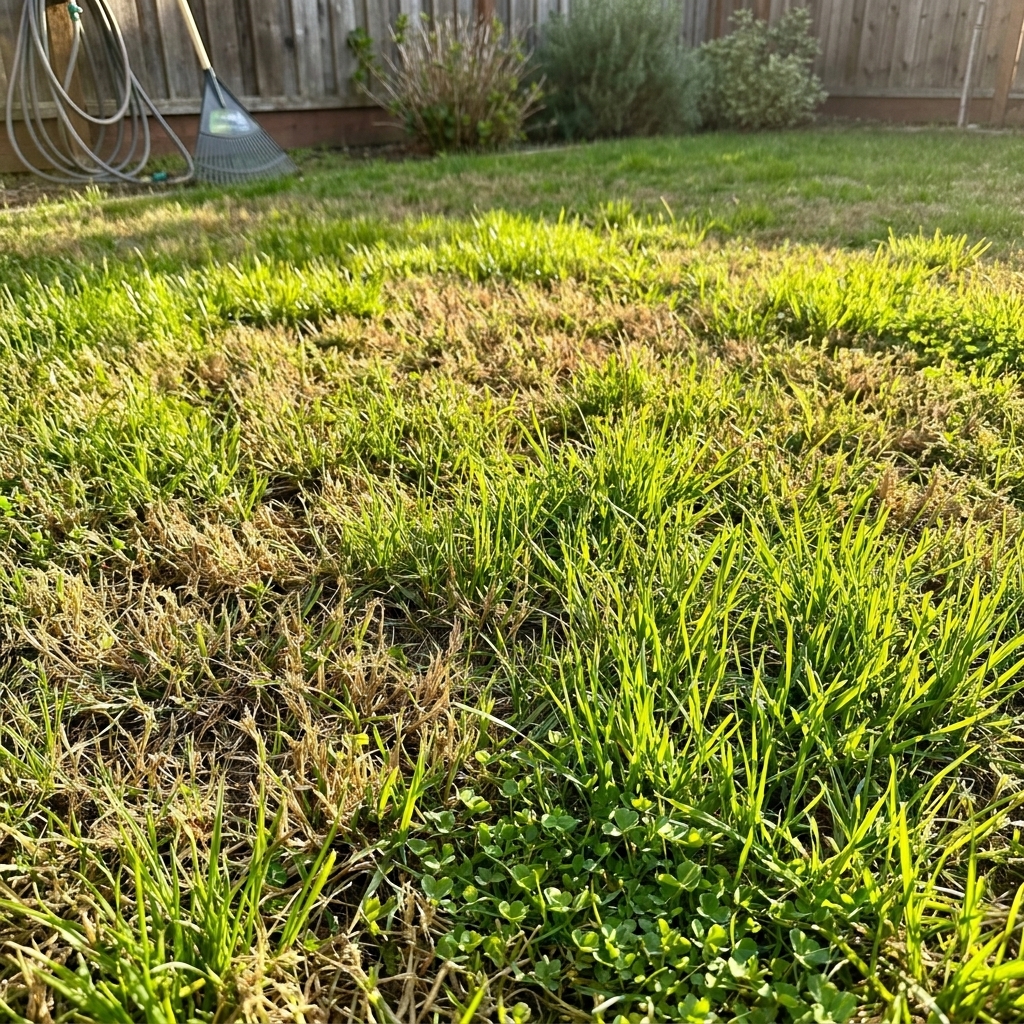
Once the feeding stops, the lawn often rebounds better than you would expect, especially warm-season grasses.
Recovery checklist
- Water deeply (not constantly). You are supporting regrowth, not creating soggy conditions.
- Resume mowing when growth returns, and keep blades sharp to reduce stress.
- Hold off on heavy nitrogen for a week or two if the lawn is severely scalped by feeding. Light, steady growth is the goal.
- Overseed cool-season lawns if you have true bare soil showing. Early fall is usually prime time for repair.
- Watch for weeds in thinned spots and stay ahead of them before they settle in.
Prevention for the season
You cannot fully prevent armyworms from showing up because adult moths can arrive and lay eggs quickly. But you can make your lawn easier to monitor and less likely to be caught off guard.
- Scout weekly in late summer and early fall, especially after warm nights and rainy periods.
- Check the edges first: along driveways, sidewalks, and sunny sections that dry faster.
- Keep thatch in check with proper mowing and occasional dethatching or aeration as appropriate for your grass type. Thatch gives caterpillars a nice hiding layer.
- Do not overdo nitrogen during peak risk windows. Super lush growth can attract more feeding pressure.
FAQ
Will fall armyworms kill my lawn?
They can devastate the leaf tissue quickly. Many established lawns regrow from the crown once feeding stops, but heavy infestations can thin turf badly and may require overseeding or sodding in spots.
What time of day should I treat?
Late afternoon to early evening is usually best so the product is present when caterpillars begin feeding. Always follow the label for timing and watering instructions.
Do I need to water in the insecticide?
It depends on the product and formulation. Many spray treatments for caterpillars work best when left on the leaf surface. Some granular products require watering-in. The label will tell you.
How do I tell armyworm damage from drought or fungus?
Drought stress usually looks more uniform and improves quickly after deep watering. Many fungal issues create distinct patterns or lesions on blades. Armyworm damage often has shredded leaf tips and expands rapidly. The soap flush is the fastest tie-breaker.
Are these the same as grubs?
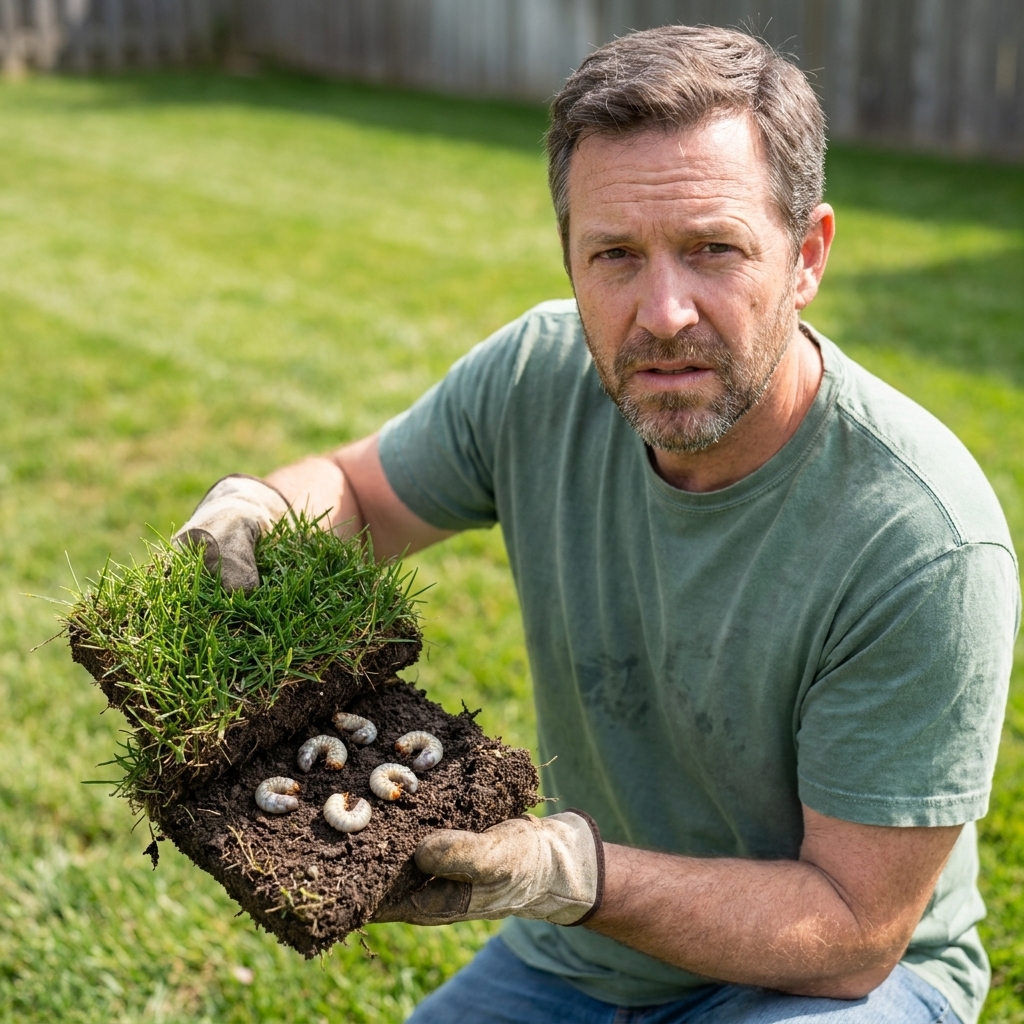
No. Grubs are beetle larvae that feed on roots under the soil. Armyworms are caterpillars that mainly feed on the grass blades and can be confirmed with a surface soap flush.