Diagnose brown lawn patches fast with simple checks, including tug and moisture tests. Repair damage from drought stress, fungal disease, or grubs and preven...
lawn care
How to Fix Brown Patches in Your Lawn
 Mark Vance
 is a former professional landscaper and the lead turf enthusiast at Yard Mentor. With over 15 years of experience in soil health, turf management, and residential landscaping, he is dedicated to helping homeowners transform frustrating dead patches into lush, healthy lawns. When he isn't testing new grass seed blends, you can find him enjoying a Saturday morning coffee looking out over his freshly striped yard.
Updated October 17, 2026
Created October 17, 2026
Mark Vance
Mark Vance is a former professional landscaper and the lead turf enthusiast at Yard Mentor. With over 15 years of experience in soil health, turf management, and residential landscaping, he is dedicated to helping homeowners transform frustrating dead patches into lush, healthy lawns. When he isn't testing new grass seed blends, you can find him enjoying a Saturday morning coffee looking out over his freshly striped yard.
Updated October 17, 2026
Created October 17, 2026
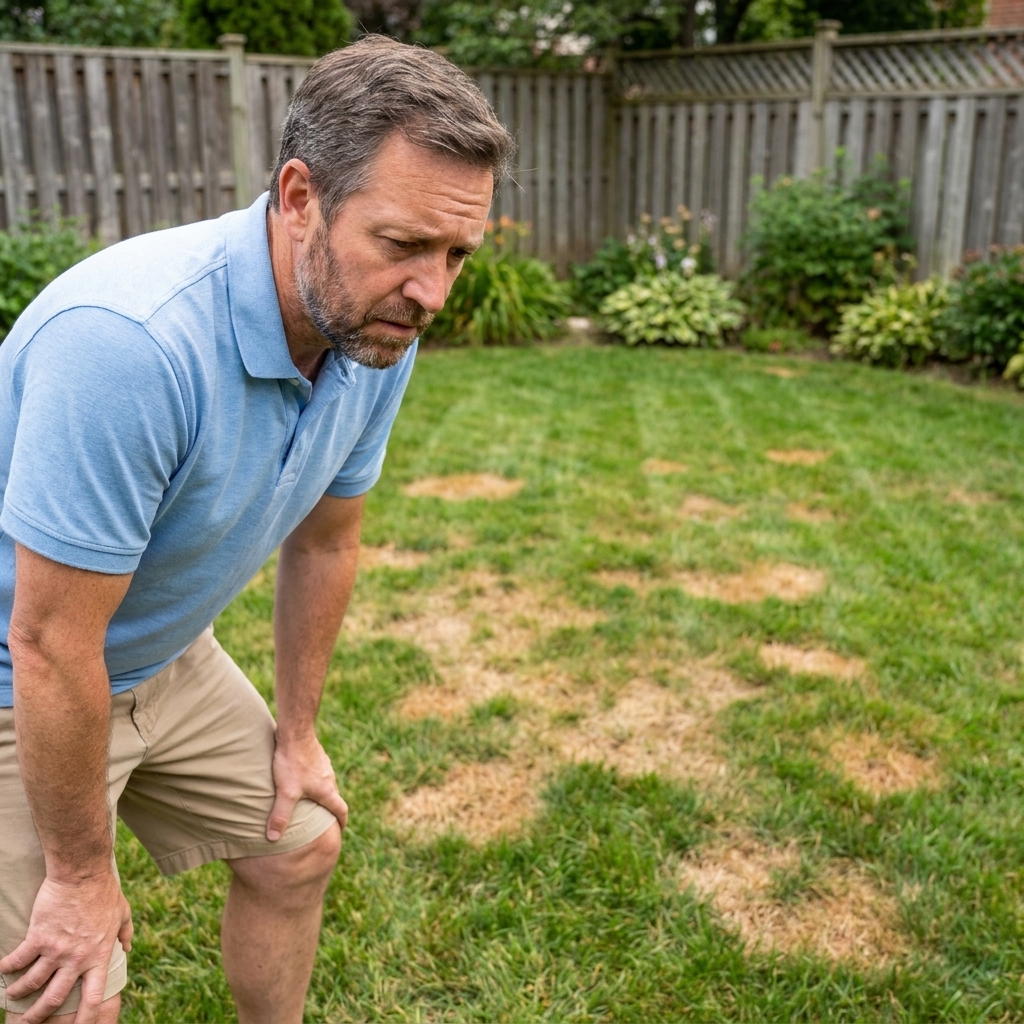
Brown patches have a special talent for showing up right when the rest of the lawn is finally looking good. The good news is most patch problems are fixable without hiring a crew, but you do need to tackle them in the right order: figure out why the grass is struggling, correct that issue, then repair the spot so new grass can actually survive.
This guide walks you through the exact process I use when I’m helping a neighbor bring a “polka-dot lawn” back to one smooth, green carpet.
Step 1: Confirm it is truly dead
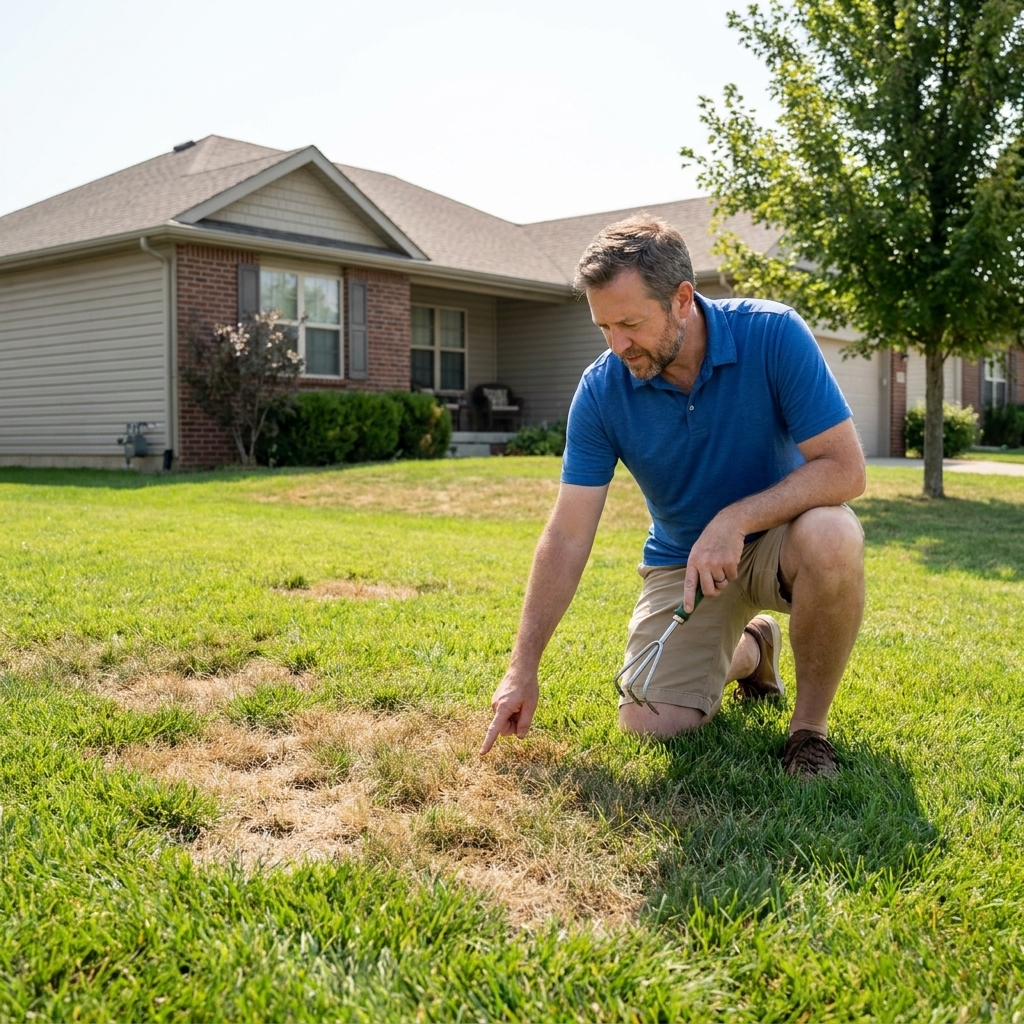
Before you rip anything out, do a quick check. Dormant grass can look straw-brown but still has living crowns that will green back up when conditions improve.
The tug test
Grab a small handful of brown grass and tug.
- If it pulls up easily like loose carpet, you likely have dead turf, shallow roots, or grub damage.
- If it resists and you feel it anchored, it might be drought stress or heat dormancy, not total death.
Look at the crown
Part the grass and look down at the base where the stems meet the soil.
- White or pale green crown usually means it is alive.
- Brown, mushy, or missing crowns usually means it is gone and needs repair.
Step 2: Diagnose the cause
Reseeding over the top of a problem is like painting over water damage. It looks good for a minute, then fails again.
Also, don’t assume it is one single culprit. In real yards, causes can stack up. A compacted spot might also dry out faster. A shady area might also stay wet longer and invite disease.
Here are the most common causes and the clues that point to each one.
Uneven watering or drought stress
- Clues: Brown areas show up on high spots, near pavement, or along south and west facing edges. Grass looks gray-green before it browns.
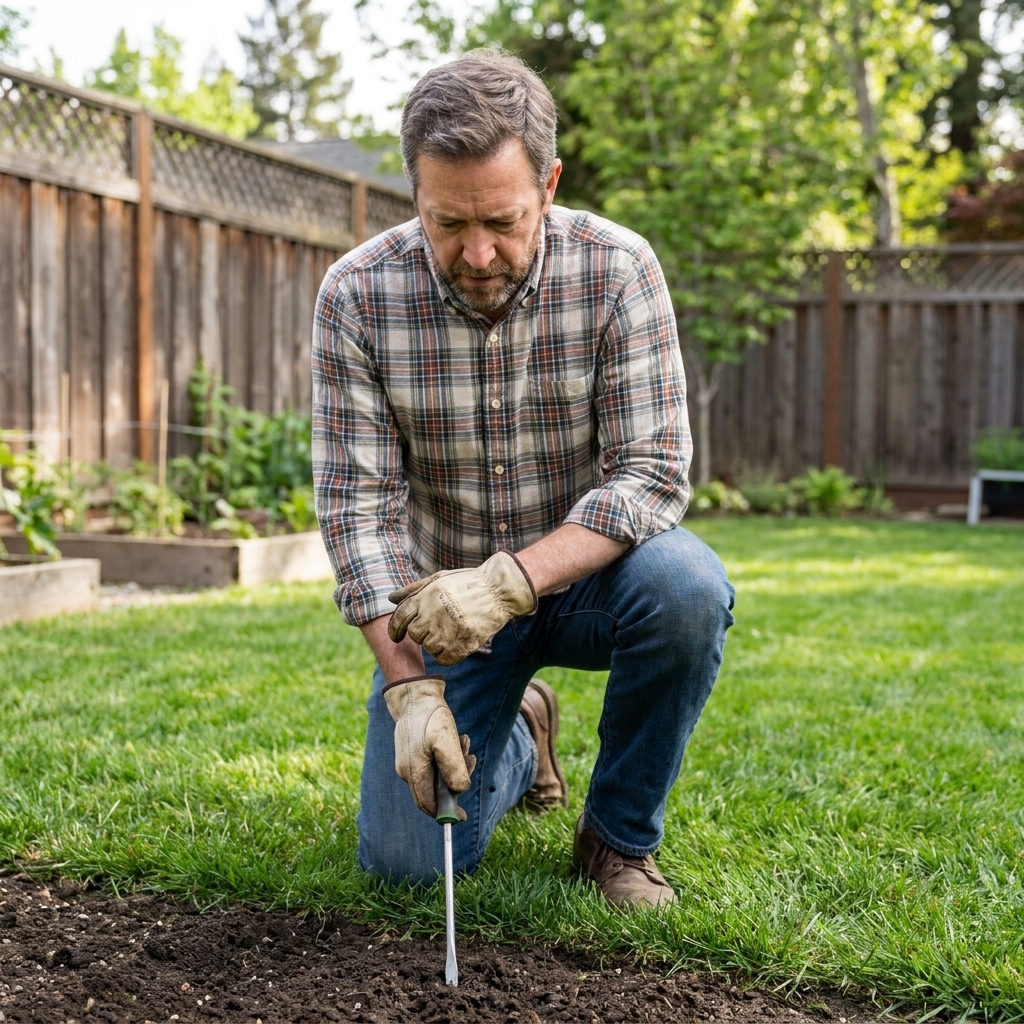
- Quick check: Push a screwdriver into the soil. If it stops after an inch or two, the soil is too dry or too compacted.
- Fix: Deep, infrequent watering and improved sprinkler coverage. Many established lawns do well with around 1 inch per week total (rain + irrigation), applied in 1 to 2 soakings, but adjust for your soil and weather. Sandy soil often needs smaller, more frequent soakings. Heavy clay needs slower watering to avoid runoff. During peak heat, some lawns need more.
Shade and tree competition
- Clues: Thin, weak grass under trees or on the north side of buildings that never really dries out. You may see moss, more bare soil, or algae on the surface.
- Fix: Raise mowing height, overseed with a shade-tolerant mix where appropriate, and prune for light and airflow if possible. Under dense trees, consider mulched beds or shade groundcovers instead of fighting for turf that cannot get enough light.
Dog urine
- Clues: Small round spots, often with a dark green ring around a straw center.
- Fix: Flush the area with water as soon as possible. Long-term, encourage the dog to use one area, or water that spot right after they go.
Fungal disease
- Clues: Patches that expand, especially during humid nights. Grass may pull up with a rotted base. You might see a “smoke ring” edge in the morning with some diseases or leaf lesions when you look closely.
- Fix: Water early morning only, reduce evening irrigation, avoid pushing heavy growth during hot, humid stretches, and improve airflow. If you are considering a fungicide, try to confirm you are dealing with a disease first by checking for lesions, comparing symptoms, or contacting your local extension office. Fungicides can help in the right situation, but cultural fixes matter more long term.
Grubs or other insects
- Clues: Irregular dead areas that peel back easily like sod. You may see birds or raccoons tearing at the turf.
- Quick check: Cut three sides of a 1 foot by 1 foot flap and peel it back. Finding more than about 6 to 10 grubs per square foot is a common rule of thumb for likely damage, but thresholds vary by species, season, and turf health. When in doubt, your local extension guidance is gold.
- Fix: For active infestations, a curative grub control product labeled for grubs can help. For prevention next season, apply a preventive product in early to mid-summer (timing varies by region and species).
Compaction, thatch, and poor drainage
- Clues: Thin grass in high-traffic routes, clay soil that stays soggy, puddles after rain, or hard ground that is difficult to penetrate. A thick spongy layer between grass and soil (thatch) can also block water infiltration and create a humid zone that favors disease.
- Fix: Core aeration, compost topdressing, and redirecting foot traffic. Dethatching or power raking can help when thatch is truly excessive. If you have chronic pooling caused by low spots or heavy subsoil, compost alone is not a magic fix. You may need minor regrading, a drain solution, or a different landscape approach in that area.
Heat stress from pavement or reflected sun
- Clues: Consistent browning along driveways, sidewalks, or rock borders.
- Fix: Increase water slightly in these zones, raise mowing height, and consider a heat-tolerant grass type when you reseed or patch.
Spills, salt, or fertilizer burn
- Clues: Sharp-edged dead streaks where fertilizer was dropped or where de-icer runoff collects. The grass may turn yellow first, then brown.
- Fix: Immediately water heavily to dilute if it just happened. For salt issues, flush the soil and improve drainage, then reseed once conditions normalize.
Step 3: Pick a repair method
Once you address the cause, pick the repair strategy based on how big the patch is and what time of year it is.
Use seed when
- Patches are small to medium, or scattered across the lawn
- You can keep the soil consistently moist for 2 to 3 weeks
- You are in the best seeding window for your grass type
Use sod or plugs when
- You need an instant fix
- Erosion is a concern on slopes
- You are outside prime seeding season and need coverage now
- Your grass type is not typically seeded
Get the timing right
- Cool-season lawns (Kentucky bluegrass, fescue, ryegrass): seed in late summer to early fall for best results.
- Warm-season lawns (Bermuda, zoysia, centipede, St. Augustine): late spring through summer is prime time for plugging or sodding because soil is warm. Seeding is common for Bermuda. Some zoysias can be seeded, but many are established with sod or plugs. St. Augustine is typically installed as sod or plugs, not seed.
Quick way to guess what you have: If your lawn greens up early in spring and stays green into fall, you are often looking at cool-season turf. If it loves summer heat but goes tan after the first frost, it is usually warm-season turf. If you are still unsure, bring a sample or a few photos to your local extension office or a reputable garden center.
Step 4: Gather tools and materials
You do not need much, but the right few items make the repair cleaner and more successful.
- Garden rake or stiff bow rake
- Hand cultivator or hoe (optional for bigger patches)
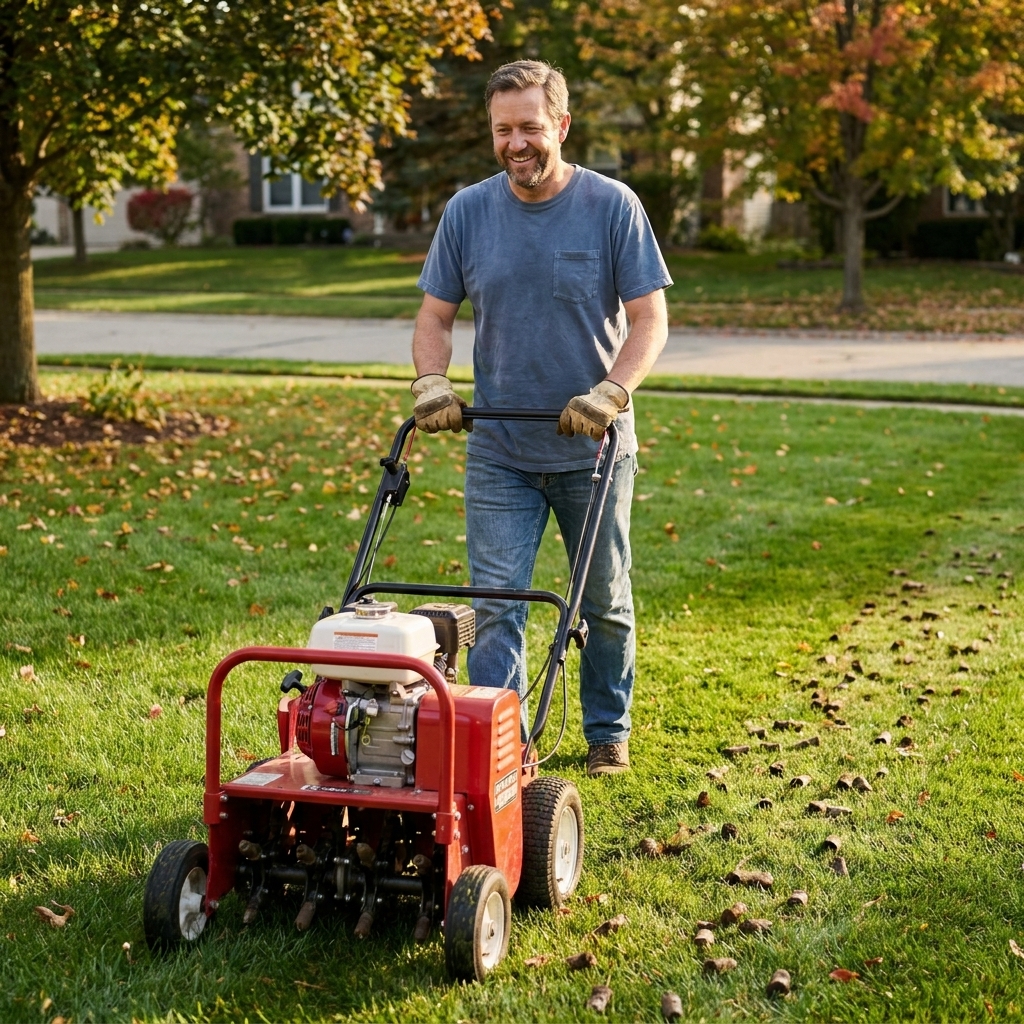
- Core aerator rental (optional for compacted areas)
- Quality grass seed that matches your existing lawn (if seeding)
- Matching sod or plugs (if your grass is not typically seeded)
- Fresh topsoil and/or compost (screened is best)
- Starter fertilizer (optional but helpful)
- Peat moss or straw (optional as a light mulch)
- Hose-end sprinkler or oscillating sprinkler
Step 5: Prep the patch
This is the step most DIY repairs skip, and it is the reason many patches fail. Seed needs soil contact, oxygen, and consistent moisture. Sod and plugs need the same basics: loose soil, good contact, and water.
1) Remove dead material
Rake out dead grass, matted thatch, and loose debris until you see soil. If the area is weedy, pull weeds by the roots.
2) Loosen the top 1 to 2 inches of soil
Scratch up the soil with a rake or cultivator. If the ground is hard like a driveway, consider core aerating the surrounding area too, not just the spot.
3) Fix the grade
Add 1/4 to 1/2 inch of screened topsoil or compost and rake it smooth. You want the patch to sit slightly below surrounding turf before seeding, because the new soil settles.
4) Address the underlying issue now
- Chronic pooling or low spots: Compost can help infiltration a bit over time, but standing water usually needs a grade fix, a drain solution, or a different planting choice.
- Compaction: Core aerate nearby and topdress with compost.
- Pet spots: Flush the soil well before seeding or plugging.
Step 6: Seed for a match
The goal is for the repair to disappear in a month or two, not look like a different lawn “sticker.” That starts with using the right seed.
Match the grass type
If you are not sure what you have, look at leaf texture and growth habit. Kentucky bluegrass spreads with rhizomes, tall fescue is bunch-type with wider blades, perennial rye germinates fast and looks shiny.
How much seed to use
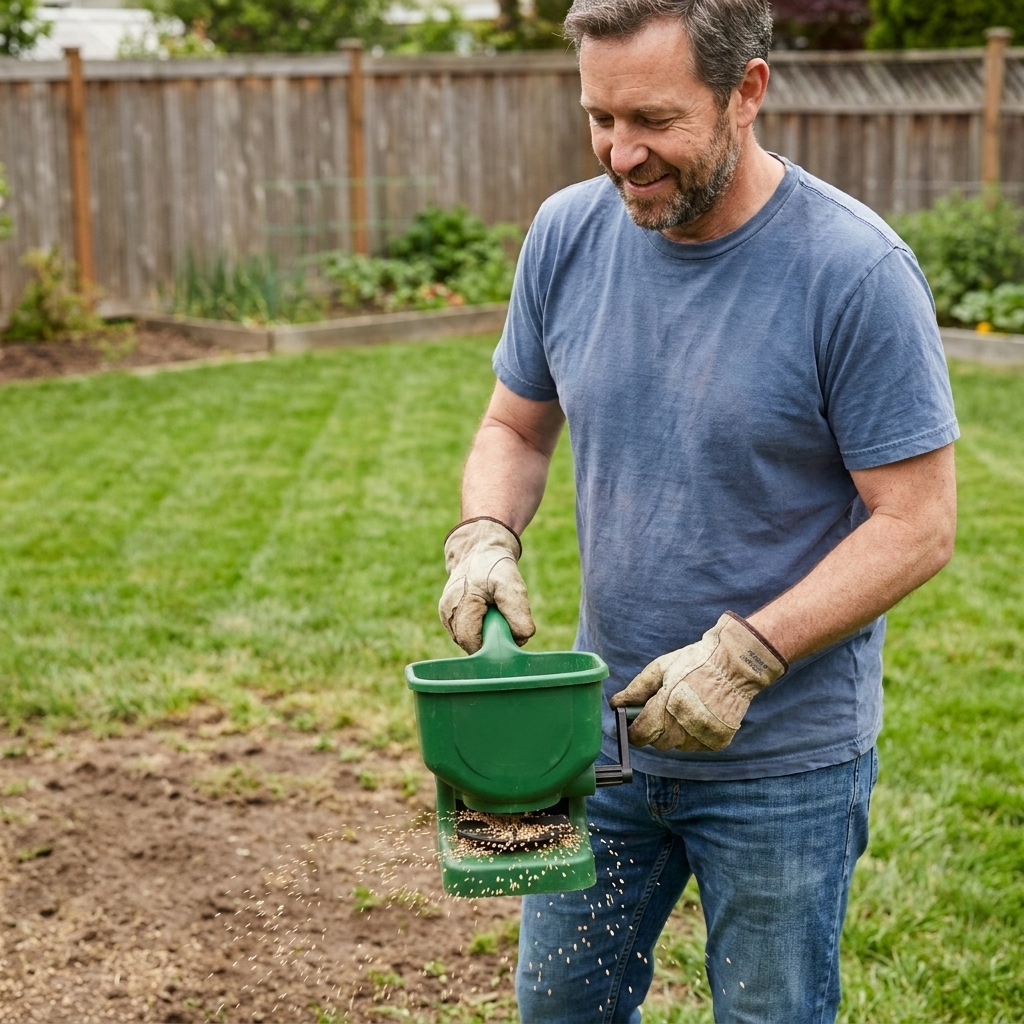
Use the rate on the bag for repair or overseeding. For small patches, a common DIY mistake is going way too heavy. Too much seed creates weak seedlings that compete and die off.
Seeding steps
- Spread seed evenly over the patch.
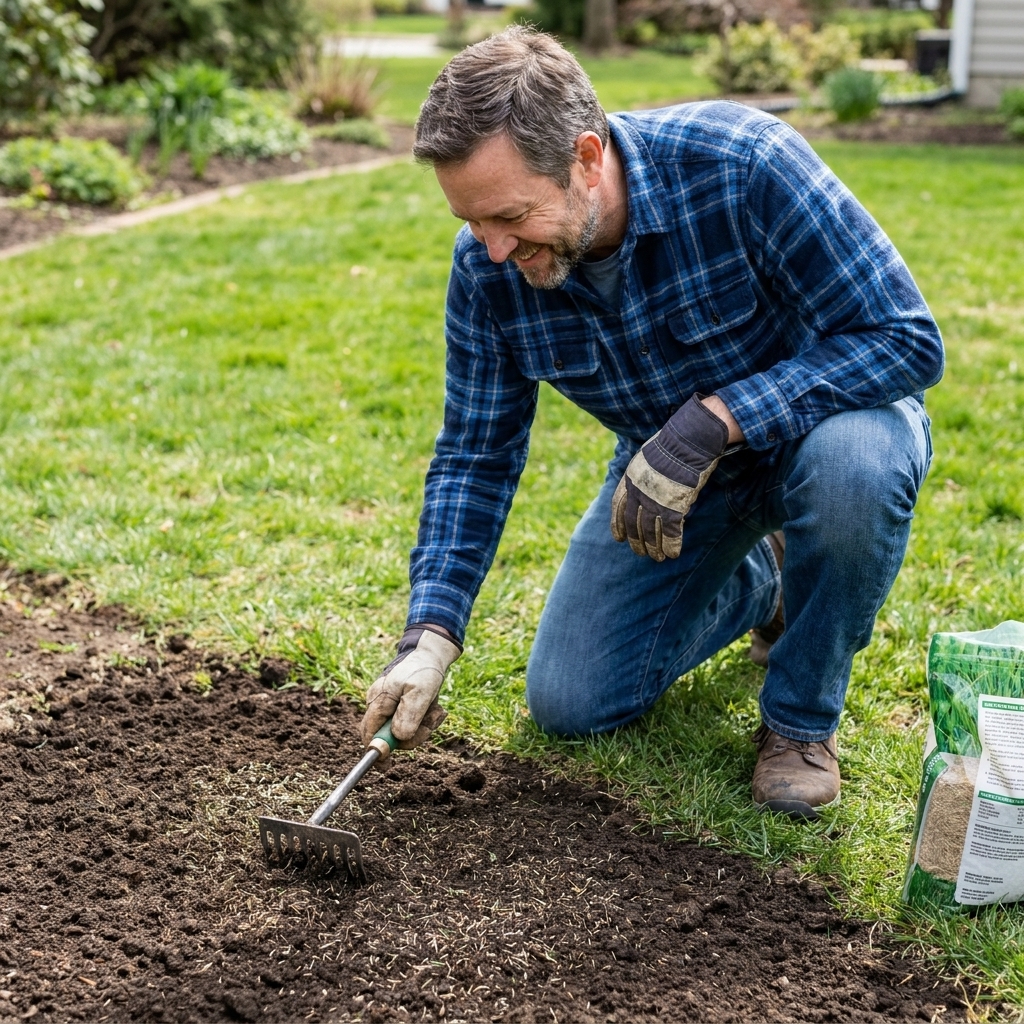
- Lightly rake so seed is tucked into the top 1/8 inch of soil.
- Gently press the area with your foot or a lawn roller so seed makes firm soil contact.
- Apply a light mulch layer if desired. You should still see some soil through it.
Step 7: Water consistently
Seed does not need floods. It needs consistency. Your job is to keep the top layer damp until germination, then transition to deeper watering so roots chase moisture downward.
Watering schedule (simple version)
- Days 1 to germination: Light water 1 to 3 times per day to keep the surface moist. In hot, windy weather, you may need more frequent short cycles.
- After germination to week 3: Water once daily or every other day, slightly longer each time.
- Weeks 3 to 6: Shift to deeper watering 2 to 3 times per week.
Adjust for rainfall, sun, and soil type. And if you see puddling or runoff, stop and split watering into shorter cycles so water can soak in.
Tip from my own yard: Set a timer on your phone the first week. Most patch failures happen because the patch dries out one afternoon and the tiny seedlings never recover. If you want a quick way to sanity-check sprinkler output, set a few straight-sided cans around the area and see how long it takes to collect about 1/2 inch.
Step 8: Fertilize lightly
A starter fertilizer can help new roots establish, but heavy nitrogen at the wrong time can invite disease or burn tender seedlings.
- If you used compost, you may be able to skip starter fertilizer on small repairs.
- If you do apply fertilizer, choose a product labeled starter and follow the bag rate.
- Avoid “weed and feed” products on newly seeded areas unless the label explicitly says it is safe for new seedings.
- During hot, humid stretches, be extra cautious with heavy nitrogen on cool-season lawns. Warm-season lawns often handle summer feeding differently, so follow guidance for your grass type and region.
Step 9: First mow and early care
When to mow
Mow the patch when the new grass reaches about 3.5 to 4 inches, and only remove the top third. Make sure your blade is sharp. A dull blade can yank seedlings out of the soil.
Foot traffic
Keep kids, dogs, and frequent walking off the patch for at least 3 to 4 weeks. If the area is in a path, drop a couple of temporary stepping stones to protect the seedlings.
Blending the color
New grass can look lighter at first. That is normal. It typically blends after a few mowings and a feeding cycle.
Keep patches from coming back
Once you have fixed the spot, the best payoff comes from preventing the next round.
Water deeper, less often
Train roots to grow down. Shallow daily watering is one of the fastest ways to create a lawn that browns out the minute summer shows up.
Mow higher in summer
Most lawns do better with a higher cut during heat. Taller blades shade the soil, reduce evaporation, and help crowd out weeds.
Test your soil
Soil pH and nutrient balance matter. A basic lab soil test is often cheaper than a single bag of “guess-and-check” fertilizer, and way more helpful.
Aerate compacted lawns
If the lawn sees lots of foot traffic or heavy clay soil, core aeration in the right season is one of the best “reset buttons” you can press.
Go easy on stress-season nitrogen
Pushing growth during stressful weather can raise disease pressure, especially in cool-season lawns.
Troubleshooting mistakes
- Seeding on top of dead grass: Seed dries out and never contacts soil.
- Using the wrong seed mix: The patch stays visible because texture and color do not match.
- Letting it dry out once: Seedlings are not forgiving in the first two weeks.
- Overwatering at night: Increases the odds of fungal issues.
- Applying weed killer too soon: Many herbicides can damage seedlings. As a general rule, many post-emergent herbicides are safer after the new grass has been mowed a few times, but always follow the label. Also note that pre-emergent weed preventers can stop grass seed from germinating, so do not apply them where you are trying to seed unless the product specifically allows it.
FAQ
Will dead grass come back?
If the crowns are dead, no. Grass blades do not heal back to life. You either need the grass to spread into the area (some types can) or you need to seed, plug, or sod.
Should I use topsoil or compost?
For most small repairs, a thin layer of screened compost is fantastic because it holds moisture and adds organic matter. Screened topsoil also works well, especially if you need to rebuild grade. Avoid thick layers that bury surrounding grass.
How long until the patch looks normal?
Fast-germinating grasses like perennial rye can show in under two weeks. Fescue often takes 7 to 21 days. Kentucky bluegrass can take 14 to 30 days. Most patches blend in after a few mowings, assuming watering and mowing are on point.
Can I just throw seed down before a rain?
A gentle rain can help, but a heavy downpour can wash seed away or bury it too deep. You will get better results by raking seed in and keeping it consistently moist yourself.