A homeowner-friendly, step-by-step guide to diagnosing brown lawn patches, repairing dead spots with seed, sod, or plugs, and preventing them from coming back.
lawn care
Fix Summer Brown Patches in Your Lawn
 Mark Vance
 is a former professional landscaper and the lead turf enthusiast at Yard Mentor. With over 15 years of experience in soil health, turf management, and residential landscaping, he is dedicated to helping homeowners transform frustrating dead patches into lush, healthy lawns. When he isn't testing new grass seed blends, you can find him enjoying a Saturday morning coffee looking out over his freshly striped yard.
Updated October 17, 2026
Created October 17, 2026
Mark Vance
Mark Vance is a former professional landscaper and the lead turf enthusiast at Yard Mentor. With over 15 years of experience in soil health, turf management, and residential landscaping, he is dedicated to helping homeowners transform frustrating dead patches into lush, healthy lawns. When he isn't testing new grass seed blends, you can find him enjoying a Saturday morning coffee looking out over his freshly striped yard.
Updated October 17, 2026
Created October 17, 2026
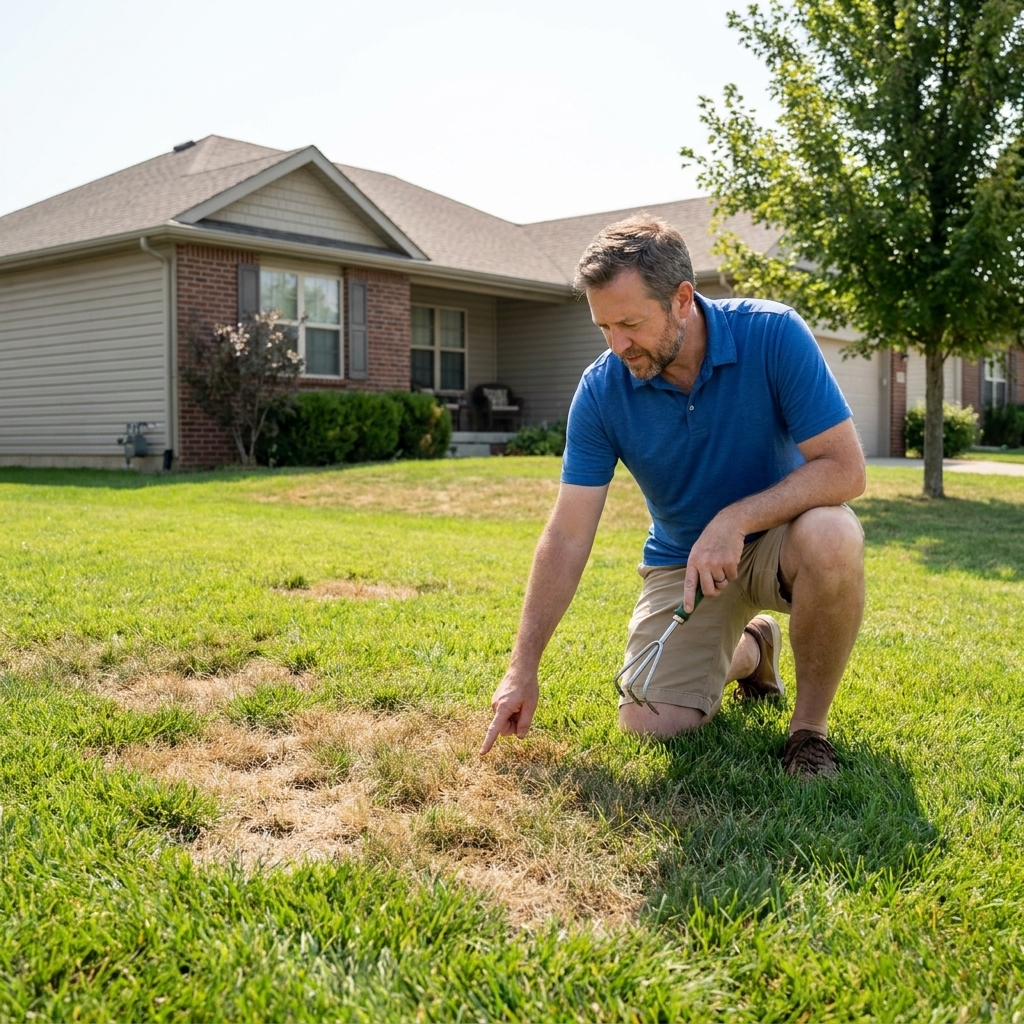
Few things are more frustrating than walking out in July and seeing your lawn develop “leopard spots” overnight. The good news is that most summer brown patches trace back to a handful of repeat offenders. The most common are drought or heat stress, fungal disease, and grubs, but they are not the only possibilities. Irrigation coverage issues, compacted soil, pet urine, mower scalping, heat reflection, and a few other insects can create convincing look-alikes.
Below is the exact method I use when I’m diagnosing brown areas for homeowners: quick tests first, then targeted repair, then a simple routine so it does not come back next summer.
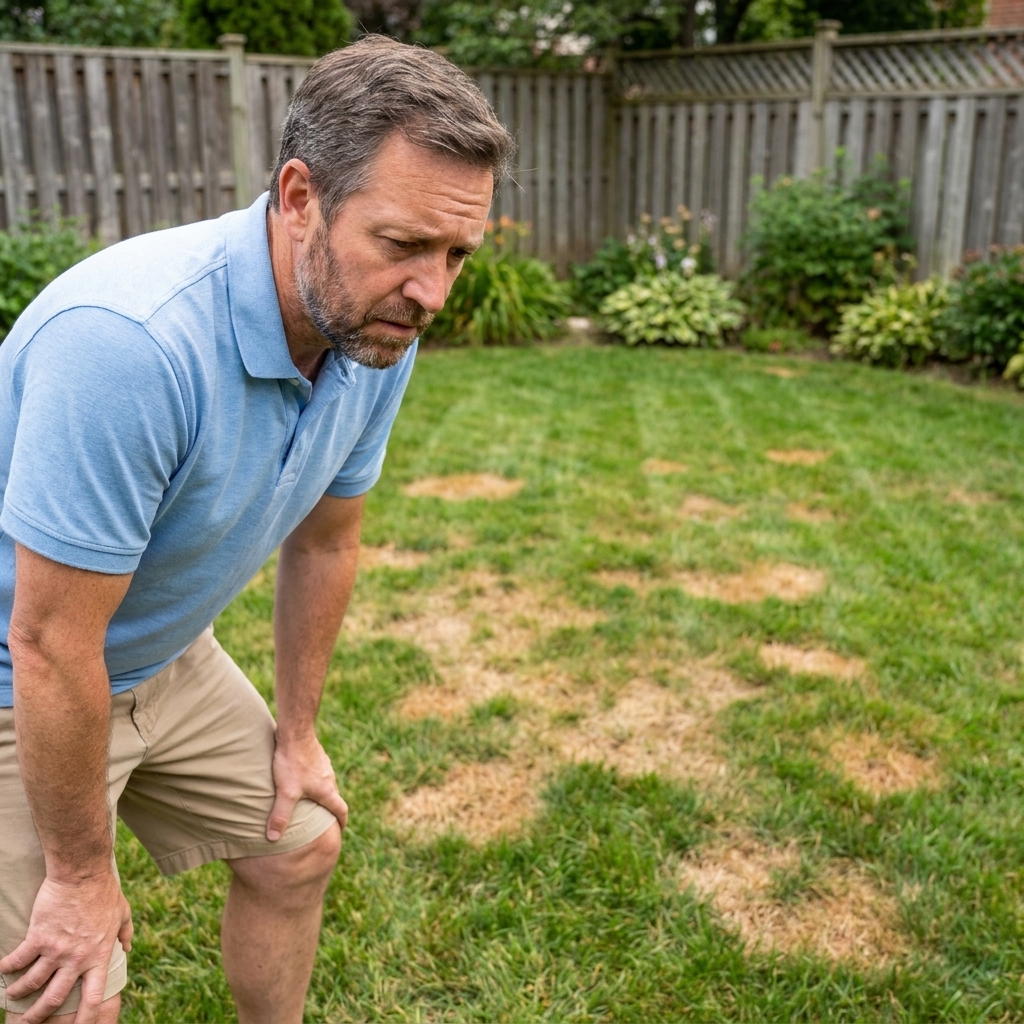
Start with a 10-minute diagnosis
Before you buy anything, do these checks in order. You will often have a strong suspect by step three, and steps four and five help confirm what you are seeing.
1) Map the pattern
- Even, widespread fading (especially sunny spots, slopes, near sidewalks): typically drought or heat stress, or irrigation coverage problems.
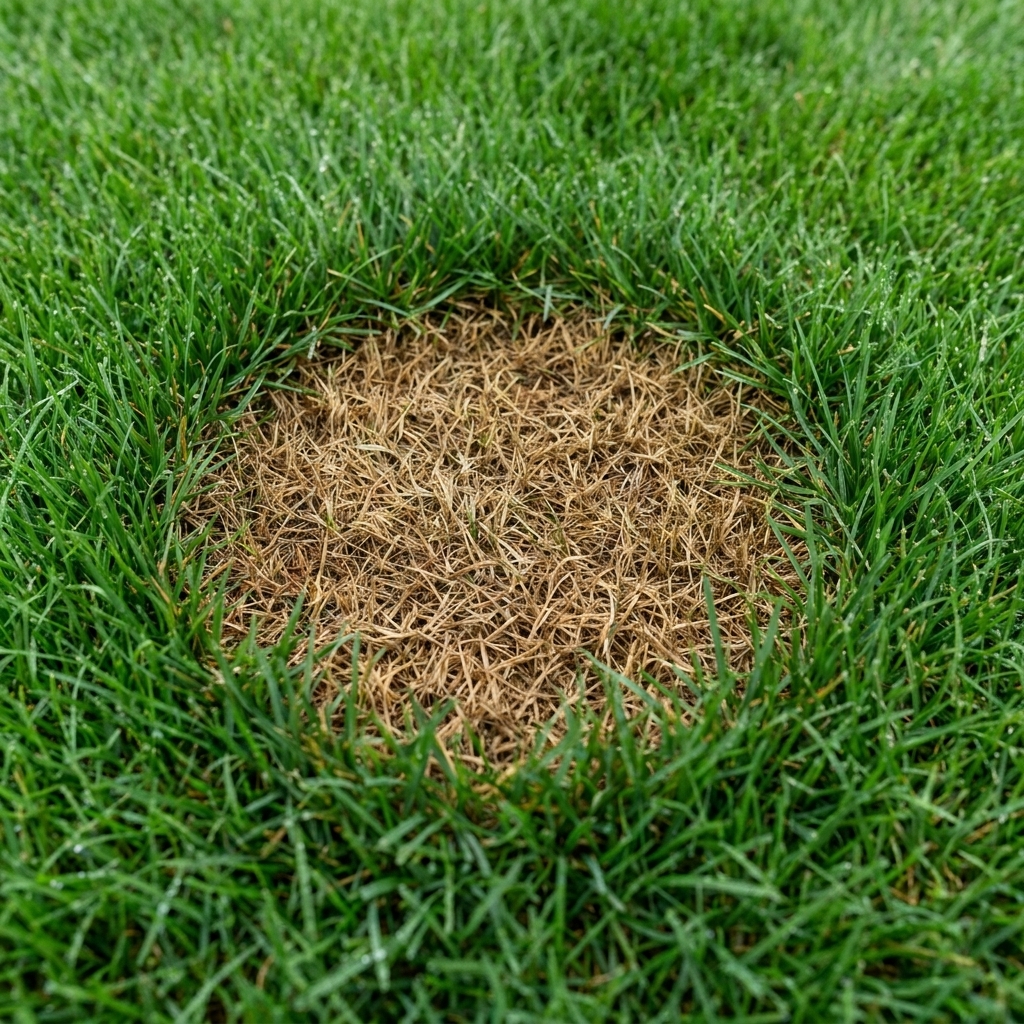
- Round-ish patches that expand and may have a darker outer ring: often fungal disease.
- Random dead spots that feel loose underfoot or get worse fast: can be grub feeding.
- Small, intense spots (often a couple inches to a foot) with very green grass around them: sometimes pet urine.
- One side of the lawn that browns while the rest looks fine: think sprinkler coverage, a clogged nozzle, a broken head, or a zone that is not running long enough.
2) Do the “tug test”
Grab a handful of grass at the edge of a brown patch and tug.
- If it pulls up easily like a bad wig, and you see little to no roots, suspect grubs or other root-feeding insects.
- If it stays anchored but looks straw-colored, suspect drought or heat stress or fungal disease.
3) Look closely at the leaf blades
Get down at turf level. I know it feels silly, but this is where the clues live.
- Drought or heat stress: blades look folded, crispy, gray-green before turning tan. Footprints linger after you walk on it.
- Fungal disease: blades may show spots, lesions, or a “smoked” look. Early morning you might see a light cobwebby growth in severe cases.
- Grubs: the blades often look fine until the roots are gone, then the whole area collapses into brown.
- Mower scalping: the area looks suddenly tan after mowing, often on high spots or slopes, and you may see shredded tips from a dull blade.
4) Check soil moisture 3 inches down
Use a screwdriver or soil probe.
- If it is hard to push in, the soil is dry. That supports drought stress, localized dry spot (hydrophobic soil), or inadequate irrigation.
- If it slides in easily and comes out damp but turf is still browning, fungal disease climbs higher on the list, along with compaction, poor drainage, and shallow rooting.
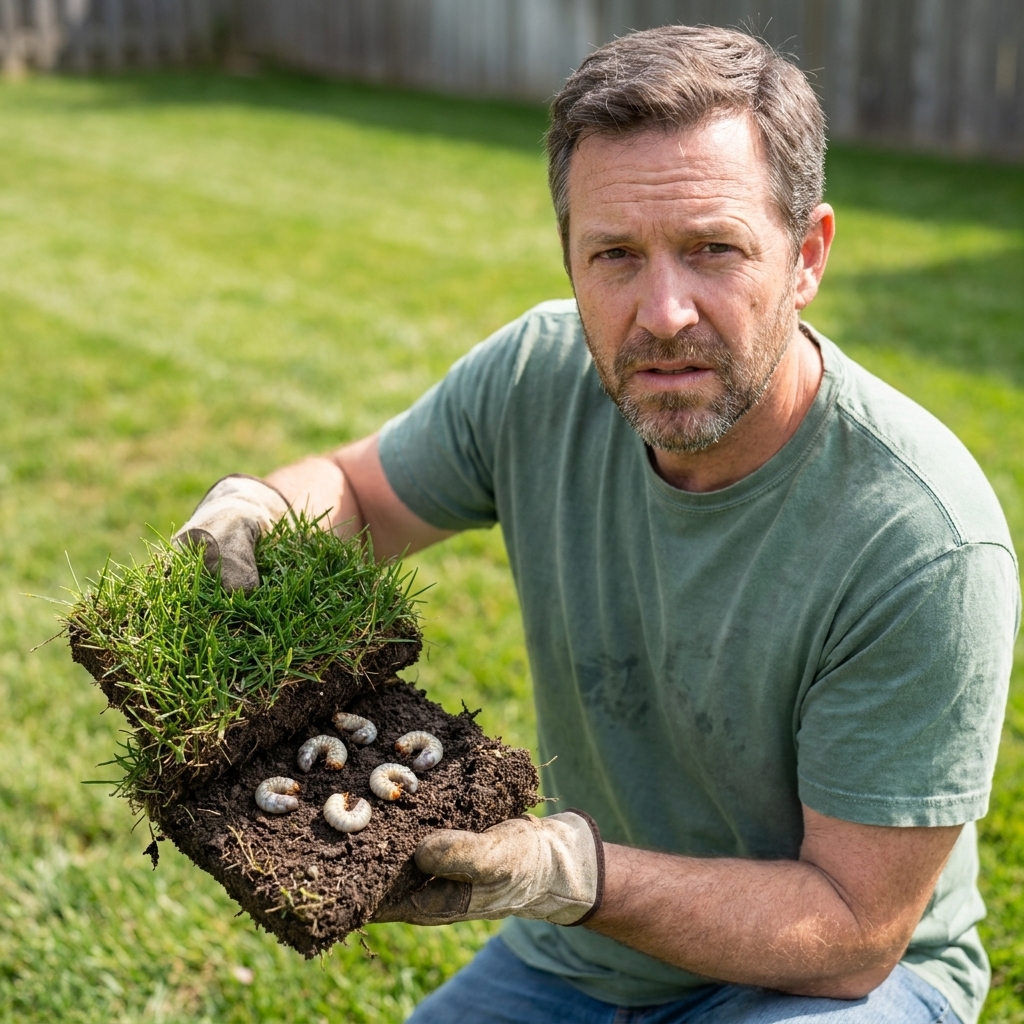
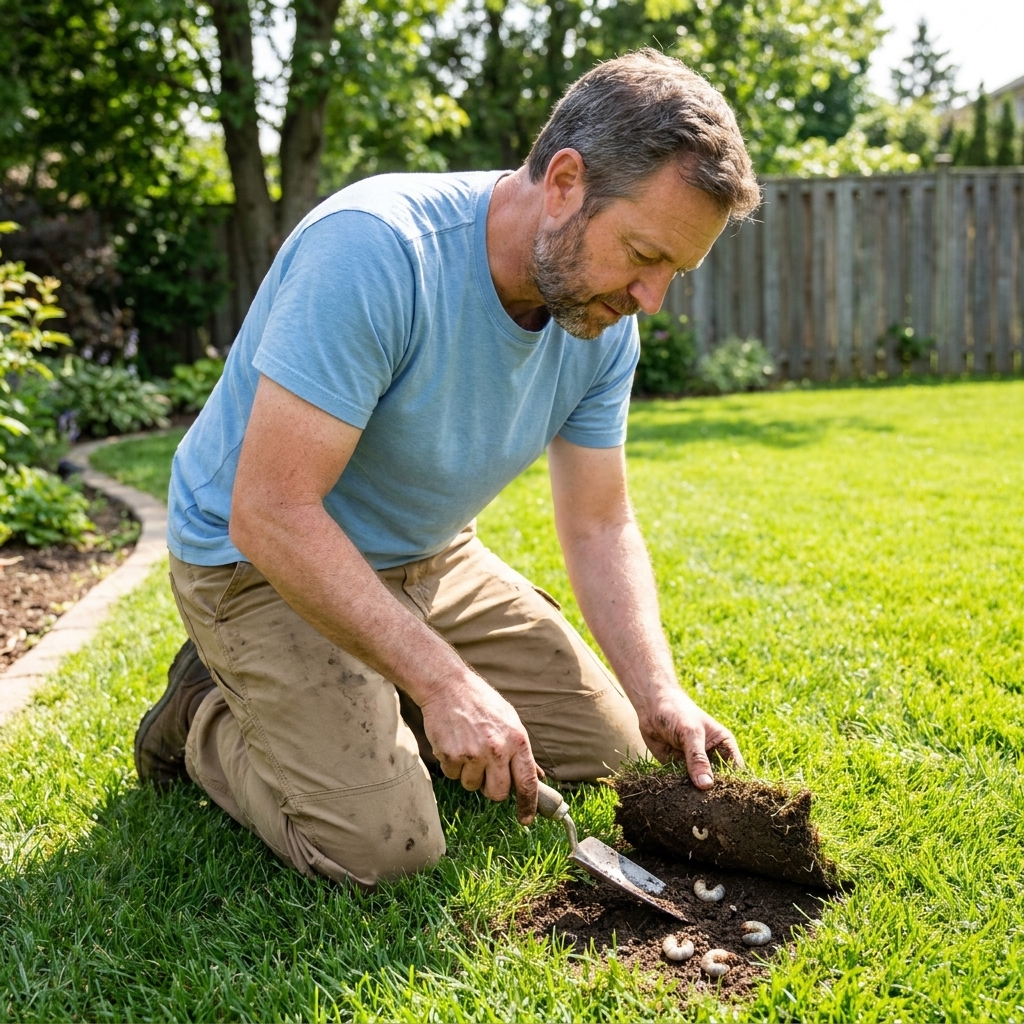
5) Confirm grubs with a small peel-back test
Cut a 1-foot square on the edge of a patch (three sides, like a flap), peel back the sod, and count grubs in the top 2 to 3 inches of soil.
- Rule of thumb: Action thresholds vary by grub species, soil, turf type, and region. Many extension guides put the “consider treating” range around 5 to 10+ grubs per square foot, with damage more likely as you climb higher.
- If you find 8 to 10+ per square foot and the turf lifts easily, grubs are a very likely cause.
If it’s drought stress: water smarter
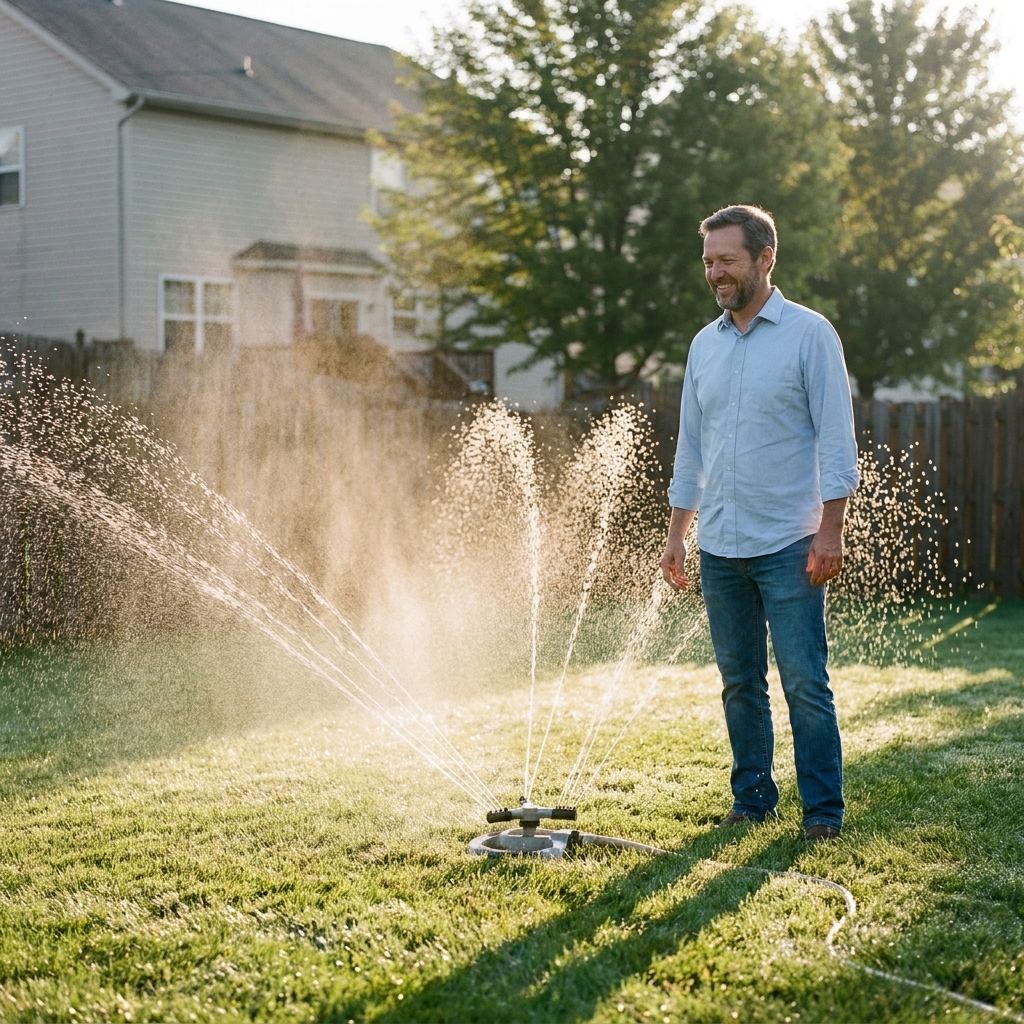
In summer, most lawns do not need daily water. They need deeper, better timed water. That said, during heat waves and wind, some lawns do need more total water than usual to keep up with evaporation, especially in sandy soils or full sun. Light daily sprinkling trains shallow roots and can make heat stress worse.
Routine fix
- Water deeply, early: Aim for early morning watering so the turf dries quickly after sunrise.
- Start with 1 inch per week: Use 1 inch per week total (rain + irrigation) as a starting point for many lawns, split into 2 waterings for most soils. Hotter, drier climates and peak heat can require more. Sandy soil often does better with 3 shorter deep soakings.
- Use the tuna-can test: Put a few empty tuna cans around a zone and run sprinklers until the average depth hits 0.5 inches. That tells you how long to run that zone.
- Mow higher: Cool-season grasses (Kentucky bluegrass, fescue, rye) do well at about 3.5 to 4 inches in summer. Warm-season grasses typically run shorter, often around 1 to 3 inches depending on species and mowing method. When in doubt, raise your mower one notch during peak heat.
- Pause heavy nitrogen: Pushing growth during heat can backfire. If you must feed, use a slow-release product at a light rate.
How to repair drought-stressed brown areas
If the crowns are still alive, drought-stressed turf often greens back up within 7 to 14 days of corrected watering. If the patch is truly dead, do this:
- Rake out the straw and loosen the top half-inch of soil.
- Topdress lightly with compost (about a quarter-inch).
- Overseed with the right grass type for your region and sun exposure.
- Keep seed damp with light watering 1 to 2 times per day until germination, then transition to deeper watering.
If it’s fungal disease: dry the canopy
Most summer lawn diseases are opportunists. Heat plus humidity plus prolonged leaf wetness equals trouble. The key is to make conditions less inviting, then decide if a fungicide is warranted.
Common summer diseases (what they look like)
- Brown patch: circular patches that can range from a dinner plate to several feet wide; sometimes a darker ring around the edge. Often worse during warm, humid nights.
- Dollar spot: many small, straw-colored spots that can merge into larger thin areas; often shows up when nitrogen is low.
- Summer patch (cool-season lawns): irregular patches that can look like heat stress, often tied to compaction and stressed root systems.
Important: Different diseases can look similar, and drought stress can mimic disease. That is why soil moisture, timing, and the leaf blade clues matter in your diagnosis.
Routine fix (do these even if you use fungicide)
- Water only in the morning: Night watering is a disease invitation.
- Avoid frequent light watering: It keeps the canopy damp.
- Mulch clippings is usually fine: If you are seeing lots of diseased tissue sticking to shoes or mower tires, bagging for a week or two can reduce debris tracking. Otherwise, focus on mowing when the grass is dry and keeping the blade sharp.
- Improve airflow: Trim back overgrown edges, and avoid letting grass get too tall and matted.
- Reduce nitrogen spikes: Heavy quick-release fertilizer during hot weather can intensify brown patch.
- Aerate in the right season: For cool-season lawns, core aeration is best in early fall. For warm-season lawns, late spring to early summer.
When fungicide makes sense
If the patch is expanding quickly, you have a history of recurring disease, or you are dealing with high-value areas, fungicide can help. Look for products labeled for your specific disease and grass type, and rotate active ingredients if you need repeated applications. Follow label directions exactly, including watering-in instructions and reapplication intervals. Check local restrictions, and when you are not sure what you are treating, your local extension office can help confirm the diagnosis before you spray.
If you prefer a conservative approach, start with mowing height and watering changes first. You would be surprised how often that stops the spread.
If it’s grubs: treat on purpose
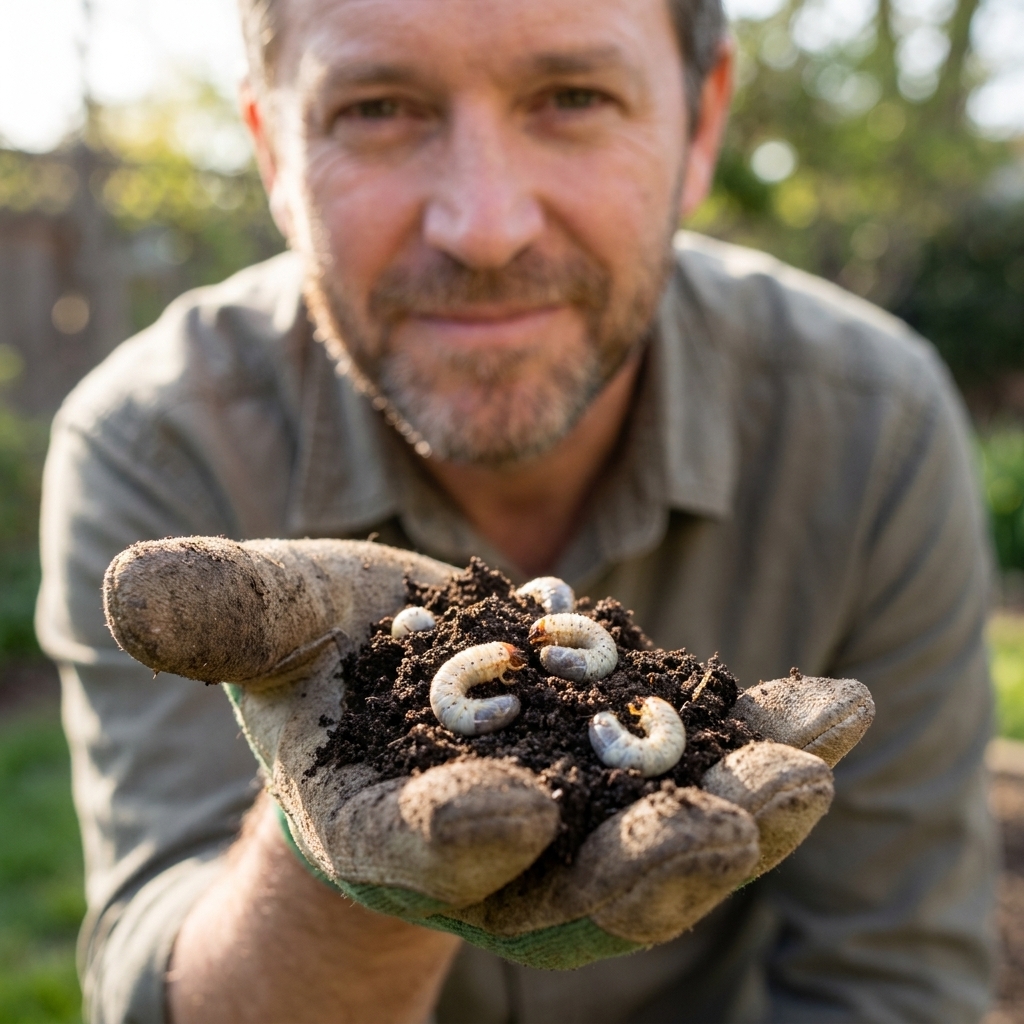
Grub damage often shows up in mid-to-late summer because the larvae are large enough to eat a lot of roots. Skunks, raccoons, and birds tearing up turf is another big clue that grubs are present.
Two types of grub control
- Preventive control: Applied earlier in the season when eggs hatch and larvae are small. Common active ingredients in preventive products include chlorantraniliprole and imidacloprid (timing and use vary by product and local guidance).
- Curative control: Used when you have active damage and you confirm grubs in the soil. These are meant to work faster on larger larvae, and labels often require watering-in. A common curative active ingredient is trichlorfon where it is available and labeled for your use.
One key timing note: late-season applications of “preventive” products usually do not perform well once grubs are large and actively feeding. If it is late summer and you have confirmed grubs, a curative treatment is usually the move.
Routine fix
- Confirm the problem with the peel-back test before treating.
- Spot treat affected areas plus a few feet beyond the edge of damage.
- Water in per label so it reaches the feeding zone.
- Repair the turf after feeding stops: rake, loosen soil, add a thin compost layer, and reseed or resod depending on how much is gone.
My practical rule: If the grass still has roots and you catch grubs early, it can recover. If the turf lifts like carpet, plan on reseeding or patching with sod.
Other causes to rule out
If your patch does not fit drought stress, disease, or grubs, do not force it. A few quick checks can save you from treating the wrong problem.
- Irrigation coverage: Run your system and watch it. Dry arcs, blocked spray, a tilted head, or mismatched nozzles can create perfect brown islands in an otherwise healthy lawn.
- Localized dry spot: Water beads up or runs off, but the soil stays dry underneath. A wetting agent, better soil organic matter, and slower cycle-and-soak watering can help.
- Soil compaction or poor drainage: Areas near paths, play zones, and dog runs get hammered. Compaction can cause browning even when soil feels damp. Plan aeration for the right season.
- Pet urine: Small round patches with dark green rings are classic. Drench the spot with water as soon as you notice it, and focus on reseeding thin areas.
- Heat reflection: South-facing walls and low windows can cook a stripe of turf. These spots often need extra water and a higher mowing height.
- Other insects: Chinch bugs (common in some warm-season lawns) and billbugs can mimic drought stress. If you suspect insects but do not see grubs, confirm with local extension guidance before treating.
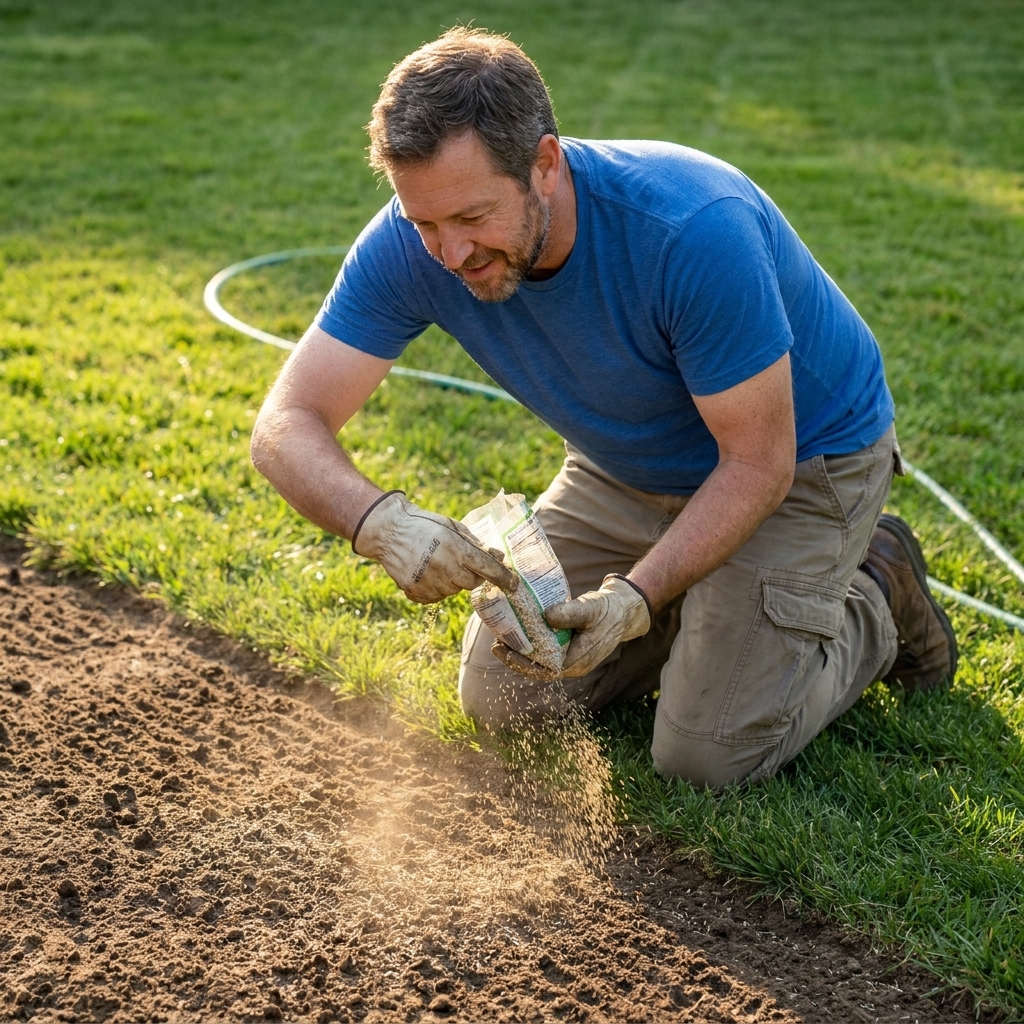
Step-by-step: repair any brown patch
Once you have addressed the cause, this is the routine repair sequence that works for drought stress, disease aftermath, or grub damage.
1) Define the edge
Use a hand rake to pull back dead material until you hit turf that is truly alive. You want a clean boundary so seed has good contact with soil.
2) Loosen the top layer
Scratch up the top half-inch of soil. Compacted, crusty soil is one of the biggest reasons patch repairs fail.
3) Add a light topdressing
A thin layer of compost helps hold moisture and improves seed-to-soil contact. Keep it light so you do not bury existing grass.
4) Seed or sod
- Seed: best for larger areas and budget-friendly repairs. Match your existing grass type as closely as possible.
- Sod: best for high-traffic spots or when you need instant cover. It also helps on slopes where seed washes.
5) Water for establishment
- Days 1 to germination: keep the surface consistently damp.
- After germination: gradually reduce frequency and increase depth.
- After 3 to 4 weeks: transition to your normal deep watering schedule.
6) Mow carefully
Do not mow new seedlings until they are tall enough and rooted enough to resist being pulled. When you mow, use a sharp blade and avoid tight turns on the patch.
Prevent brown patches in summer
Most brown patches are preventable with a few steady habits. You do not need a dozen products. You need consistency.
Weekly
- Mow high and keep blades sharp.
- Water based on need, not the calendar. If you got a soaking rain, skip irrigation.
- Scout trouble spots: sunny slopes, edges by pavement, shaded corners with poor airflow, and areas hit by window glare.
Monthly
- Check irrigation coverage: dry arcs from misaligned sprinklers create “mystery” brown zones.
- Lightly rake out thatch in problem areas if it is building up and matting down the canopy.
Seasonally
- Aerate in the correct season for your grass type.
- Fertilize with restraint in peak heat. Save your heavier feeding for the season when your grass wants to grow.
- Consider preventive grub control if you have a history of grub damage, and time it to your region and product label.
Quick troubleshooting
The patch is brown but the soil is damp
That points away from drought and toward fungal disease, compaction, poor drainage, or shallow roots. Check mowing height and thatch, and look for leaf lesions. If the area is low and stays wet, drainage can be the real issue.
The patch looks dead, but it greens up after rain
Classic drought or heat stress. Adjust your watering schedule and verify your sprinkler coverage.
The lawn has brown patches and weeds are thriving
Weeds often take over when turf is thin. Fix the underlying stress first, then overseed to thicken the lawn. A thick stand of grass is the best long-term weed control.
I treated for disease but patches keep spreading
Double-check watering timing, mowing height, and whether you actually have grubs, irrigation gaps, compaction, or heat reflection instead. Fungicide helps, but it will not solve an irrigation problem or missing roots.
FAQ
Will brown grass come back in summer?
Sometimes. If the crowns are alive, grass can rebound once watering and stress are corrected. If the patch is truly dead or the roots are gone (common with grubs), you will need to reseed or patch with sod.
How long does it take to fix a brown patch?
Drought stress can improve in 1 to 2 weeks. Disease recovery depends on stopping the spread and regrowth, often 2 to 6 weeks. Reseeding timelines depend on grass type, but many cool-season blends germinate in 7 to 21 days, then need several more weeks to mature.
Should I fertilize brown patches?
Not until you know why they are brown. Fertilizer will not fix missing roots, and heavy nitrogen in heat can worsen some diseases. Once the cause is addressed, a light, slow-release feeding can help recovery if your grass is in an active growth period.
Can I just rake out brown spots and throw down seed?
You can, but it is hit-or-miss if you do not fix the cause first. Seed fails most often because the soil stays too dry, the area is compacted, or the lawn is still being stressed by insects or disease.
If you want the fastest “aha” moment, do the tug test and the screwdriver moisture check. Those two simple steps solve most summer brown patch mysteries without spending a dime.