A homeowner-friendly, step-by-step guide to diagnosing brown lawn patches, repairing dead spots with seed, sod, or plugs, and preventing them from coming back.
lawn care
How to Get Rid of Chinch Bugs and Repair Summer Lawn Damage
 Mark Vance
 is a former professional landscaper and the lead turf enthusiast at Yard Mentor. With over 15 years of experience in soil health, turf management, and residential landscaping, he is dedicated to helping homeowners transform frustrating dead patches into lush, healthy lawns. When he isn't testing new grass seed blends, you can find him enjoying a Saturday morning coffee looking out over his freshly striped yard.
Updated October 17, 2026
Created October 17, 2026
Mark Vance
Mark Vance is a former professional landscaper and the lead turf enthusiast at Yard Mentor. With over 15 years of experience in soil health, turf management, and residential landscaping, he is dedicated to helping homeowners transform frustrating dead patches into lush, healthy lawns. When he isn't testing new grass seed blends, you can find him enjoying a Saturday morning coffee looking out over his freshly striped yard.
Updated October 17, 2026
Created October 17, 2026
Few things mess with a summer lawn like chinch bugs. One week your grass looks a little “dry,” and the next you have crispy, drought-like patches that do not respond to watering. The good news is you can beat them, and you can repair the damage without tearing up your whole yard. I will walk you through how to confirm chinch bugs, knock them down fast, and then rebuild those dead zones the right way.
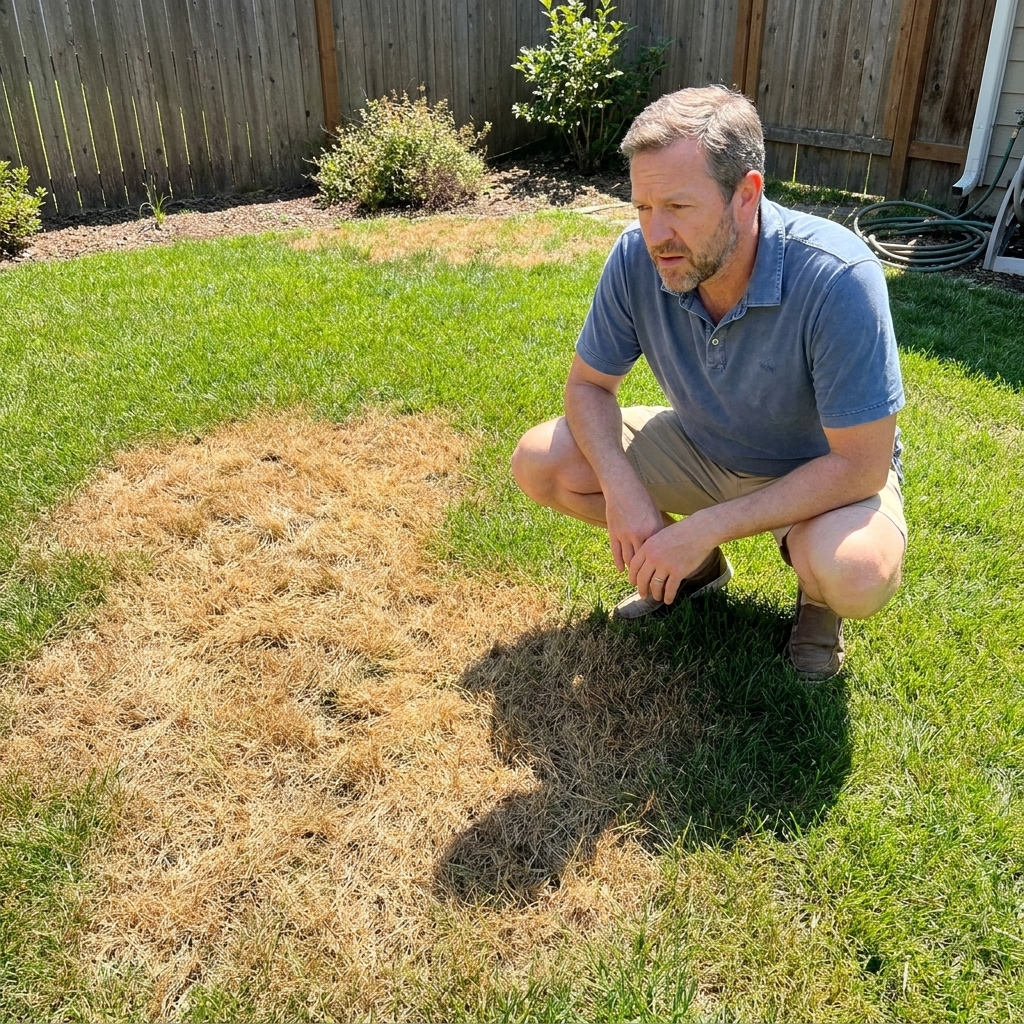
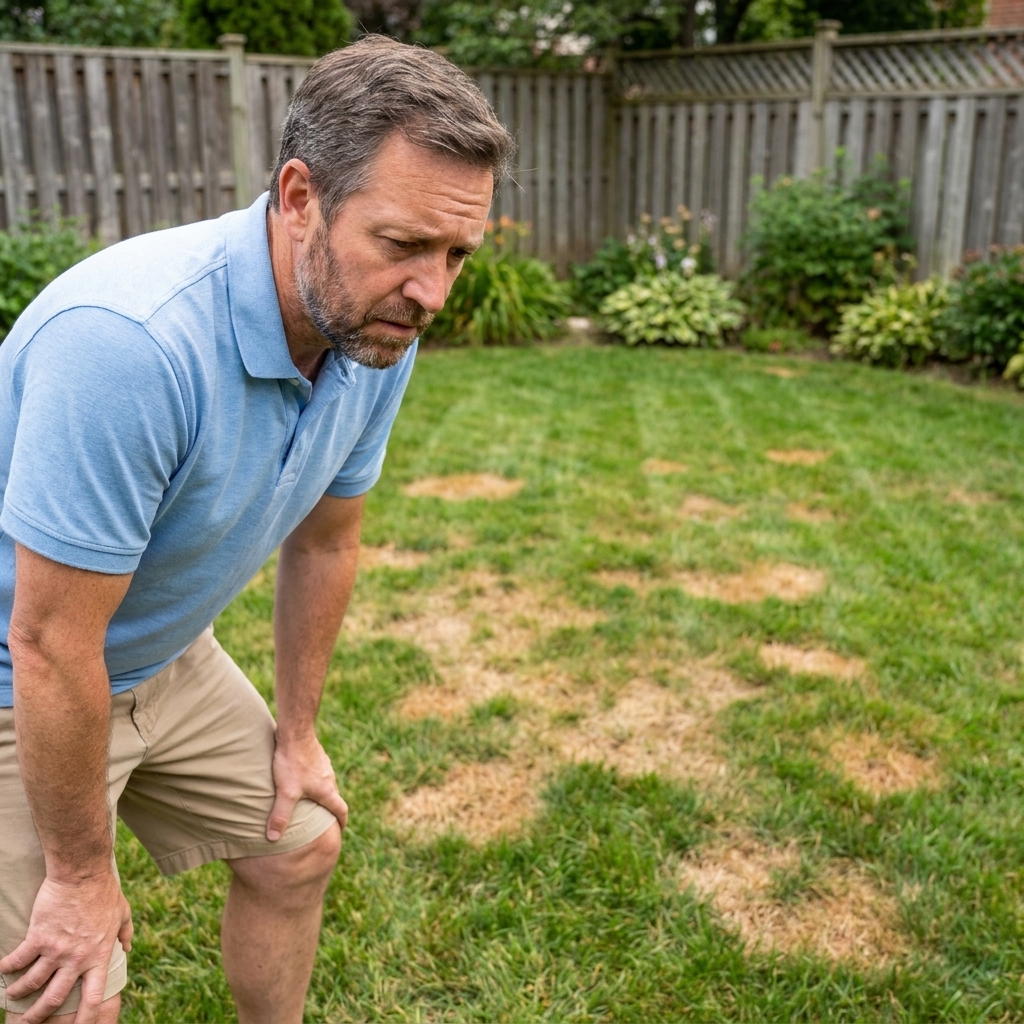
What chinch bug damage looks like
Chinch bug injury often looks exactly like heat or drought stress at first. You will usually see:
- Irregular yellowing that turns tan, then brown and expands outward.
- Damage starting in hot, sunny areas like south-facing slopes, along sidewalks and driveways, or near the street.
- Grass that feels dry and brittle even if you watered recently.
- A “halo” effect, where the center is dead and the outer ring is fading.
Chinch bugs feed by piercing grass and sucking out plant juices. Their feeding and saliva can cause grass to yellow and die, mimicking drought stress even when moisture is available.
Step 1: Confirm chinch bugs
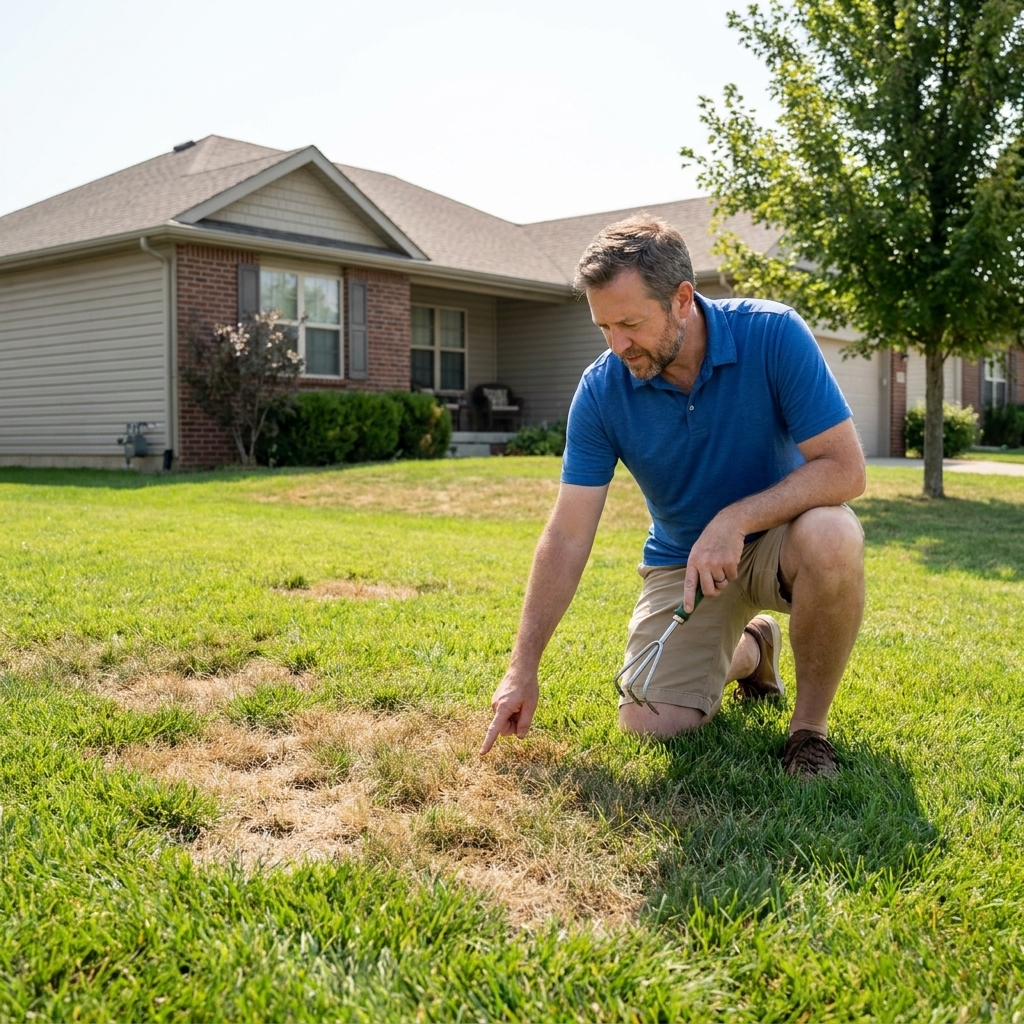
Check the thatch line
Chinch bugs love the transition zone where green stems meet thatch and soil. Part the grass at the edge of a damaged patch and look down at the crown level. Adults are small (about 1/8 inch). Nymphs are smaller and often reddish or orange early on, turning darker as they mature.

Do the coffee-can float test
This is my go-to because it is simple and surprisingly accurate.
- Cut both ends off a large metal can or similar cylinder (a coffee can works well).
- Push it 2 to 3 inches into the turf right on the border between green and damaged grass.
- Fill the cylinder with water and keep the water level up for 5 to 10 minutes. If you do not see anything right away, give it the full 10 minutes.
- Watch the surface. Chinch bugs will float up if they are present.
Repeat the test in a few spots around the edge of the patch to avoid a false negative. If you find multiple chinch bugs in a single test area, you likely have an active infestation.
Step 2: Rule out look-alikes
Before you treat, make sure you are not chasing the wrong problem. Here is how chinch bugs differ from other summer issues:
- Drought stress: footprints linger and the whole area perks up within a day after deep watering. Chinch bug patches often keep expanding even after watering.
- Dog urine: smaller spots, often with a dark green ring around a straw center.
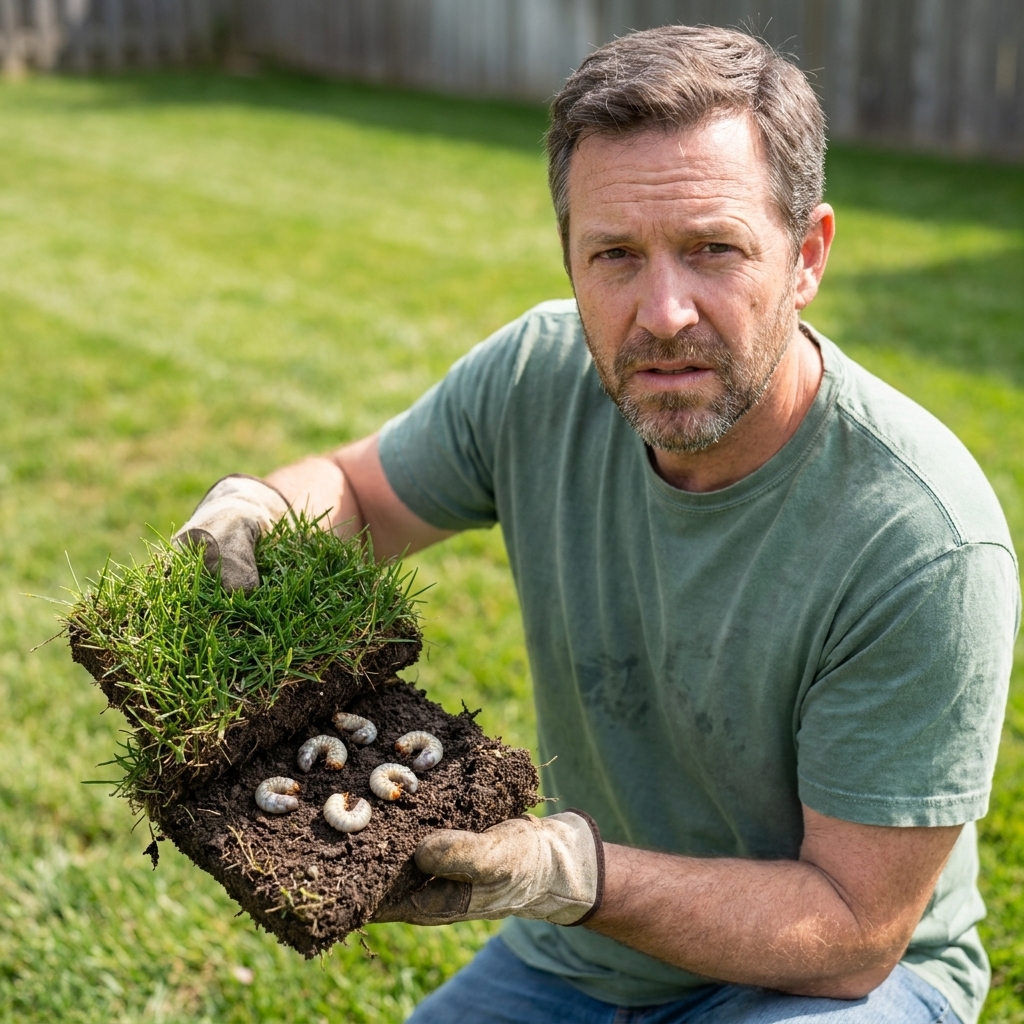
- Grubs: turf peels up like a rug because roots are eaten. With chinch bugs, roots usually still anchor the grass.
- Fungal brown patch: often shows a smoky ring or darker border and is more common in humid, warm nights. Chinch bug damage is usually hottest, sunniest zones first.
Step 3: Stop the spread
Water correctly
Chinch bugs thrive in hot, dry conditions, especially in lawns with a thick thatch layer. While you are dealing with them:
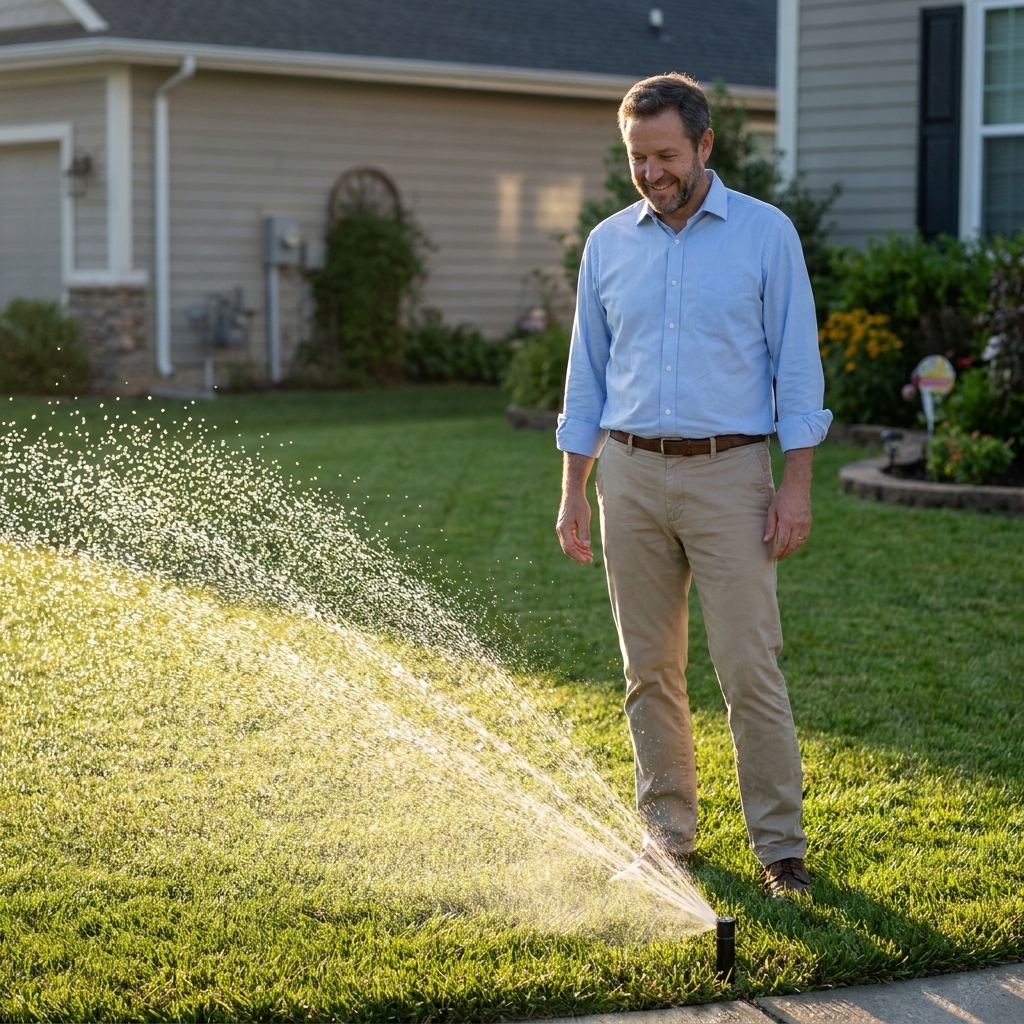
- Give the lawn deep, infrequent irrigation (generally 1 inch per week total including rain), not light daily sprinkling.
- Focus on morning watering so the lawn dries out by evening.
- Do not overwater trying to “save” dead centers. Dead turf will not recover, and excess water can invite disease.
Mow higher
Raise your mowing height a notch during peak summer stress. Taller grass shades the soil, helps roots stay cooler, and reduces the “perfect storm” chinch bugs love.
Step 4: Choose a treatment
If you confirmed chinch bugs, the goal is to treat the edge of the patch and a few feet beyond it. That is where the bugs are actively feeding and expanding the damage.
When to treat
Chinch bugs are most active in hot weather, and damage often accelerates during dry spells. For best results, treat when you first confirm activity at the edge of a patch, then recheck 7 to 14 days later. Apply when conditions are calm (low wind) and follow label guidance on watering-in or leaving product on the foliage.
Option A: Insecticidal soap
Insecticidal soap can help suppress nymphs when populations are small and you catch them early. Coverage matters. You need to hit the insects directly, and repeat applications are often needed.
Option B: Lawn insecticides
For larger patches that are actively spreading, a labeled lawn insecticide is usually the most reliable route. Look for products that list chinch bugs on the label and follow it exactly. Common active ingredients used in lawn products include bifenthrin, lambda-cyhalothrin, cyfluthrin, or similar pyrethroids. Some products also combine a fast knockdown ingredient with longer residual control.
- Spot treat first: Treat the border of damaged areas plus 3 to 5 feet into the healthy turf.
- Water-in guidance depends on the label: Some products need a light irrigation to move product into the thatch zone. Others work best left on foliage. The label wins every time.
- Recheck in 7 to 14 days: If you still find bugs with the float test, a second application may be needed as permitted by the label.
Safety basics: Keep people and pets off treated areas until sprays have dried (or as the label directs). Avoid drift onto flowers and vegetable beds, and use extra care around storm drains and open water.
Option C: Beneficial nematodes
Beneficial nematodes can help with some lawn pests, but chinch bugs are tricky because they hang out in the thatch and upper soil where conditions get hot and dry. Evidence for consistent chinch bug control with nematodes is mixed, so keep expectations modest. If you try nematodes:
- Apply in the evening or on a cloudy day.
- Keep the lawn evenly moist for the period recommended on the package.
- Understand results vary, especially in mid-summer heat.
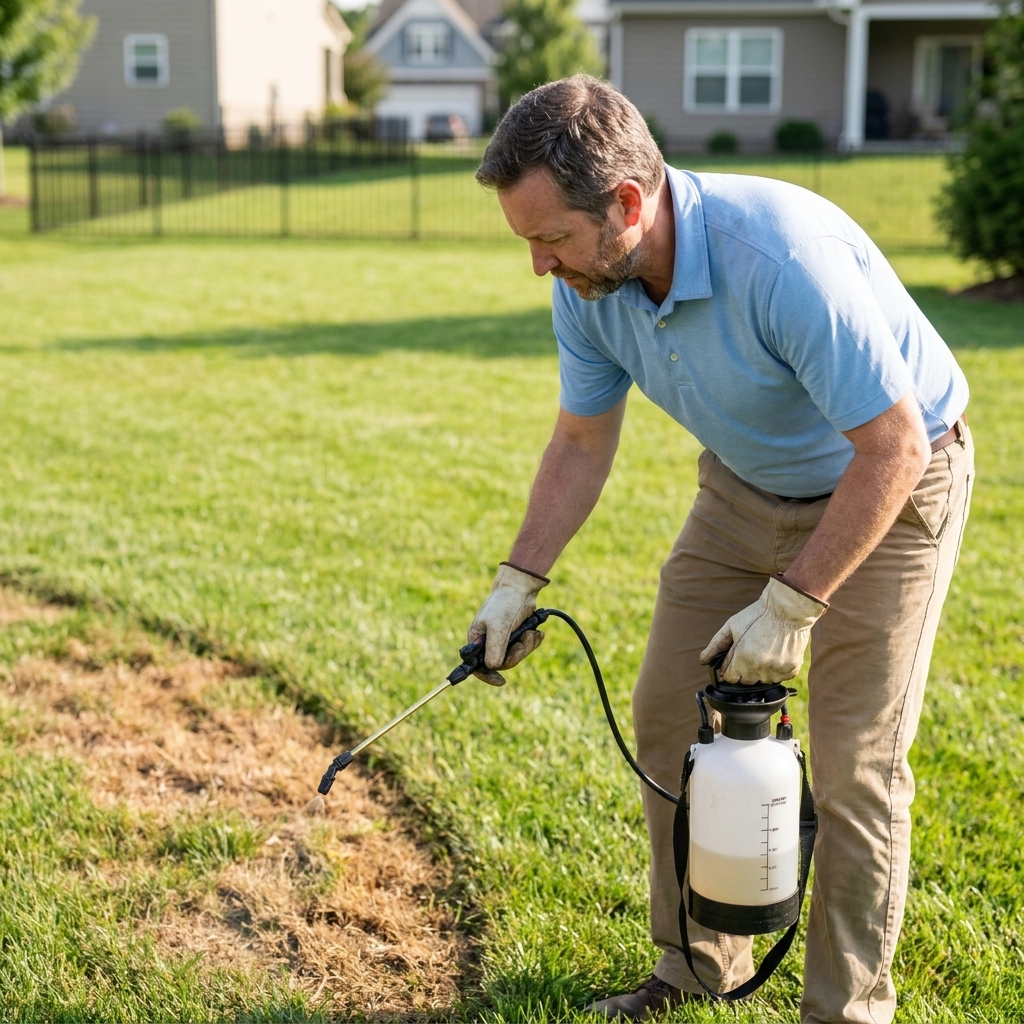
Step 5: Repair dead patches
Once the crowns are dead from chinch bug injury, the grass will not green back up. You need to rebuild those areas. The timing of the repair depends on your grass type and your local climate, but the steps stay the same.
1) Clear dead turf and thin thatch
- Rake out dead grass down to soil.
- If you have a thick thatch layer, loosen it with a thatch rake so seed can touch soil.
- Remove debris so you can see at least 30 to 50 percent exposed soil in the patch.
2) Loosen the top inch of soil
Chinch bug damage zones are often compacted and baked hard. Scratch up the top inch with a hand cultivator or garden rake. This improves seed-to-soil contact and gives new roots a place to go.
3) Add a light layer of compost
A thin topdressing of compost (about 1/4 inch) helps hold moisture and improves germination. Do not bury the area under a thick layer. Think “dusting,” not “mulch pile.”
4) Choose the right seed
Match what you already have whenever possible. Also note that chinch bug pressure and susceptibility varies by grass type. St. Augustinegrass is a common target in many Southern lawns, and some chinch bug species also damage zoysia and bermudagrass. In cool-season regions, fescue and bluegrass lawns can be affected, especially in hot, sunny areas.
- Cool-season lawns (common in the Midwest and Northeast): Turf-type tall fescue is my go-to for summer durability. Kentucky bluegrass spreads but can struggle in heat without water. Perennial ryegrass germinates fast and works well in mixes.
- Warm-season lawns (common in the South): Many warm-season grasses are best repaired with plugs or sod during active growth. Some can be seeded, but it varies by species and cultivar.
If you are not sure what you have, a local extension office or a reputable garden center can help you match grass type and timing for your area.
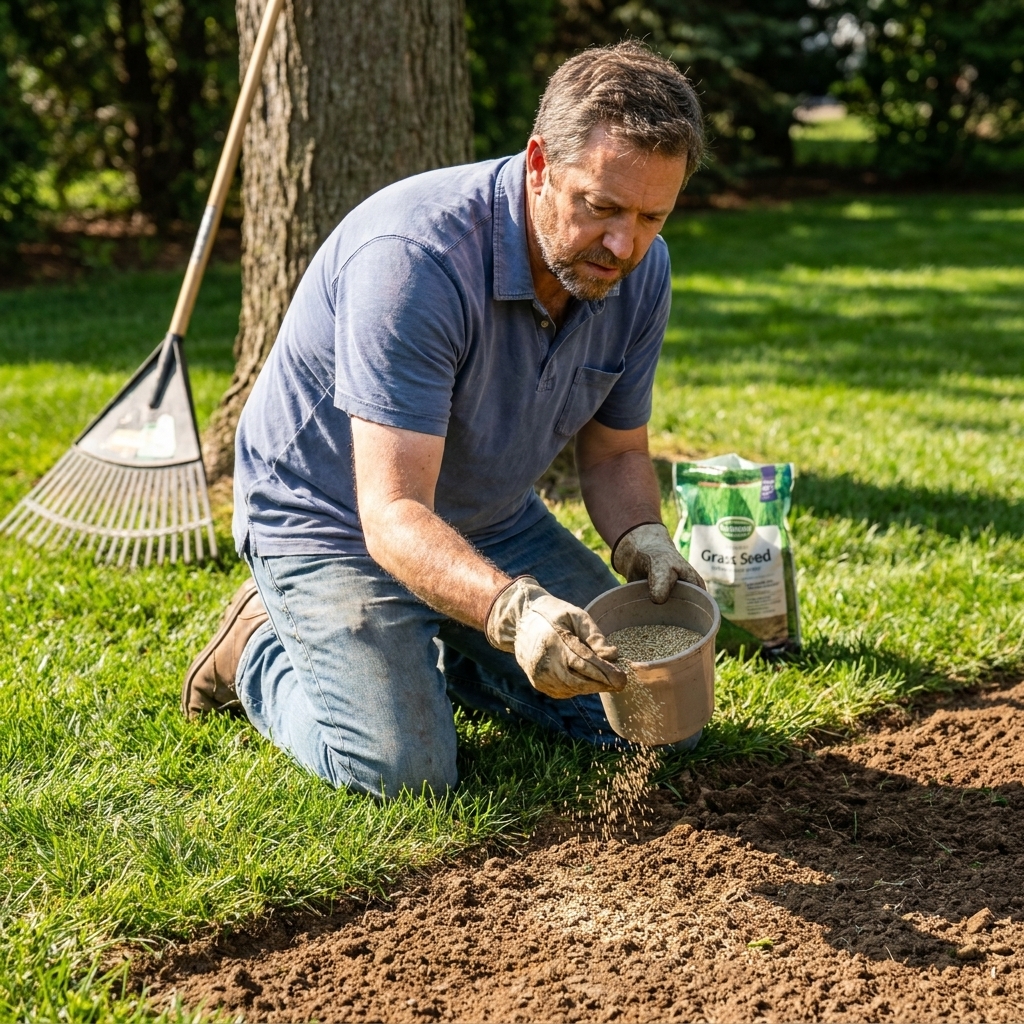
5) Seed, then lightly cover
- Spread seed evenly across the patch (a hand spreader helps for larger areas).
- Gently rake so seed settles into the roughened soil.
- Cover with a very light layer of straw or compost if you need moisture retention. Keep it airy so seedlings can push through.
6) Water for germination
This is where most patch repairs fail: people water like a normal lawn, not like a seedbed.
- Water lightly 1 to 3 times per day to keep the top 1/2 inch of soil consistently damp until germination.
- After sprouts appear, reduce frequency and increase depth over 2 to 3 weeks.
- Once established, transition to deep, infrequent watering.
7) Avoid traffic and aggressive mowing
- Avoid foot traffic until seedlings are established.
- Mow when the new grass is about one-third taller than your mowing height. Make sure the blade is sharp.
Step 6: Keep them from coming back
Chinch bugs often return to the same stressed areas. Prevention is mostly about making your lawn less inviting.
Reduce thatch buildup
- Keep a steady mowing schedule and avoid scalping.
- If thatch is thicker than about 1/2 inch, consider dethatching at the appropriate time for your grass type.
Feed the lawn, but ease up in peak heat
Over-fertilizing in summer can push tender growth right when the lawn is already stressed. Follow a seasonal plan and keep summer applications moderate unless your grass type and local conditions strongly support it.
Water deeply during heat waves
Chinch bugs love drought-stressed turf. The goal is not to keep the lawn soggy, but to avoid chronic dryness in the root zone.
Choose tougher grass for hot spots
If you fight the same battle every July, it may be time to adjust the grass type in that area. Turf-type tall fescue in cool-season lawns is a workhorse for sun and heat. In warm-season regions, improving density with proper mowing height and fertility can help the grass outcompete stress.
FAQ
Will chinch bug damaged grass grow back?
If the grass is straw-brown and pulls up easily because the crowns are dead, it will not recover. The surrounding yellowing turf might rebound if you stop the bugs quickly, but the centers usually need reseeding, plugging, or sod.
How fast do chinch bug patches spread?
In hot, dry weather, patches can expand noticeably within a week. That is why confirming the problem early and treating the border of the damage matters.
Is it safe to reseed right after insecticide?
Often yes, but it depends on the product. Check the label for any reseeding interval. If you cannot find it, focus on getting the infestation under control first, then repair once activity drops.
Do I need to treat the entire lawn?
Usually no. Spot treating the active edges is often enough, especially if you caught it early. Whole-yard treatments can be warranted in severe cases, but start with a careful inspection and targeted approach.
A simple weekend plan
- Saturday morning: Confirm chinch bugs with the float test, then mark the edges of the patches.
- Saturday afternoon: Spot treat the border zones per label directions.
- Next 7 to 10 days: Re-test in a few edge spots, then rake out dead turf once activity drops.
- Repair window: Prep soil, add a light compost topdressing, seed, and keep the seedbed evenly moist.
If you are unsure about your grass type or the best repair timing, a quick check-in with your local extension office can help you match seed, plugs, or sod to your climate and growing season.