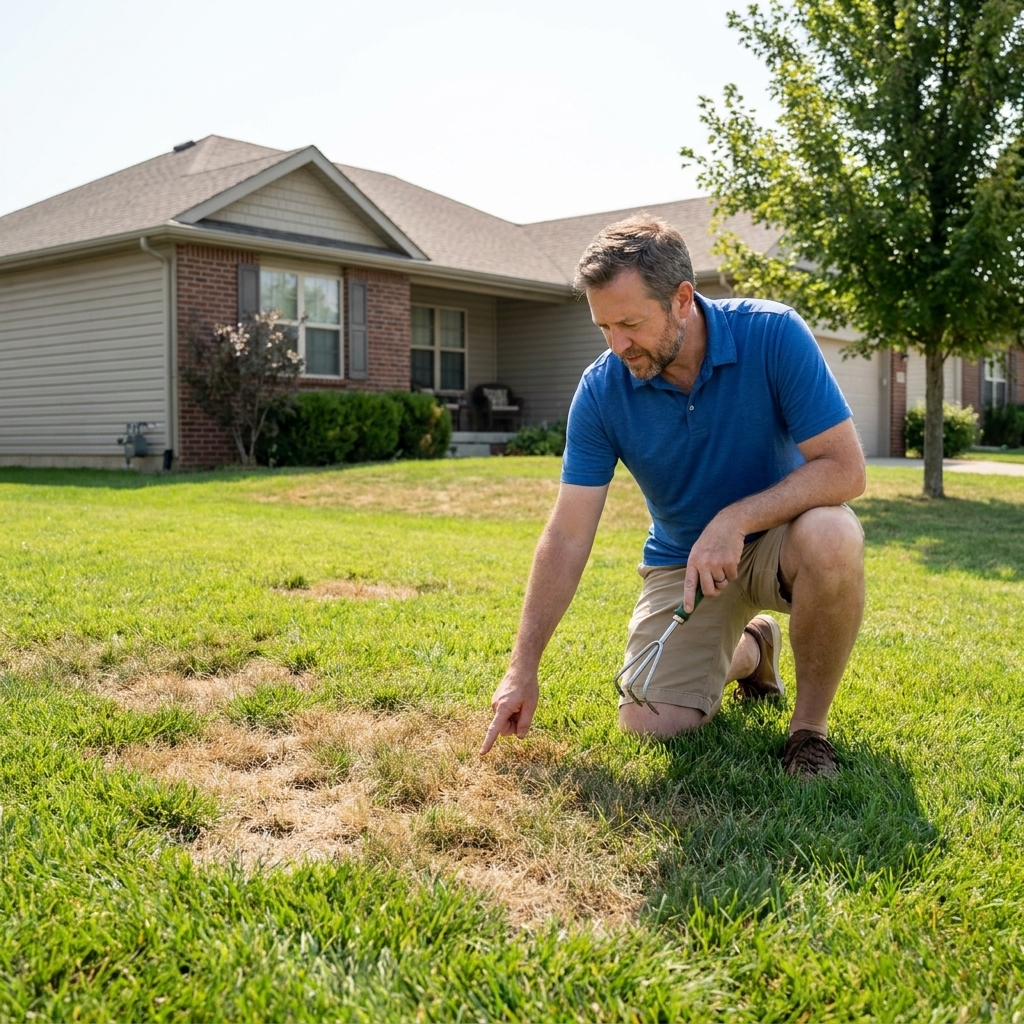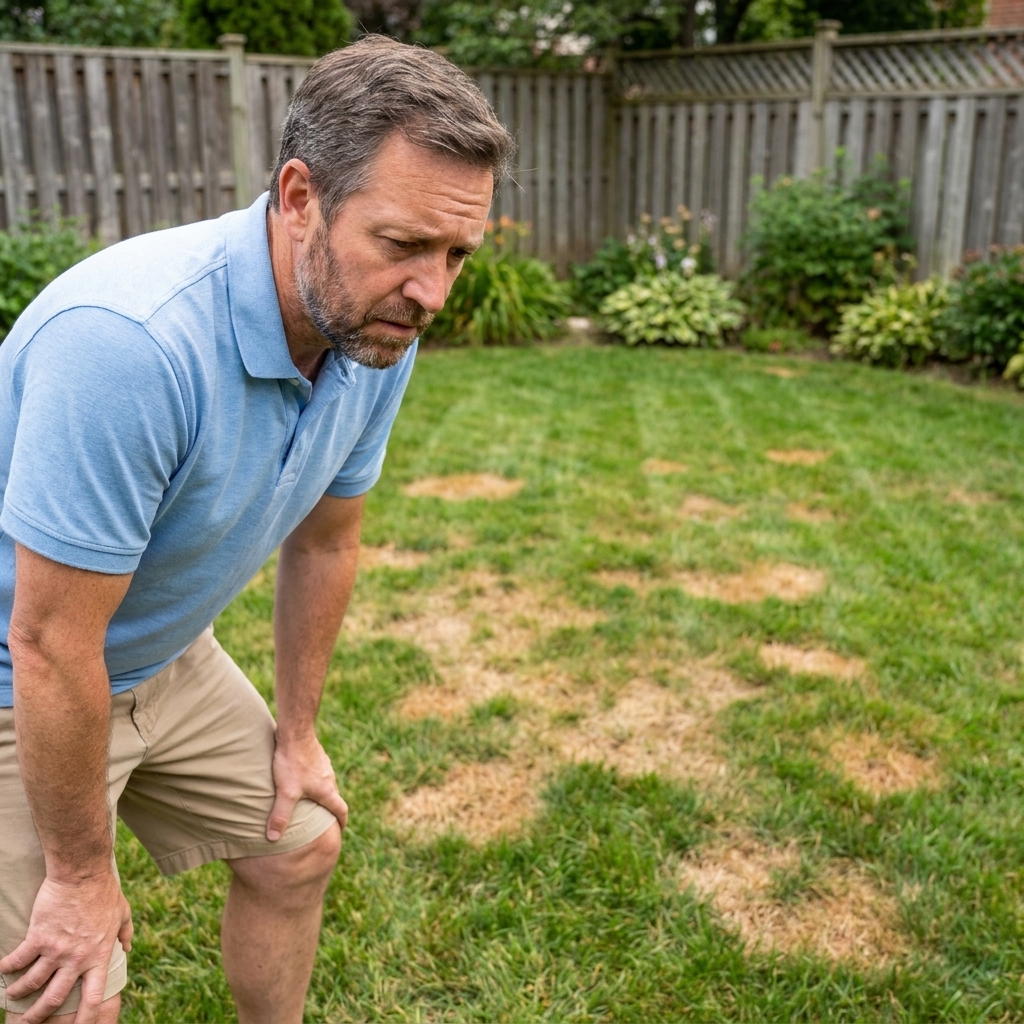
Diagnose brown lawn patches fast with simple checks, including tug and moisture tests. Repair damage from drought stress, fungal disease, or grubs and preven...
lawn care
Grub Control: Signs, Prevention, and Treatment
 Mark Vance
 is a former professional landscaper and the lead turf enthusiast at Yard Mentor. With over 15 years of experience in soil health, turf management, and residential landscaping, he is dedicated to helping homeowners transform frustrating dead patches into lush, healthy lawns. When he isn't testing new grass seed blends, you can find him enjoying a Saturday morning coffee looking out over his freshly striped yard.
Updated October 17, 2026
Created October 17, 2026
Mark Vance
Mark Vance is a former professional landscaper and the lead turf enthusiast at Yard Mentor. With over 15 years of experience in soil health, turf management, and residential landscaping, he is dedicated to helping homeowners transform frustrating dead patches into lush, healthy lawns. When he isn't testing new grass seed blends, you can find him enjoying a Saturday morning coffee looking out over his freshly striped yard.
Updated October 17, 2026
Created October 17, 2026
If your lawn suddenly looks thirsty even after rain, or a “dead” patch peels back like old carpet, you might be dealing with grubs. I have seen a lot of lawns blamed on heat stress when the real problem was happening an inch or two under the surface.
This guide walks you through the telltale signs, how to confirm what is going on, when to treat, what products actually work, and how to repair the damage afterward.
What lawn grubs are (and why they wreck turf)
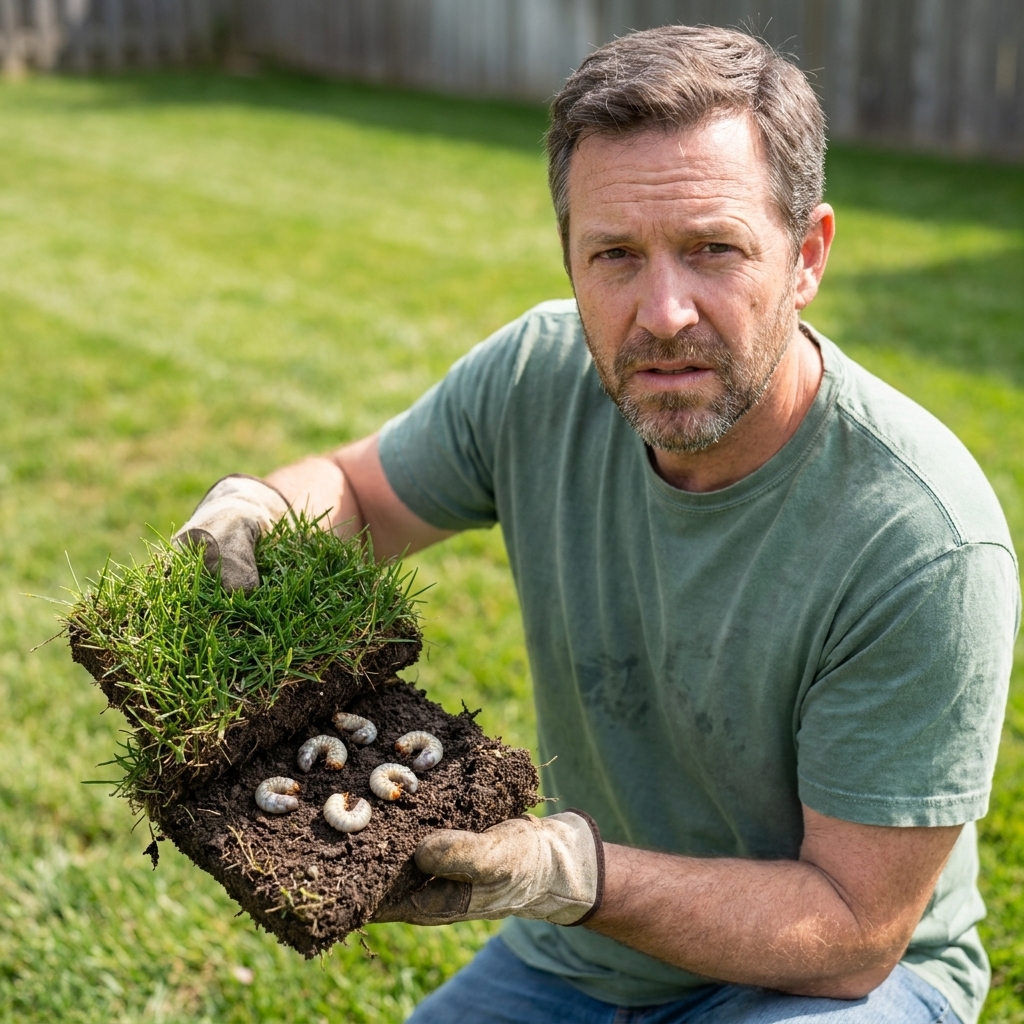
Lawn grubs are the creamy-white, C-shaped larvae of beetles. The usual culprits include Japanese beetles, June beetles, European chafer, and masked chafers, depending on where you live.
They feed on grass roots. When enough roots are chewed off, your turf cannot pull up water and nutrients, even if you are watering correctly. That is why grub damage often looks like drought stress at first.
Grub life cycle in plain English
- Adults lay eggs in lawn soil, usually in summer.
- Eggs hatch into grubs, and small grubs start feeding near the surface.
- Late summer into early fall is typically when damage becomes obvious, because grubs are bigger and hungrier.
- Grubs overwinter deeper in soil, then may feed a bit again in spring before turning into beetles.
Timing matters because treatments work best when grubs are small and close to the surface. The exact window varies by region, weather, and species, so if you want to be extra precise, check your local extension service timing for your area.
Early signs of grubs
The earlier you catch grubs, the easier they are to stop and the less patch repair you will have to do.
1) Spongy turf underfoot
If the lawn feels a little springy or squishy in spots, roots may be thinning.
2) Grass that wilts quickly
Grub-damaged grass dries out faster than surrounding turf, even with the same sun and sprinkler coverage.
3) Increased animal digging
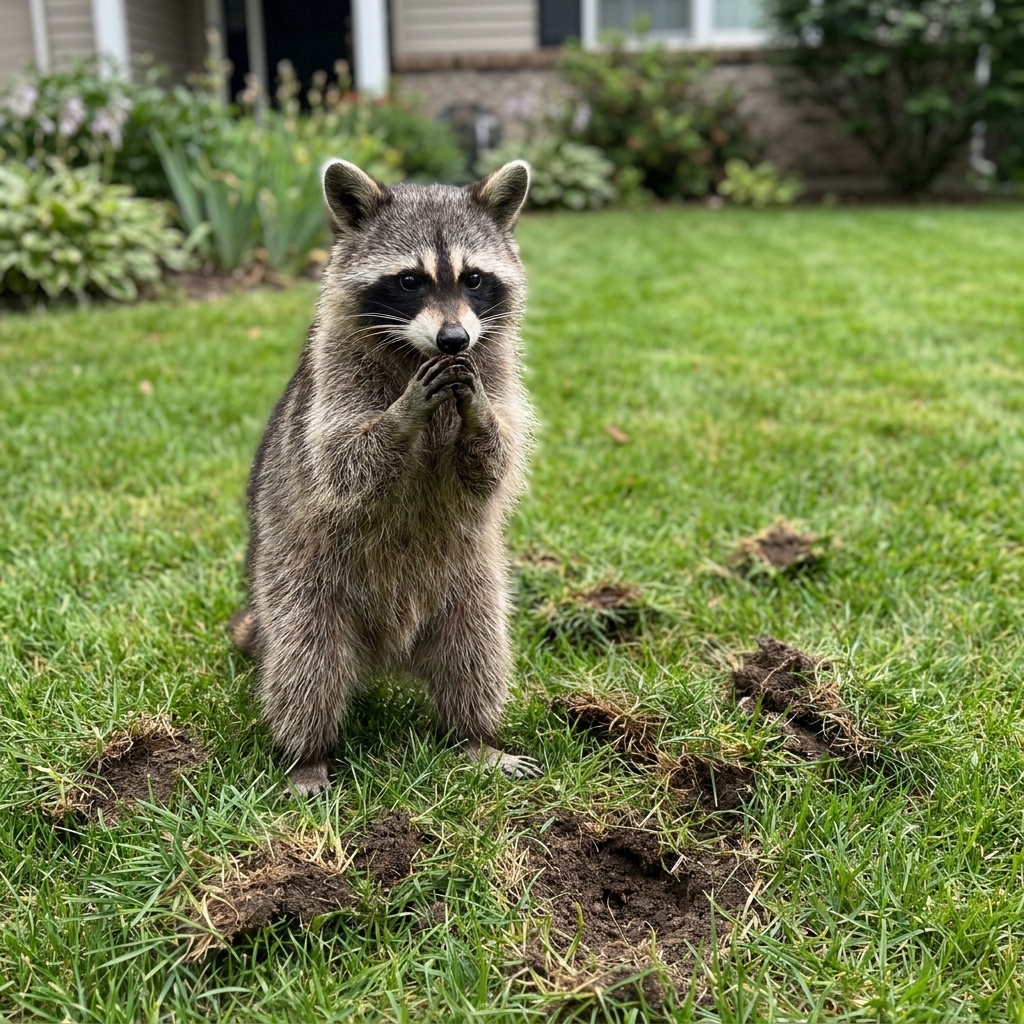
Skunks, raccoons, and even some birds will tear up turf to eat grubs. If you wake up to rolled-back sod or small divots everywhere, do not just blame the animal. The grubs are the buffet.
How to confirm grubs
Before you buy anything, confirm the problem. Here is the simple method I use on my own yard and client lawns.
Step-by-step: the sod-flap test
- Pick the edge of a stressed area, where brown meets green.
- Cut three sides of a 1-foot by 1-foot square with a shovel.
- Peel it back like a flap.
- Look in the top 2 to 3 inches of soil for C-shaped grubs.
If the soil is very dry or it has been hot for weeks, check a little deeper too. Grubs can move down in search of moisture.
How many grubs is too many? Extension guidance often uses a range, not a single hard number. As a rough rule, if you consistently find 5 to 10 grubs per square foot in stressed areas, treatment is usually justified. In healthy, irrigated lawns, you might tolerate a few without visible damage. In hot, dry stretches, or with more damaging species in your region, even lower counts can tip turf over the edge.
Rule out lookalikes
Not every brown patch is grubs. Also check for:
- Drought stress (uniform browning in full sun, no grubs present)
- Fungal disease (distinct rings, lesions on blades, patches that spread fast in humid weather)
- Dog urine (small green ring with a brown center)
- Chinch bugs (tiny insects, usually in hot sunny areas; grass looks scorched)
Prevention
“Preventing grubs” is really about two things: reducing egg-laying success and keeping your turf healthy enough to tolerate some feeding.
Water smart in mid to late summer
Many beetles prefer to lay eggs in consistently moist soil. If you water every day in midsummer, you can unintentionally create prime nursery conditions.
- Water deeply and less often. A typical starting point for many lawns is about 1 inch per week total including rainfall, then adjust for heat, wind, shade, and soil type.
- If your lawn goes a little dormant during extreme heat, that is not always a bad thing.
Mow correctly
Keep cool-season grasses (Kentucky bluegrass, fescue, rye) on the taller side in summer. Taller grass shades soil and improves root depth, which helps turf tolerate pest pressure.
Build stronger roots with soil basics
- Test soil every couple of years and correct pH if needed.
- Aerate compacted lawns in the right season for your grass type.
- Fertilize seasonally instead of panic feeding in summer heat.
Natural allies
Beneficial nematodes can reduce grub populations in some lawns when applied correctly. They are living organisms, so timing, soil temperature, moisture, and storage matter a lot. Products commonly contain species such as Heterorhabditis bacteriophora or Steinernema species. If you try them, follow product directions closely and keep the soil consistently moist for the recommended window.
If you want a low-drama long-term approach, I have also had good results focusing on turf density and resilience. A thick stand of grass, improved soil, and smart watering often prevents minor grub pressure from turning into a full-on lawn collapse.
Treatment options
Grub control is one of those lawn topics where the best product depends heavily on when you apply it. There are two main categories: preventive and curative. Timing varies by region and weather, so local extension recommendations are worth a quick look.
Preventive control
Preventives target young grubs shortly after eggs hatch. In many regions they are applied in late spring through early to mid-summer, depending on the product and local beetle timing.
- Active ingredients to know: chlorantraniliprole is a common preventive choice, and it tends to be long-lasting.
- How it works best: apply evenly, then water it in per label directions so it reaches the root zone.
If you had confirmed grub damage last year, a preventive the next season is often the simplest plan.
Curative control
Curatives are meant to knock down larger grubs that are actively feeding. These are typically used in late summer to early fall, when damage shows up and you have confirmed counts.
- Active ingredients to know: trichlorfon is a common curative option in many retail products, but availability and restrictions can vary by location and labels can change.
- Timing matters: curatives work best when grubs are still actively feeding and not too deep.
If you are seeing heavy grub damage in mid to late fall, your window may be closing. At that point, control gets less reliable. I usually shift the plan to lawn repair now, then a preventive at the right time next season.
Quick safety and runoff reminder
Always follow the label. Keep product off sidewalks and driveways (sweep granules back into the lawn), and avoid applying right before heavy rain so it does not wash into storm drains. If you have flowering weeds in the lawn, mow them before treatment so you are not applying over blooms that attract pollinators.
How to treat grubs step by step
1) Confirm the infestation
Do the sod-flap test in a few spots. Treating blindly is expensive and often misses the real issue.
2) Pick the right product for the season
- Late spring to mid-summer: preventive product aimed at newly hatched grubs.
- Late summer to early fall: curative product if you have active feeding and confirmed counts.
3) Apply evenly
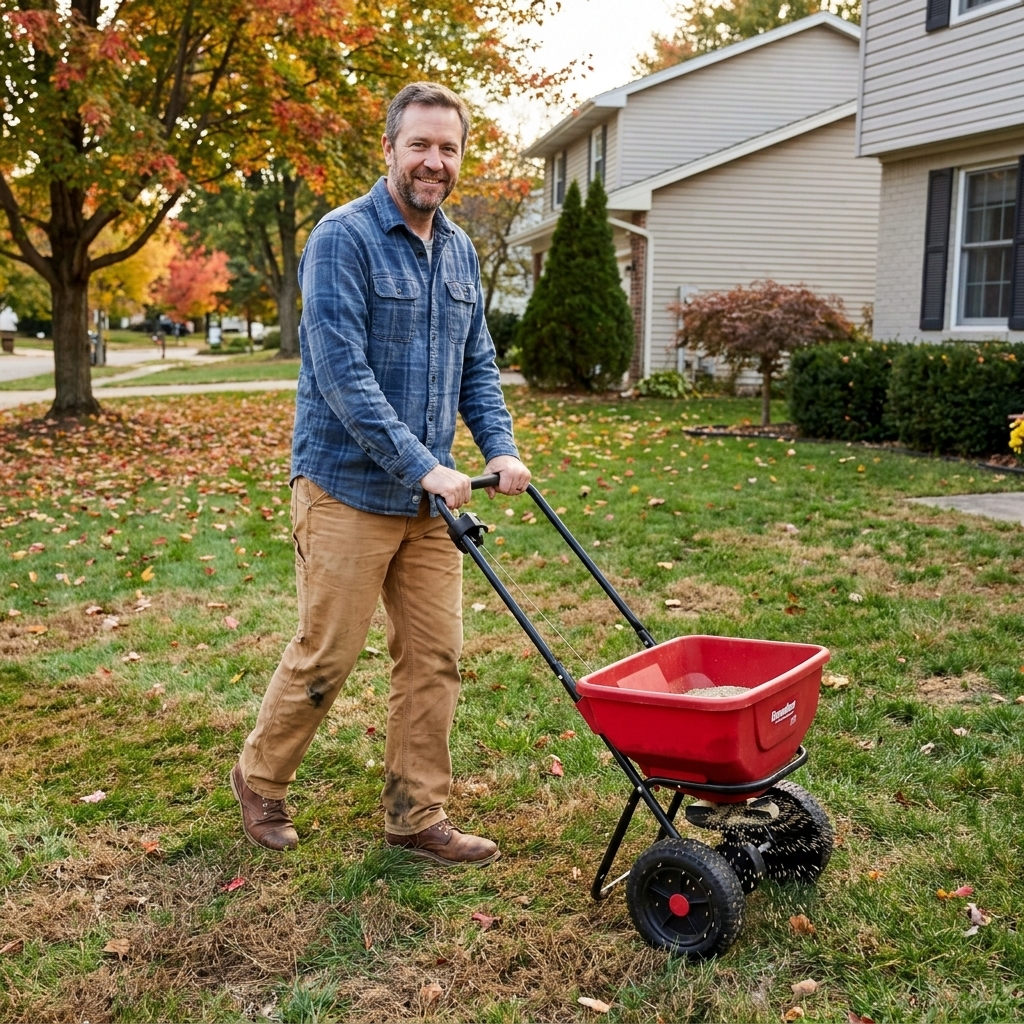
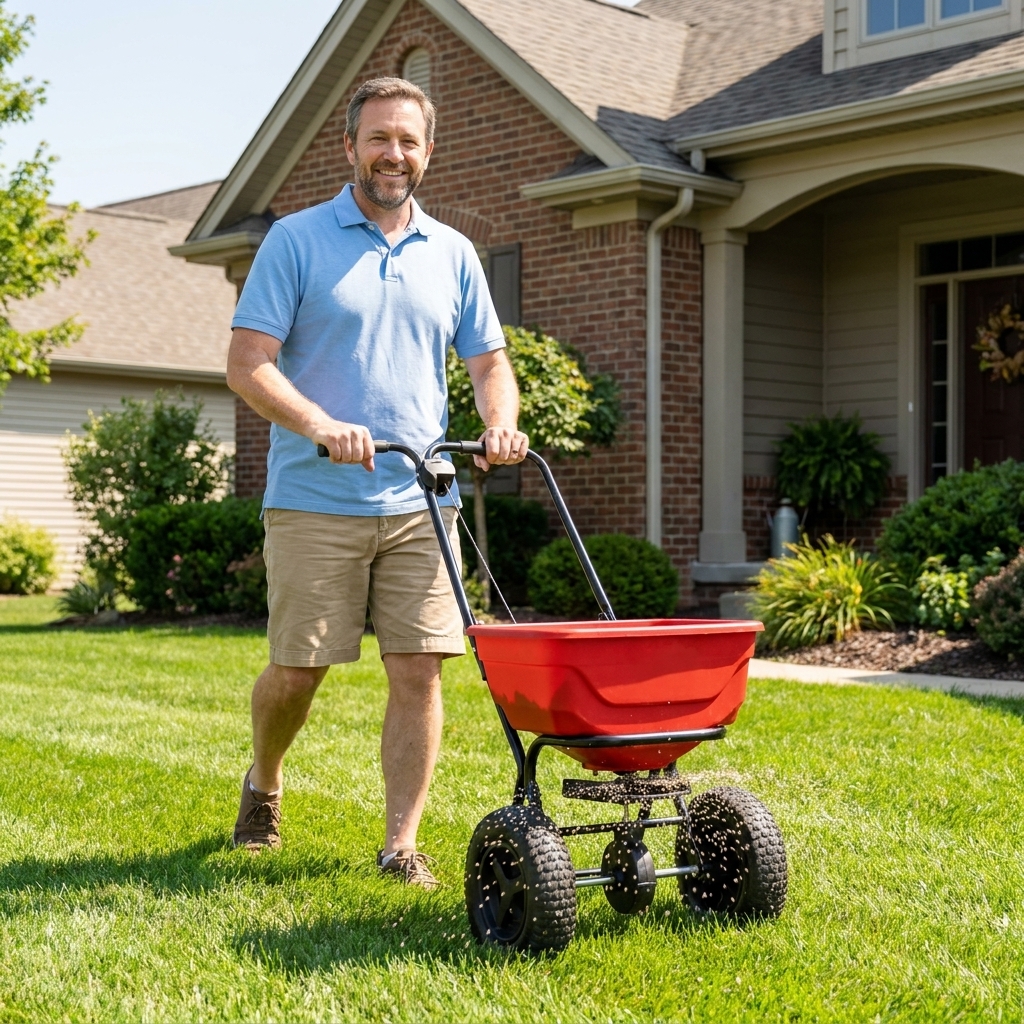
Use a calibrated spreader for granules or a hose-end sprayer for liquids. Uneven coverage is a common reason people swear a product did not work.
4) Water it in
Most grub products need irrigation to reach the root zone. Follow label instructions. In general, you are trying to move the active ingredient down into the top few inches of soil where grubs feed.
5) Recheck in 10 to 14 days
Pull another small flap and see what you find. Some grubs may still be present, but you should see a noticeable reduction in live, active grubs if the treatment took.
Repairing brown patches
Once roots are chewed up, grass often cannot simply green back up. Repair is usually a mix of cleanup, reseeding, and gentle care.
Step 1: Remove dead turf
Rake out loose, dead grass. If the turf lifts easily, pull it up and remove it. You need good seed to soil contact for the next step.
Step 2: Loosen the top layer
Scratch up the top 1/2 inch of soil with a rake. If the soil is compacted, consider core aeration (especially for bigger damaged areas).
Step 3: Add seed (and match your grass type)
Choose a seed blend that matches your existing lawn and your sun conditions. Cool-season lawns are often repaired in early fall, while warm-season lawns are usually repaired in late spring to early summer.
- Spread seed at the label rate.
- Lightly rake it in.
- Topdress with a very thin layer of compost or clean topsoil if you can.
Step 4: Keep seed consistently moist
Light, frequent watering is the key until germination. Once seedlings are established, transition to deeper, less frequent watering to encourage roots.
Step 5: Mow at the right time
First mow when new grass reaches about 3 to 4 inches, and mow with a sharp blade. Do not scalp new seedlings.

Common mistakes
- Treating the wrong problem: brown patches are not automatically grubs. Confirm first.
- Missing the timing window: preventives and curatives are not interchangeable.
- Not watering products in: if it stays on the surface, it cannot reach grubs feeding on roots.
- Ignoring underlying lawn health: compacted soil and shallow roots make grub damage worse.
- Overwatering in midsummer: it can encourage egg-laying and weak roots at the same time.
FAQ
Will grubs kill my lawn?
Heavy infestations can kill large areas, especially in hot, dry weather. The good news is that grub damage is usually very repairable if you control the population and reseed at the right time.
Do I need to treat every year?
Not always. If you have had repeated, confirmed grub problems, a yearly preventive during the appropriate window can make sense. Otherwise, I prefer to monitor and only treat when counts and symptoms justify it.
Why do I see damage in spring sometimes?
Some feeding can happen in spring, but major spring damage is less common than late summer damage. Sometimes you are seeing the after-effects of fall feeding, plus winter stress, plus weak roots.
Are animals digging always a grub sign?
Often, yes, but not 100 percent. Do the sod-flap test. If you find few or no grubs, the animals may be after other insects or just opportunistic.
Quick plan
- Confirm: cut a 1-foot by 1-foot flap and count grubs.
- Decide: if counts are consistently in the 5 to 10 per square foot range in stressed areas (or lower in harsh conditions), treatment is usually justified.
- Choose: preventive in late spring to mid-summer, curative in late summer if you have active damage.
- Apply correctly: even coverage, then water it in.
- Repair: rake out dead turf, loosen soil, seed, and keep it moist until established.
If you want to get ahead of it next season, make a note of when you saw damage, where it showed up, and how many grubs you counted. That little bit of lawn journaling saves a lot of guesswork later.