A step-by-step topdressing and leveling method for shallow ruts and uneven turf, plus the best mix to use so your existing grass keeps growing.
lawn care
Topdressing Your Lawn with Compost
 Mark Vance
 is a former professional landscaper and the lead turf enthusiast at Yard Mentor. With over 15 years of experience in soil health, turf management, and residential landscaping, he is dedicated to helping homeowners transform frustrating dead patches into lush, healthy lawns. When he isn't testing new grass seed blends, you can find him enjoying a Saturday morning coffee looking out over his freshly striped yard.
Updated October 17, 2026
Created October 17, 2026
Mark Vance
Mark Vance is a former professional landscaper and the lead turf enthusiast at Yard Mentor. With over 15 years of experience in soil health, turf management, and residential landscaping, he is dedicated to helping homeowners transform frustrating dead patches into lush, healthy lawns. When he isn't testing new grass seed blends, you can find him enjoying a Saturday morning coffee looking out over his freshly striped yard.
Updated October 17, 2026
Created October 17, 2026
Topdressing with compost is one of those rare lawn projects that pays you back in multiple ways. You are not just feeding grass blades, you are improving the soil underneath them. Done right, a thin layer of quality compost helps loosen tight soil, wakes up microbial life, holds moisture longer between waterings, and sets you up for better results from seeding and fertilizing.
I like to think of compost topdressing as “slow improvement.” You will not usually see an overnight color change like you get from quick-release nitrogen. What you will see, over a season or two, is a lawn that handles heat better, fills in more evenly, and bounces back faster after stress.
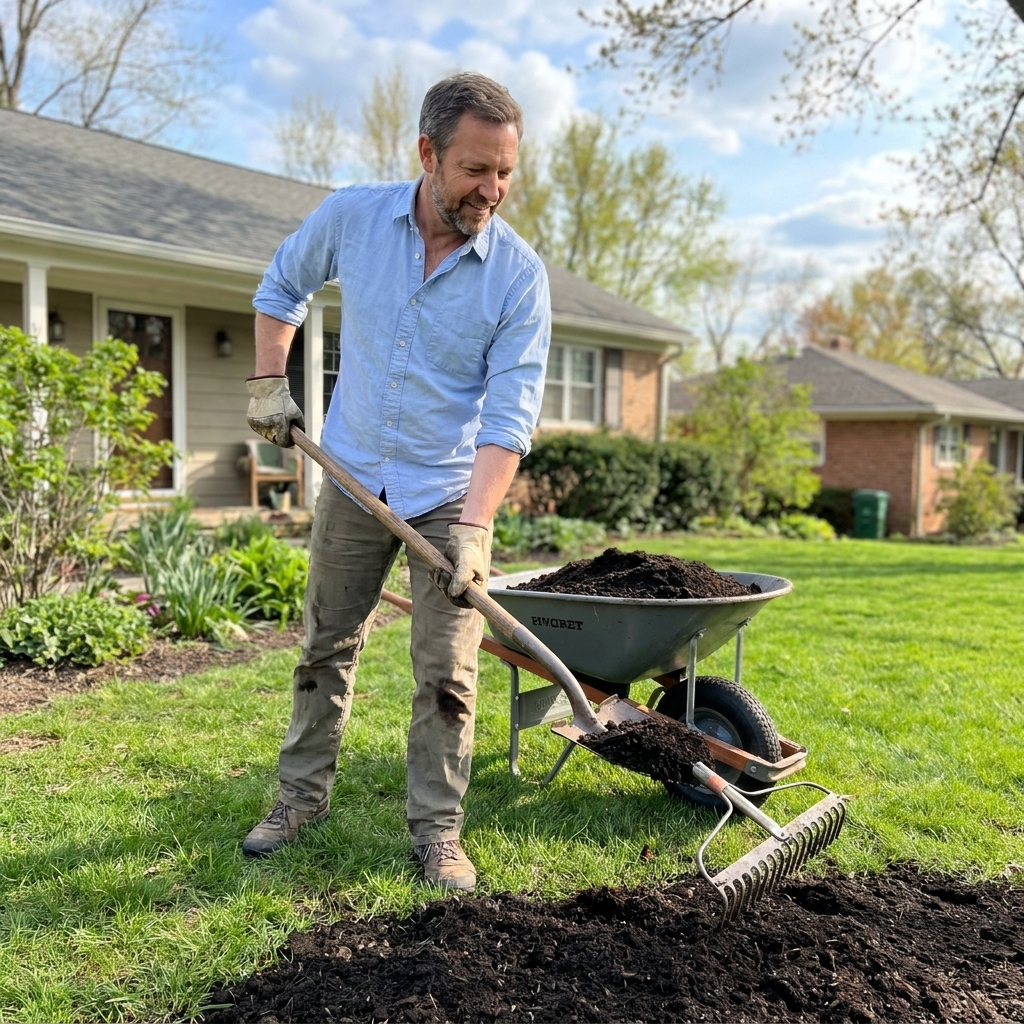
What compost topdressing does
Compost works on the soil ecosystem, not just the plant. Here is what is happening when you spread a light layer over turf:
- Improves soil structure: Compost helps sandy soil hold water and nutrients longer, and it helps clay soil loosen up so roots can breathe and penetrate.
- Boosts microbial activity: Finished compost brings beneficial microbes and food for the ones already living in your soil. That biology supports nutrient cycling and healthier root zones.
- Increases moisture retention: Even a light application helps the surface stay evenly moist, which is great for shallow roots, new seed, and summer stress.
- May support thatch breakdown: In some lawns, compost can encourage biological activity that helps reduce organic buildup over time. That said, severe thatch is usually driven by turf type and management (too much nitrogen, frequent watering, low mowing, or compacted soil), and it still tends to need mechanical help.
When to topdress
The best timing depends on your grass type, your weather, and what you are trying to accomplish. In general, topdress when your lawn is actively growing so it can push through the compost and recover quickly. If you are in a transition zone or dealing with unusual patterns (late frosts, monsoon summers, extended heat), use the same principle and adjust the calendar.
Cool-season lawns
- Best: Early fall (late summer into fall) when nights cool down but the soil is still warm.
- Also good: Spring once the lawn is growing steadily and you are past repeated hard frosts.
Warm-season lawns
- Best: Late spring into early summer after green-up, when the lawn is growing aggressively.
My rule of thumb: If you can mow weekly because growth is steady, it is a good window for topdressing.
How much to apply
The magic is in the word “light.” Most topdressing problems come from applying compost like mulch.
- Routine soil improvement: 1/8 inch to 1/4 inch across the lawn.
- Leveling minor unevenness: Up to 1/2 inch in low spots, feathered out gradually so surrounding grass is not buried.
- Overseeding help: Around 1/8 inch is usually plenty, just enough to help seed-to-soil contact and hold moisture.
Important: Grass blades should still be visible after spreading. If your lawn looks “topped with chocolate frosting,” you went too heavy.
If you like doing the math, here is the quick formula:
Compost (cubic yards) = (square feet × depth in inches ÷ 12) ÷ 27
For 1,000 square feet, these rough amounts are handy:
- 1/8 inch: ~0.39 cubic yards (about 10.4 cubic feet)
- 1/4 inch: ~0.77 cubic yards (about 20.8 cubic feet)
- 1/2 inch: ~1.54 cubic yards (about 41.7 cubic feet)
Compost is often sold by the cubic yard in bulk or in 1 to 2 cubic foot bags. (Bag math is annoying, I know. When in doubt, buy a little extra and use leftovers in garden beds.)
Pick the right compost
Not all compost is lawn-friendly. You want something that is finished, dark, crumbly, and earthy smelling.
What to look for
- Finished and screened: Screened compost spreads easier and will not leave you picking out chunks across the yard. For lawns, a screen size around 3/8 inch to 1/2 inch is a good target.
- Clean, consistent inputs: Ask what it is made from (yard waste, food waste, manure, etc.). None are automatically “bad,” but you want maturity and consistency from batch to batch.
- Low trash and low wood content: Avoid loads with visible plastic bits, glass, or lots of woody chips that do not break down quickly.
- Sourcing you trust: If the compost includes manure or hay, ask about herbicide carryover. Persistent broadleaf herbicides can survive composting and may damage sensitive plants. Lawns are grasses and are usually less sensitive than garden crops, but you still want clean material and a supplier who can answer basic questions.
What to avoid
- Unfinished or “hot” compost: If compost smells sour, ammonia-like, or is warm inside the pile, it is not ready. Immature compost, especially when it is high in woody material, can temporarily tie up nitrogen and stress turf.
- Compost-heavy mulch blends: If it looks like mostly shredded bark, it is not what you want for turf topdressing.
- Unknown bargain loads: If the source is questionable, you can pay for it later in weeds, debris, or inconsistent performance.
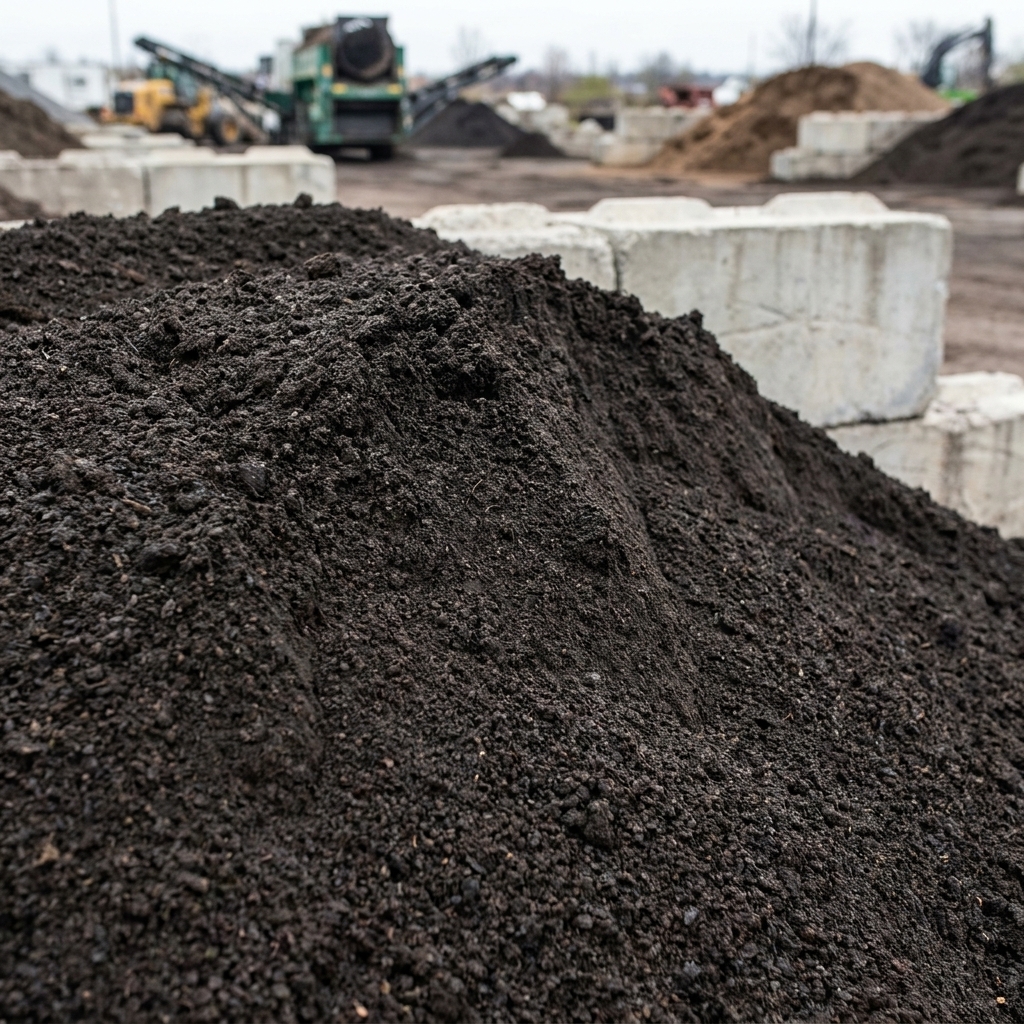
Tools that help
You can topdress with basic tools, but a couple upgrades can save your back.
- Wheelbarrow and shovel for moving compost
- Leaf rake or landscape rake for pulling compost into the canopy
- Peat/compost spreader roller for even distribution on larger lawns
- Work gloves and dust mask if compost is dry and dusty
- Broadcast spreader (optional) only if compost is very dry and finely screened, otherwise it clogs
One practical note: Compost that is soaking wet is hard to spread evenly. If yours is clumpy and heavy, let it dry slightly (or break it up with a shovel) before you start.
How to topdress
1) Mow slightly shorter
Mow the day before (or morning of) topdressing. You are not scalping, just going a bit shorter so compost can settle into the turf canopy instead of sitting on top of tall blades.
2) Clear debris
Blow or rake out leaves, sticks, and heavy clippings. Compost should contact the soil surface and the base of the grass plants.
3) Fix compaction first (if needed)
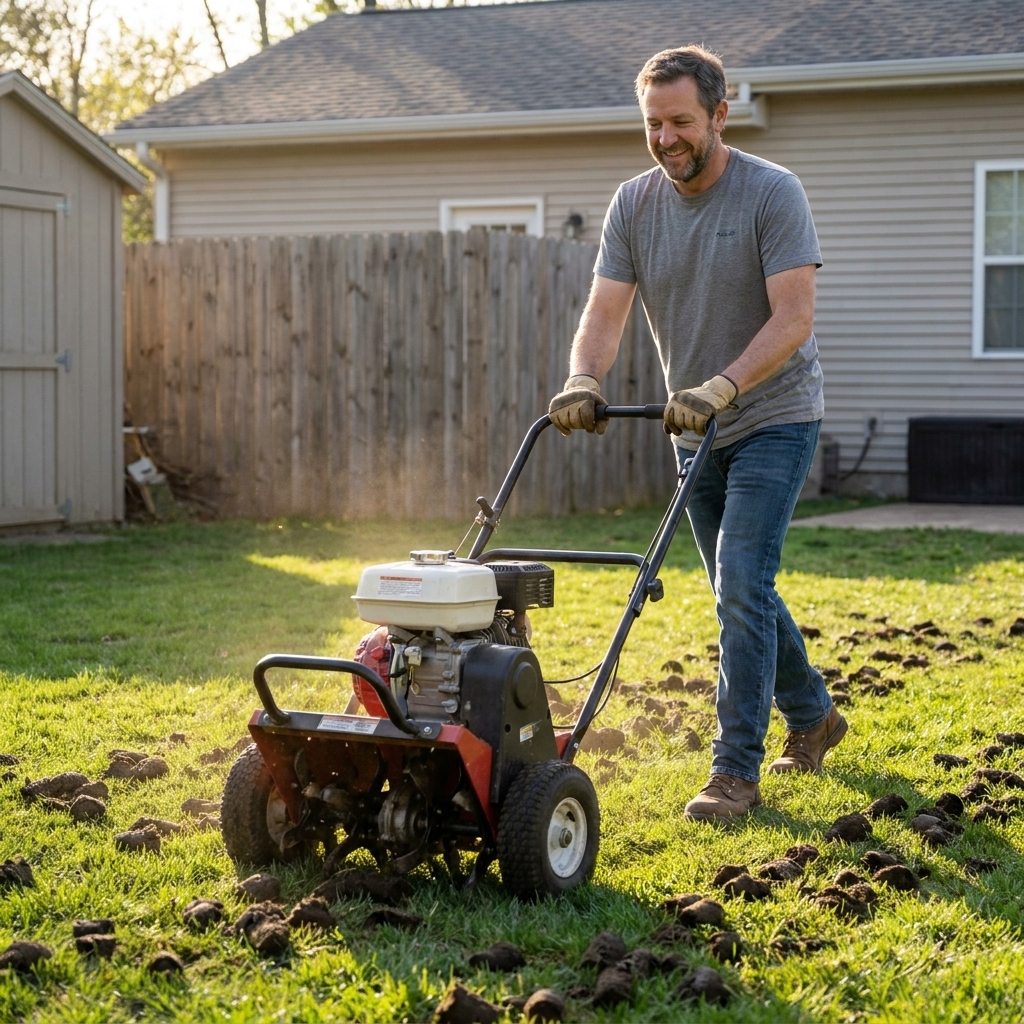
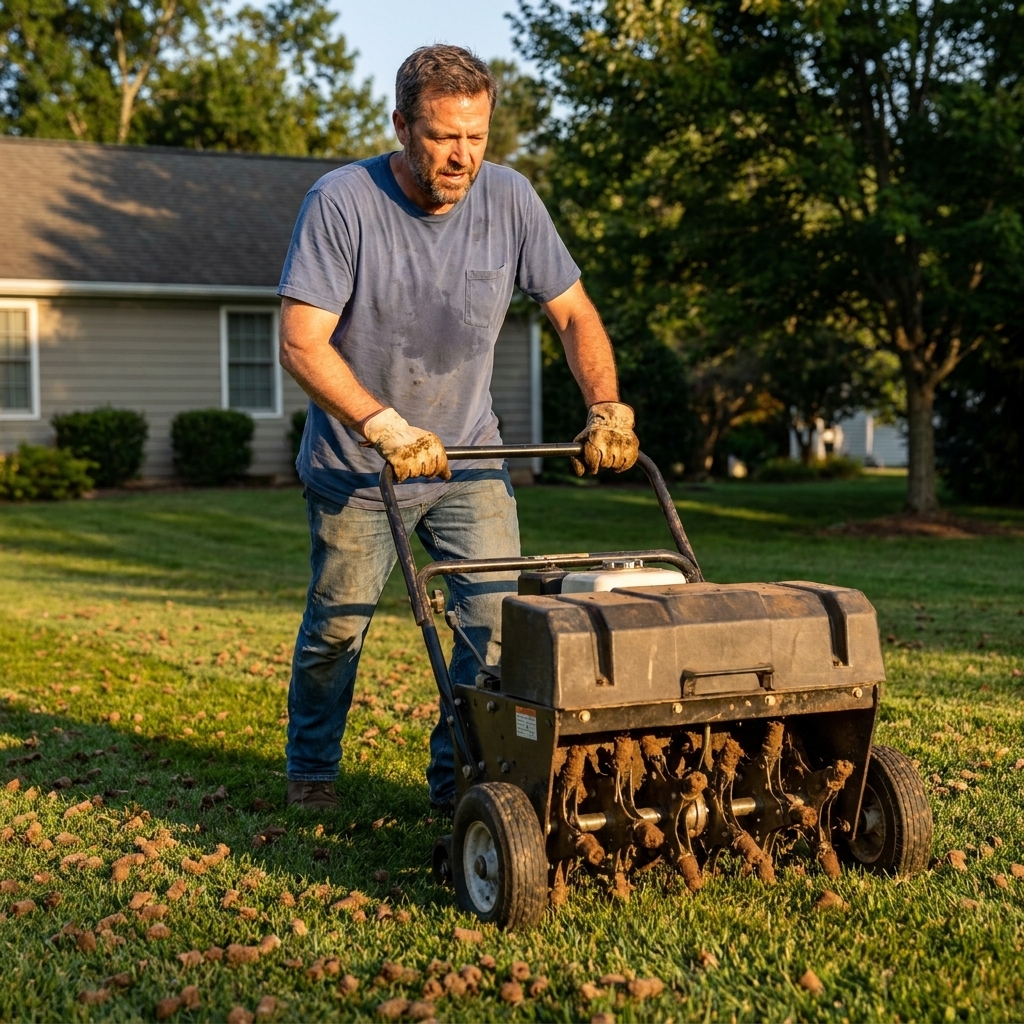
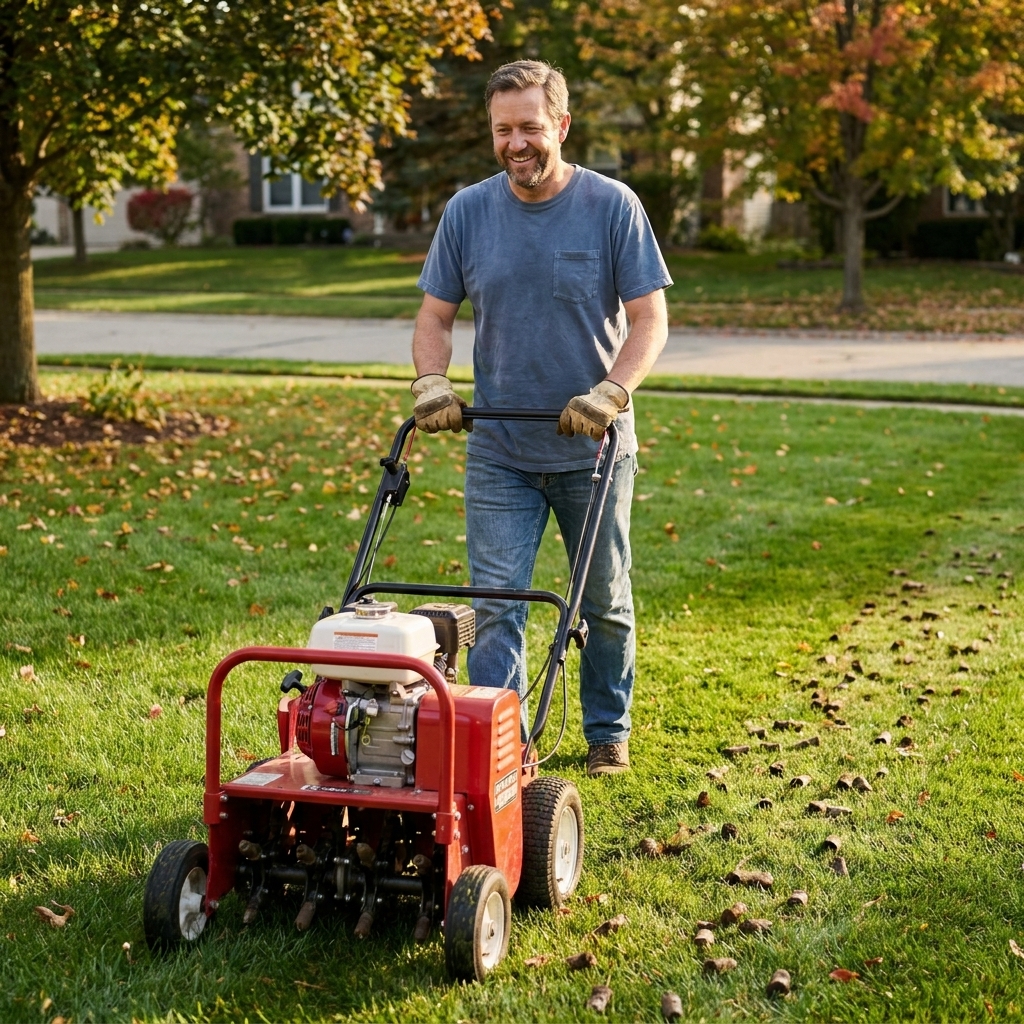
If your lawn feels like a parking lot, aerate before topdressing. Compost paired with core aeration is one of my favorite combinations because compost works down into the holes and jump-starts root-friendly soil structure.
4) Drop small piles
Instead of dumping big mounds, place small shovel piles every few feet. This makes raking much easier and helps you avoid thick spots.
5) Spread a light, even layer
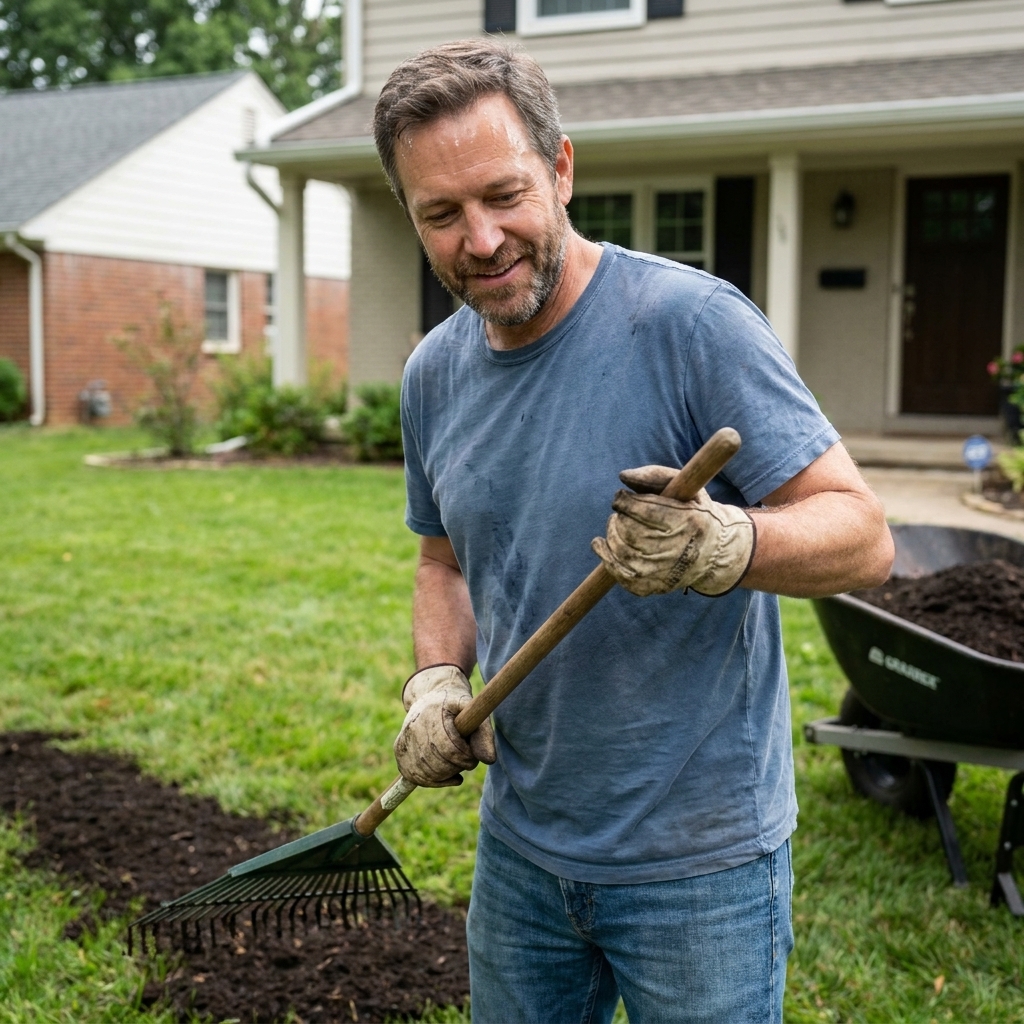
Use a rake (or spreader roller) to work compost across the surface. Your goal is typically 1/8 to 1/4 inch. Keep stepping back and checking. If the grass disappears, pull compost into thinner areas.
6) Brush it in
Lightly rake in different directions. You want compost to settle around the plants, not blanket them. This step is the difference between soil improvement and a lawn that struggles.
7) Water lightly
A gentle watering helps compost settle and cuts down on dust. You are not trying to soak the yard, just marry compost to the turf canopy and upper soil.
Compost and overseeding
If you are overseeding, compost is a great helper, as long as you keep coverage very light.
- Mow and clean up.
- Aerate if the lawn is compacted.
- Spread seed at the recommended rate for your grass type.
- Topdress very lightly (around 1/8 inch) to help hold moisture and improve seed-to-soil contact.
- Water frequently and lightly until germination, then transition to deeper, less frequent watering.
Most turf seed wants shallow coverage. If your seed is disappearing under compost, you went too thick.
Aftercare
For the next 2 to 4 weeks, keep things simple and steady.
- Mowing: Mow as normal once the lawn is dry enough and the compost has settled. Keep blades sharp to avoid tearing grass that is already working.
- Watering: Watch moisture closely during dry, windy weather. Compost helps hold water, but the surface can still dry out.
- Fertilizer: Compost is gentle. If you are chasing growth or recovery, you can still fertilize according to your seasonal plan. Compost is not a replacement for a complete fertility program.
- Traffic: Try to limit heavy foot traffic for about a week so you do not grind compost into clumps.
Common mistakes
Applying too thick
This is the big one. A heavy layer can block light and airflow. If you already spread too much, rake aggressively to redistribute and expose blades.
Using immature compost
If compost smells sour, ammonia-like, or is warm inside the pile, it is not finished. Skip it. Immature compost, especially woody material that is still breaking down, can cause nutrient issues and stress turf.
Topdressing dormant grass
Dormant turf cannot push through as well. Wait for active growth unless you are doing a very light application for soil protection.
Expecting instant results
Compost topdressing is a soil-building habit. The biggest payoff usually shows up after repeat applications over multiple seasons.
How often to topdress
For most home lawns, once per year is a great pace. If your soil is poor or you are rehabbing a yard that has been neglected, you can do twice per year (spring and fall for cool-season lawns, late spring and late summer for warm-season lawns), keeping each application on the lighter side.
If you are already getting good results and your lawn is stable, you can back off to every other year and maintain with smart mowing, mulching clippings, and targeted fertilizing.
Quick FAQ
Will compost reduce thatch?
It may help over time in some situations, but it is not a quick fix for severe thatch. If thatch is over about 1/2 inch, consider mechanical dethatching or aeration, then maintain with lighter compost applications and better watering and fertility habits.
Can I topdress if I have weeds?
You can, but manage expectations. Compost improves turf health, which helps grass compete, but it does not kill existing weeds. If weeds are heavy, handle them first (or alongside) so you are not improving conditions for weeds too.
Is compost better than topsoil for topdressing?
For soil health and biology, compost usually wins. For leveling, a screened topsoil or a topsoil-compost blend can be better because compost can settle a bit as it continues to break down. For most lawns, a light compost topdress is the best health move.
Will compost change my soil pH?
Sometimes, but the effect is usually modest and depends on the compost and your existing soil. Many composts are near neutral to slightly alkaline, and most soils buffer changes. If pH has been a long-term issue, get a soil test and adjust with lime or sulfur as recommended.
My takeaway
If your lawn has been stuck in a cycle of thin grass, hard soil, and patchy summer stress, compost topdressing is one of the most practical upgrades you can make. Keep it light, use finished screened compost from a source you trust, and repeat yearly. Healthier soil is not flashy, but it is the foundation that makes everything else in lawn care easier and cheaper.