A homeowner-friendly guide to spotting thatch vs. compaction, choosing dethatching or core aeration, and timing both for the best fall recovery and overseedi...
lawn care
Improve Clay Soil in Your Lawn
 Mark Vance
 is a former professional landscaper and the lead turf enthusiast at Yard Mentor. With over 15 years of experience in soil health, turf management, and residential landscaping, he is dedicated to helping homeowners transform frustrating dead patches into lush, healthy lawns. When he isn't testing new grass seed blends, you can find him enjoying a Saturday morning coffee looking out over his freshly striped yard.
Updated October 17, 2026
Created October 17, 2026
Mark Vance
Mark Vance is a former professional landscaper and the lead turf enthusiast at Yard Mentor. With over 15 years of experience in soil health, turf management, and residential landscaping, he is dedicated to helping homeowners transform frustrating dead patches into lush, healthy lawns. When he isn't testing new grass seed blends, you can find him enjoying a Saturday morning coffee looking out over his freshly striped yard.
Updated October 17, 2026
Created October 17, 2026
If your lawn stays soggy after rain, turns rock-hard in summer, or grows grass in stubborn clumps instead of a thick carpet, there is a good chance you are dealing with clay soil. Clay is not “bad” soil, but it is a dense, tight soil. The tiny particles pack together, squeeze out air pockets, and slow water movement. Roots struggle, microbes slow down, and your lawn ends up looking tired even when you’re doing everything right.
The good news is you can absolutely improve clay. The goal is not to “remove” clay. The goal is to open it up, feed it, and gradually build a crumbly soil structure that drains better and grows deeper roots. The fastest progress comes from combining three things: core aeration, generous organic matter additions, and a soil conditioner that helps water move through compacted ground.
How to tell if you have clay (and what is really causing the problem)
Clay lawns usually show the same set of symptoms:
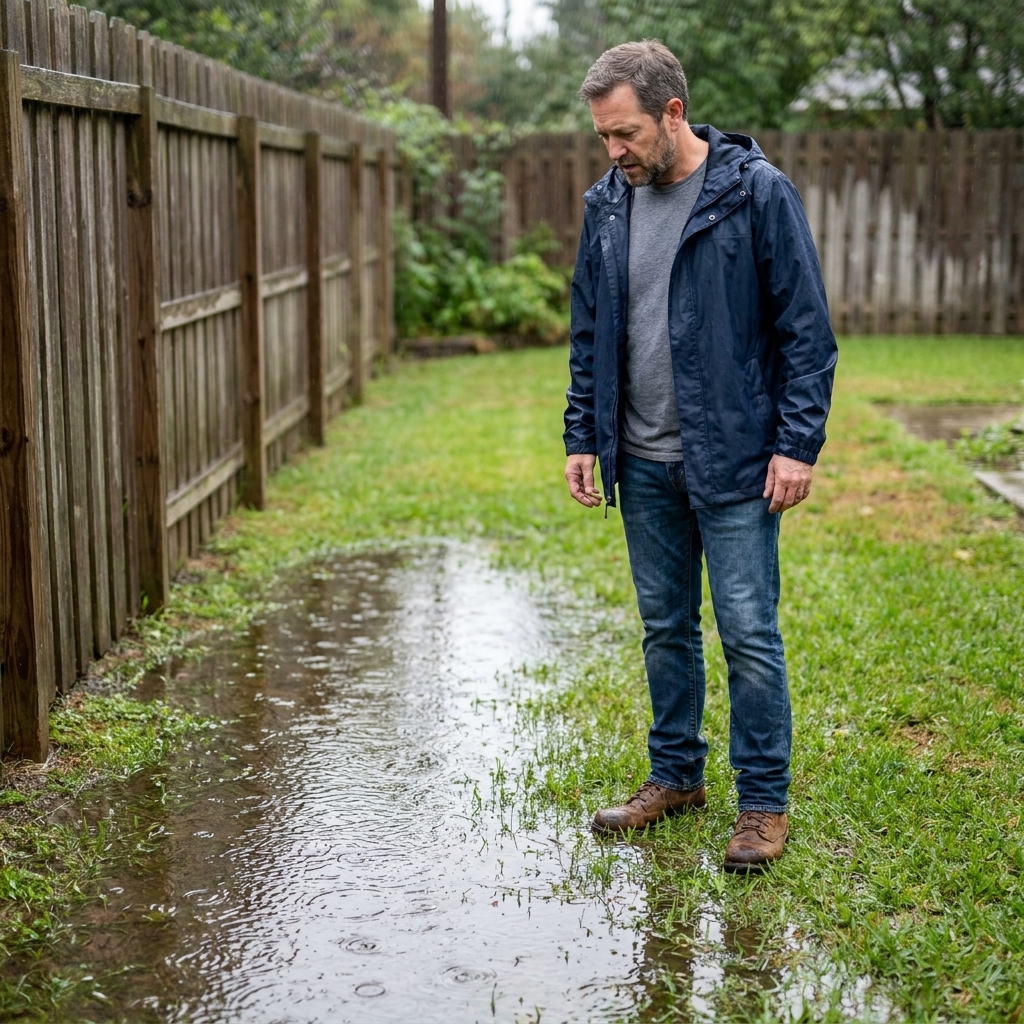
- Puddles that linger or water that runs off instead of soaking in
- Hard, cracked ground during dry spells
- Thin turf and shallow roots, even with regular watering
- Compaction from foot traffic, kids, dogs, or mowing when soil is wet
- Yellowing and disease pressure because roots are stressed and oxygen-starved
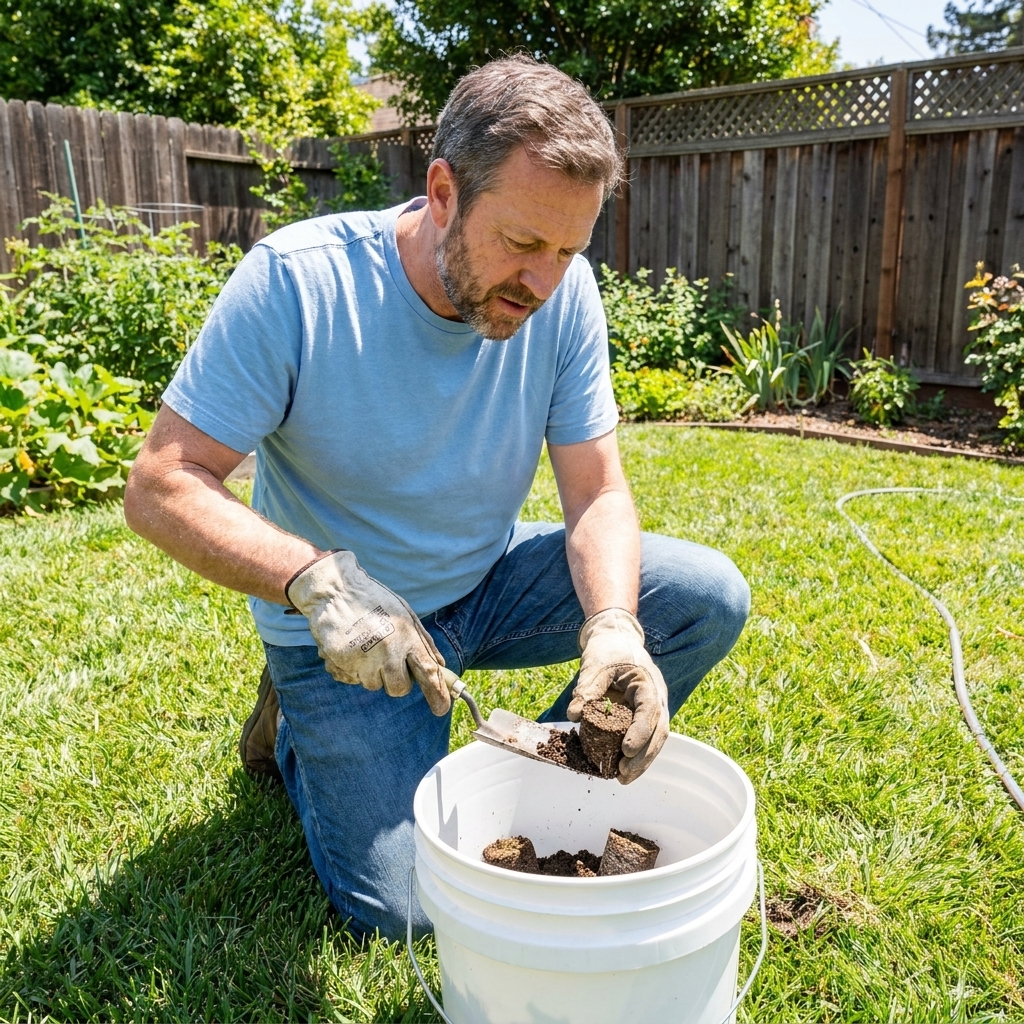
Here is a quick “jar test” you can do without overthinking it. Scoop soil from a few inches down, remove rocks, put it in a clear jar, add water, and shake. Let it settle. Sand drops first, silt settles next, and clay takes the longest. You may see cloudy water for 24 to 48 hours (or more) before clay fully settles. Once it does, it forms the finest, topmost layer. If that fine layer is thick, you have clay influence. If the yard also gets hard and slick when wet, compaction is probably your bigger enemy than clay alone.
One more smart move: run a basic soil test every couple of years. Clay can be nutrient-rich, but pH and key nutrients can still be off. Testing takes the guesswork out of liming and fertilizing.
The big picture: what actually improves clay soil
Clay improves when you build structure. You want stable aggregates, basically little clumps of soil that create spaces for air and water. Those spaces are what roots chase.
To build that structure, you need:
- Physical openings so water and oxygen can enter now (core aeration)
- Organic matter to feed biology and create aggregation over time (compost and topdressing)
- Better infiltration through compacted or water-repellent layers (wetting agents and soil conditioners)
If you do only one, you will help. If you do all three in the right order, you will finally feel your yard change under your feet.
One thing I generally avoid on an established lawn: tilling (unless you are doing a full renovation). Tilling destroys existing soil structure, roughs up your grade, and can bring buried weed seed to the surface. For most lawns, aeration plus topdressing is the cleaner, steadier path.
Step 1: Core aeration (the clay soil reset button)
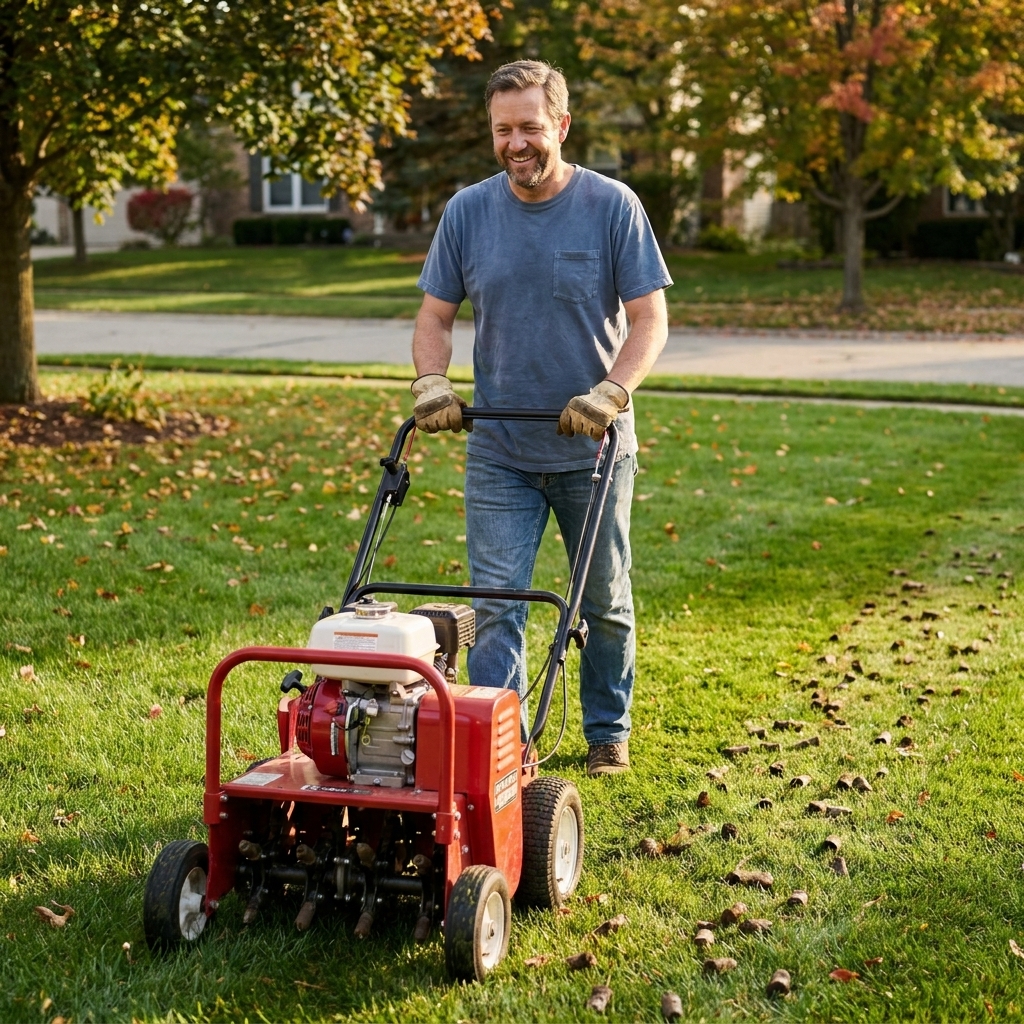
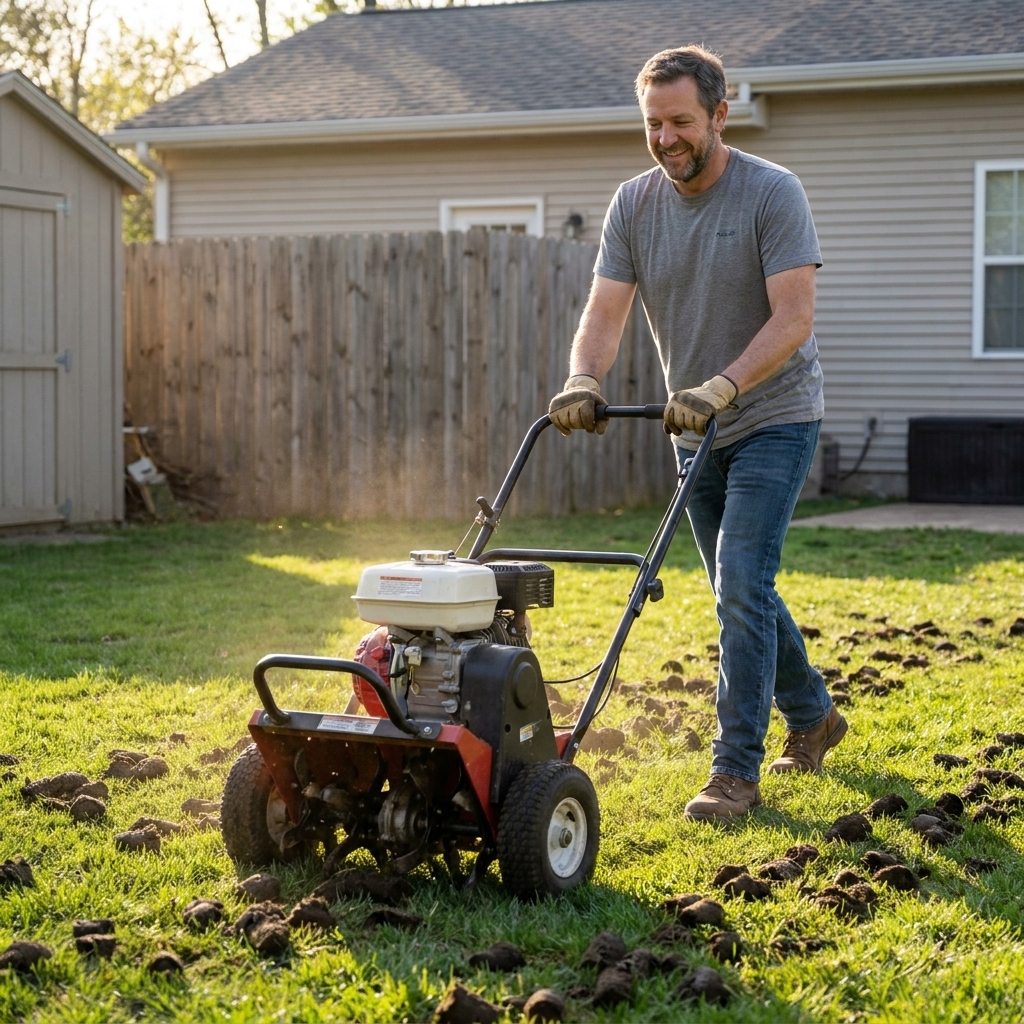
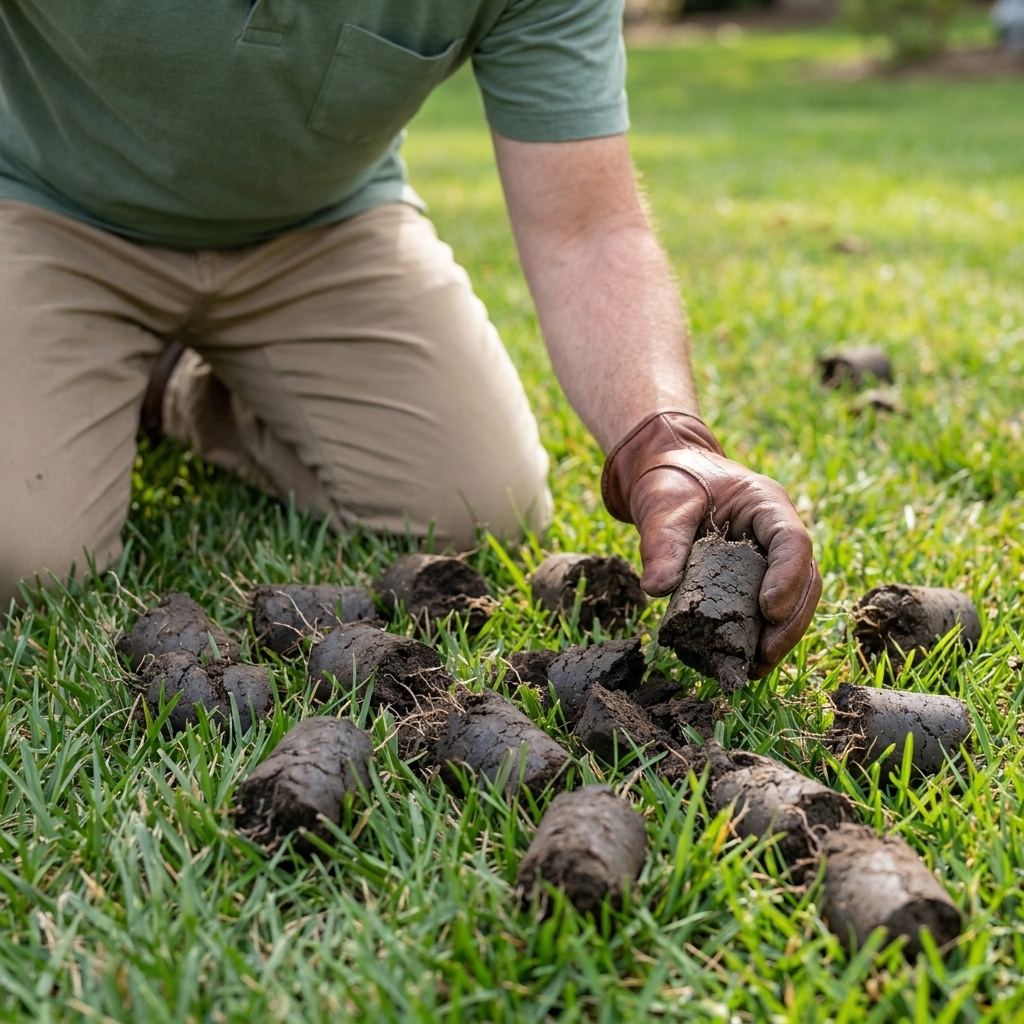
For compacted clay, core aeration is the move that gives you immediate breathing room. A proper core aerator pulls plugs, not just pokes holes. Those pulled cores create channels where water can enter, roots can expand, and organic matter can work its way down.
When to aerate clay soil
- Cool-season grasses (Kentucky bluegrass, fescue, rye): aerate in early fall, or spring if you missed fall
- Warm-season grasses (Bermuda, zoysia, St. Augustine): aerate in late spring to early summer when the lawn is actively growing
Avoid aerating when the soil is bone-dry or sloppy-wet. You want it slightly moist. If you can push a screwdriver into the ground with some effort, that is usually perfect.
How many passes on clay?
One pass helps, two passes in different directions is where clay lawns start to turn a corner. If your yard is extremely compacted, do two passes this season and plan to repeat annually until drainage and rooting improve.
Should you pick up the plugs?
No. Let the plugs dry and crumble back in. That is organic matter and microbial life returning to the surface. Mow normally and they disappear faster than you think.
Step 2: Add organic matter (the long-term fix)
If aeration is the reset button, organic matter is the rebuild. Clay does not improve because you “sand it” or because you tilled once. It improves because you repeatedly add carbon-rich material that soil life can turn into stable structure.
Best amendments for clay lawns
- Finished compost (my top choice): stable, easy to spread, great for biology
- Screened topsoil with compost: useful if you need to level minor bumps too
- Leaf mold: excellent if you have it, slower but very effective
What I avoid for most homeowners: heavy doses of peat moss as a primary strategy. It can help with moisture management, but it does not build long-term structure like compost does, and it tends to be overpriced for what you get.
How much compost to apply
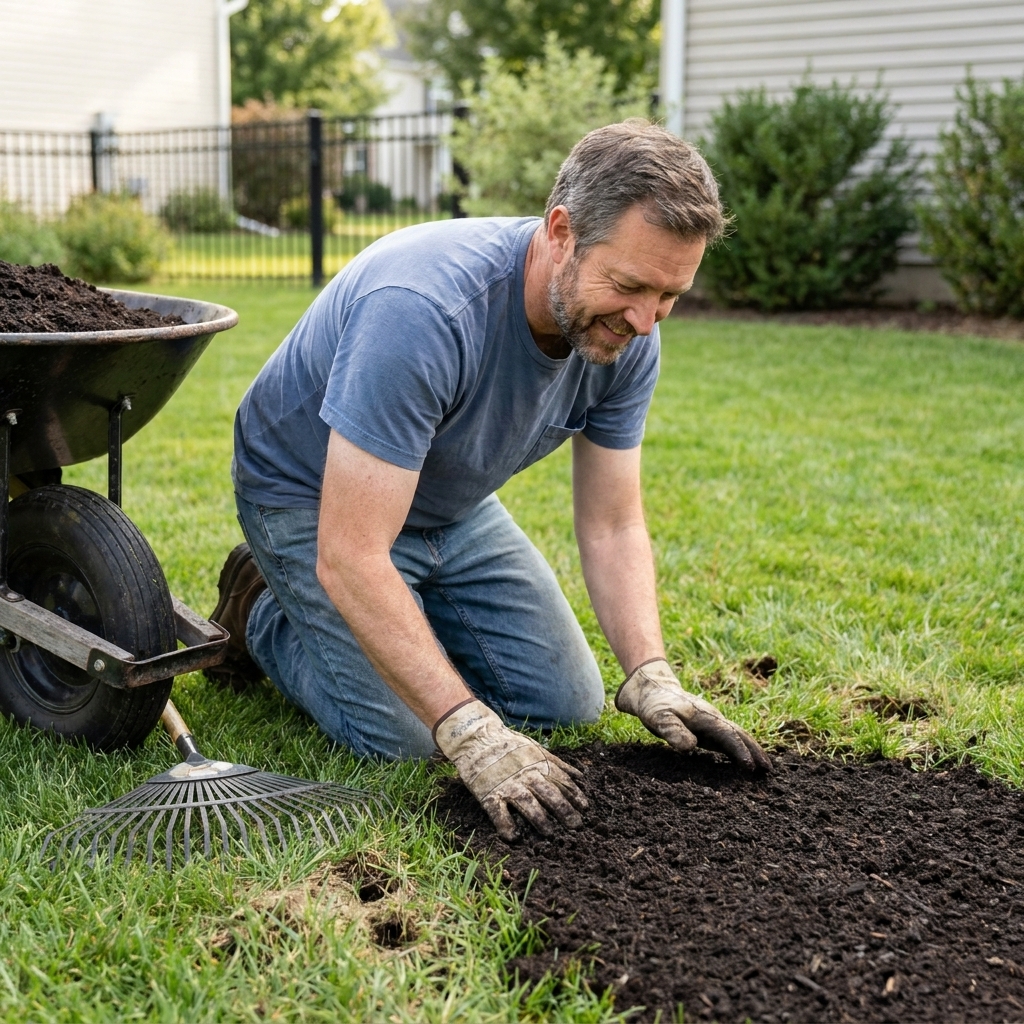
A great starting point is one-quarter inch to one-half inch of compost as a topdressing. Spread it across the lawn and work it in with a rake or drag mat so grass blades are still visible. Do this right after aeration and you will get compost down into the holes where it can actually change the soil.
If your yard is severely clay-heavy, aim for a lighter topdressing twice a year instead of dumping a thick layer once. Consistency wins.
Quick compost calculator
To estimate compost volume: at a 1/4-inch topdressing, you need about 0.8 cubic yards per 1,000 square feet. At a 1/2-inch topdressing, it is about 1.5 cubic yards per 1,000 square feet. Ordering a little extra is better than coming up short, but you do not need to bury the grass.
Step 3: Use liquid soil conditioners and wetting agents wisely
Liquid products will not magically turn clay into loam overnight, but they can be valuable tools, especially when your lawn has a compacted layer that water will not penetrate.
What “liquid aeration” usually means
Most liquid aeration or soil loosener products are built around surfactants and soil conditioners. They help water move through soil more evenly, reducing runoff and dry spots. In clay lawns, this can improve infiltration and make your watering more effective.
When liquid products shine
- Right after core aeration, to help water carry treatments deeper
- During summer, when you cannot mechanically aerate but need better infiltration
- On slopes, where runoff is stealing your irrigation
What to expect (realistically)
Think of liquids as a support tool that helps water behave better in the short term. Results vary widely by product, soil chemistry, and how you water. They do not reduce compaction the way a plug aerator does. For actual soil transformation, you still need repeated organic matter additions over time.
What about gypsum for clay soil?
Gypsum gets brought up a lot, and it can be helpful, but only in the right situation. Gypsum is most useful when you have sodic soil (excess sodium) that causes dispersion and sealing. In many residential lawns, the bigger issue is compaction and low organic matter, not sodium.
If you suspect sodic soil, your best move is a soil test that reports sodium and, ideally, CEC and EC so you can spot sodicity or salinity problems. Without that, gypsum can become an expensive guessing game. For plain old clay, I would rather put that money into aeration and compost first.
Stop making clay worse
Clay lawns punish the little mistakes. Fix these and your improvements stick faster.
- Do not mow when the soil is wet. You are basically pressing the soil particles together.
- Reduce traffic when it is soggy. Clay compacts easily, especially in high-use paths.
- Raise your mowing height. Taller grass grows deeper roots and shades the soil, which improves biology and moisture stability.
- Water deeper, less often. Frequent light watering keeps roots shallow and makes clay crust over faster.
- Keep thatch in check. A little thatch is normal. Before you dethatch aggressively, check thickness. If it is less than about a half-inch, compaction is usually the bigger issue, and hard dethatching can stress the turf.
Best step-by-step plan
Fall plan for cool-season lawns
- Core aerate (two directions if compacted)
- Topdress with compost (one-quarter inch to one-half inch)
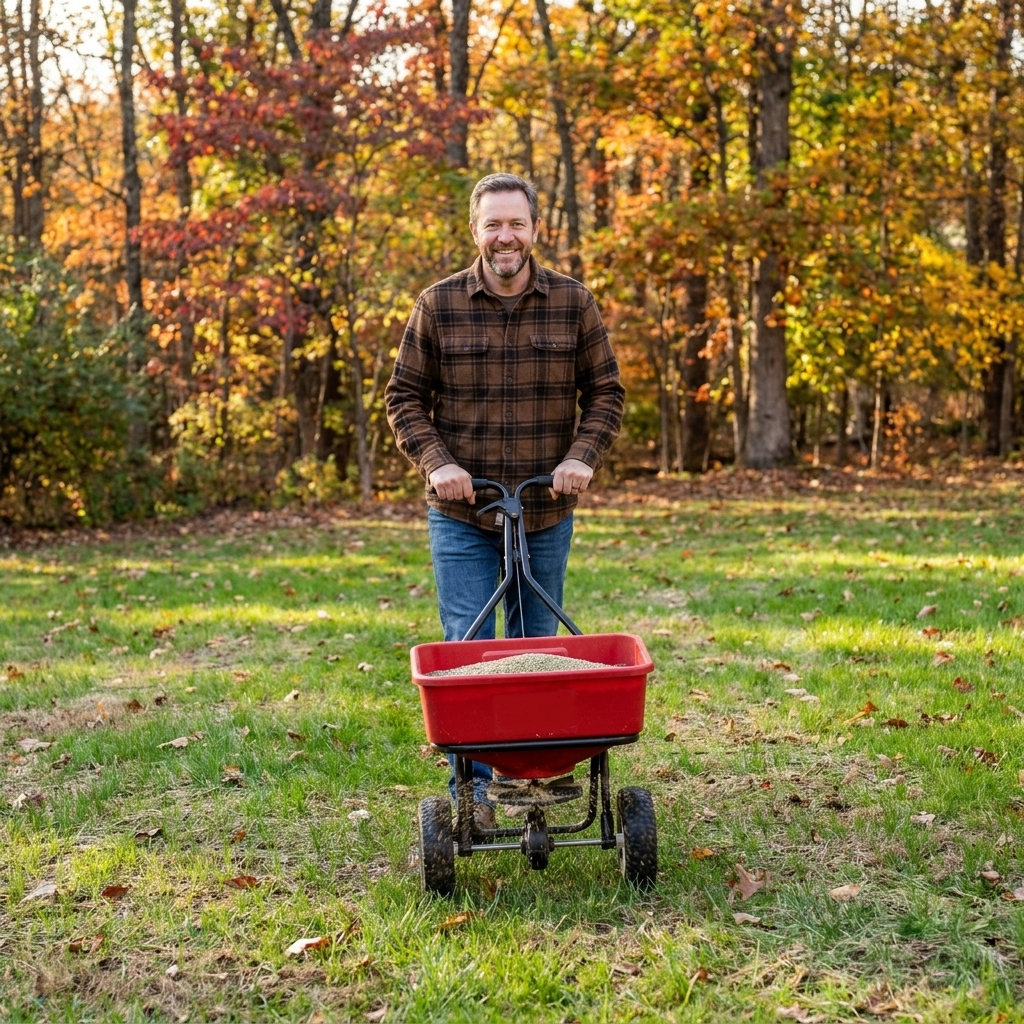
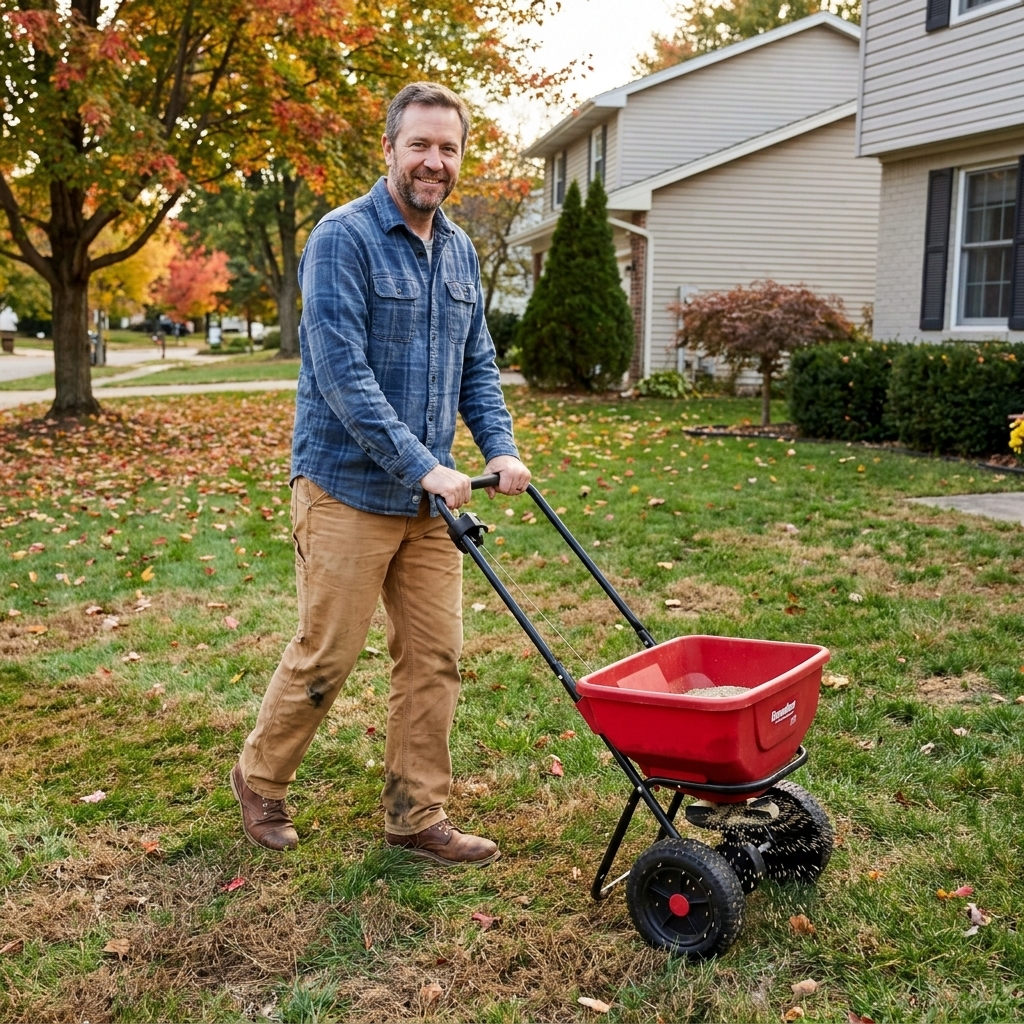
- Overseed if the lawn is thin, then lightly rake for seed to soil contact
- Apply a starter fertilizer if you overseed, then follow your normal fall fertilizing plan (based on a soil test if possible)
- Optional: apply a liquid soil conditioner after aeration and again a few weeks later
Late spring and summer plan for warm-season lawns
- Core aerate once the grass is actively growing
- Topdress with compost in a thin layer and brush it into the canopy
- Water to settle compost into holes and keep growth steady
- Optional: liquid conditioner during the season to help infiltration
Drainage trouble spots
Sometimes the soil is only part of the issue. If you have a low spot that stays wet for days, or you have downspouts dumping water into the lawn, you will fight an uphill battle unless you address the water source.
Consider these upgrades if clay improvement alone is not solving it:
- Extend downspouts away from turf
- Regrade small low areas with a soil and compost mix
- Install a shallow swale to redirect flow
- Add a French drain for chronic pooling, especially near foundations
FAQ
How long does it take to improve clay soil in a lawn?
You can see better infiltration after aeration right away, especially if you topdress with compost. For real soil structure change, plan on one to three seasons of consistent aeration plus organic matter. Clay improvement is cumulative.
Should I add sand to clay soil?
In most lawns, no. Adding small amounts of sand to clay can actually make the surface behave like a dense, brick-like mix unless you incorporate very large volumes evenly (and pair it with organic matter). If you are leveling, use a soil mix that includes compost, and focus on building organic matter instead of trying to “sand your way out of clay.”
Will overseeding help clay problems?
Grass does not fix clay by itself, but thicker turf helps a lot. Dense roots improve soil biology, protect the surface from crusting, and reduce runoff. Overseeding is especially effective when paired with aeration and compost topdressing.
What is the fastest way to loosen hard clay?
Core aeration is the fastest mechanical change. Follow it immediately with compost topdressing. If you need a short-term boost to help water soak in, add a wetting agent or soil conditioner after aeration.
My simple rule for clay lawns
If you remember one thing, make it this: poke holes, add compost, repeat. Clay does not respond to quick fixes, but it responds beautifully to steady improvement. Do those two habits for a couple seasons and you will notice the lawn gets easier to water, easier to mow, and a whole lot easier to love.