Follow this beginner-friendly fertilizing plan for spring, summer, and fall. Includes cool-season vs warm-season timing, safe application rates, and burn-pro...
lawn care
Organic vs. Synthetic Lawn Fertilizers
 Mark Vance
 is a former professional landscaper and the lead turf enthusiast at Yard Mentor. With over 15 years of experience in soil health, turf management, and residential landscaping, he is dedicated to helping homeowners transform frustrating dead patches into lush, healthy lawns. When he isn't testing new grass seed blends, you can find him enjoying a Saturday morning coffee looking out over his freshly striped yard.
Updated October 17, 2026
Created October 17, 2026
Mark Vance
Mark Vance is a former professional landscaper and the lead turf enthusiast at Yard Mentor. With over 15 years of experience in soil health, turf management, and residential landscaping, he is dedicated to helping homeowners transform frustrating dead patches into lush, healthy lawns. When he isn't testing new grass seed blends, you can find him enjoying a Saturday morning coffee looking out over his freshly striped yard.
Updated October 17, 2026
Created October 17, 2026
If you have ever stood in the fertilizer aisle staring at bags that all promise “greener in 7 days,” you are not alone. When I bought my first house in the Midwest, I picked a high-number synthetic fertilizer because I wanted results fast. I got results all right: a quick color pop, followed by a few crispy patches where I overlapped. That was my first lesson in the tradeoff between speed and soil-building.
Here is the simple truth: organic and synthetic fertilizers can both grow great grass. The “best” choice depends on your goals, your soil, your schedule, your budget, and how comfortable you are applying it correctly. Let’s break it down like a neighbor leaning over the fence, not a chemistry lecture.
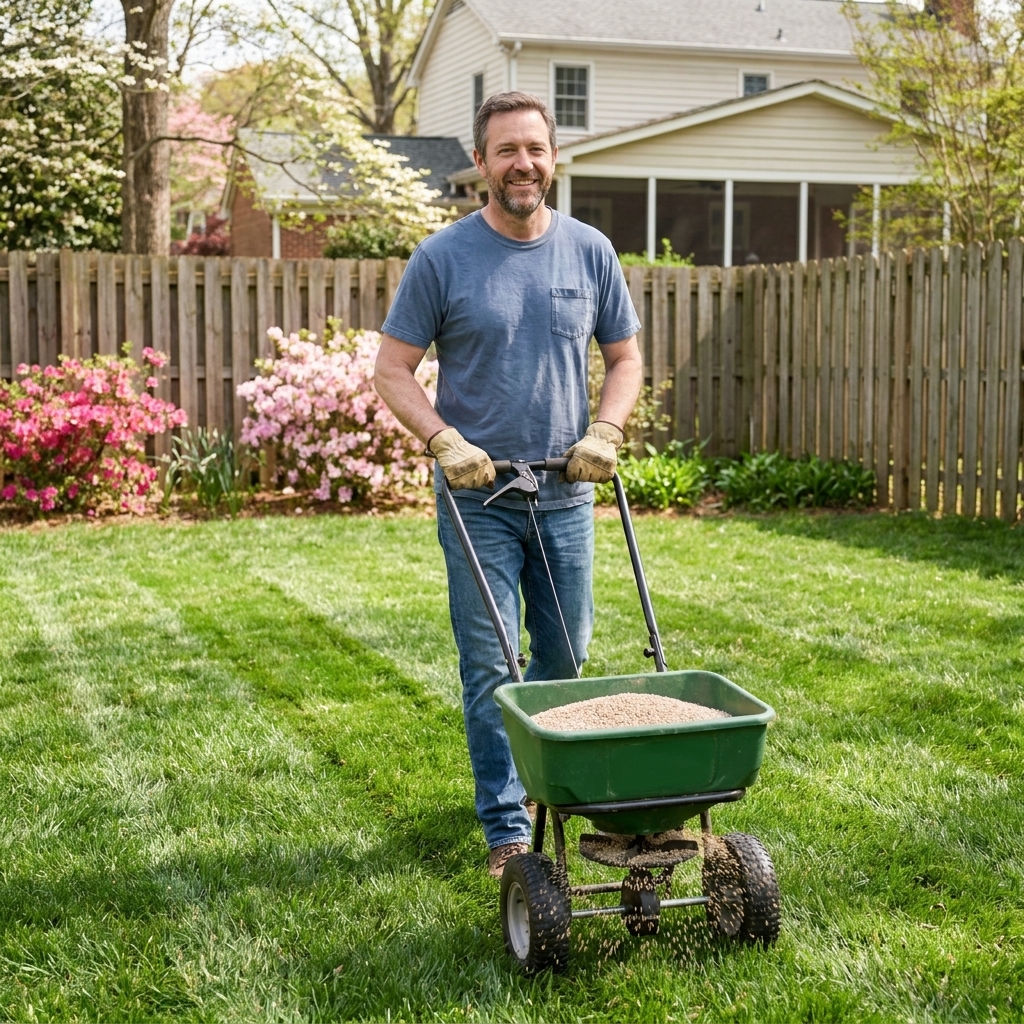
The quick difference
Synthetic fertilizer is manufactured plant nutrition, usually mineral salts, designed to deliver nutrients in a predictable, often fast way.
Organic fertilizer is made from once-living materials like composted manure, feather meal, bone meal, alfalfa meal, biosolids, or other natural sources. Nutrients are released as soil microbes break them down, which is typically slower and more weather-dependent. (Always check the label, because “organic” products can vary, and some blends include quicker-available forms.)
Think of it like this
- Synthetic: “Feed the plant directly.”
- Organic: “Feed the soil so the soil feeds the plant.”
How fertilizers work
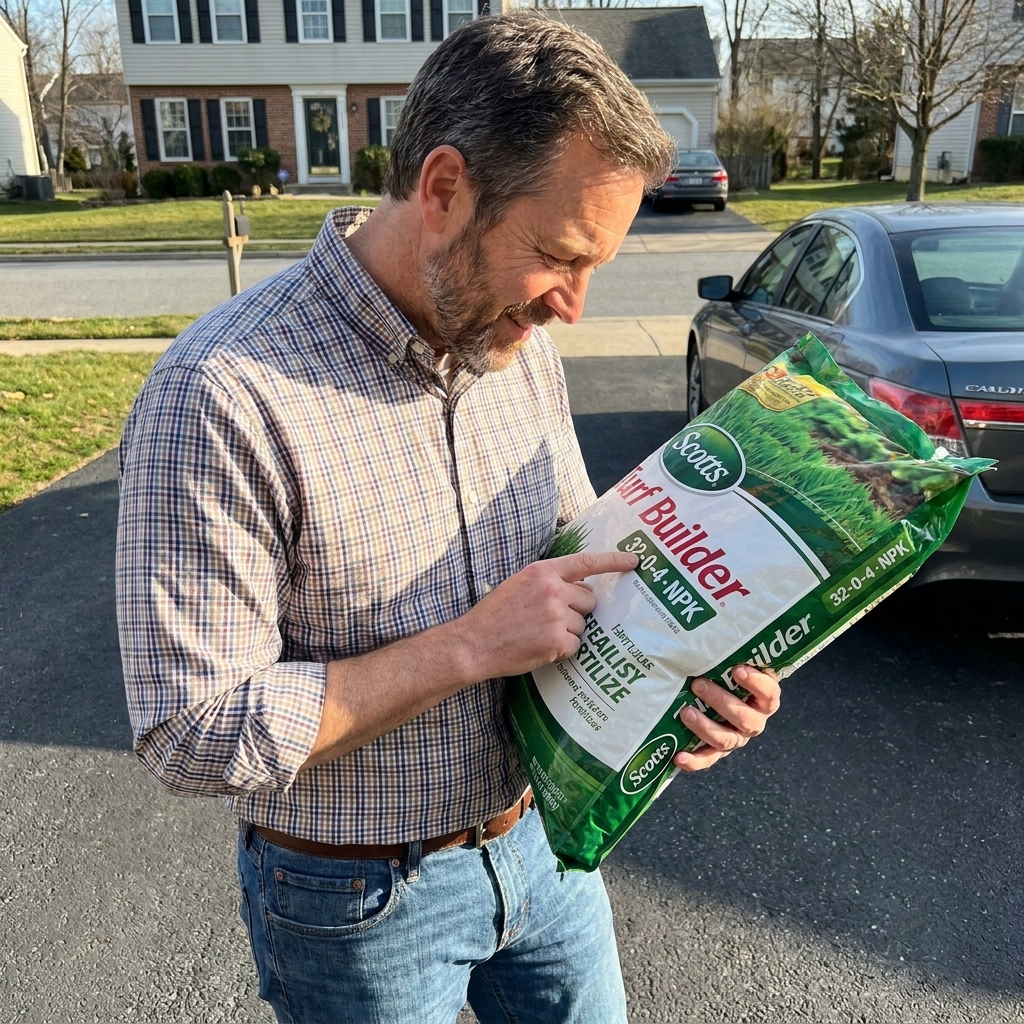
Every fertilizer bag has three numbers like 24-0-6 or 10-0-2. That is N-P-K:
- N (Nitrogen): drives top growth and green color.
- P (Phosphorus): supports roots and establishment. Many lawns do not need much, and some areas restrict it.
- K (Potassium): helps stress tolerance, disease resistance, heat and drought resilience.
The key difference is not just the numbers. It is how quickly those nutrients become available.
Fast-release vs. slow-release
Many synthetics are fast-release, though “slow-release” synthetics exist (coated urea, methylene urea, sulfur-coated urea). Organic fertilizers are often slow-release because microbes have to do the work, but the speed still depends on the ingredient list, soil temperature, moisture, and how the product is made.
Organic fertilizers
Pros
- Lower burn risk: Because nutrients tend to release gradually, it is usually harder to scorch the lawn if you apply a bit too much. (Lower risk is not zero, especially with higher-rate products or poor timing.)
- Improves soil over time: Organics add carbon and support microbial life. That helps with soil structure, water retention, and nutrient cycling.
- Steadier growth: You often get fewer “growth surges,” which means less mowing stress and fewer spikes of tender growth.
- Great for long-term turf health: If your lawn feels like it is always struggling, building soil usually pays off.
Cons
- Slower green-up: If you want a fast color change for an event next weekend, organic is not your quickest tool.
- Weather-dependent: Microbial activity slows in cool soil, very dry soil, or waterlogged conditions.
- Bulk and cost per pound of nitrogen: You often need to spread more product to deliver the same nitrogen.
- Can have odor: Some products (certain manures or biosolids) smell for a day or two.
When organic shines
- Spring and fall foundation feeding when you want steady growth and strong roots.
- Families with kids and pets who prefer a gentler input, especially if you are still dialing in your application skills.
- Thin lawns on tired soil, compacted ground, or sandy soil that struggles to hold nutrients.
- Overseeding season, where slow, consistent feeding supports seedlings without pushing them too hard.
One quick clarification that helps: organic fertilizer is mostly about nutrients. Organic matter (like compost topdressing) is mostly about improving soil structure and biology. They can overlap, but they are not the same thing, and many lawns benefit from both.
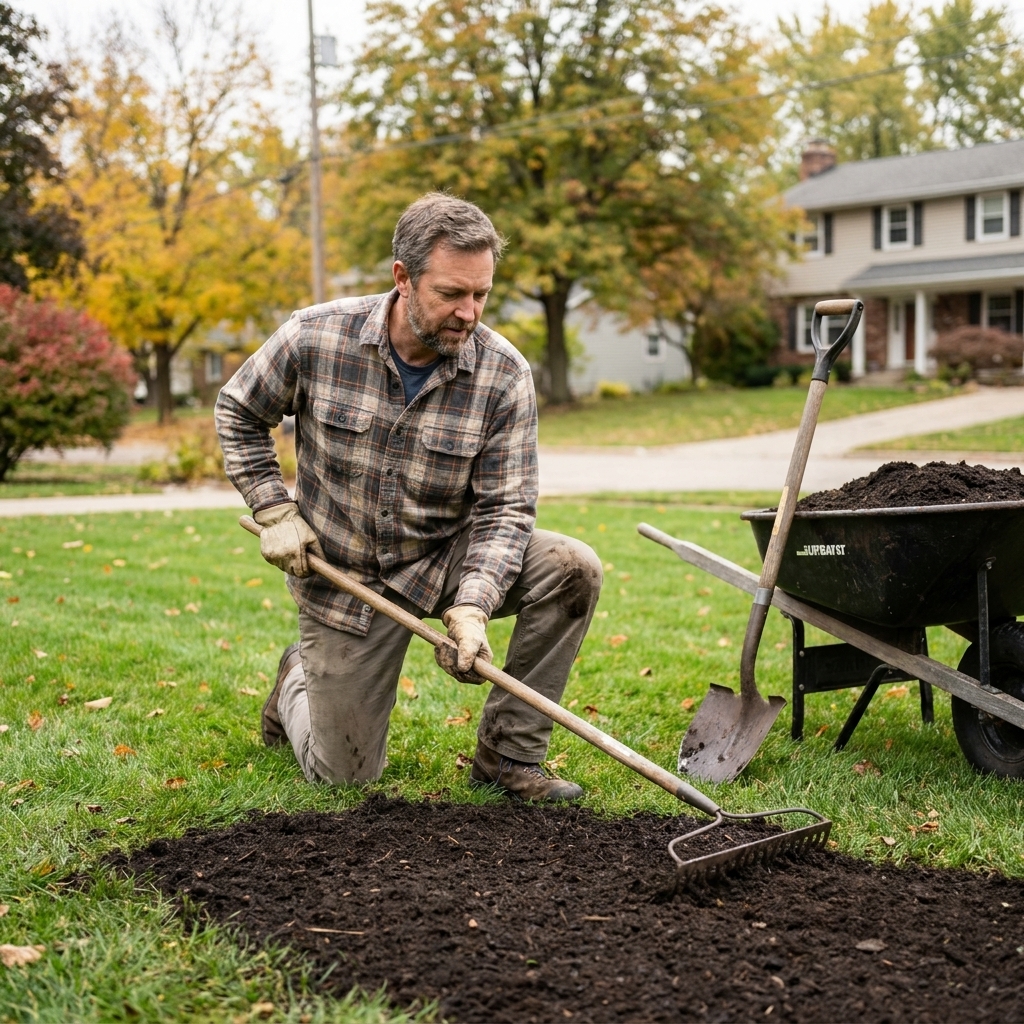
Synthetic fertilizers
Pros
- Fast, predictable results: Especially with quick-release nitrogen, you can see color and growth change quickly.
- Precision feeding: Easier to deliver an exact rate of nitrogen per 1,000 square feet.
- Often cheaper upfront: Less product is needed to deliver the same nutrient amount.
- Useful for correcting deficiencies: If a soil test shows you are low, synthetics can address it efficiently.
Cons
- Higher burn risk: Over-application, overlap, or applying during heat or drought can damage turf.
- Can push excessive top growth: That means more mowing and potentially more disease pressure if you are watering heavy.
- Less soil building: Synthetics feed the plant, but they do not add organic matter.
- Runoff potential: Misapplied fertilizer, especially before heavy rain, can wash into storm drains.
When synthetic makes sense
- You need quick recovery after heavy use (kids, dogs, backyard parties) and the grass is actively growing.
- You are on a tight budget but can apply carefully with a calibrated spreader.
- You are following a soil test and want precise nutrient corrections.
- Cool-season lawns in fall where a measured synthetic nitrogen plan can drive strong root storage going into winter.
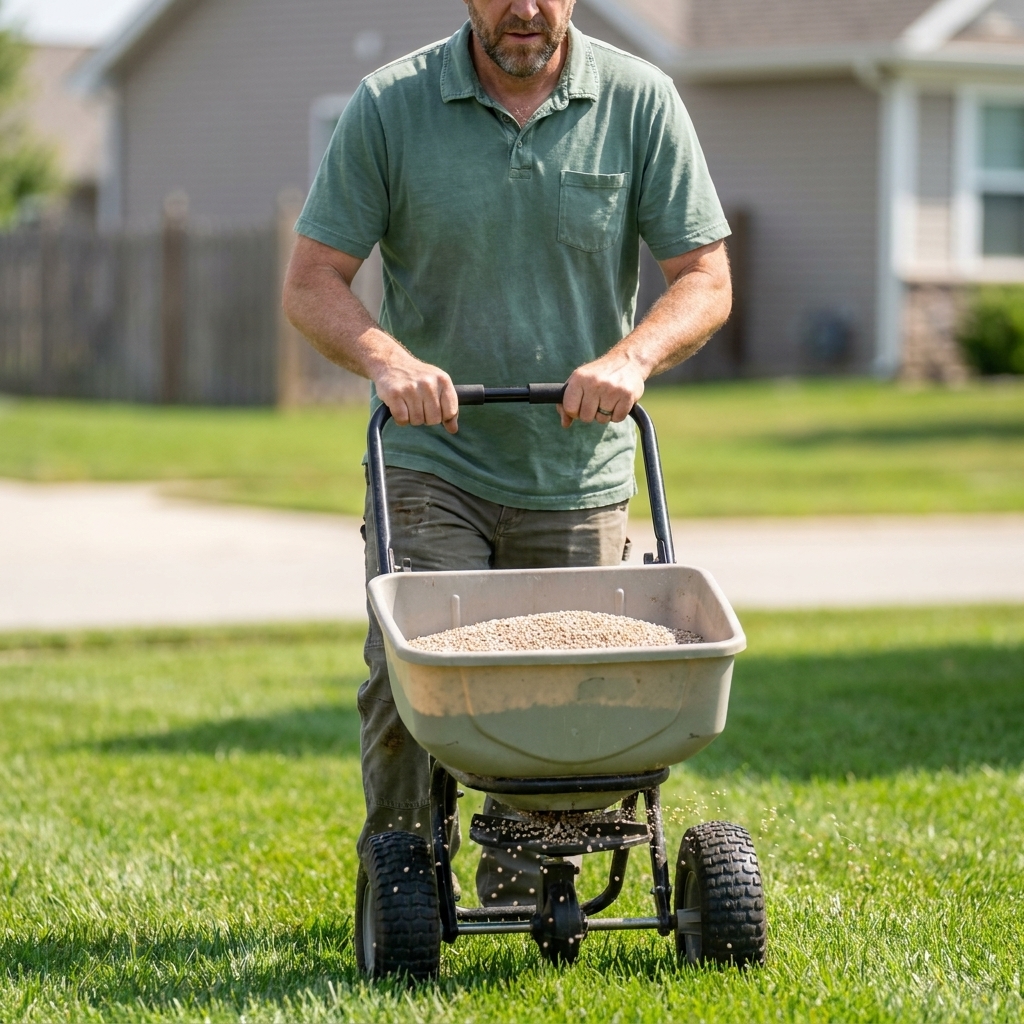
Kids, pets, and bare feet
This is a common worry, and it is a good one. Both organic and synthetic fertilizers can be used responsibly. The biggest practical differences are burn risk and how long granules remain on the surface.
- Granular synthetic fertilizers can be irritating for some pets (and uncomfortable on bare feet) if granules sit on the surface, and concentrated salts can burn grass where piles collect.
- Organic granular fertilizers are typically less caustic, but they can still be unsafe to ingest in quantity and should be kept off paws and out of mouths.
My rule: apply, sweep or blow granules off hard surfaces, and water in if the label calls for it. Keep kids and pets off the lawn until it is watered in and dry, or until the label says re-entry is OK.
Weed and feed
Most weed-and-feed products are synthetic fertilizer combined with a herbicide. They can work, but they are easy to misuse because the best time to fertilize and the best time to kill weeds are not always the same.
- If your main issue is crabgrass, you usually want a pre-emergent timing window, not necessarily a big fertilizer push.
- If your main issue is dandelions and clover, spot-spraying may be cleaner than broadcasting herbicide across the whole yard.
If you are trying to keep things simpler and more targeted, consider separating your fertilizer plan from your weed plan.
Best by grass type
Cool-season grasses
Kentucky bluegrass, fescues, and ryegrass do their best work in fall, with a smaller (but still important) growth window in spring.
- Best all-around approach: organic or slow-release synthetic in spring, then a more deliberate feeding plan in fall.
- If you want the best lawn for the least drama: organic in spring and early fall, then a carefully measured late-fall synthetic nitrogen application can be a strong combo.
Warm-season grasses
Bermuda, zoysia, St. Augustine, and centipede thrive when it is hot and sunny, and they slow down hard when they are not.
- Best all-around approach: feed during active growth in late spring through summer, back off as growth slows.
- Be cautious with quick-release synthetics during extreme heat or drought stress unless irrigation is consistent.
- Centipede in particular hates being overfed. When in doubt, go lighter.
Also worth noting: local rules and recommendations vary, especially around phosphorus. If your state or county restricts phosphorus, follow those rules and lean on local extension guidance.
The biggest mistake
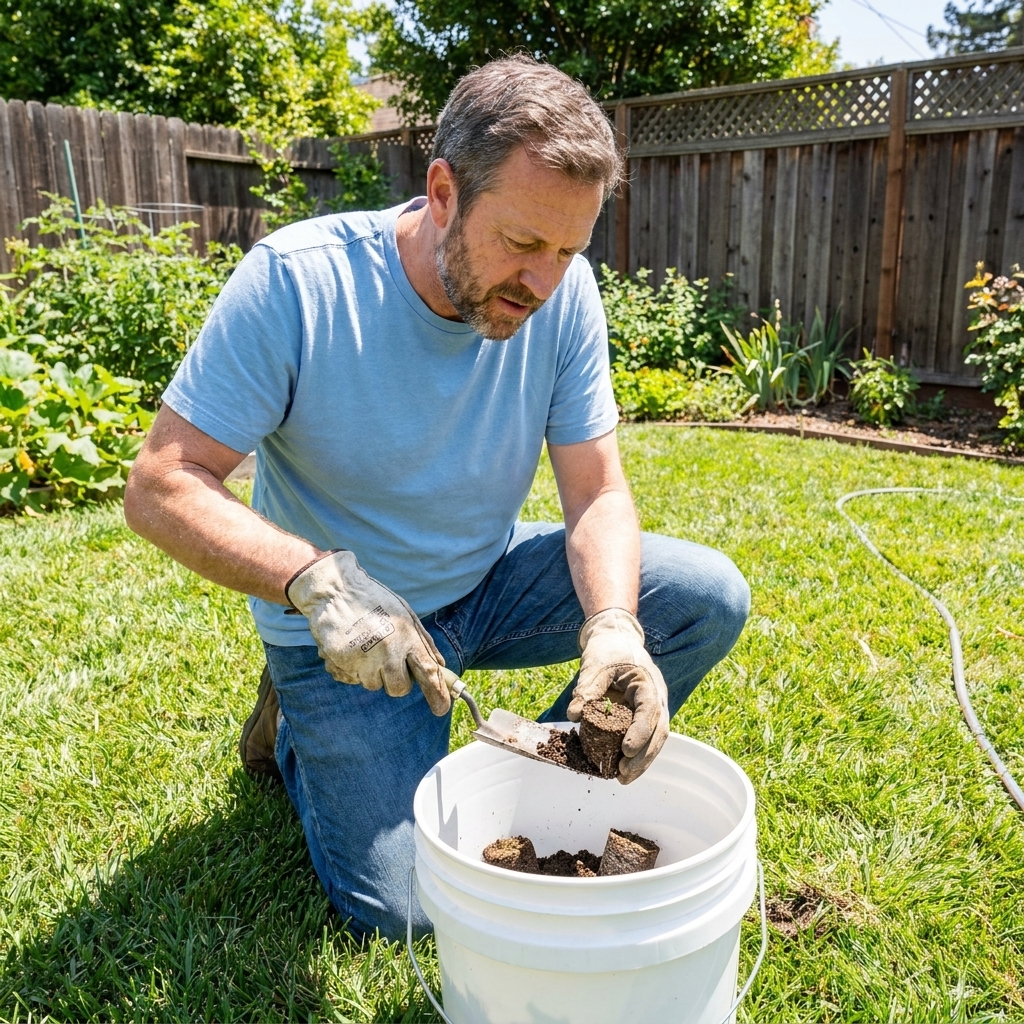
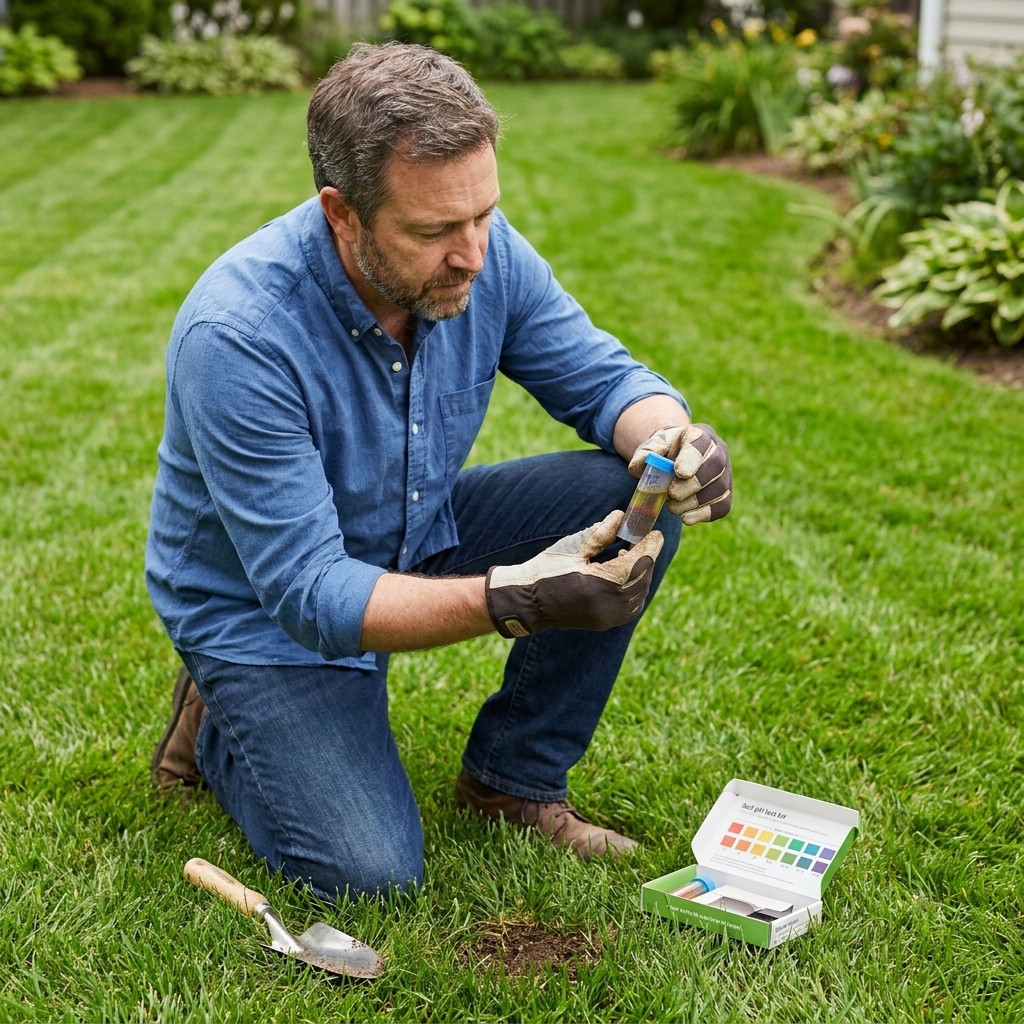
If you only take one tip from this article, take this one: get a soil test every couple of years. It often costs less than a couple bags of fertilizer and tells you what you actually need.
Why it matters for organic vs. synthetic:
- If your phosphorus is already high, you can choose products with 0 in the middle number.
- If your pH is off, no fertilizer type will fully fix the problem until you address pH with lime or sulfur as recommended.
- If potassium is low, you can target it instead of dumping extra nitrogen and hoping for the best.
Decision guide
Choose organic if you want:
- Lower burn risk and steadier growth
- Better soil structure over time
- A simpler, forgiving program
- Support for microbial life and overall lawn resilience
Choose synthetic if you want:
- Fast green-up and quick response
- Precise nutrient delivery per 1,000 sq ft
- Lower upfront cost
- Efficient correction of soil test deficiencies
Choose a hybrid approach if you want the best of both:
- Organic base feedings a couple times a year
- Strategic synthetic applications when timing really matters (heavy growth season, repair, late fall for cool-season lawns)
Apply it right
1) Measure your lawn
Most fertilizer mistakes happen because people guess square footage. Measure once, save yourself years of frustration.
2) Know what rate you are applying
A lot of lawn programs are built around a target like “X pounds of nitrogen per 1,000 square feet.” You do not have to love math, but you do want to avoid accidental overfeeding. The bag label will tell you how many pounds of product to apply per 1,000 square feet, and the N-P-K numbers tell you how much nitrogen is in the bag.
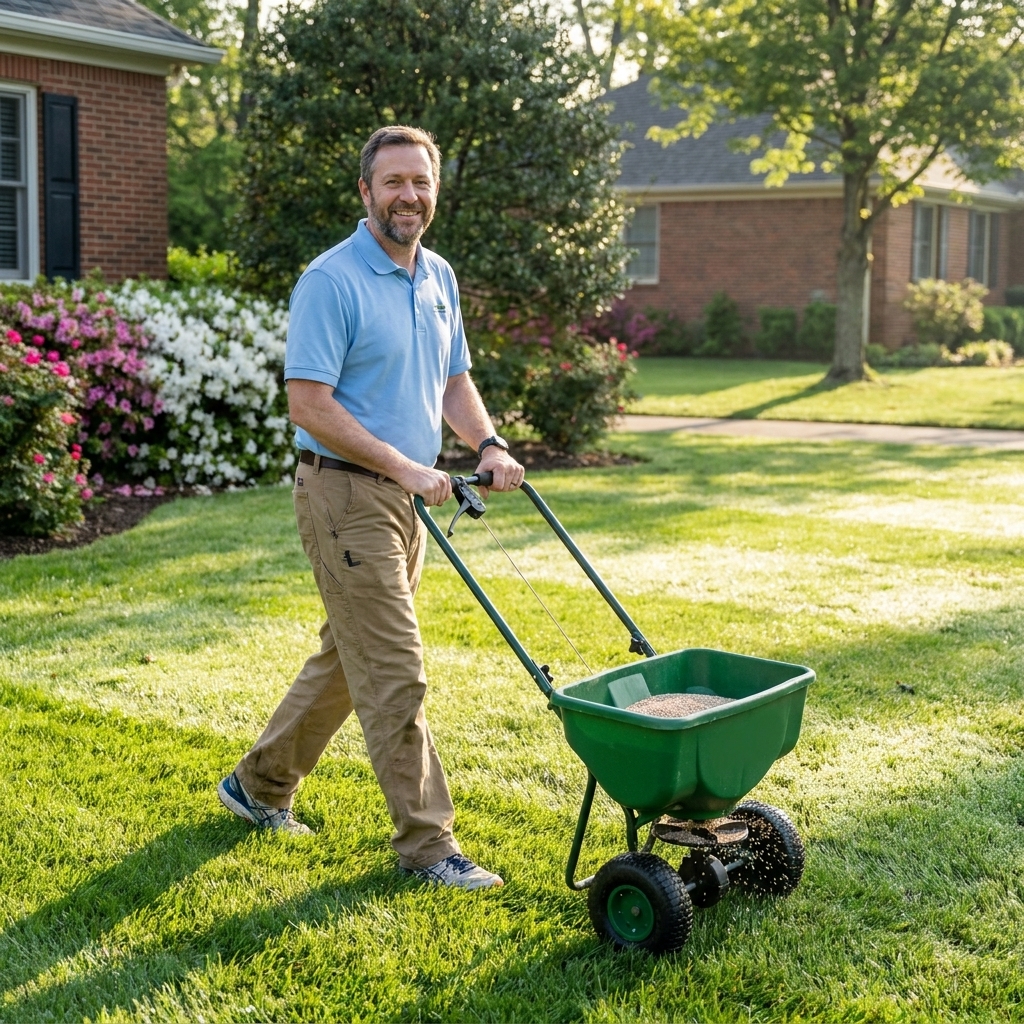
3) Calibrate your spreader
Use the bag’s spreader setting as a starting point, then apply half your product in one direction and the other half perpendicular. That helps prevent stripes and hot overlap lines.
4) Avoid heat and drought stress
Fertilizing stressed turf, especially with quick-release synthetic nitrogen, is a recipe for burn and disease.
5) Water correctly
Some products need to be watered in right away, others do not. Always follow the label. As a general rule, watering in helps move nutrients off blades and into the soil.
6) Keep it off sidewalks and driveways
Sweep or blow granules back into the grass. This is one of the easiest ways to reduce runoff risk.

FAQ
Does organic fertilizer work as well as synthetic?
Yes, but it usually works slower. Over time, many lawns look better with organics because the soil improves and the turf becomes more resilient.
Will synthetic fertilizer ruin my soil?
Used correctly, synthetic fertilizer will not “ruin” soil. The issues come from overuse, imbalanced feeding, and ignoring soil pH and organic matter. If you rely mostly on synthetics, consider adding compost topdressing or other organic matter periodically.
Can I mix organic and synthetic fertilizers?
Absolutely. Many homeowners get excellent results by using organic as the baseline and using synthetic in smaller, strategic doses when they need a response.
What is the lowest-burn option?
Organic fertilizers and slow-release synthetics generally have the lowest burn risk, assuming you follow label rates and do not apply to stressed turf.
How often should I fertilize?
It depends on grass type, climate, and your goals. Many cool-season lawns do best with most feeding in fall, while warm-season lawns are fed during summer growth. A soil test and a simple seasonal plan beat frequent guesswork.
My fence-line take
If you are overwhelmed, start with this approach: use an organic fertilizer in spring, focus on mowing and watering basics through summer, then feed again in early fall. Once you see how your lawn responds, you can decide if you want the extra speed and precision of synthetic applications.
A great lawn is rarely about one magic product. It is the boring consistency: right amount, right time, right soil.