Follow this beginner-friendly fertilizing plan for spring, summer, and fall. Includes cool-season vs warm-season timing, safe application rates, and burn-pro...
lawn care
Understanding NPK Ratios for Lawns
 Mark Vance
 is a former professional landscaper and the lead turf enthusiast at Yard Mentor. With over 15 years of experience in soil health, turf management, and residential landscaping, he is dedicated to helping homeowners transform frustrating dead patches into lush, healthy lawns. When he isn't testing new grass seed blends, you can find him enjoying a Saturday morning coffee looking out over his freshly striped yard.
Updated October 17, 2026
Created October 17, 2026
Mark Vance
Mark Vance is a former professional landscaper and the lead turf enthusiast at Yard Mentor. With over 15 years of experience in soil health, turf management, and residential landscaping, he is dedicated to helping homeowners transform frustrating dead patches into lush, healthy lawns. When he isn't testing new grass seed blends, you can find him enjoying a Saturday morning coffee looking out over his freshly striped yard.
Updated October 17, 2026
Created October 17, 2026
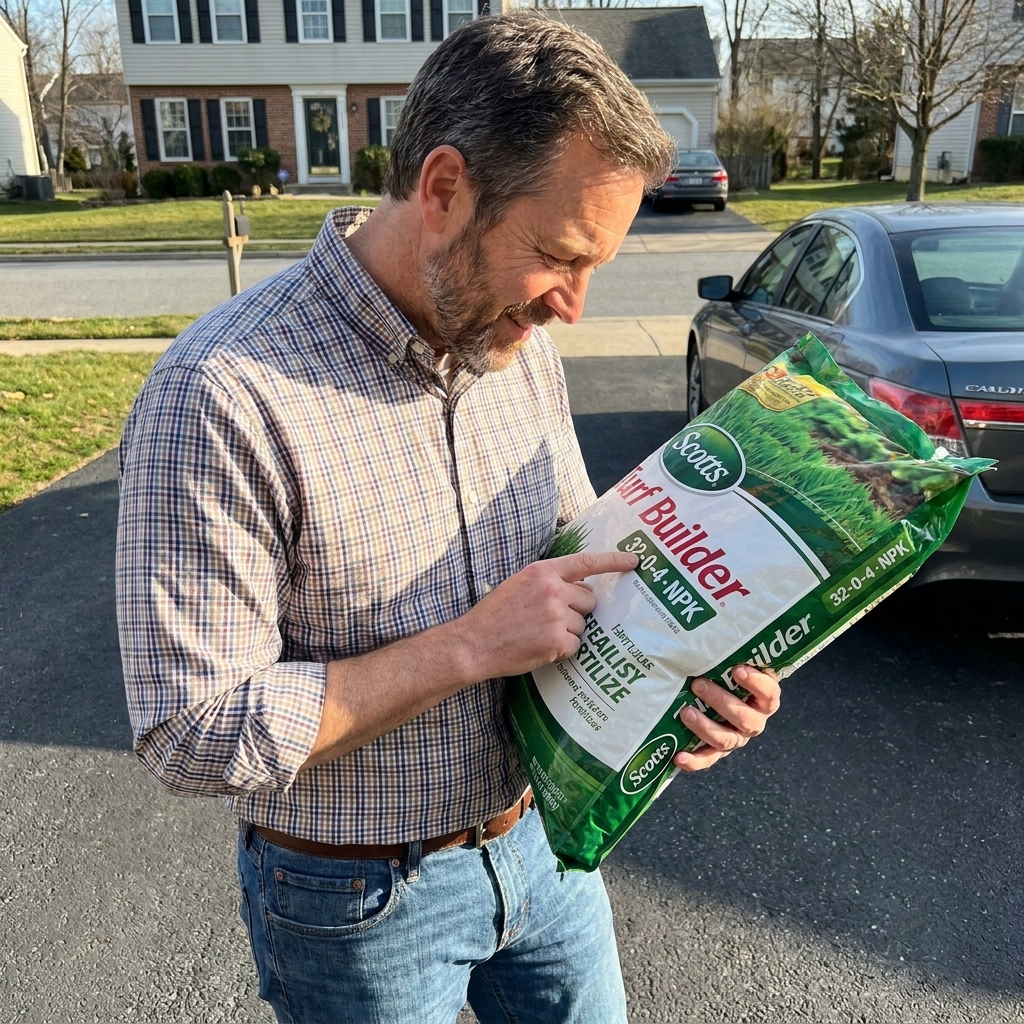
If you have ever stood in the lawn fertilizer aisle staring at bags that say 28-0-3, 10-10-10, or 12-12-12, you are not alone. Those three numbers are the fertilizer grade (often called the N-P-K or NPK ratio), and once you understand what they mean, picking the right product gets a whole lot less intimidating.
NPK is simply shorthand for the three primary nutrients grass uses the most:
- N = Nitrogen
- P = Phosphorus
- K = Potassium
Think of NPK like your lawn’s macros, meaning its main nutrients. You can have good mowing habits and still struggle with thin turf or stubborn brown patches if the nutrient balance is off. Let’s break down what each number means, what each nutrient does, and how to choose the right ratio for your yard.
What the NPK numbers mean
An NPK label is three numbers like 24-0-6. Those numbers are the percent by weight of each nutrient in the bag:
- First number (N): percent nitrogen
- Second number (P): percent phosphorus (reported as phosphate, P2O5)
- Third number (K): percent potassium (reported as potash, K2O)
So a 50 lb bag of 20-0-10 contains:
- 10 lb nitrogen (50 x 0.20)
- 0 lb phosphate (50 x 0.00)
- 5 lb potash (50 x 0.10)
Two quick takeaways that save homeowners a lot of money:
- Higher numbers mean more nutrient per pound of product, not “stronger” in a scary way. You just apply less product to deliver the same nutrient.
- The ratio matters as much as the numbers. A 30-0-4 and a 15-0-2 are basically the same “shape,” just different concentration.
Nitrogen (N): growth and color
If your lawn had a favorite nutrient, it would be nitrogen. Nitrogen drives top growth, green color, and thickening of turf. When you see a lawn that looks lush and “filled in,” nitrogen is usually a big part of that story.
What nitrogen does
- Deepens green color by supporting chlorophyll production
- Speeds leaf growth and helps turf fill thin spots
- Boosts recovery after stress (heat, traffic, mowing)
Signs your lawn may be low on nitrogen
- Pale green color or a yellow cast
- Slow growth even when temperatures are good
- Thin turf that shows soil between blades
When nitrogen goes wrong
Nitrogen is also the easiest nutrient to overdo. Too much, or applying at the wrong time, can lead to:
- Excessive growth (you are mowing constantly)
- More disease pressure (lush, tender growth can invite problems)
- Fertilizer burn (especially with quick-release products in heat)
Rule of thumb: if it is hot and your lawn is already stressed, do not try to force green with heavy nitrogen. Feed for health, not just color.
Phosphorus (P): roots and establishment
Phosphorus is famous for roots, but here is the key: many established lawns do not need much of it year after year in many soils. Plenty of yards already have adequate phosphorus, and some regions restrict phosphorus applications to protect waterways.
What phosphorus does
- Supports root development, especially in young turf
- Helps with seedling vigor and early establishment
- Plays a role in energy transfer inside the plant
When phosphorus is useful
- Seeding or overseeding: a starter fertilizer often includes phosphorus
- Sod installation: can help rooting in
- Soil test shows low P: this is the best reason to add it
Phosphorus caution
Excess phosphorus can contribute to algae blooms in nearby ponds and lakes when it runs off. If you are not establishing new grass, a fertilizer with 0 in the middle number is often the smartest and safest choice. Also, because rules vary, it is worth checking your state or provincial guidelines before applying any phosphorus product.
Potassium (K): stress tolerance
Potassium is the “toughness nutrient.” It does not make your lawn explode with growth like nitrogen, but adequate potassium can help grass handle real life: heat, drought, foot traffic, and winter stress.
What potassium does
- Improves drought tolerance and water regulation
- Can improve stress resilience and recovery, especially when soil levels are low
- Helps with winter hardiness in many cool-season lawns
Signs potassium might be lacking
- Grass that wilts quickly in warm weather
- More stress-related thinning, especially in summer
- Slow recovery after heavy use
Potassium is often paired with nitrogen in lawn products because they complement each other well: nitrogen builds the turf, potassium helps it hold up.

How to choose a ratio
Instead of asking “What is the best fertilizer?”, ask “What does my lawn need right now?” Your grass type and climate matter too. Cool-season lawns usually do their best growing in spring and fall, while warm-season lawns hit their stride in late spring and summer. With that in mind, here are the most common scenarios I see with homeowners and which NPK ratios tend to match them.
1) Routine feeding (established lawn)
For most established lawns, look for a product with higher nitrogen, little to no phosphorus, and some potassium. Common examples:
- 24-0-6
- 26-0-5
- 30-0-4
This supports color and density without adding phosphorus your soil may not need.
2) Seeding or overseeding
If you are planting seed, this is when phosphorus can earn its keep. Common starter ratios include:
- 12-24-12
- 10-20-10
Apply based on the label and local rules. Some areas require a soil test or only allow phosphorus when seeding.
3) Heading into heat stress
If your lawn tends to struggle in heat, consider a fertilizer that does not go too heavy on nitrogen and includes potassium, such as:
- 16-0-8
- 18-0-6
You still get green-up, but you are also supporting stress tolerance.
4) Fall feeding (cool-season lawns)
In much of the Midwest and Northeast, fall is prime time for feeding cool-season grass. Many fall fertilizers still emphasize nitrogen, often with a bit more potassium than a spring product. Examples:
- 24-0-10
- 20-0-10
Fall nitrogen supports root storage and spring green-up without pushing the same kind of summer-stress growth.
5) When balanced makes sense
A “balanced” fertilizer like 10-10-10 or 12-12-12 is not automatically bad, but it is often unnecessary for established lawns. It is most useful when:
- You have a soil test showing low P and low K
- You are establishing new turf and local rules allow it
The missing step: soil test
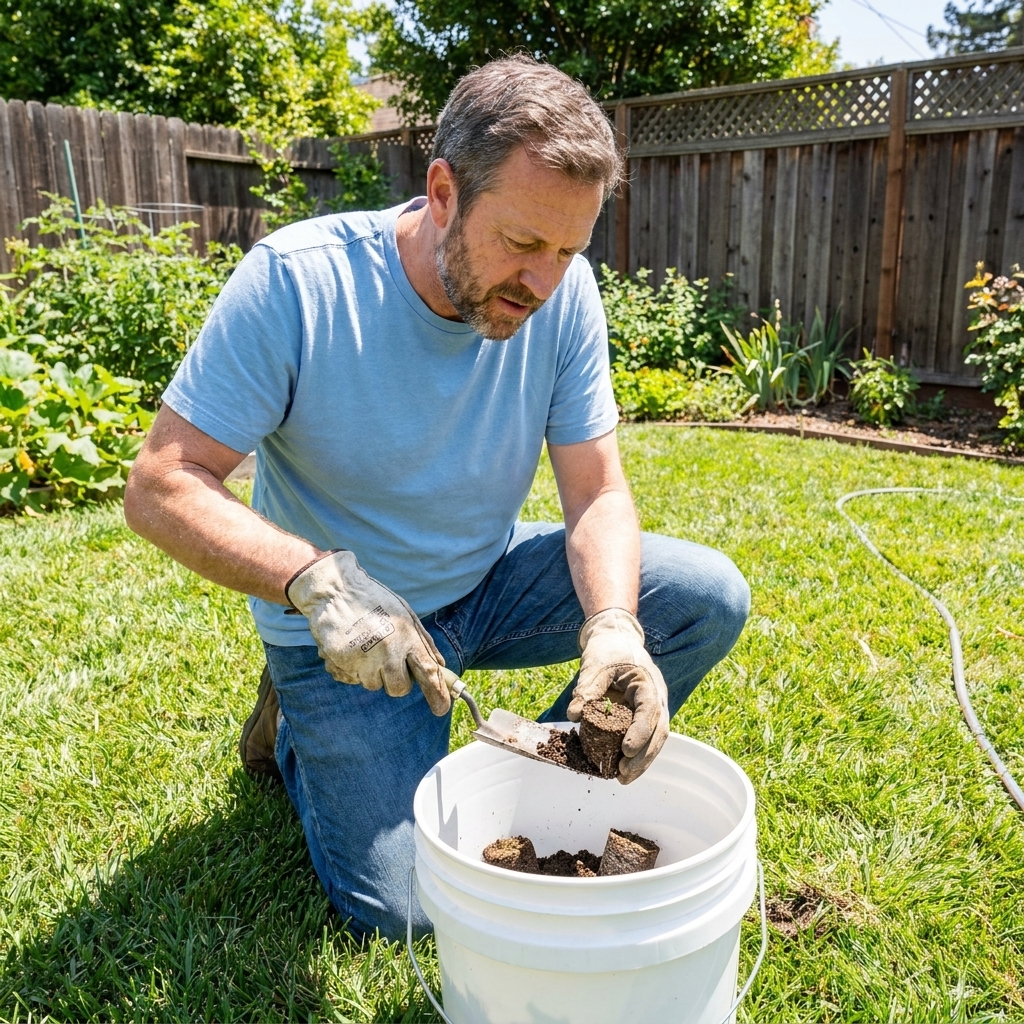
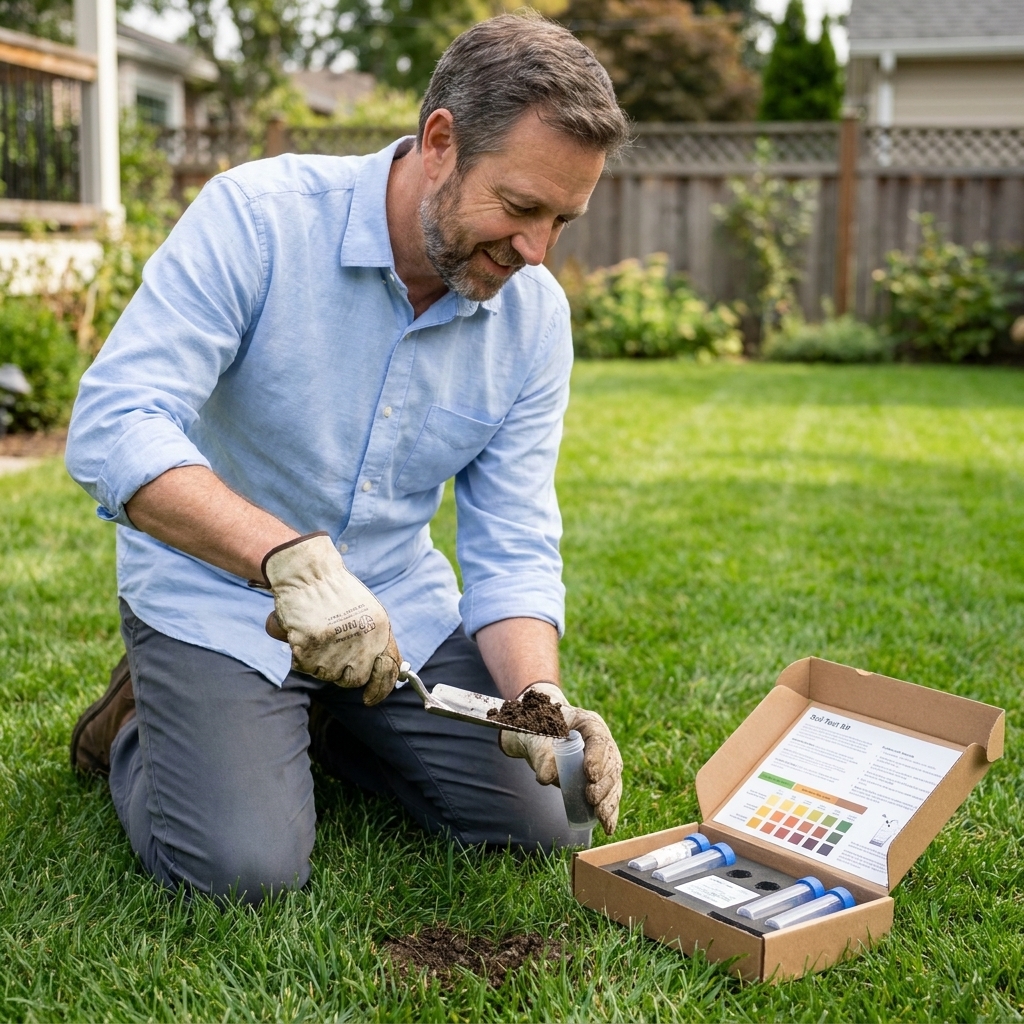
If you only take one thing from this article, let it be this: guessing nutrients is expensive. A basic soil test tells you what your soil already has, what it lacks, and usually gives fertilizer recommendations.
In my own first-yard disaster years ago, I kept throwing “green-up” products at the problem and wondered why bare spots never filled in. My soil pH was off and phosphorus was already high. Once I corrected pH and focused on the right nutrient plan, the lawn finally started acting like grass instead of a science experiment.
Soil tests are typically available through:
- Local university extension offices
- Independent soil labs
- Some garden centers (quality varies)
Even if you only test every 2 to 3 years, you will make better fertilizer choices.
Quick math: how much to apply
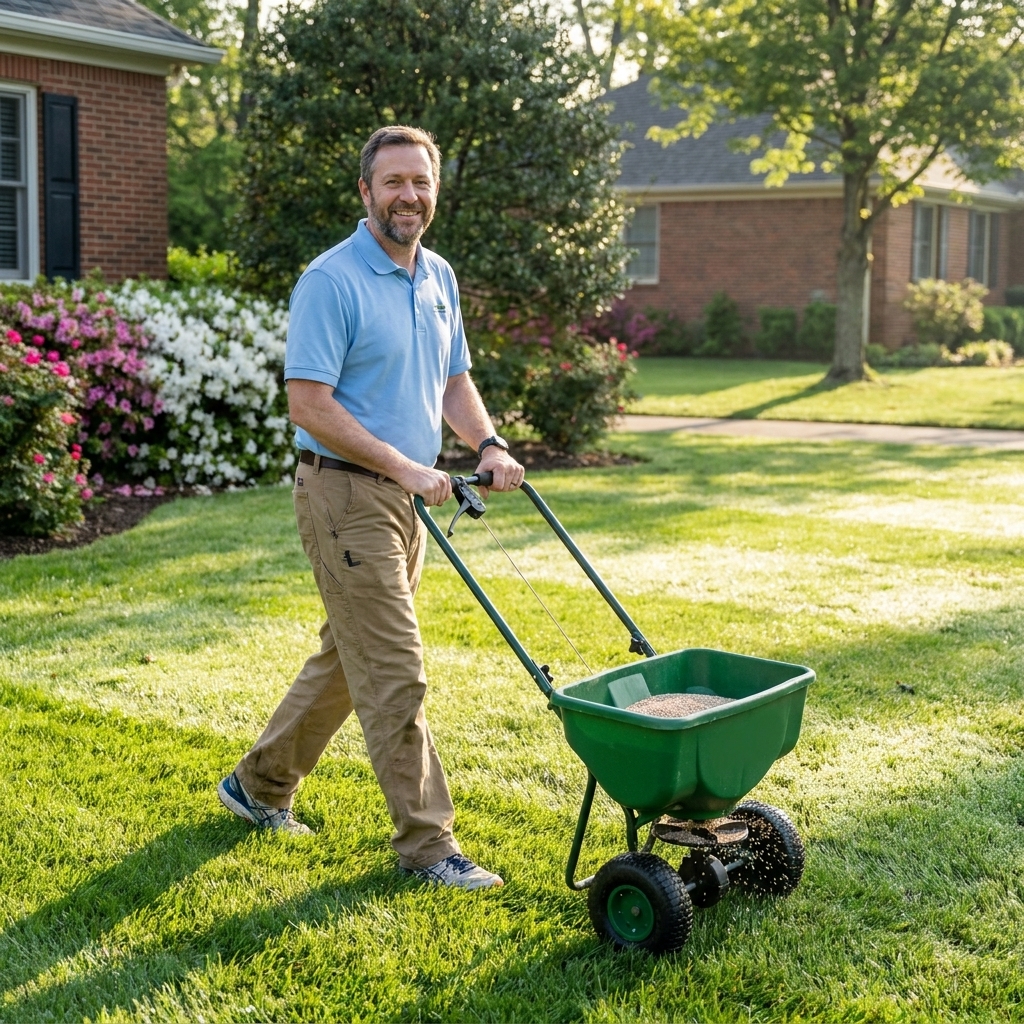
Most lawn fertilizer recommendations are written as pounds of nitrogen per 1,000 square feet, not “bags per yard.” That is why two different bags can have different spreader settings.
Here is a simple way to think about it:
- If you want to apply 1.0 lb of nitrogen per 1,000 sq ft using a 20-0-10, you need 5 lb of product per 1,000 sq ft (because 20 percent of 5 lb is 1 lb).
- If you want the same 1.0 lb N using a 30-0-4, you need 3.3 lb of product per 1,000 sq ft.
If you do not know your lawn size, that is step one. Even a rough measurement is better than eyeballing.
And always follow the label rate. More is not better, it is just more risk.
Slow-release vs quick-release
NPK tells you what is in the bag. Release type tells you how fast your lawn gets it.
Quick-release nitrogen
- Fast green-up
- Higher burn risk if overapplied or applied during heat
- Can lead to growth spikes
Slow-release nitrogen
- More even feeding
- Lower burn risk
- Often better for homeowners who want steady results
Many quality lawn fertilizers blend both, giving you some early response plus longer feeding.
What NPK does not cover
NPK is a big part of the story, but it is not the whole label. Some products also include secondary nutrients and micronutrients like sulfur, iron, magnesium, and others. If your lawn is “yellowish green” but still growing, iron is sometimes part of the conversation. The cleanest way to know what you are dealing with is still a soil test, plus an honest look at sunlight, mowing height, and watering.
Prevent runoff and waste
A couple of small habits protect your lawn, your budget, and nearby water:
- Avoid fertilizing right before a heavy rain.
- Sweep granules off sidewalks and driveways back into the grass.
- Water in fertilizer if the label calls for it, and do not exceed the recommended rate.
Common questions
Is higher nitrogen always better?
No. Higher nitrogen can be great when turf is actively growing and you want density, but timing matters. Cool-season lawns respond best in fall and spring. Heavy nitrogen in midsummer can backfire.
Do I need phosphorus every year?
Usually not for established lawns in many soils. If you are not seeding and your soil test is fine, choosing a fertilizer with 0 phosphorus is often the right move.
My lawn is green but still thin. Is that an NPK issue?
Sometimes, but thin turf is often a sunlight, mowing height, soil compaction, or watering pattern problem. Fertilizer helps, but it cannot fix shade or compacted clay by itself.
Can I use the same ratio all year?
You can, but you will get better results by matching fertilizer timing to growth. Many homeowners do well with a nitrogen-forward product most of the year, then adjust nitrogen down a bit during peak heat, and feed strongly in fall (cool-season regions).
A simple plan
If you want a practical starting point, here is a low-stress approach that fits most established lawns:
- Get a soil test every couple of years.
- Use a high-N, zero-P lawn fertilizer for routine feedings unless the soil test says otherwise.
- Use a starter fertilizer with P only when seeding or when the soil test shows low phosphorus.
- Do not chase color in summer heat. Focus on mowing height, watering habits, and moderate feeding.
If you are unsure which ratio to choose, start with your goal (green-up, recovery, establishing seed, stress tolerance) and work backward. Your lawn will tell you a lot once you are feeding it with intention.