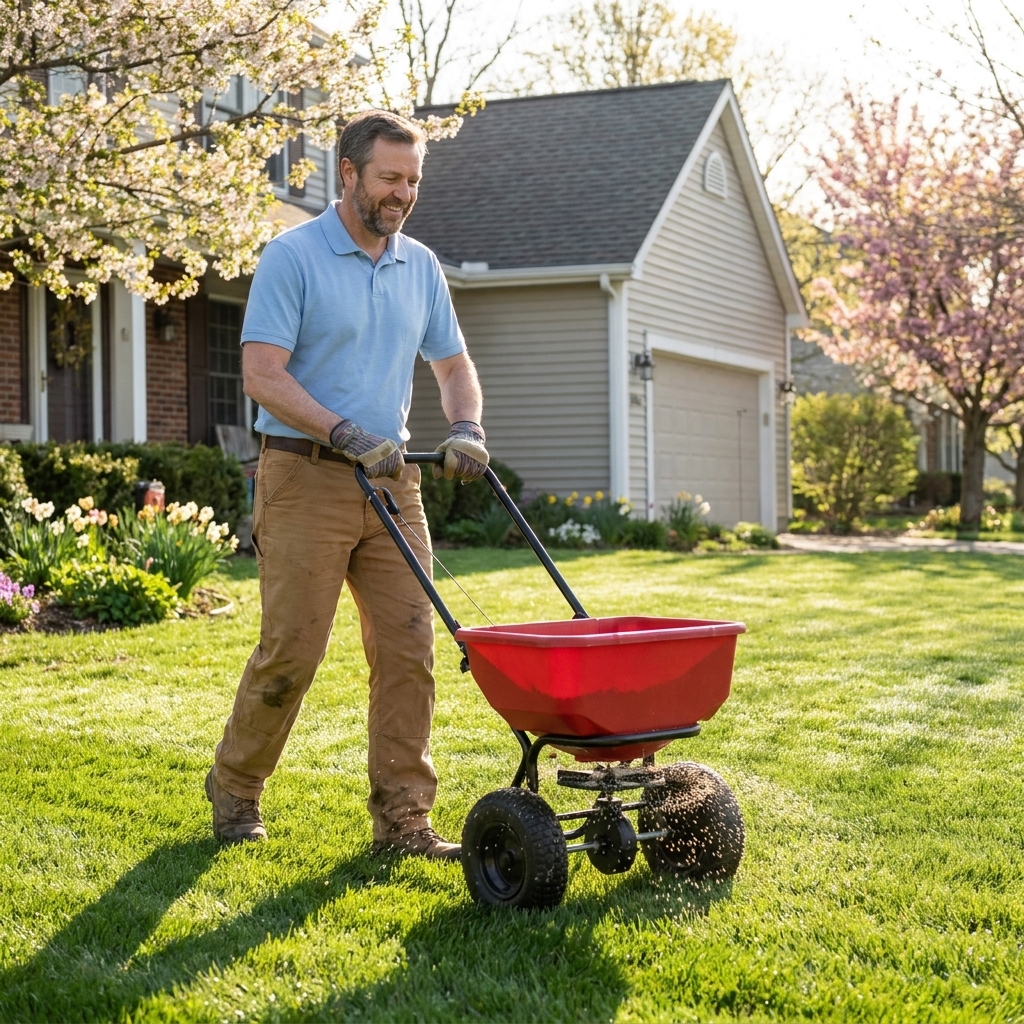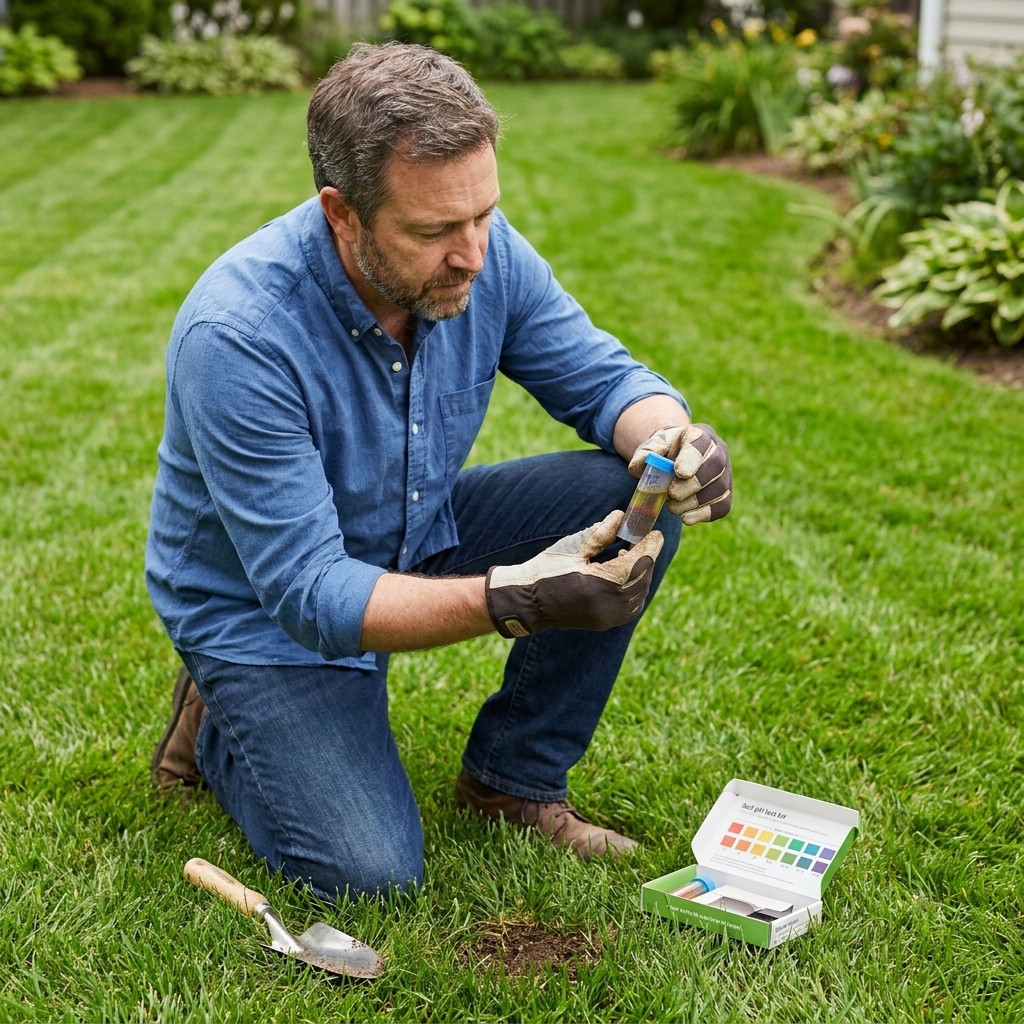
A simple, homeowner-friendly guide to testing lawn soil pH and adjusting it with lime or sulfur for healthier turf and better fertilizer results.
lawn care
Year-Round Lawn Fertilization Schedule for Beginners
 Mark Vance
 is a former professional landscaper and the lead turf enthusiast at Yard Mentor. With over 15 years of experience in soil health, turf management, and residential landscaping, he is dedicated to helping homeowners transform frustrating dead patches into lush, healthy lawns. When he isn't testing new grass seed blends, you can find him enjoying a Saturday morning coffee looking out over his freshly striped yard.
Updated October 17, 2026
Created October 17, 2026
Mark Vance
Mark Vance is a former professional landscaper and the lead turf enthusiast at Yard Mentor. With over 15 years of experience in soil health, turf management, and residential landscaping, he is dedicated to helping homeowners transform frustrating dead patches into lush, healthy lawns. When he isn't testing new grass seed blends, you can find him enjoying a Saturday morning coffee looking out over his freshly striped yard.
Updated October 17, 2026
Created October 17, 2026
If you have ever stood in the fertilizer aisle staring at a wall of bags and numbers, you are not alone. The good news is you do not need a complicated program to get a thick, green lawn. You just need to feed your grass when it is actually able to use the nutrients, and you need to apply the right amount.
This guide gives you a complete year-round fertilization schedule you can follow as a beginner, with simple targets that work for most home lawns. I will also show you how to adjust for cool-season versus warm-season grass, because that is the difference between “wow, it’s green” and “why did I just grow weeds.”
Before you fertilize: know your grass
Your fertilizing calendar depends on when your grass does its best growing.
Cool-season grasses
Common in the Midwest, Northeast, and much of the transition zone. Examples include Kentucky bluegrass, perennial ryegrass, and tall fescue.
- Best growth: spring and fall
- Main fertilizer season: late summer through fall
- Beginner mistake: too much nitrogen in early spring, which can increase disease and summer stress
Warm-season grasses
Common in the South and warmer transition-zone areas. Examples include bermudagrass, zoysiagrass, centipedegrass, St. Augustinegrass, and bahiagrass.
- Best growth: late spring through summer
- Main fertilizer season: once the lawn is fully green and actively growing
- Beginner mistake: fertilizing too early while grass is still waking up, which often boosts weeds in open or thin spots
Not sure what you have? If your lawn stays greener into cool weather and bounces back in early spring, it is usually cool-season. If it turns straw-brown after frost and does not truly wake up until late spring, it is usually warm-season.
The key number: lb N per 1,000 sq ft
Fertilizer bags are labeled with three numbers like 24-0-10. The first number is nitrogen (N), and it is the driver of green growth.
Rather than guessing “half a bag,” use a simple rule of thumb:
- Typical single application target: 0.5 to 1.0 lb of nitrogen per 1,000 sq ft
- Beginner-safe approach: aim for 0.5 to 0.75 lb N per 1,000 sq ft per application until you get confident
Quick math (simple version)
To apply 1.0 lb N using a 24-0-10 fertilizer:
- 24 percent nitrogen means 0.24 lb N per pound of product
- 1.0 ÷ 0.24 = 4.2 lb of product per 1,000 sq ft
For 0.5 lb N with the same bag: 0.5 ÷ 0.24 = 2.1 lb per 1,000 sq ft.
Tip: Many modern bags include a rate table. Use it, but confirm it matches your lawn size and the nitrogen target you want.
Beginner-friendly fertilizer picks
If you are brand new, you will have the easiest time with a slow-release granular fertilizer. It feeds steadily and reduces the odds of striping or burn.
What to look for on the bag
- Slow-release nitrogen (often listed as “slow-release,” “polymer-coated,” “SCU,” or “methylenurea”)
- Some potassium (the third number), especially for summer stress tolerance
- Avoid high-nitrogen quick-release products as your first choice unless you are spot-correcting color and you know your rates
Starter fertilizer is different
Use a “starter” fertilizer (higher middle number, phosphorus) only when you are seeding or laying new sod, and only if phosphorus is allowed and needed in your area. Many established lawns do not need extra phosphorus. Also note that many starter products contain phosphorus even in regions with restrictions, so read the label and follow local rules.
Cool-season schedule
If you only want one simple plan for cool-season grass, this is it: lighter feeding in spring, then make your best applications in late summer and fall.
Early spring
Goal: wake the lawn up gently, not force it.
- Apply: 0 to 0.5 lb N per 1,000 sq ft
- Fertilizer type: slow-release, balanced or slightly higher nitrogen (for example, something like 20-0-10)
- Skip it if: you fertilized in late fall and your lawn looks decent. Many lawns do not need an early spring push.
My neighbor-fence advice: If you are fighting spring weeds, focus first on mowing correctly and a pre-emergent plan. Heavy spring nitrogen can create lush top growth at the expense of roots, which can mean more summer stress and more openings for crabgrass if the lawn thins later. Crabgrass prevention is mostly about pre-emergent timing plus turf density.
Late spring
Goal: steady growth without setting up summer disease.
- Apply: 0.5 lb N per 1,000 sq ft
- Fertilizer type: slow-release with some potassium (for example, something like 24-0-10 or similar)
Summer
Goal: keep the lawn healthy without pushing tender growth during the hottest stretch.
- General rule: in hot, humid regions, it is often best to avoid nitrogen applications in midsummer unless you are irrigating, the lawn is actively growing, and you have a specific reason.
- Apply: 0 to 0.5 lb N per 1,000 sq ft total across summer, only if the lawn is irrigated and growing
- If you must fertilize: use a slow-release product and keep the rate conservative
Watch-outs: Fertilizing cool-season lawns in hot, humid weather can increase risk of fungal diseases like brown patch, especially if you also water late in the day.
Late summer
Goal: rebuild thickness and color as temperatures moderate. This is prime time for cool-season lawns.
- Apply: 0.75 to 1.0 lb N per 1,000 sq ft
- Pair with: aeration and overseeding if your lawn is thin
- Fertilizer type: slow-release nitrogen
Fall
Goal: feed roots and density for next spring.
- Apply: 0.75 to 1.0 lb N per 1,000 sq ft in early to mid-fall
- Fertilizer type: balanced with potassium or a “fall” blend
This is where beginners see the biggest payoff. A well-fed cool-season lawn in fall usually means fewer weeds and a faster green-up next spring.
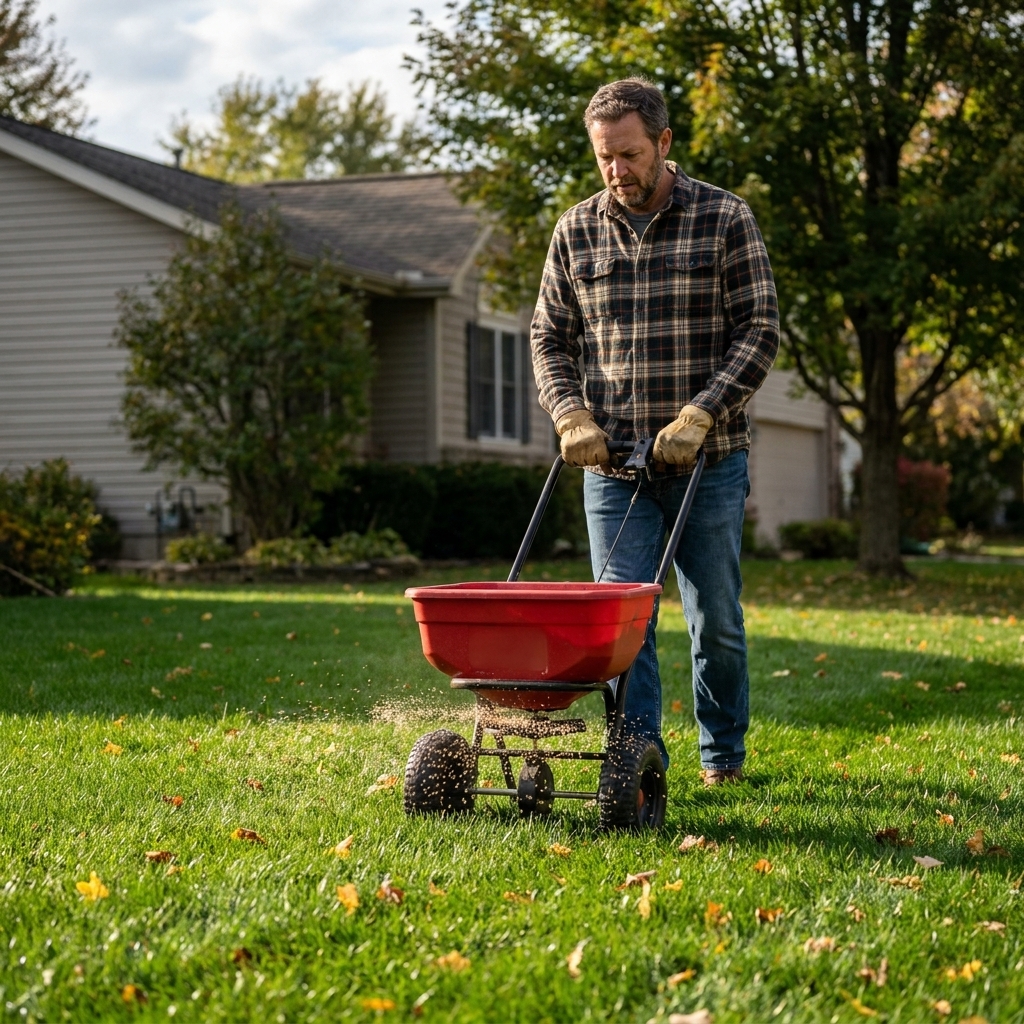
Late fall
Goal: store energy without creating a growth flush.
- Apply: 0.5 to 1.0 lb N per 1,000 sq ft
- Timing cue: when top growth has slowed and you are mowing rarely, but the grass is still green and the soil is not frozen
- Fertilizer type: more quick-available nitrogen can be acceptable at this timing, but stay within rate and follow the label
What “winterizer” really means: It is mostly about timing, not a magical product. The point is to fertilize late enough that you are not forcing leaf growth, but early enough that roots can still take up nutrients.
Important: Do not fertilize frozen turf or right before a heavy rain. In areas with sandy soil, near lakes, or where local ordinances limit fall nitrogen, follow local guidance closely to reduce leaching and runoff risk.
Warm-season schedule
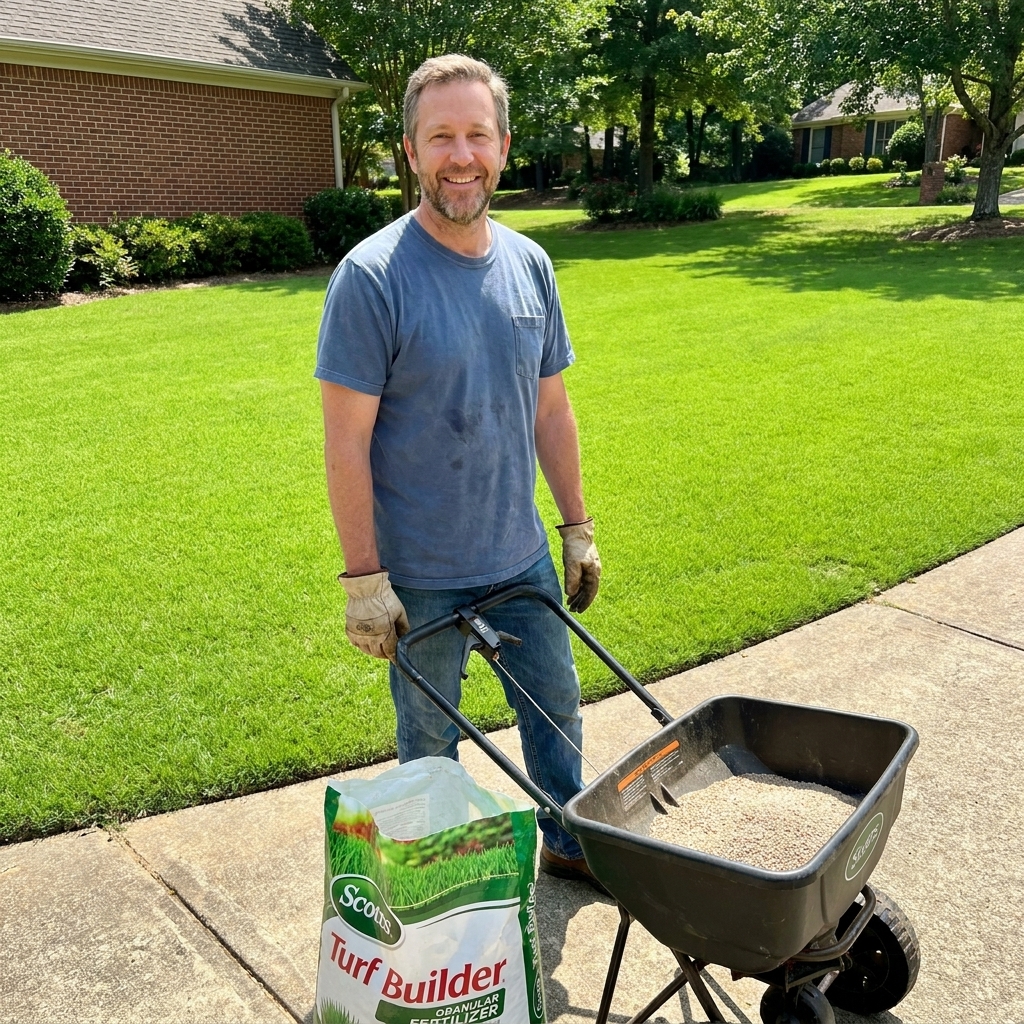
Warm-season lawns should be fertilized when they are fully awake, green, and growing strongly. If your yard is still half-tan, it is too early.
Early spring
Goal: let the lawn wake up on its own, then feed.
- Apply: usually none until the lawn is mostly green and you are mowing regularly
- Exception: if you are correcting a known deficiency based on a soil test
Late spring
Goal: support strong growth as the lawn enters its real season.
- Apply: 0.5 to 1.0 lb N per 1,000 sq ft
- Fertilizer type: slow-release nitrogen; choose potassium if you deal with heat stress
Summer
Goal: maintain color and density without creating excessive thatch or turning your weekends into mowing misery.
- Apply: 0.5 to 1.0 lb N per 1,000 sq ft every 6 to 8 weeks while actively growing
- Annual cap (beginner guardrail): keep your season total within the yearly ranges in this guide. If your planned applications push you above that, reduce the per-application rate or extend the interval.
- Grass-type reality check: centipede and many St. Augustine lawns often need less nitrogen than bermuda, especially in shade or low-input yards. When in doubt, choose the lower rate and fewer applications.
Heat tip: Fertilize when temperatures are not extreme and water it in. A light irrigation after application helps prevent burn and gets nutrients where the roots can use them.
Early fall
Goal: help the lawn finish strong, then slow down.
- Apply: 0.5 lb N per 1,000 sq ft, then stop as growth slows
- Avoid: late heavy nitrogen that can increase winter injury risk in some regions
Late fall and winter
Goal: let dormancy happen.
- Apply: none while dormant
- About potassium-only products: they are not a winterizing shortcut. Consider them only if a soil test indicates low potassium and your local guidance supports it.
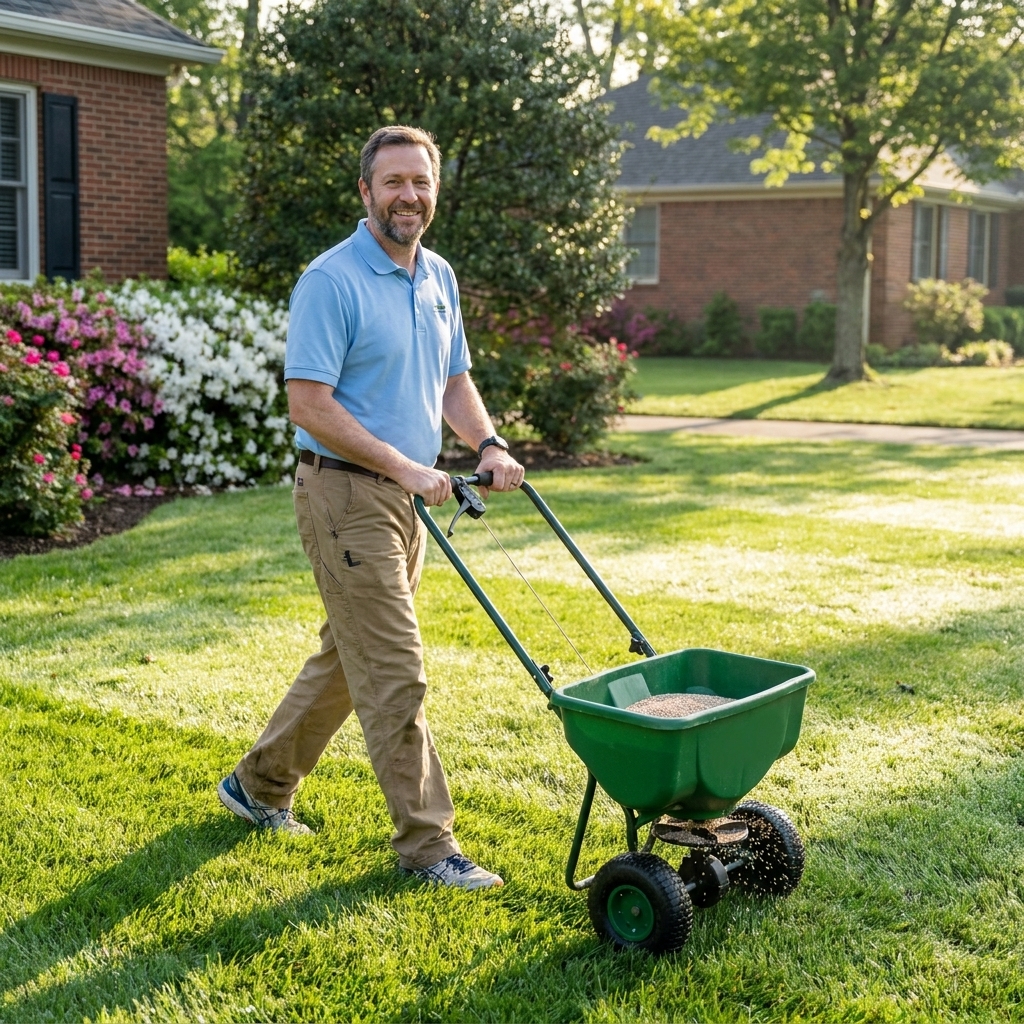
Apply it evenly
Most “I burned my lawn” stories come down to uneven coverage or applying too much.
- Measure your lawn (at least roughly) so you are not guessing product amounts.
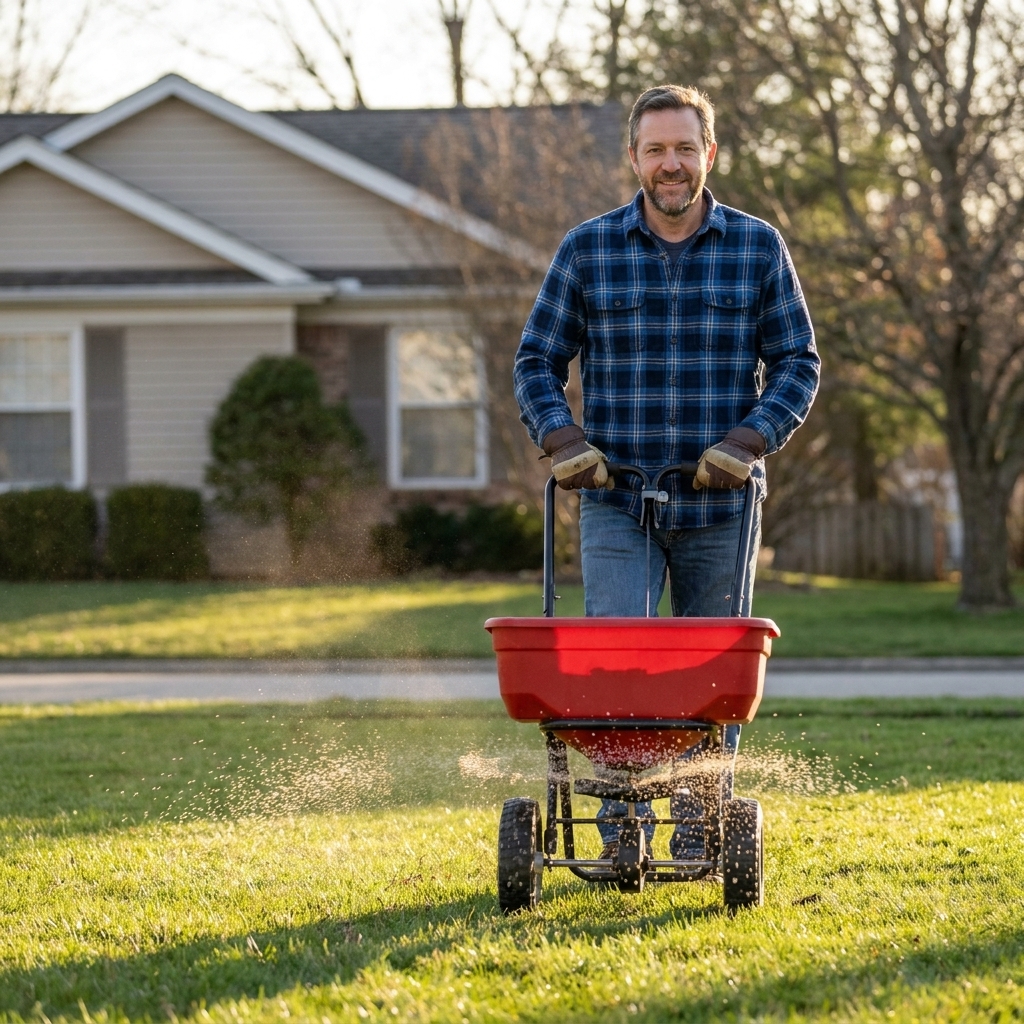
- Calibrate your spreader by starting at a lower setting and making two passes at half-rate in a crisscross pattern.
- Keep the spreader moving when you open the gate, and close it before you stop.
- Do the perimeter first, then fill in the middle.
- Sweep or blow fertilizer off hard surfaces back onto the lawn.
- Water it in unless the label says otherwise.
How much water is “water it in”? For many granular fertilizers, roughly 0.25 to 0.5 inch of irrigation is enough to move granules off the leaf blades and into the soil. Do not rely on “rain is coming” unless it is a light, soaking rain, not a downpour that can wash nutrients away.
How much per year?
This varies by grass type, climate, soil, and how “show-lawn” you want to get. For beginners, these yearly nitrogen ranges are a sensible starting point:
- Cool-season lawns: about 2 to 4 lb nitrogen per 1,000 sq ft per year, with the majority applied in fall
- Warm-season lawns: about 2 to 5 lb nitrogen per 1,000 sq ft per year during the active growing season (lower for centipede, higher for bermuda)
If you want the safest route, start at the low end for year one. You can always feed a little more next season. Fixing burn, thatch, or disease from overfeeding is a lot more work.
Monthly cues
Calendars are helpful, but grass follows temperature. Use these as general cues and lean on what your lawn is doing.
January to February
- Most lawns: no fertilizer
- Plan for a soil test if you have not done one in a few years
March to April
- Cool-season: optional light feeding after consistent growth starts
- Warm-season: wait for real green-up and regular mowing
May to June
- Cool-season: moderate feeding if needed, then start thinking about summer stress
- Warm-season: first main feeding once fully green
July to August
- Cool-season: generally avoid nitrogen in humid heat; focus on watering and mowing higher
- Warm-season: feed only while actively growing and keep your season total within your yearly target
September to October
- Cool-season: prime feeding window, great time to overseed
- Warm-season: taper off as growth slows
November to December
- Cool-season: late fall fertilizing is about timing, not a special bag
- Warm-season: usually none
Common mistakes
1) Fertilizing at the wrong time
Feeding when the grass is not actively growing is one of the fastest ways to waste money and get disappointing results.
2) Chasing dark green with more nitrogen
Deep color is nice, but too much nitrogen can mean more mowing, more disease, and weaker stress tolerance.
3) Skipping watering-in
Granular fertilizer sitting on leaf blades can burn, especially in hot weather. Watering it in moves nutrients into the soil where they belong.
4) Forgetting the basics
Fertilizer helps, but it cannot make up for mowing too short, dull mower blades, compacted soil, or chronic underwatering.
Soil test basics
If you do one “grown-up lawn care” step this year, make it a soil test. It tells you pH and whether you actually need phosphorus or extra potassium.
- Best time: anytime the ground is not frozen, often late summer or fall
- How often: every 2 to 3 years for most yards
In my experience, the lawns that struggle year after year are often not “under-fertilized.” They are usually battling off-target pH or a nutrient imbalance.
Safety and runoff tips
- Keep fertilizer off pavement: sweep it up and put it back on the lawn so it does not wash into storm drains.
- Skip windy days: you will lose product and risk getting it into beds and water features.
- Avoid heavy rain: apply when you have a window to water it in gently, not when a storm is about to dump water and move nutrients off site.
- Follow local rules: some areas limit nitrogen or phosphorus applications near waterways or during certain seasons.
FAQ
Can I fertilize and overseed at the same time?
Yes. For cool-season lawns, early fall is the sweet spot. Use a starter fertilizer at seeding if your soil test supports it or you are establishing new grass, and make sure phosphorus is allowed where you live.
What if I used a weed-and-feed?
It can be convenient, but timing gets tricky because the best time to control weeds is not always the best time to fertilize. If you use one, follow the label exactly and keep your nitrogen totals in check for the season. Also, fertilizer does not exactly “feed weeds” as much as it speeds growth wherever plants already have room to grow, which is why thick turf and correct timing matter.
Is liquid fertilizer better than granular?
Liquids can green up fast, but they are easier to overapply and they do not always provide steady feeding. For beginners, a slow-release granular product is usually the most forgiving.
How do I know if I burned my lawn?
Fertilizer burn often shows up as sudden yellowing or browning in spreader patterns, especially along edges where you may have overlapped. Water deeply right away and avoid additional fertilizer until it recovers.
My simple plan
If you are standing at square one and want a plan you can actually stick with:
- Cool-season lawns: 1 light feeding in late spring, then 2 stronger feedings in early fall and mid-fall, plus an optional late fall application at the correct timing.
- Warm-season lawns: start once fully green and mowing regularly, then feed every 6 to 8 weeks through summer as needed, tapering off in early fall. Keep your season total within your yearly nitrogen target.
Keep your rates conservative, water it in, and focus on consistency. A healthy lawn is not built in one weekend. It is built one good season at a time.