Exact mowing heights and schedules for popular cool-season and warm-season lawns, with seasonal tweaks that build deeper roots and crowd out weeds.
lawn care
Pro Tips for Edging and Trimming Your Lawn Like a Landscaper
 Mark Vance
 is a former professional landscaper and the lead turf enthusiast at Yard Mentor. With over 15 years of experience in soil health, turf management, and residential landscaping, he is dedicated to helping homeowners transform frustrating dead patches into lush, healthy lawns. When he isn't testing new grass seed blends, you can find him enjoying a Saturday morning coffee looking out over his freshly striped yard.
Updated October 17, 2026
Created October 17, 2026
Mark Vance
Mark Vance is a former professional landscaper and the lead turf enthusiast at Yard Mentor. With over 15 years of experience in soil health, turf management, and residential landscaping, he is dedicated to helping homeowners transform frustrating dead patches into lush, healthy lawns. When he isn't testing new grass seed blends, you can find him enjoying a Saturday morning coffee looking out over his freshly striped yard.
Updated October 17, 2026
Created October 17, 2026
If your lawn looks “almost” great after mowing, odds are the edges are giving you away. Crisp lines along sidewalks, a clean trench at garden beds, and zero shaggy grass around posts are the difference between a yard that’s cut and a yard that’s cared for.
I learned this the hard way on my first Midwest lawn. I could stripe it nicely, but my edges looked like I cut them with a butter knife. Once I started treating edging and trimming like a repeatable routine, my whole yard leveled up without adding much time.
Edging vs trimming
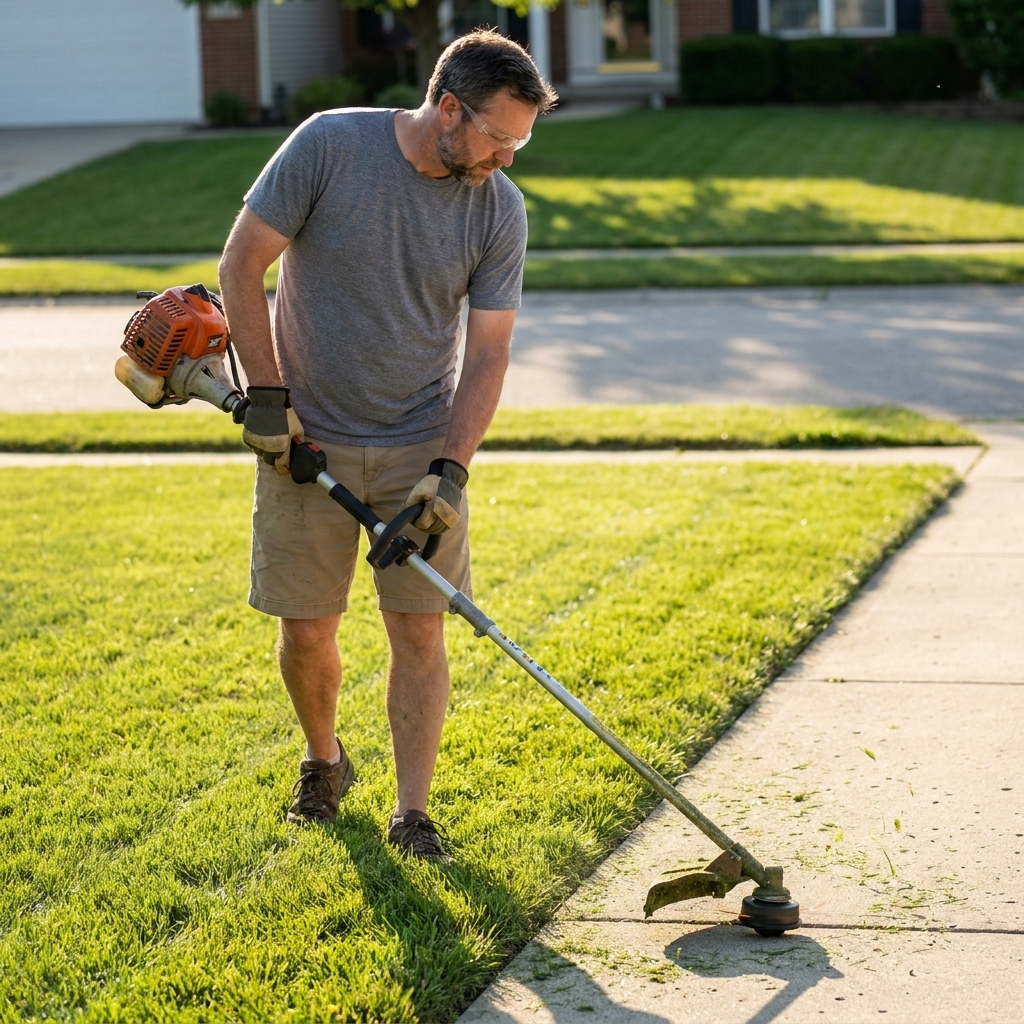
People lump everything into “weed whacking,” but pros split the work into two jobs:
- Edging creates a defined boundary between turf and hard surfaces or beds. The goal is a clean line you can see from the street.
- Trimming cleans up what the mower can’t reach. Think fence lines, tree rings, steps, AC units, mailbox posts, and tight corners.
When you treat those as separate steps, you naturally slow down for the edge work and stop scalp-hacking everything else.
Tools and setup
String trimmer basics
- Power: Battery trimmers are plenty for most suburban lawns. Gas still wins for thick growth and long run time. Either is fine if your technique is solid.
- Head type: A bump-feed head is easiest to live with. Fixed-line heads are simple but slower to reload.
- Edging-friendly features: Some trimmers have a rotating head, an edging guide, or a little wheel that helps you ride a straight line. Others require you to flip the whole tool. Both can work. The ones with guides are just easier to be consistent with.
- Handle adjustment: Set the front handle so your arms feel relaxed and the head sits level without you wrestling it. Comfort equals consistency.
- Guard on: Keep the debris guard installed. It is there for your shins, windows, and siding.
Line choice
Line thickness is your “blade.” Match it to the job and your trimmer’s rating:
- 0.065 to 0.080 inch: light trimming, smaller yards, fewer broken windows.
- 0.080 to 0.095 inch: the sweet spot for most homeowners, including edging along concrete.
- 0.095 inch and up: heavier weeds, but it can be harder on smaller trimmers and burns through batteries faster.
Also, store line out of the sun. If your line feels brittle, soaking nylon line overnight may help it snap less, but results vary by brand and formulation.
When an edger is worth it
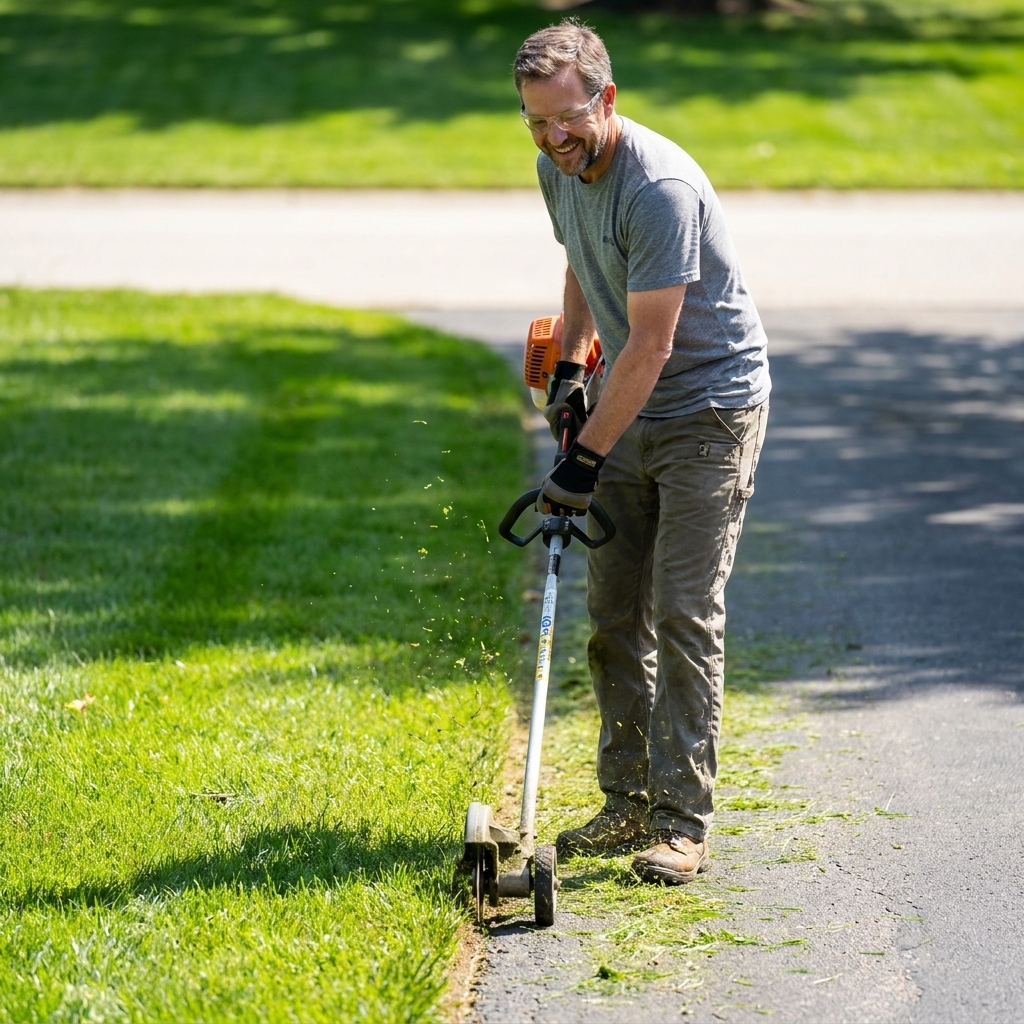
A dedicated stick edger or blade edger is worth owning if you have lots of sidewalk or curb, or if your lawn grows fast in spring. It cuts a consistently straight edge with less learning curve than flipping a trimmer head.
Order of operations
Here’s the order I use when I want the cleanest finish:
- Edge first (hard surfaces and bed lines).
- Trim second (posts, fences, around obstacles).
- Mow third (so the mower vacuums up some of the mess).
- Blow last (clean hard surfaces and knock clippings out of beds).
If you edge after mowing, you usually end up with grass spray on your freshly cleaned sidewalk and you’ll be back out there with the blower again.
Edging with a trimmer
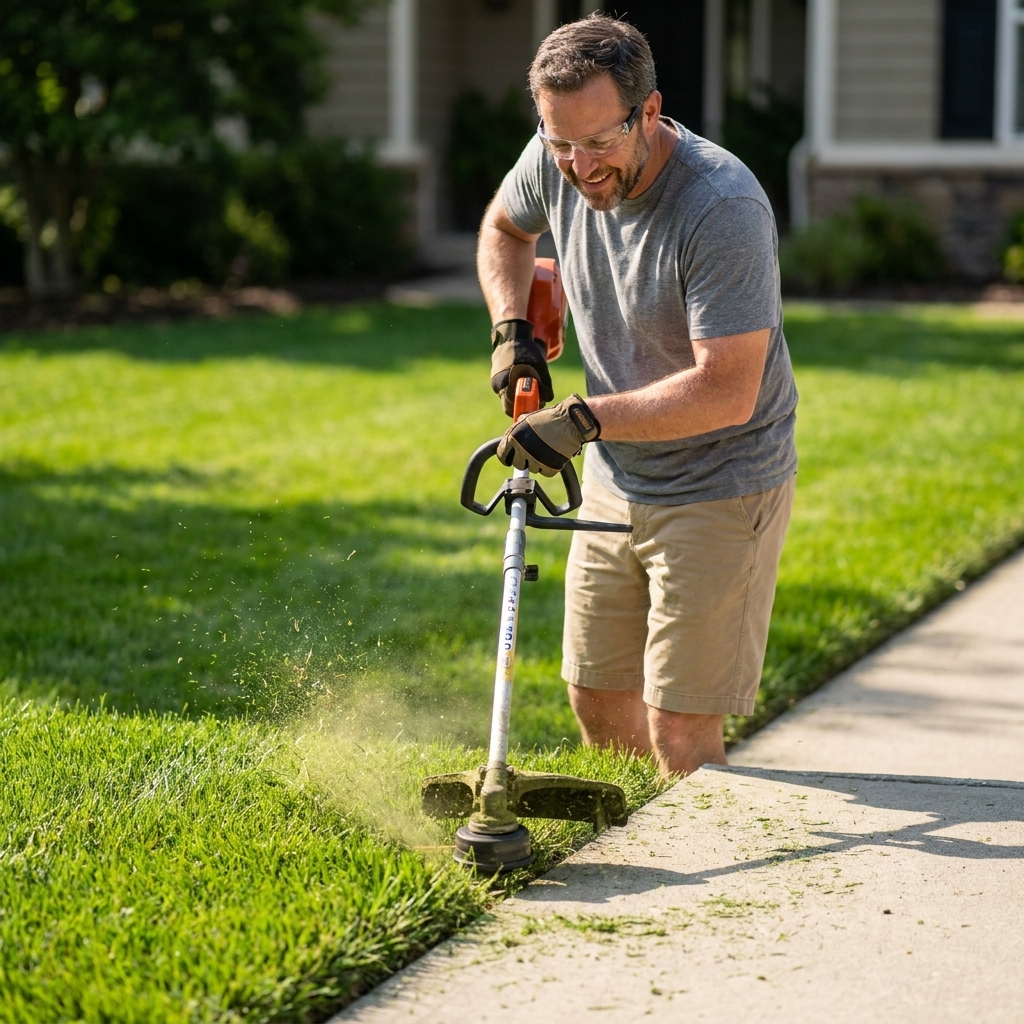
1) Go vertical and confirm spin
Rotate the trimmer so the string spins vertically like a little saw. Many trimmers spin counterclockwise, which often throws debris to the left, but it varies by model and how you’re holding it for edging. The safe move is simple: with plenty of clearance, briefly spin it up and watch which way clippings kick, then position yourself so you are not peppering your legs, your car, or your siding.
2) Let the tip work
Use the last 2 to 3 inches of line. If you bury the whole head into the edge, you’ll gouge soil, chew the concrete, and burn through line.
3) Start shallow
For sidewalks and driveways, you’re aiming for a visible groove, not a trench. Start with a shallow cut, roughly 1/4 to 1/2 inch into the turf edge, then adjust based on your grass and soil. Deeper than you need invites erosion and makes the edge crumble after heavy rain.
4) Walk slow, eyes ahead
The biggest “pro” secret is boring: pace. Take shorter steps and keep your eyes 3 to 4 feet ahead like you’re painting a line. If you stare at the trimmer head, the line will wobble.
5) Use two passes for overgrowth
If grass has crept onto the concrete, don’t try to fix it in one aggressive cut. Do:
- Pass 1: shave the overhang off the concrete.
- Pass 2: define the groove at the true edge.
This keeps you from undercutting and leaving a ragged lip.
Bed edging
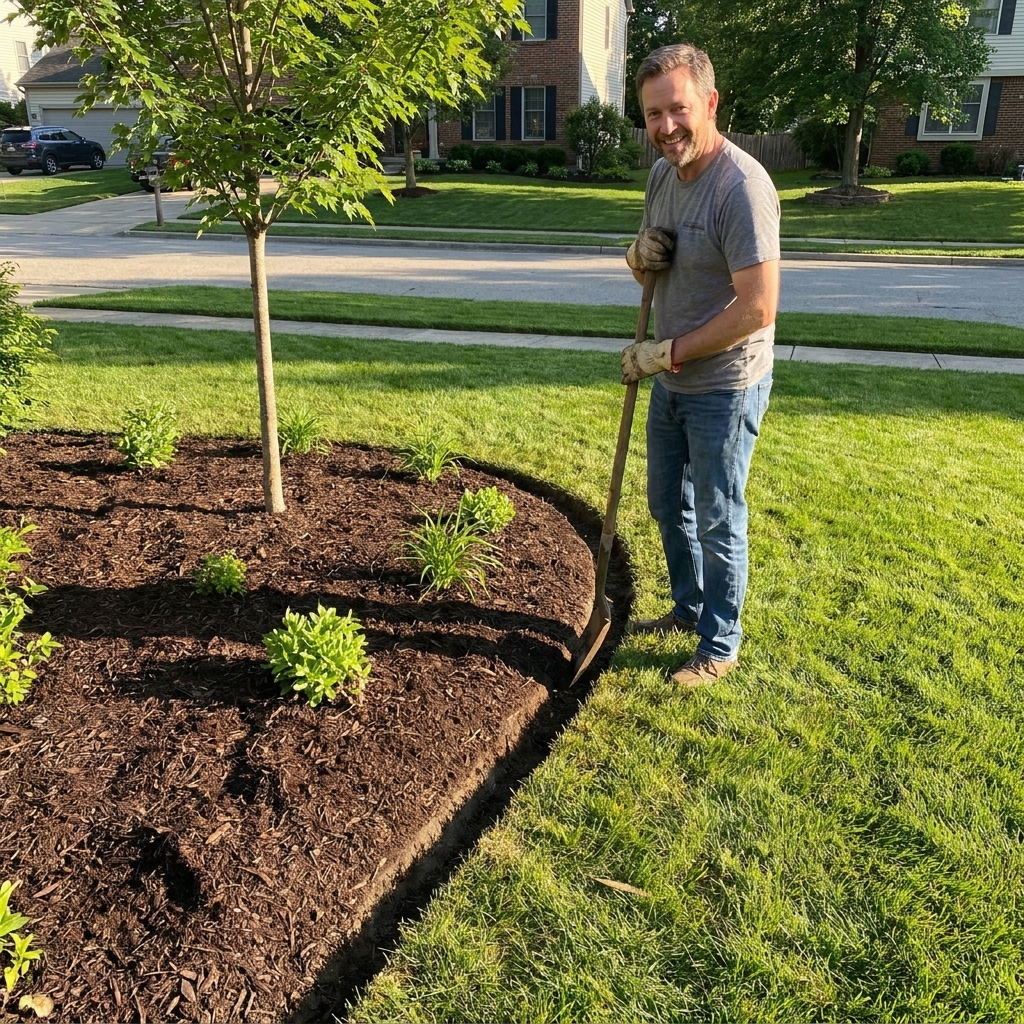
Bed edges are where a yard starts to look designed. The goal is a smooth, continuous curve or a clean straight run.
For mulch beds
- Create a small trench edge that keeps mulch from washing onto the lawn.
- Keep it consistent at roughly 2 to 3 inches wide.
- Refresh lightly instead of re-cutting deep every week. A quick touch-up keeps the line crisp without widening the bed over time.
For rock beds
Rock loves to bounce. If your bed has decorative stone, consider edging with a dedicated edger or a manual half-moon tool, then trim lightly. One rock through a window will ruin your Saturday.
Trimming without scalping
Most homeowners scalp around everything because the trimmer feels like a faster mower. That’s how you end up with yellow halos around trees, posts, and the patio.
Instead, trim like this:
- Keep the head level so you’re cutting the grass to the same height as your mower.
- Hover, don’t dig. The guard or head should not be plowing into soil.
- Stay 2 to 3 inches away from fences and siding, then come back for a light finishing pass if needed. It reduces accidental damage.
Go easy around trees
String trimmers can girdle young trees fast. If you have to trim near trunks, consider a mulch ring and keep the trimmer line off bark. A clean tree ring is cheaper than replacing a tree.
Tricky spots
Along chain-link fences
Angle the trimmer slightly away from the fence and use the tip of the line. If you constantly hit metal, you’ll chew line and you can fling little bits of wire or rust.
Around landscape edging
Do not “saw” into edging. Cut grass to height first, then do a light edge pass. Plastic edging gets scalloped fast if you press into it.
Curbs and streets
Edge these when the grass is dry. Wet clippings stick to asphalt and concrete, and you’ll spend more time cleaning than cutting.
Sprinklers and hidden lines
Slow down around sprinkler heads, shallow drip lines, invisible dog fences, and low-voltage lighting wire. Edging is exactly how people find the stuff they forgot they buried.
10-minute weekly routine
If you want it to look landscaped all season, consistency beats marathon sessions.
- Week 1: full edge all hard surfaces and beds.
- Weeks 2 to 4: touch-up passes where growth is fastest (typically sunny sidewalks and driveway edges).
- After heavy rain: inspect bed edges for crumble and touch up lightly once things dry.
Most lawns only need a true “re-cut” every few weeks in peak growth. The rest is maintenance.
Common mistakes
Wavy lines
Cause: walking too fast, staring at the head, or reaching too far out with your arms.
Fix: shorten your step, look ahead, and keep your elbows closer to your sides.
Ragged, torn-looking edge
Cause: moving too fast, using thin line in thick growth, running low RPM, or trying to cut with too much of the line instead of the tip.
Fix: slow down, keep the line extended properly, and consider stepping up a line size within your trimmer’s rating.
Brown “burn” along the edge
Cause: edging too deep or scalping the turf crown.
Fix: raise your cut approach and keep it to a shallow groove.
Chewed-up concrete
Cause: riding the head against the sidewalk.
Fix: float the line just off the concrete and let the tip do the cutting.
Safety and cleanup
- Eye protection: non-negotiable. Trimmers throw sand, sticks, and rocks.
- Hearing protection: a smart habit, especially with gas equipment.
- Long pants and closed-toe shoes: ideally boots if you’re edging along gravel.
- Mind the throw zone: angle away from cars, windows, people, and pets, and keep bystanders back.
- Blow or sweep hard surfaces: grass left on sidewalks can get slick and can discolor porous concrete after rain.
If you fertilized recently, be extra careful blowing clippings off pavement. You want nutrients in the lawn, not washing into the street with the next storm.
FAQ
Should I edge every time I mow?
Not usually. Trim touch-ups can be weekly, but true edging often looks best on a 2 to 4 week cycle during peak growth. If your grass is creeping aggressively onto concrete, do light weekly touch-ups instead of deep cuts.
Which direction should I edge?
Use whichever direction keeps debris throwing away from you and away from your house, cars, and windows. Because spin direction varies, confirm it with a quick test spin in a clear area and plan your path from there.
Why do my edges crumble?
Usually it’s too deep, too dry, or both. Cut a shallower groove, edge when the soil has a little moisture (not soaked), and avoid undercutting. Sandy soil and aggressively creeping grasses can require more frequent light touch-ups to keep a sharp line.
Can I edge wet grass?
You can, but it’s messy and less precise. Wet clippings clump, stick to concrete, and smear into beds. If you want that crisp look, edge when the grass is dry.
Finish strong
After edging and trimming, step to the curb and look back at your lines before you put the tools away. If something looks wavy, fix it immediately while your eye is on it. That 60-second touch-up is what makes it look like a pro did it.
Once you get your routine down, edging stops feeling like an extra chore and starts feeling like the satisfying final detail that makes your whole yard pop.