A simple, homeowner-friendly guide to testing lawn soil pH and adjusting it with lime or sulfur for healthier turf and better fertilizer results.
lawn care
How to Fix Yellow Grass: Iron Chlorosis
 Mark Vance
 is a former professional landscaper and the lead turf enthusiast at Yard Mentor. With over 15 years of experience in soil health, turf management, and residential landscaping, he is dedicated to helping homeowners transform frustrating dead patches into lush, healthy lawns. When he isn't testing new grass seed blends, you can find him enjoying a Saturday morning coffee looking out over his freshly striped yard.
Updated October 17, 2026
Created October 17, 2026
Mark Vance
Mark Vance is a former professional landscaper and the lead turf enthusiast at Yard Mentor. With over 15 years of experience in soil health, turf management, and residential landscaping, he is dedicated to helping homeowners transform frustrating dead patches into lush, healthy lawns. When he isn't testing new grass seed blends, you can find him enjoying a Saturday morning coffee looking out over his freshly striped yard.
Updated October 17, 2026
Created October 17, 2026
If your lawn is looking pale, washed out, or straight-up yellow but it is not crispy or dead, there is a good chance you are dealing with iron chlorosis. I have seen it a lot on newer lots, heavy clay lawns, and yards that get frequent irrigation with alkaline, high-bicarbonate water. The good news: iron chlorosis is usually one of the fastest fixes in lawn care once you confirm the cause and apply the right product the right way.
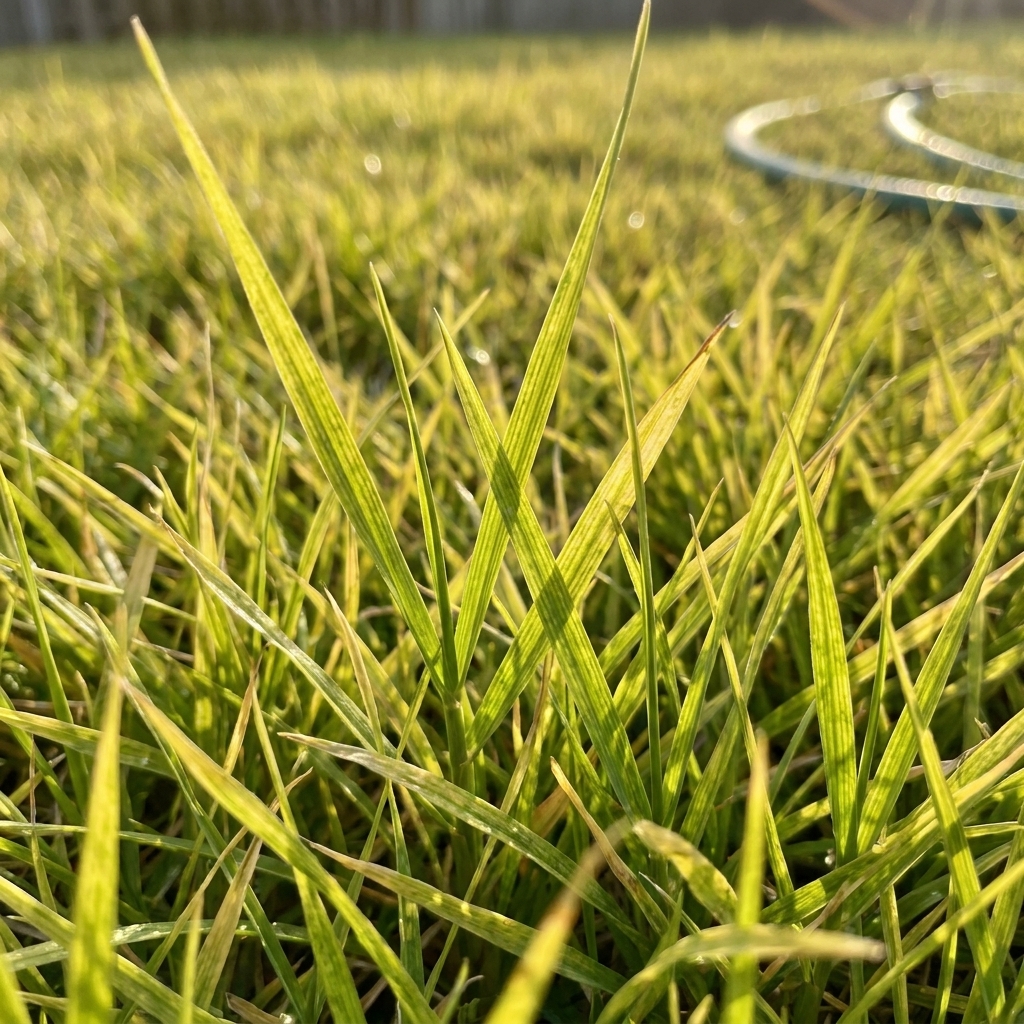
In this guide I will show you how to spot iron deficiency, what causes it, how to rule out look-alikes like nitrogen deficiency and disease, and exactly how to apply liquid or granular iron to bring back a deep green color.
What iron chlorosis looks like in turf
Iron is a micronutrient, but it has a big job: it helps turf form chlorophyll, the pigment that makes grass green. When iron is not available to the plant, the lawn can’t “green up” properly even if everything else seems fine.
Common signs
- Yellowing that starts on newer growth (the youngest leaf tissue looks the palest first).
- Green veins with yellow tissue between them, especially noticeable up close.
- The lawn is still growing, just with weak color.
- No obvious lesions or patchy rings like you would see with many diseases.
- More noticeable in spring or early summer when growth is active.
Quick tug test (mainly for drought kill): if you can tug on the grass and it holds tight, and the blades are flexible instead of crunchy, the turf is usually still alive. That points you toward a stress, watering, or nutrition issue rather than dead grass from drought.
Iron deficiency vs other causes of yellow grass
Iron chlorosis is common, but it is not the only reason lawns turn yellow. Before you apply iron, take two minutes to compare symptoms.
Nitrogen deficiency
- Color: pale green to yellow across the lawn, often more uniform.
- Where it starts: older leaves first (plants move nitrogen from older tissue to newer growth).
- Growth: slow growth and thin turf.
If your lawn is yellow and barely growing, nitrogen is often more likely than iron.
Drought stress
- Color: bluish gray first, then straw yellow.
- Footprints: footprints linger.
- Texture: blades feel dry and crunchy.
Disease
- Pattern: spots, rings, or irregular patches.
- Leaf symptoms: lesions, “smoke rings,” or rotting at the crown.
Dog urine, grubs, and compaction
- Dog urine: often a green ring with a yellow center or a small dead spot.
- Grubs: turf peels up like carpet and you can find C-shaped larvae in soil.
- Compaction: thin, weak color in traffic lanes; a screwdriver is hard to push into soil.
If you are not sure, treat the diagnosis like a pro: check watering first, then look closely at the leaves, then confirm with a simple soil test and a small test application.
Why iron chlorosis happens
Here is the tricky part: your soil may actually have plenty of iron. The problem is often availability, not total iron.
High pH is the big one
As soil pH rises, iron becomes less available to turf roots. Chlorosis is especially common in lawns with:
- Soil pH around 7.0 and up
- Calcareous soils (lots of lime)
- Irrigation water that is high in bicarbonates (alkalinity)
Overwatering and poor drainage
Saturated soils limit root function and oxygen, which can reduce nutrient uptake. Heavy clay lawns that stay wet after rain are frequent offenders.
Cold, wet spring soils
Cool soils slow root activity. You may see temporary yellowing that improves as temperatures rise, but an iron application can still help color.
High phosphorus can contribute
Very high phosphorus levels can contribute to micronutrient availability problems, including iron in some situations. If you have been applying starter fertilizer repeatedly, a soil test is the right way to confirm whether phosphorus is actually high before you blame it.

Confirming iron chlorosis
You can get pretty confident without turning this into a science project. In real lawns, the most practical confirmation is a combination of symptoms, pH, and response to iron.
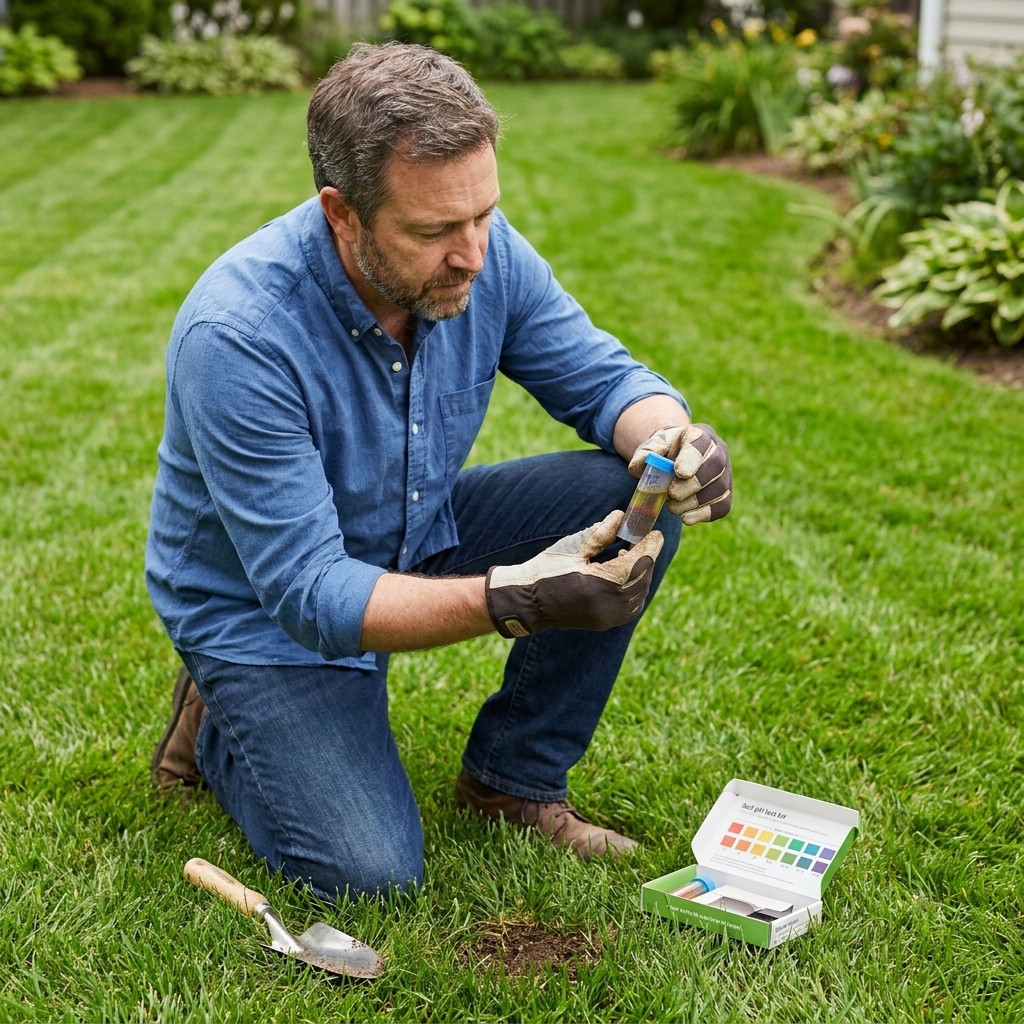
1) Check soil pH
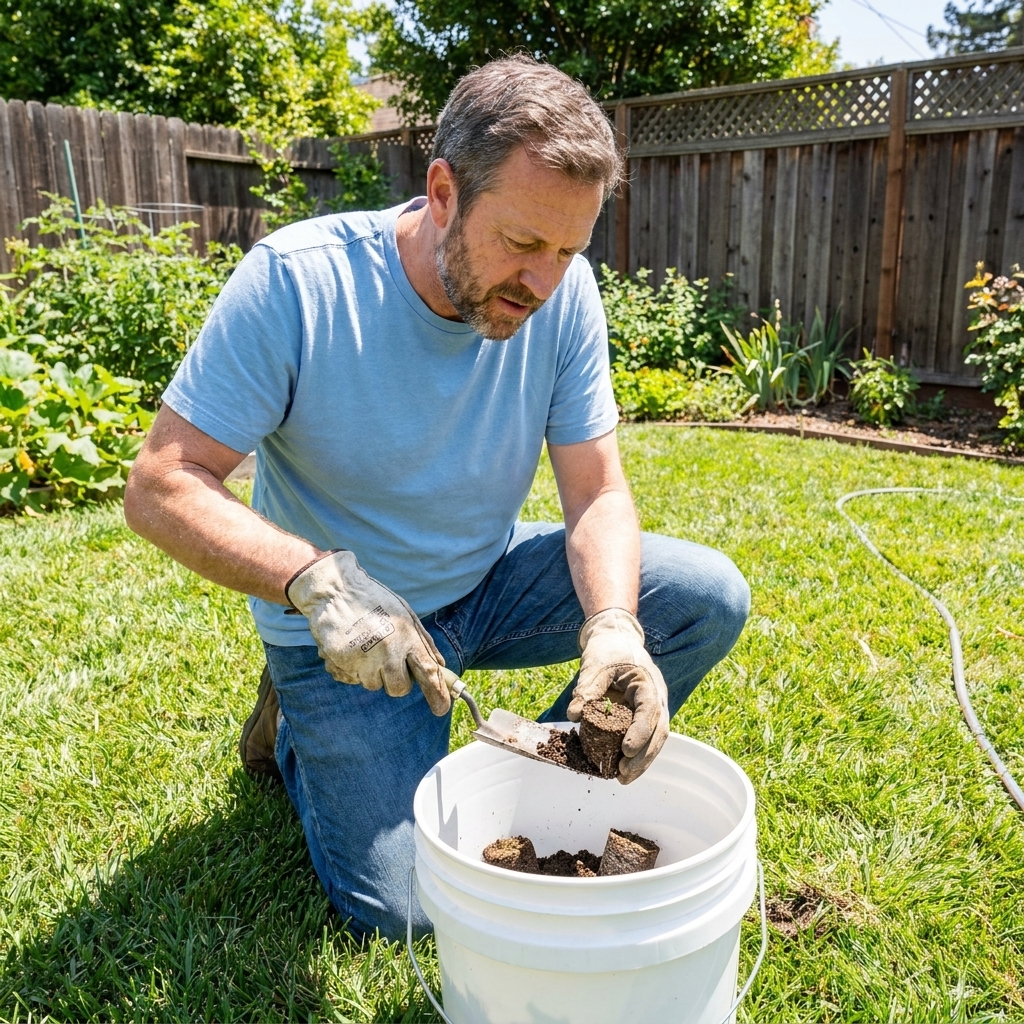
At minimum, test soil pH. You do not need a lab report to get value here, but a lab test can help if you want a full nutrient picture. High pH supports iron chlorosis as a likely cause, but pH alone does not prove it.
2) Watch where the yellowing shows up
Iron issues often show on newer growth first. Nitrogen often shows on older growth first. It is not perfect, but it is a helpful clue.
3) Run a small test strip with liquid iron
Spray a small area and check it in 24 to 72 hours. If that area darkens noticeably while the rest of the lawn stays pale, you have a strong, practical confirmation.
Best ways to treat iron chlorosis
You have two main options: foliar (liquid) iron for fast color, and granular iron for longer support through the soil. Many homeowners get the best results using both strategically.
Expectation check: iron often deepens color without pushing a lot of growth. That is a feature for many people, especially if you want green without an extra mowing surge. It can also be somewhat cosmetic and temporary if the underlying issue (often pH) is still there.
Option A: Liquid iron for fast green-up
Liquid iron is my go-to when a lawn needs a quick color correction. Foliar iron is absorbed through the leaf, so it can work even when soil pH is working against you.
- Pros: fastest results, great for high pH soils, easy to spot-check.
- Cons: can stain concrete, may require repeat applications, can darken unevenly if coverage is inconsistent.
What type of liquid iron should you use?
- Ferrous sulfate solutions can work quickly but can be more prone to staining and can be harsher if overapplied.
- Chelated iron is generally gentler and stays available longer. If you are applying iron to the soil (not foliar), chelate type matters more in high pH lawns. In general, EDDHA chelates tend to hold up better at higher pH than EDTA or DTPA.
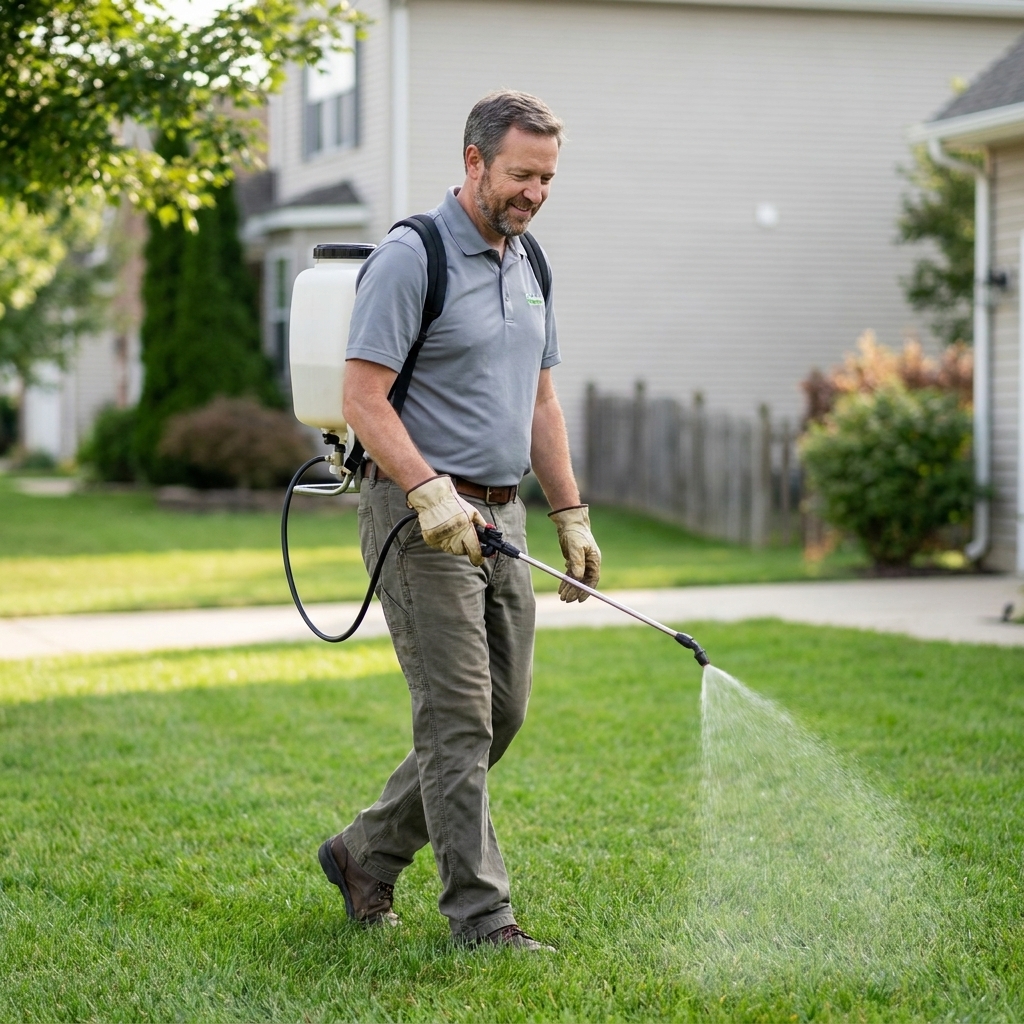
How to apply liquid iron safely
- Apply to dry grass and avoid windy days.
- Use a pump sprayer or backpack sprayer and aim for even coverage.
- Keep it off concrete, pavers, and light-colored stone. If you accidentally overspray, rinse immediately.
- Watering after application: follow the label. Many foliar products want a dry-time window so the leaf can absorb iron.
- Timing: early morning or late afternoon is ideal, especially during warm weather.
Rate note: rates vary a lot by product and formulation. I recommend starting at the low end of the label rate until you see how your grass responds, then adjusting within label directions if needed.
What to expect: you can see a deeper green in as little as 1 to 3 days with a good foliar application, sometimes faster in mild temps. If the root cause is high pH, plan on reapplying as needed for color.
Option B: Granular iron for steadier support
Granular iron is applied like fertilizer. It works more slowly because it relies on watering and soil movement to reach the root zone, and soil chemistry plays a bigger role.
- Pros: easier for many homeowners, can last longer, good as part of a routine feeding plan.
- Cons: slower response, less reliable in very high pH conditions, can still stain if tracked onto hard surfaces.
How to apply granular iron
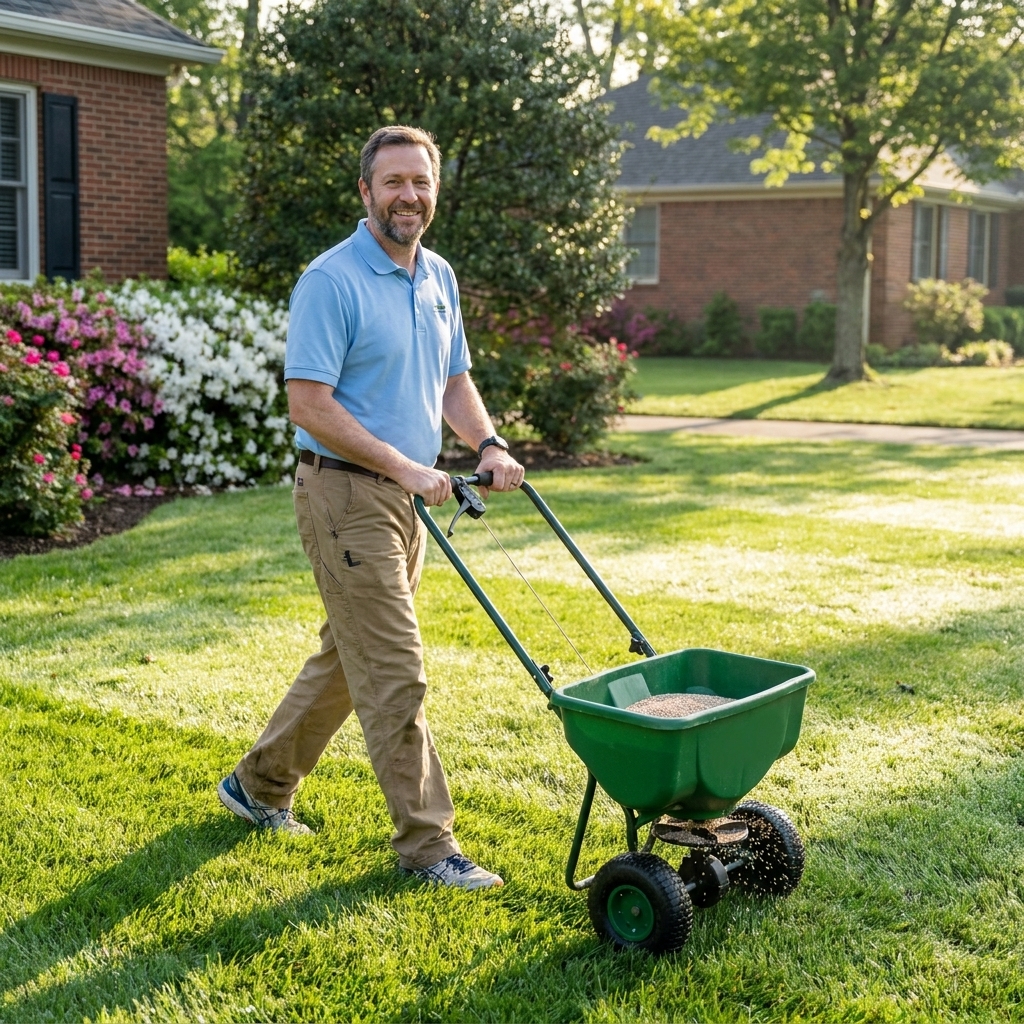
- Use a broadcast spreader for uniform distribution.
- Sweep product off sidewalks and driveways before watering.
- Water in as directed so granules move into the turf canopy and soil.
Rate note: granular iron sources and concentrations vary widely. Stick to the label rate and avoid the temptation to “double it” for faster results.
What to expect: gradual green-up over about 1 to 3 weeks depending on product and conditions.
Fix the cause so it stays green
Iron products are great, but if your soil pH is high or drainage is poor, chlorosis tends to recur. Here are the longer-term plays that actually change the game.
Address high soil pH carefully
If your soil test shows high pH, the long-term correction is slow and methodical. The most common approach is using elemental sulfur to gradually acidify soil, but the right rate depends on your starting pH, soil type, and local conditions. Follow soil test recommendations when possible.
- Do not guess with sulfur. Overapplication can stress turf.
- Expect months, not weeks. pH change is gradual.
- Meanwhile, use foliar iron for color without fighting the soil.
Improve drainage and reduce overwatering
- Water early morning, not at night.
- Aim for deep, infrequent irrigation rather than daily sprinkles.
- If your yard holds water, consider core aeration and topdressing with compost to improve soil structure over time.
Avoid unnecessary phosphorus
Unless a soil test says you are low, avoid repeated high-P applications. Many established lawns do not need extra phosphorus, and high levels can contribute to micronutrient headaches.
When to apply iron
Iron can be applied during most of the growing season, but you will get the smoothest results when the turf is actively growing and not under extreme stress.
- Cool-season lawns (Kentucky bluegrass, fescue, ryegrass): spring and fall are ideal. Summer applications are possible, but avoid treating during heat waves and follow labels closely.
- Warm-season lawns (bermudagrass, zoysia, St. Augustine, centipede): apply once the lawn is fully greened up and actively growing.
My practical rule: if your lawn is already struggling from heat or drought, solve that first. Iron is not a substitute for water management.
A simple green-up plan
- Check irrigation and drainage. Make sure the lawn is not drought-stressed or waterlogged.
- Test soil pH. If pH is high, plan on foliar iron as your fastest and most reliable color fix.
- Apply liquid iron to a test patch. If you see improvement in a couple days, treat the broader area.
- Back it up with a balanced fertilizer program. If nitrogen is low, correct that too, but do not overdo it.
- Make a long-term pH plan. If pH is the driver, address it gradually and use iron as needed for color.
Common mistakes to avoid
- Overapplying iron for extra dark green. More is not better. Too much can discolor turf, stain hardscapes, and create uneven results.
- Ignoring pH. If soil pH is high, granular iron alone often turns into a repeat purchase.
- Spraying liquid iron on concrete. Iron stains are no joke. Protect surfaces and rinse overspray immediately.
- Treating yellow grass that is actually drought or disease. Diagnose first so you are not masking the real issue.
FAQ
How fast does iron turn grass green?
Liquid (foliar) iron can show improvement in 1 to 3 days. Granular iron is typically slower, often 1 to 3 weeks depending on watering and soil conditions.
Will iron fix brown patches?
Iron helps with chlorosis (yellowing from lack of chlorophyll). True brown patches from drought, fungus, pet urine, or dead turf will not recover with iron alone.
Is iron safe for pets and kids?
Most lawn iron products are safe when used as directed, but always follow the label. I recommend keeping pets and kids off the lawn until sprays dry or granular products are watered in and the area is dry again.
Should I use iron or nitrogen for yellow grass?
It depends on the pattern. If new growth is yellow and the lawn is still growing, iron is a strong candidate. If the lawn is pale and thin with slow growth, nitrogen is often more likely. When in doubt, test soil pH and try a small liquid-iron test strip.
Can mowing make iron chlorosis worse?
Scalping can make any nutrient issue look worse because you remove green leaf tissue. Stick to the one-third rule and keep blades sharp so the lawn is not stressed while you correct the deficiency.
Bottom line
Iron chlorosis is frustrating because it can make a lawn look unhealthy even when you are doing a lot of things right. But it is also one of the most satisfying problems to fix. Confirm the symptoms, check your pH, and use liquid iron for quick correction or granular iron for longer support. Then focus on the root cause, especially high pH and drainage, so that rich green color sticks around.