Diagnose brown lawn patches fast with simple checks, including tug and moisture tests. Repair damage from drought stress, fungal disease, or grubs and preven...
lawn care
How to Repair Dog Urine Spots on Your Grass Permanently
 Mark Vance
 is a former professional landscaper and the lead turf enthusiast at Yard Mentor. With over 15 years of experience in soil health, turf management, and residential landscaping, he is dedicated to helping homeowners transform frustrating dead patches into lush, healthy lawns. When he isn't testing new grass seed blends, you can find him enjoying a Saturday morning coffee looking out over his freshly striped yard.
Updated October 17, 2026
Created October 17, 2026
Mark Vance
Mark Vance is a former professional landscaper and the lead turf enthusiast at Yard Mentor. With over 15 years of experience in soil health, turf management, and residential landscaping, he is dedicated to helping homeowners transform frustrating dead patches into lush, healthy lawns. When he isn't testing new grass seed blends, you can find him enjoying a Saturday morning coffee looking out over his freshly striped yard.
Updated October 17, 2026
Created October 17, 2026
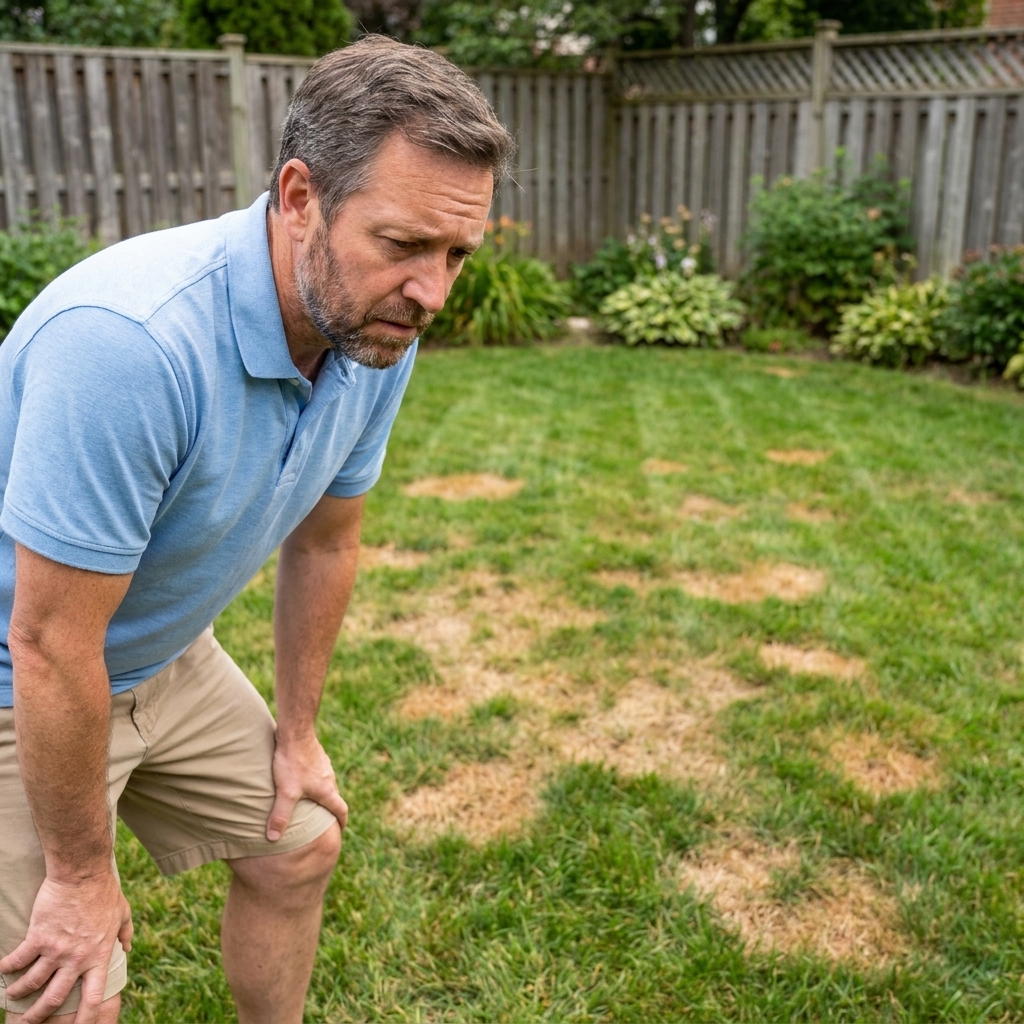
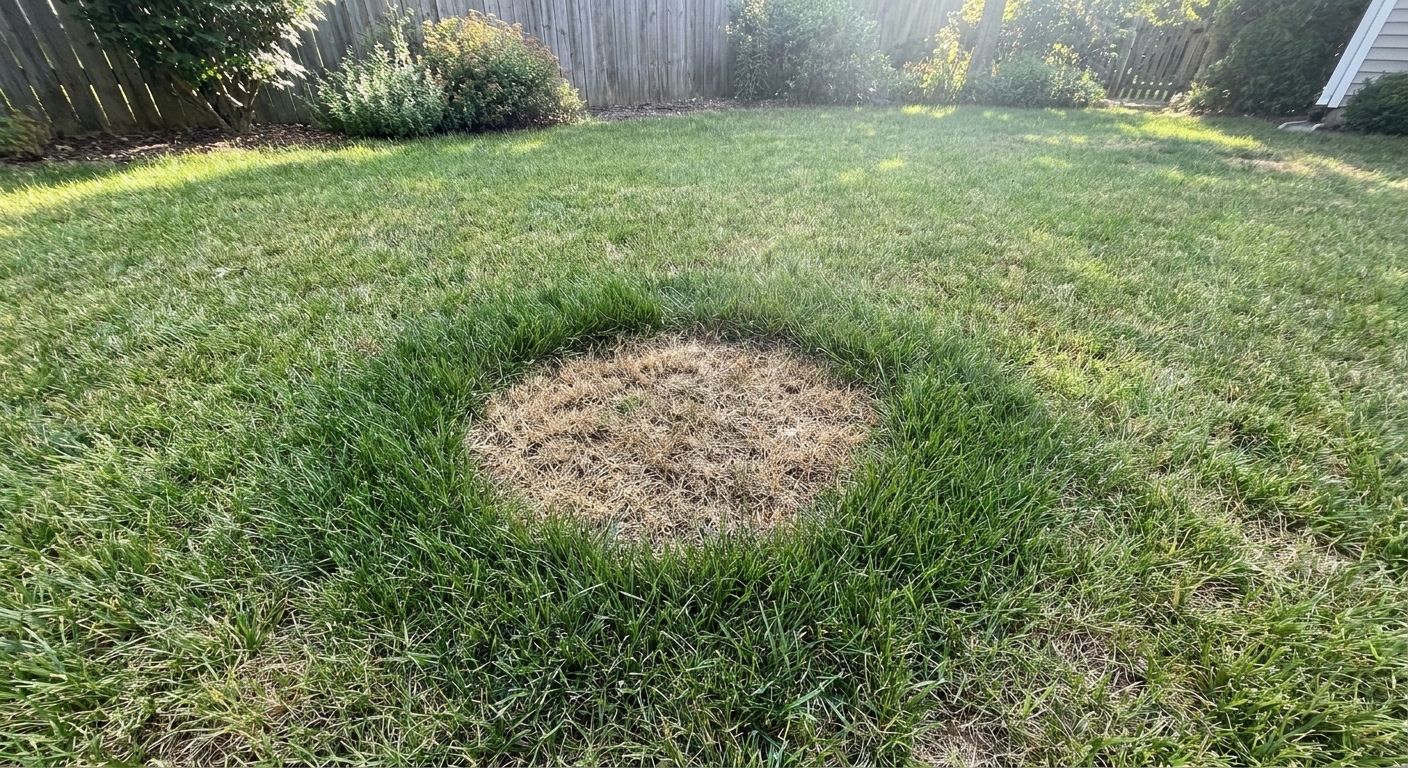
If you have a dog, you have probably seen it: a tan or straw-colored spot with a dark green ring around it. That is classic dog urine burn. The good news is you can repair these spots in a long-lasting way. The trick is treating both the soil problem (salt and nitrogen concentration) and the turf problem (dead crowns and thin roots), then changing one or two habits so the same circles do not keep popping up.
I am going to walk you through a methodical, homeowner-friendly fix that does not require special tools or a lawn service.
Why dog urine spots happen
Dog urine is mostly water, but it also contains urea (which quickly converts to ammonium nitrogen) and dissolved salts. On a big lawn, a little nitrogen acts like fertilizer. In one concentrated spot, it becomes too much of a good thing.
- Osmotic stress and burn: High concentrations of soluble salts pull moisture away from grass and roots, creating a “burn” effect similar to over-fertilizing.
- Ammonia and nitrogen overload: As urea breaks down, the resulting ammonium can be harsh at high concentration and can injure crowns and roots.
- pH shifts and microbial stress: Urine can temporarily swing soil chemistry and stress the biology that helps turf recover.
- Dark green ring: The edges receive a lower dose, so they green up like you fertilized just that circle.
One important note: female dogs often create more noticeable spots simply because they tend to empty the bladder in one place, while many male dogs mark multiple small areas.
Decide if it is urine or something else
Dog spots are common, but you do not want to reseed if the real issue is grubs, fungus, or drought stress. Here is the quick check:
- Urine spot: Round-ish patch, tan center, often a darker green halo. Common in the same go-to potty zones.
- Grubs: Grass lifts like a loose carpet and you can peel it back. Often irregular shapes.
- Fungal patch: Can be circular too, but often shows a smoky ring, mushrooms, or spreads in multiple areas not tied to the dog’s route.
- Drought or sprinkler miss: Matches irrigation patterns, edges near pavement, or slopes.
If you are unsure, tug on the grass in the center. If it is firmly rooted but straw-colored, it might still be alive and simply stressed. If it pulls easily and you see bare soil, treat it as dead and plan to patch.
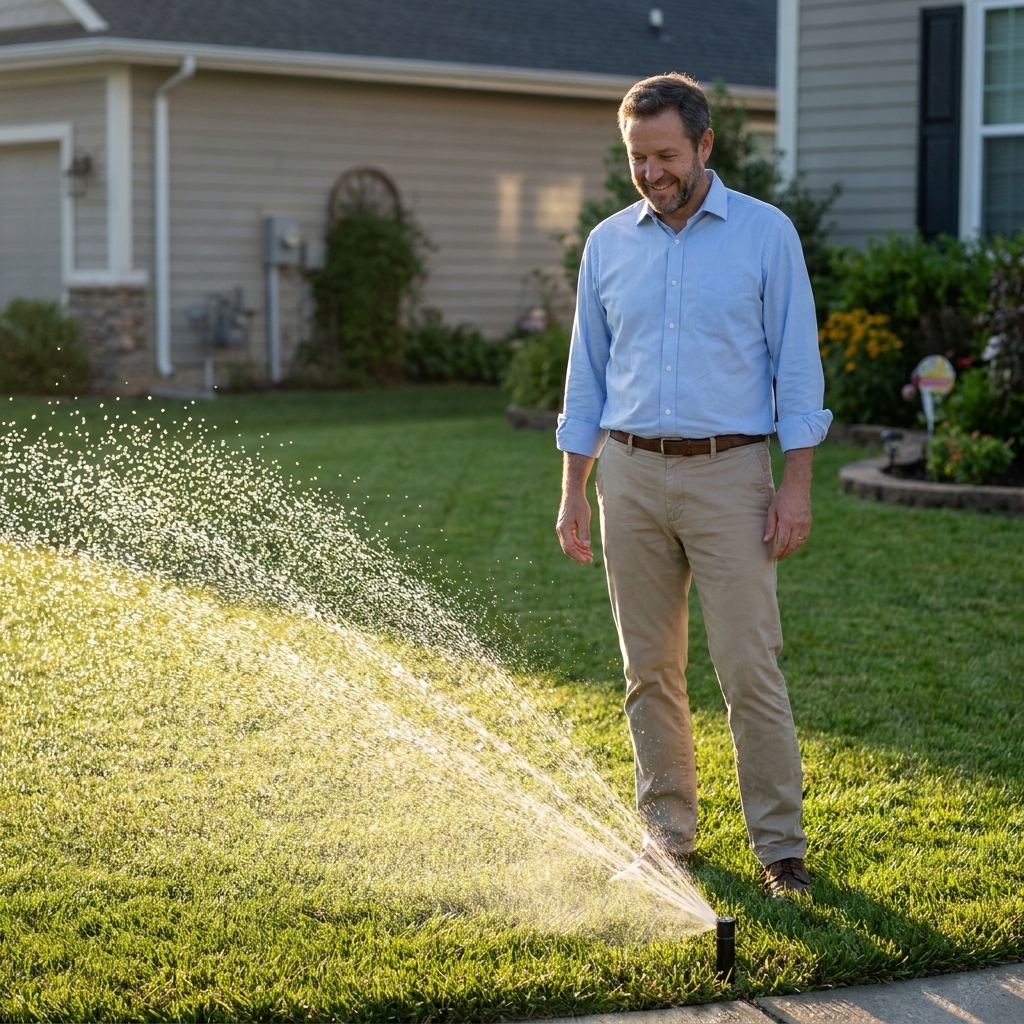
Also take a quick look at irrigation coverage. Many “dog spots” look worse (and recover slower) in places where sprinklers do not reach consistently.
The lasting fix: flush, condition, then patch
Think of this like a three-step repair. Skipping step one is why many “repairs” fail and the spot comes right back.
Step 1: Flush out salts and excess nitrogen
As soon as you notice a fresh spot, water it. If you are repairing an older burn, you can still flush, it just takes longer.
- For a fresh spot: Apply enough water to thoroughly soak the area, roughly 1 to 2 gallons for a small spot (about 1 to 2 feet across). Go slowly so it soaks in rather than running off.
- For an old spot: Soak it thoroughly once a day for 2 to 3 days, letting the surface dry back to normal between waterings. If your yard slopes, apply in shorter rounds so water does not run downhill.
The goal is to dilute the concentration and move it out of the immediate root zone, not to create runoff or keep the area soggy for weeks.
Avoid “quick neutralizers” like vinegar or baking soda. They can swing pH hard in the wrong direction and make the soil even less hospitable for new grass.
Step 2: Remove dead turf and loosen the soil
If the center is dead, you need to open it up so seed or sod can root.
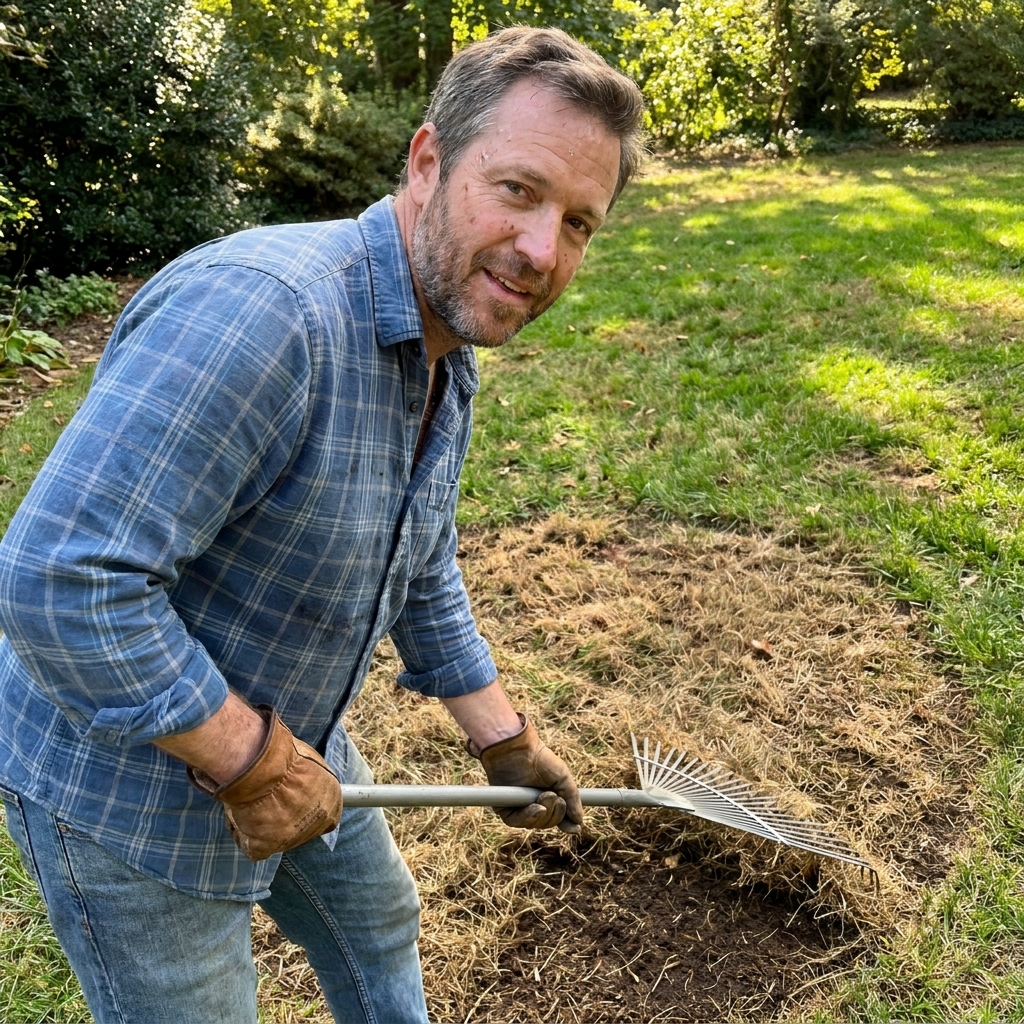
- Rake out dead grass with a stiff rake. Get down to soil.
- Loosen the top 1 to 2 inches with a hand cultivator.
- Remove any crusty, white residue if present (often salts or mineral residue at the surface).
Condition the hot spot without wrecking your soil
After flushing, your job is to make that little circle welcoming again. Here are the safest, most reliable options.
Option A: Gypsum for stubborn salt stress
If your urine spots are frequent and seem to “stick” (seed struggles, soil crusts, or the same area keeps burning), gypsum can help. Gypsum adds calcium without raising pH and can improve how salts move through the soil profile with irrigation.
- Apply a light dusting over the spot and surrounding ring, then water it in well.
- It tends to be most useful in heavier soils or where sodium is part of the problem. In many lawns, flushing plus compost is plenty.
Option B: Compost for the best all-around reset
My favorite long-game soil fix is plain compost. It helps in multiple ways at once: improves moisture holding, feeds microbes, and gently buffers salt and nitrogen spikes.
- Topdress the spot with about 1/4 to 1/2 inch of screened compost.
- Work it lightly into the loosened soil so seed makes contact.
Avoid heavy applications of lime unless a soil test tells you pH is low. Urine problems are rarely fixed by raising pH.
Patch the spot: seed vs sod vs plugs
Once the soil is flushed and conditioned, you have three solid ways to restore turf. Your choice depends on season, how quickly you need it green, and what grass you already have.
Best for most homeowners: reseed with a tough, fast blend
For cool-season lawns (common across the Midwest and Northeast), you want durability and speed:
- Perennial ryegrass germinates fast (often 5 to 10 days in good soil temps) and gives quick cover.
- Tall fescue has deeper roots and better urine tolerance than many bluegrasses once established.
- Kentucky bluegrass spreads, which helps long-term knitting, but it germinates slowly.
A very practical approach is a sun mix of tall fescue + perennial ryegrass, or a “pet traffic” blend that leans on those two species. If your lawn is mostly Kentucky bluegrass, you can still use a mix as a patch, just understand the texture may look slightly different up close.
Fastest green: small piece of sod
If you need an instant fix (kids, parties, rentals), cut out the dead circle with a flat spade and drop in a matching piece of sod. Water it daily for 10 to 14 days, then taper down.
Great for warm-season lawns: plugs (and patience)
If you have bermudagrass or zoysia, plugs work well during active growth. You still need to flush and loosen first. Keep the area moist until the plugs root and start spreading.
Step-by-step: reseed a spot so it lasts
This is the exact routine I use for homeowners who are tired of redoing the same circles every month.
- Soak the spot to flush salts. Apply enough water to fully wet the area (roughly 1 to 2 gallons for a small patch). Go slow and avoid runoff.
- Rake out dead grass and loosen the top 1 to 2 inches of soil.
- Topdress with compost (1/4 to 1/2 inch). If salt stress is a recurring issue, apply a light dusting of gypsum first, water it in, then compost.
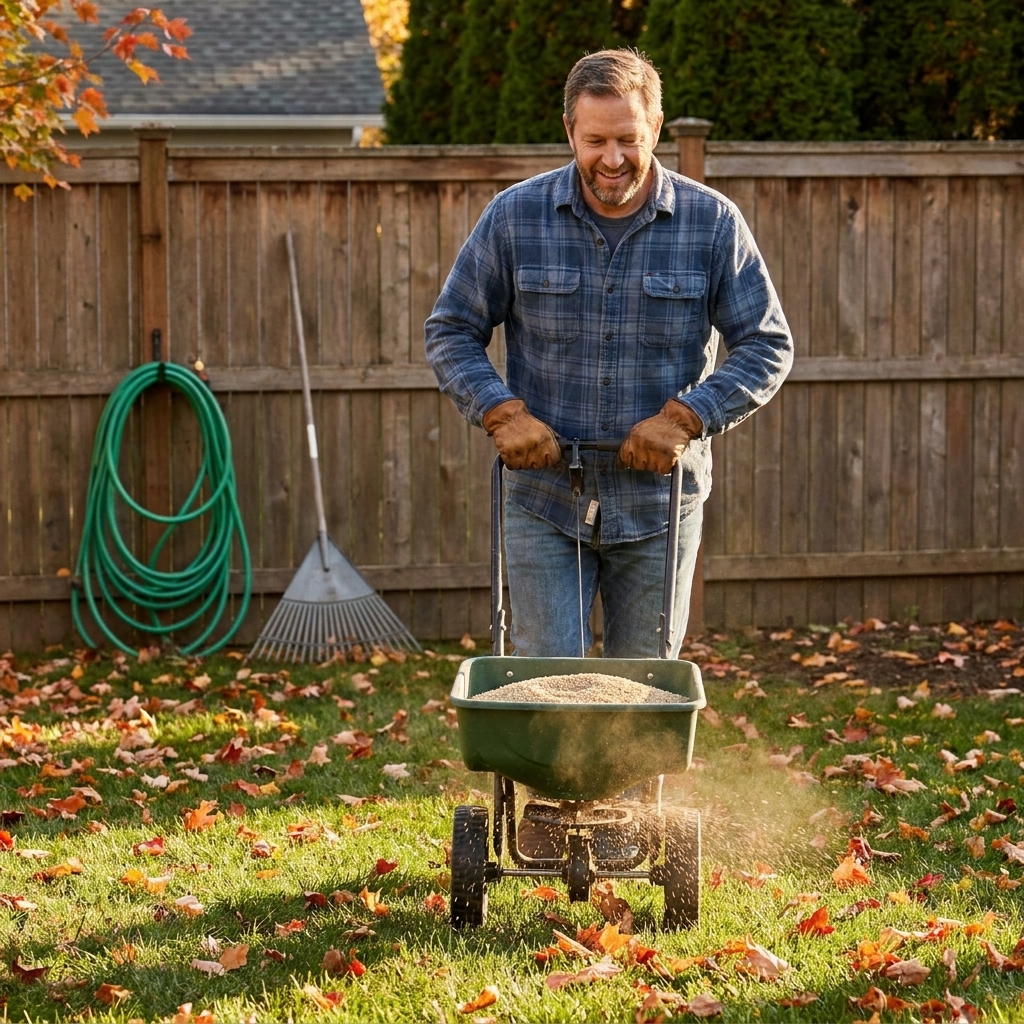
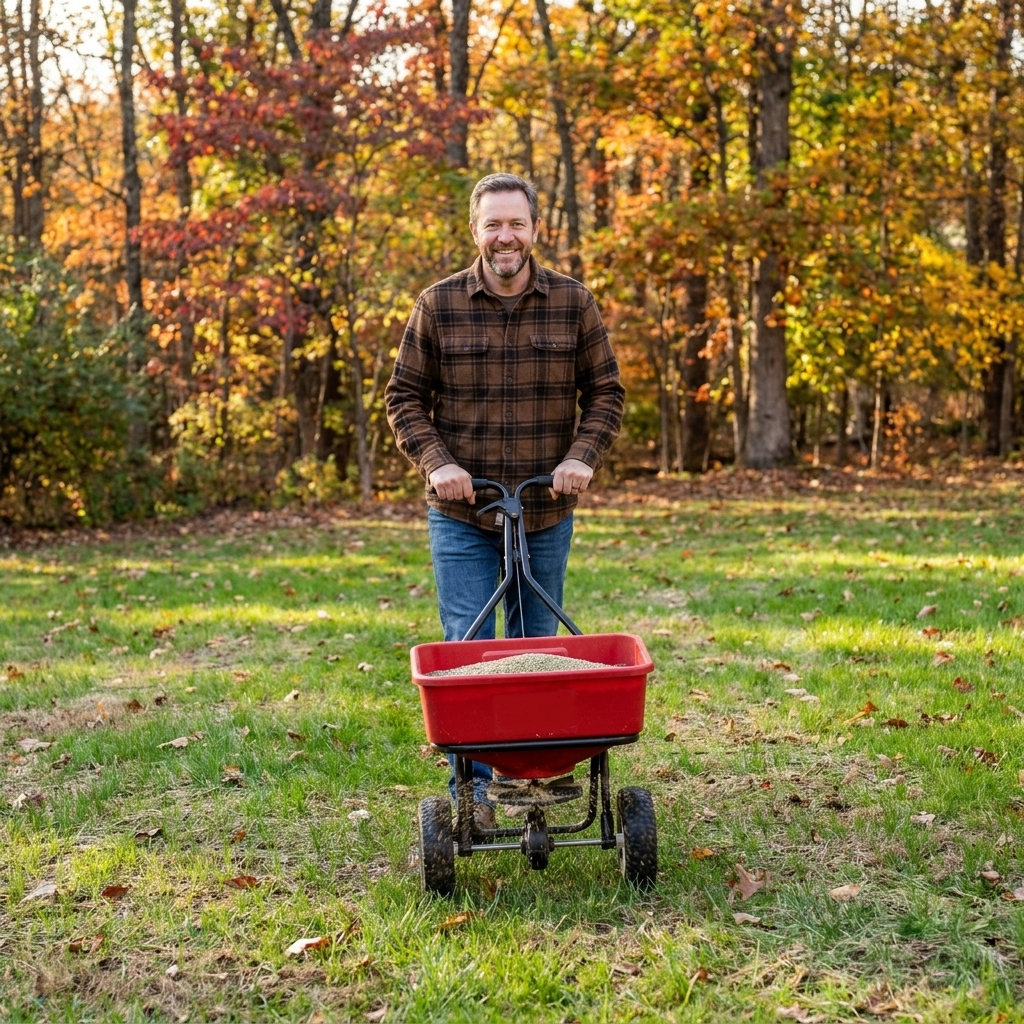
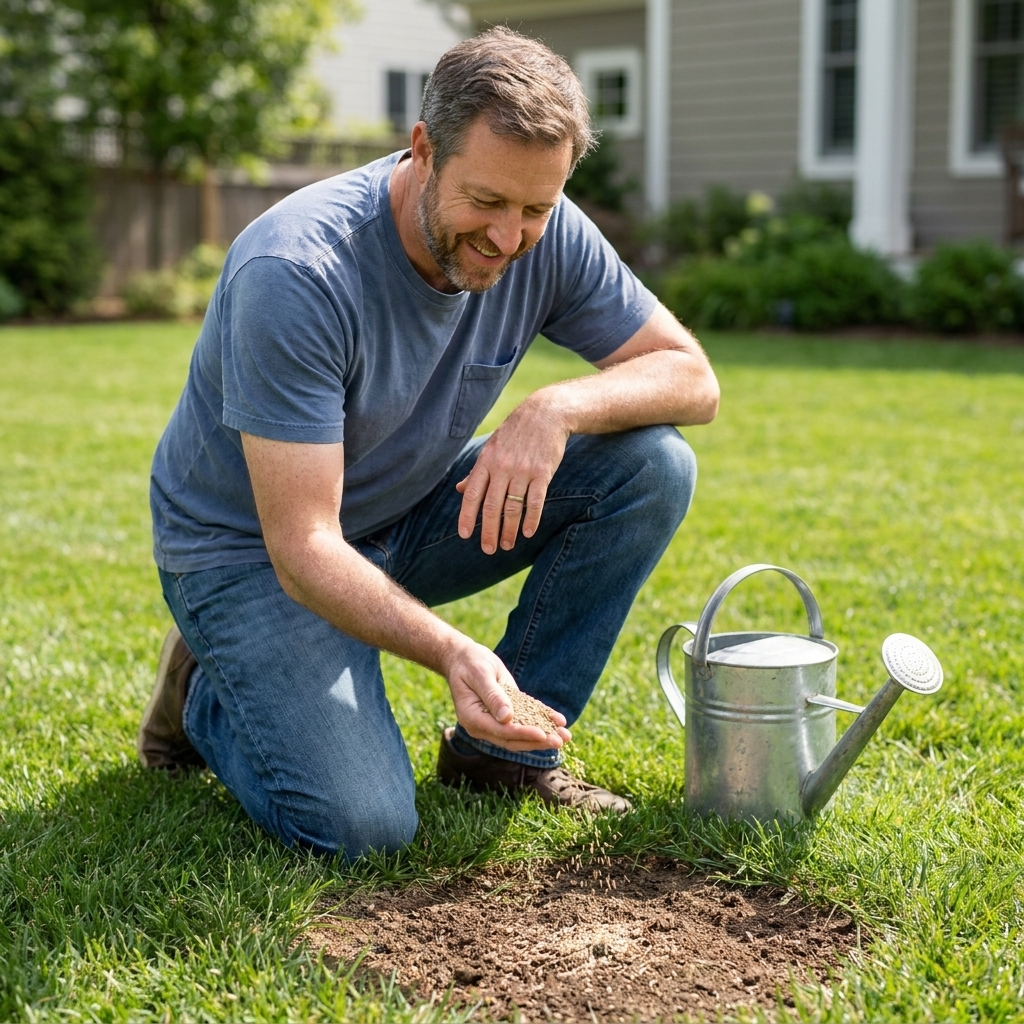
- Add seed at the label rate. For tiny spots, sprinkle evenly across the soil plus a few inches beyond the edge.
- Press seed into soil with your shoe or the back of a rake. Seed must touch soil.
- Cover lightly with a pinch more compost or clean straw. You should still see some seed.
- Water correctly: keep the top 1/2 inch of soil consistently damp until germination. That usually means 1 to 3 light waterings per day depending on heat, sun, and wind.
- First mow: mow when new grass reaches about 3.5 to 4 inches. Use a sharp blade and never scalp the patch.
Protect the repair: keep pets (and heavy foot traffic) off newly seeded areas as much as possible until the new grass has been mowed a couple of times. Also try not to let your dog urinate on fresh seed or new sod for the first two weeks, because that first flush of concentrated urine can undo all the work.
How long does it take to recover?
- Perennial ryegrass patch: often looks noticeably better in 10 to 14 days, with solid coverage in 3 to 5 weeks (depending on soil temperature).
- Tall fescue patch: typically 7 to 14 days to sprout, then thickens over 4 to 8 weeks.
- Kentucky bluegrass patch: 14 to 28 days to sprout, then gradually fills in over the season.
- Sod: looks good right away, but treat it gently for 2 to 3 weeks while it roots.
If you repair in the wrong season, it will feel temporary no matter how well you do it. Cool-season grasses patch best in early fall or spring. Warm-season grasses patch best in late spring through summer when they are actively growing.
Prevention that works (without fighting your dog)
You do not need to turn your backyard into a rulebook. You just need to lower the concentration hitting any one spot and keep the turf resilient.
1) Train a potty zone
This is the most permanent fix of all. Pick a low-visibility area and make it the default bathroom spot. Many families use mulch, pea gravel, or tough groundcover in that zone.
2) Rinse after the dog goes
If you do one thing, do this. A quick rinse prevents most burns, especially in summer.
3) Keep your lawn growing, not starving
A stressed lawn burns faster. Set your mower higher and avoid scalping.
- Cool-season lawns: aim for 3 to 4 inches in summer.
- Warm-season lawns: follow your grass type, but avoid cutting too low during heat.
4) Be careful with fertilizing
If you are already fertilizing heavily, urine spots hit harder. Use a moderate, seasonal plan and do not chase dark green in peak summer.
5) Hydration helps, but supplements are rarely the answer
Well-hydrated dogs produce more diluted urine, which can reduce spotting. Most supplements marketed to stop lawn burn are unnecessary, and some can be risky depending on your dog’s health. If you are considering anything that changes diet or urinary chemistry, run it by your veterinarian first.
Common mistakes that make spots come back
- Skipping the flush: seed struggles in salty, hot soil.
- Throwing seed on dead thatch: seed needs soil contact or it dries out.
- Overwatering for weeks: constant sogginess invites disease and shallow roots.
- Using harsh pH hacks: vinegar and baking soda can do more harm than good.
- Choosing the wrong grass: delicate grasses struggle in high-traffic pet areas.
- Mowing the patch too soon or too short: it sets back young roots.
Pet-spot grass options that hold up better
No grass is urine-proof, but some handle the abuse better than others.
Cool-season picks
- Turf-type tall fescue: my top choice for many dog households because it roots deep and stays tough in summer.
- Perennial ryegrass: excellent for quick repair and wear tolerance, often used in mixes.
- Kentucky bluegrass: great long-term lawn grass due to spreading, but it is slower to repair.
Warm-season picks
- Bermudagrass: tough and self-repairing in heat and sun.
- Zoysiagrass: dense and durable, slower to fill but strong once established.
If you are repeatedly patching the same zones, consider overseeding your entire yard (or at least the dog run path) with a more wear-tolerant blend in the right season. That is how you stop playing whack-a-mole.
FAQ
Will dead dog urine spots grow back?
If the crown is dead, that individual plant will not recover. The spot can only fill in if surrounding grass spreads (common with Kentucky bluegrass, bermudagrass, and zoysia) or if you reseed or patch with sod.
Should I put lime on dog spots?
Usually no. Lime is for raising soil pH, and urine damage is more about concentration and salts than “acid soil.” If you suspect a broader pH issue, do a soil test before adding lime.
Does dish soap help dog urine spots?
Dish soap is sometimes used as a surfactant to help water penetrate hydrophobic soil, but it is not a true fix for urine salts and it can irritate soil biology if overused. I would rather see you flush thoroughly and topdress with compost.
Can I seed and use gypsum at the same time?
Yes. Apply gypsum lightly, water it in, then topdress with compost and seed. The key is not burying seed too deep and keeping it evenly moist until it germinates.
A simple plan for dog owners
If you want the most reliable version of this, here is the routine I recommend:
- Right after potty: quick rinse when you can.
- When a spot appears: flush for a couple of days, rake out dead, compost topdress, reseed or patch.
- Each fall (cool-season) or late spring (warm-season): overseed or thicken thin areas so the lawn is resilient.
- All season: mow high, water deeply but not constantly, and do not over-fertilize.
Do that, and those frustrating circles stop being a recurring problem and start being a rare maintenance moment.