A homeowner-friendly guide to the most common turf weeds, how to spot them, why they show up, and the best prevention and treatment strategies that work.
lawn care
Permanently Get Rid of Dandelions Without Killing Grass
 Mark Vance
 is a former professional landscaper and the lead turf enthusiast at Yard Mentor. With over 15 years of experience in soil health, turf management, and residential landscaping, he is dedicated to helping homeowners transform frustrating dead patches into lush, healthy lawns. When he isn't testing new grass seed blends, you can find him enjoying a Saturday morning coffee looking out over his freshly striped yard.
Updated October 17, 2026
Created October 17, 2026
Mark Vance
Mark Vance is a former professional landscaper and the lead turf enthusiast at Yard Mentor. With over 15 years of experience in soil health, turf management, and residential landscaping, he is dedicated to helping homeowners transform frustrating dead patches into lush, healthy lawns. When he isn't testing new grass seed blends, you can find him enjoying a Saturday morning coffee looking out over his freshly striped yard.
Updated October 17, 2026
Created October 17, 2026
Dandelions are not “hard” because they are mysterious. They are hard because they play a simple game really well: grow a deep taproot, hug the ground under your mower, and throw seeds like confetti the minute you look away.
If you want long-term, near-permanent control of dandelions without killing your grass, the goal is always the same: remove or kill the taproot, then fix the lawn conditions that let dandelions move in. You can wipe out the plants you have today, but keeping a lawn “dandelion-free forever” takes ongoing prevention because new seeds can blow in and old seeds can sit in the soil.
Why dandelions keep coming back
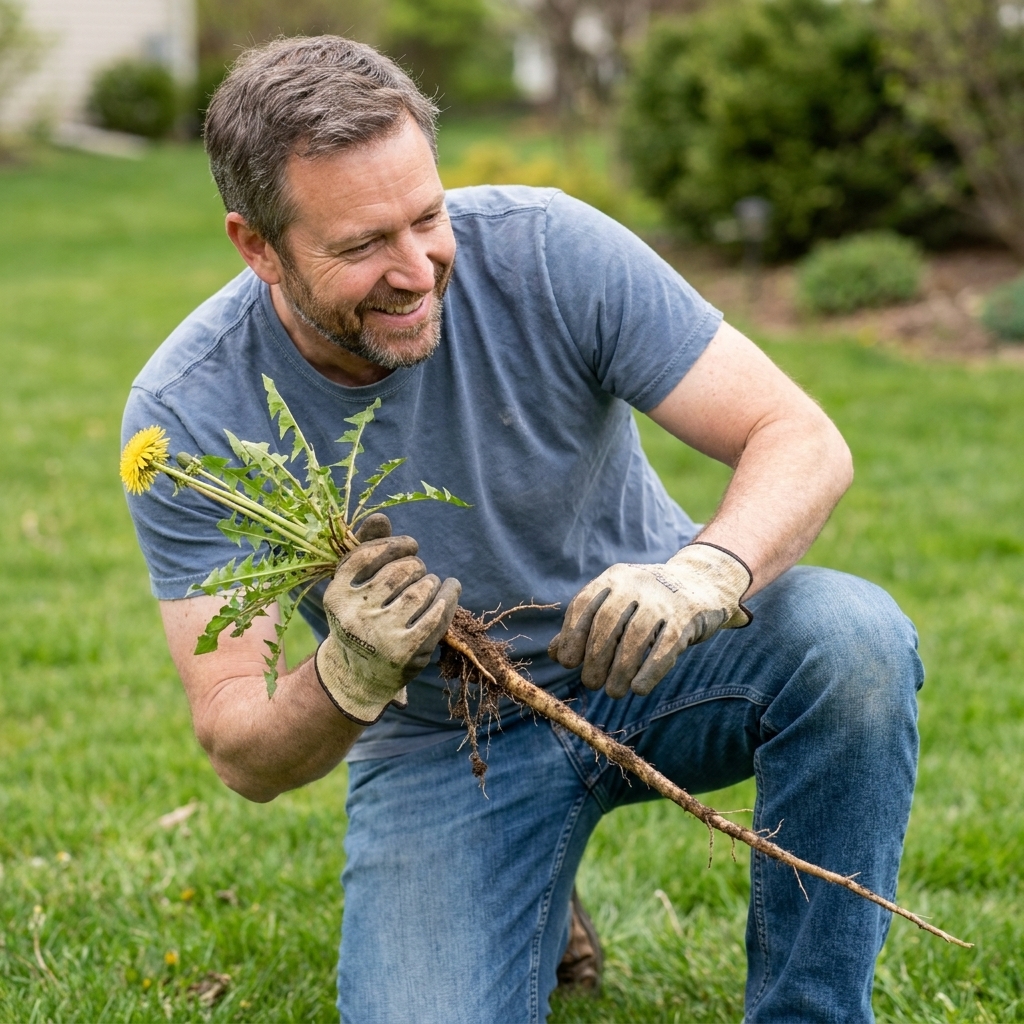
Common dandelion (Taraxacum officinale) is a perennial broadleaf weed. That matters, because perennials store energy in their roots. You can mow the leaves off all season and the plant can still bounce back.
- Deep taproot: Commonly 6 to 18 inches long in lawns, and it can exceed that in older plants or loose soil.
- Low rosette growth: Leaves sit below mower height, especially when you mow short.
- Seed production: One plant can produce hundreds to thousands of wind-blown seeds over a season.
- Thrives in thin turf: Bare spots, compacted soil, low mowing, and low fertility are basically an open invitation.
So the “permanent” part is a two-step plan: taproot control, then turf thickening.
Step 1: Pull the taproot (manual)
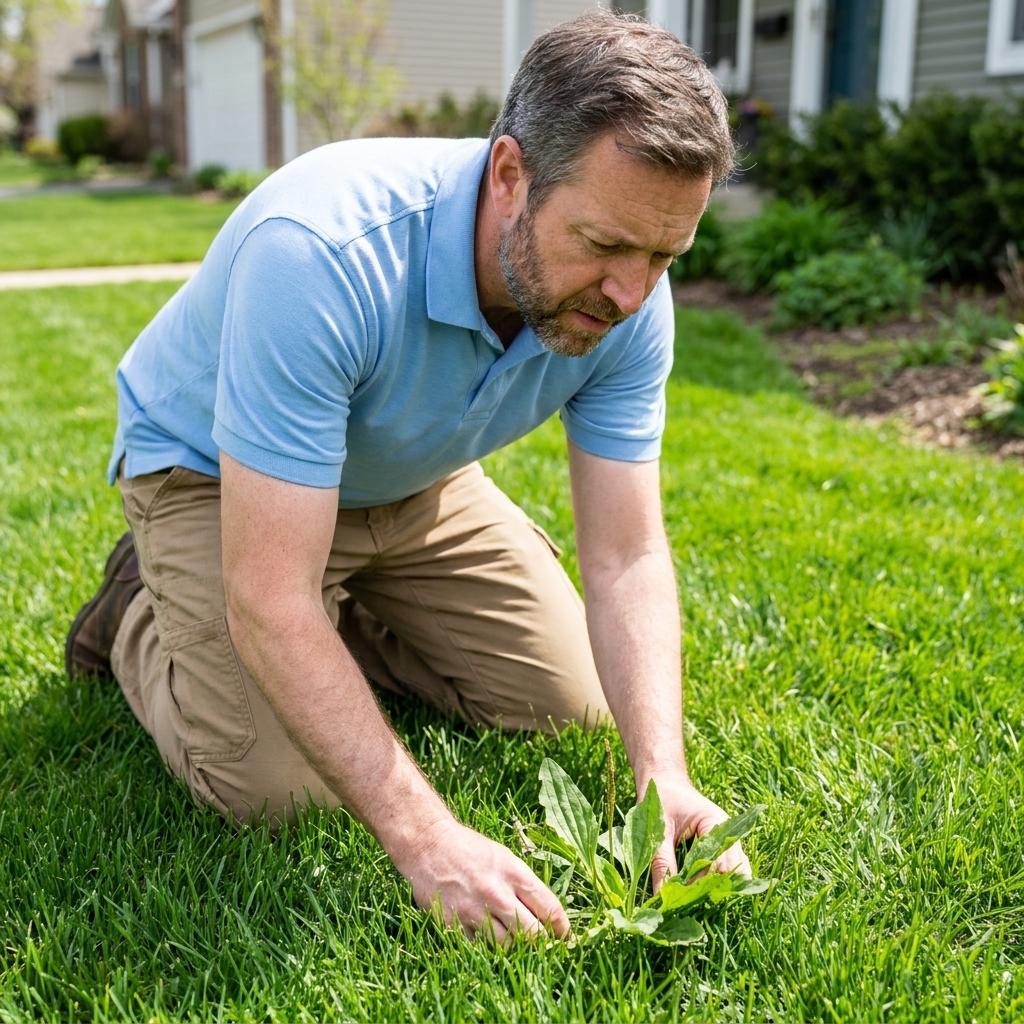
If you only have a handful, manual removal is the cleanest way to get long-lasting results with zero risk to grass. The trick is not yanking the leaves. The trick is getting under the crown and sliding the whole root out.
Best time to pull
- After rain or irrigation: Moist soil lets the taproot release in one piece.
- When the plant is actively growing: Spring and fall are easiest. Summer pulling works too if the soil is soft.
- Before it goes to seed: If you see puffballs, bag them gently first so you do not “plant” your problem across the yard.
Tools that actually work
You can use a hand trowel, but dandelions respond best to tools designed to reach deep and pry without tearing the root.
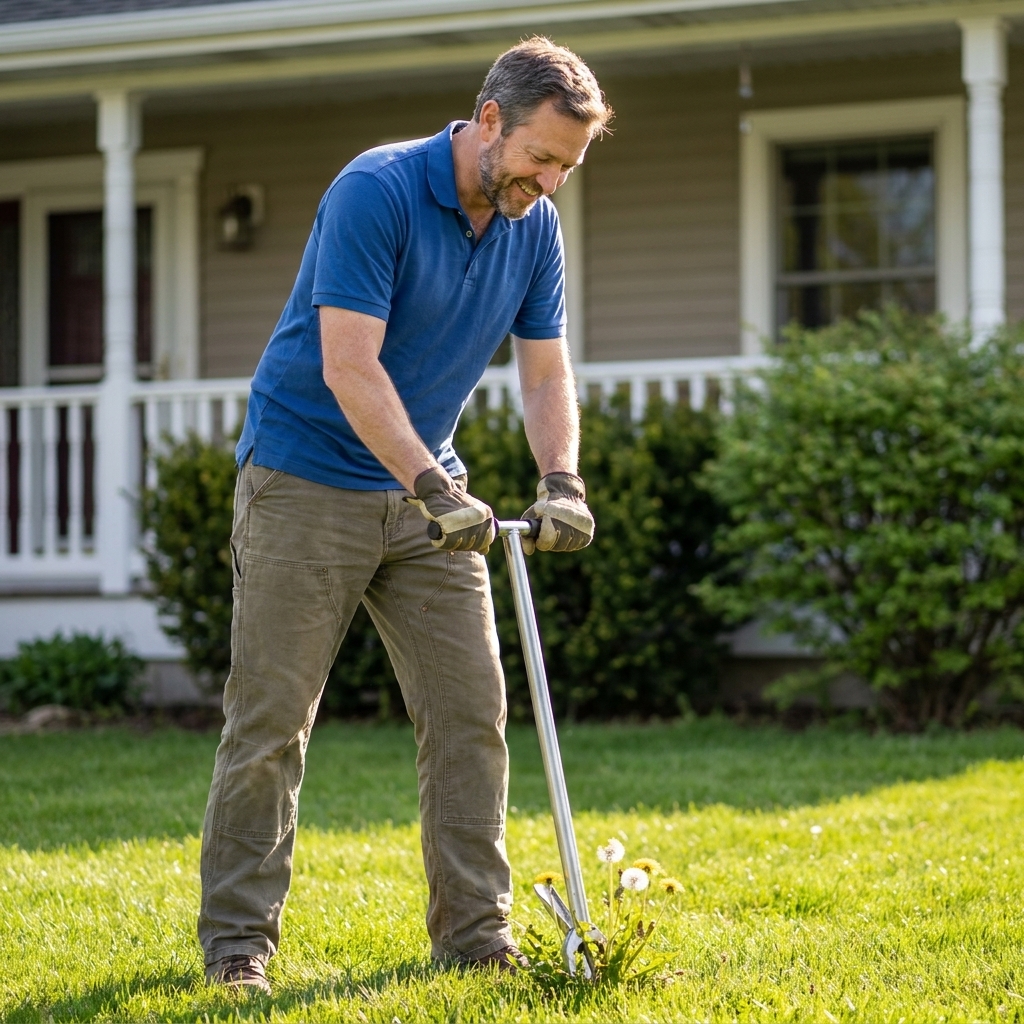
- Fishtail weeder (a.k.a. dandelion weeder): Slides down alongside the taproot and lifts it out with leverage.
- Stand-up weeder (claw style): Great for larger lawns. It grabs the root column, then you eject the plug. You will leave a small core hole that you can topdress and seed.
- Soil knife or hori-hori: Versatile, especially for tight areas near sidewalks where dandelions love to camp out.
Quick disposal tip: If the plant has a seed head, do not toss it on the lawn or into an open compost pile. Bag it, or at least keep it contained until the seeds are not viable.
Step 2: Selective herbicides (grass-safe)
If you have dozens or hundreds of dandelions, you can absolutely control them with herbicide, but you have to use the right type and the right timing.
For lawns, you want a selective broadleaf herbicide. “Selective” means it targets broadleaf weeds while leaving grasses alone when used as directed and when the product is labeled for your grass type.
What to look for on the label
For dandelions, the most proven active ingredients are:
- 2,4-D (workhorse for broadleaf weeds)
- MCPP (Mecoprop-p) or MCPA (often paired with 2,4-D)
- Dicamba (adds punch on tough perennials)
- Triclopyr (excellent on many broadleaf weeds, often strong on dandelion and clover)
Many homeowner products are “three-way” blends such as 2,4-D + MCPP + dicamba. Those are commonly effective on dandelions when applied correctly.
Grass-type caution: Always confirm the label lists your turf. Some mixes can be too harsh for certain warm-season lawns. St. Augustine and centipede, in particular, can be sensitive to some broadleaf herbicides or require specific products and rates. When in doubt, choose a product specifically labeled for your grass and spot test a small area first.
Spot spray beats blanket spraying
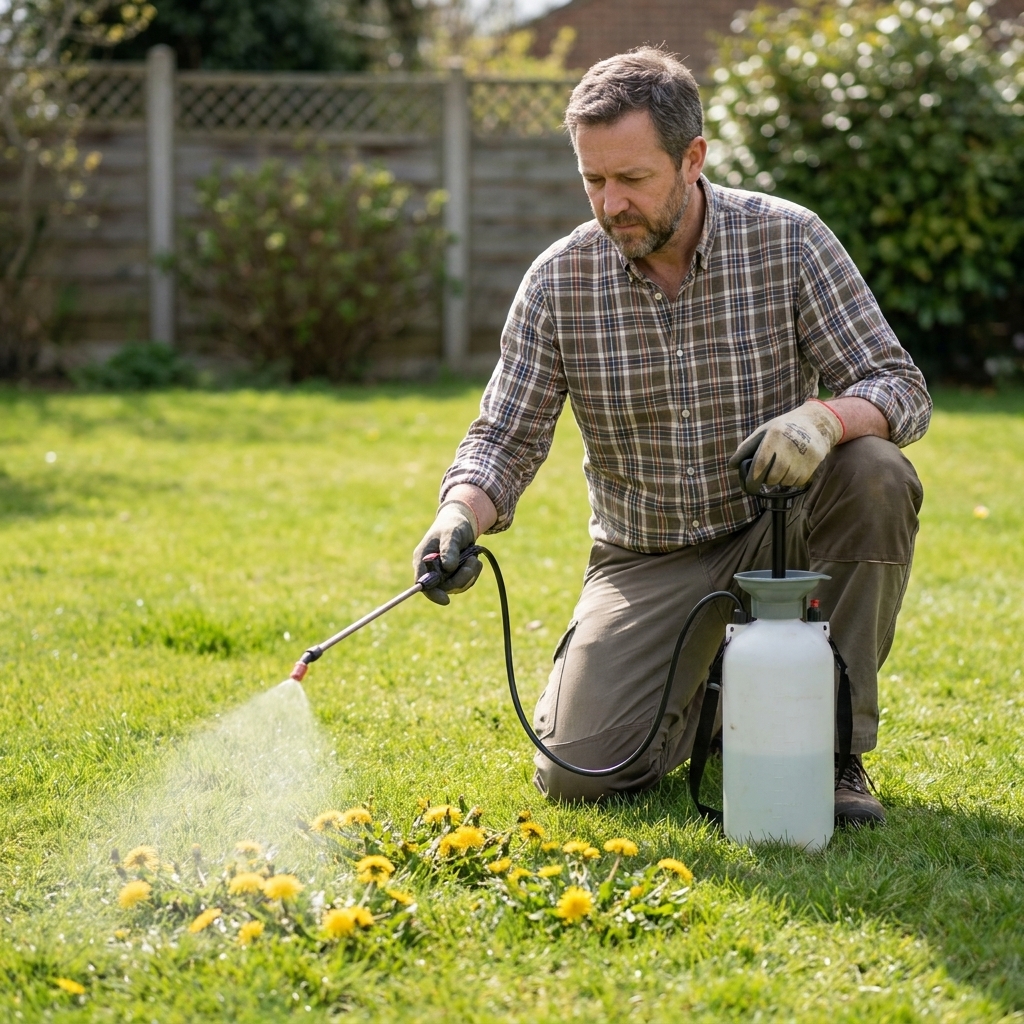
If your lawn is not completely overrun, spot treat. It uses less product, reduces stress on turf, and protects nearby ornamentals.
- Use a pump sprayer or ready-to-spray bottle.
- Spray leaves until they are wet, not dripping.
- Avoid windy days to prevent drift onto flowers, vegetables, trees, and shrubs.
Timing: when herbicides work best
My best results come from fall applications, with spring as a close second.
- Early fall: Dandelions are sending carbohydrates down to the root for winter storage. Herbicide rides that flow and hits the taproot hard.
- Spring: Works well too, especially on young plants. You may need a second application 10 to 21 days later if the label allows.
- Summer: Can work, but heat-stressed turf is easier to injure and some products are less effective when weeds are drought-stressed.
Weather and mowing notes: Do not spray right before rain unless the label says it is rainfast in that window. And if the label allows, avoid mowing for about 1 to 2 days before and after application. More leaf surface equals better uptake.
Basic safety and handling
- Wear gloves and eye protection, and wash up after spraying.
- Keep spray off desirable broadleaf plants (they are broadleaf too).
- Keep kids and pets off treated areas until the spray has dried, or longer if the label requires it.
- Rinse and store equipment so you do not accidentally track herbicide into garden beds later.
Step 3: Make your lawn unfriendly to dandelions
This is the part most people skip, then they wonder why dandelions “came back.” Often they did not come back. New seeds moved into the same thin spots, or the soil seed bank finally got its moment.
Mow higher
Dandelions love short mowing because sunlight hits the soil and turf gets weaker. Most cool-season lawns do best around 3 to 4 inches in the growing season. Taller grass shades soil, crowds seedlings, and grows deeper roots.
Feed your grass
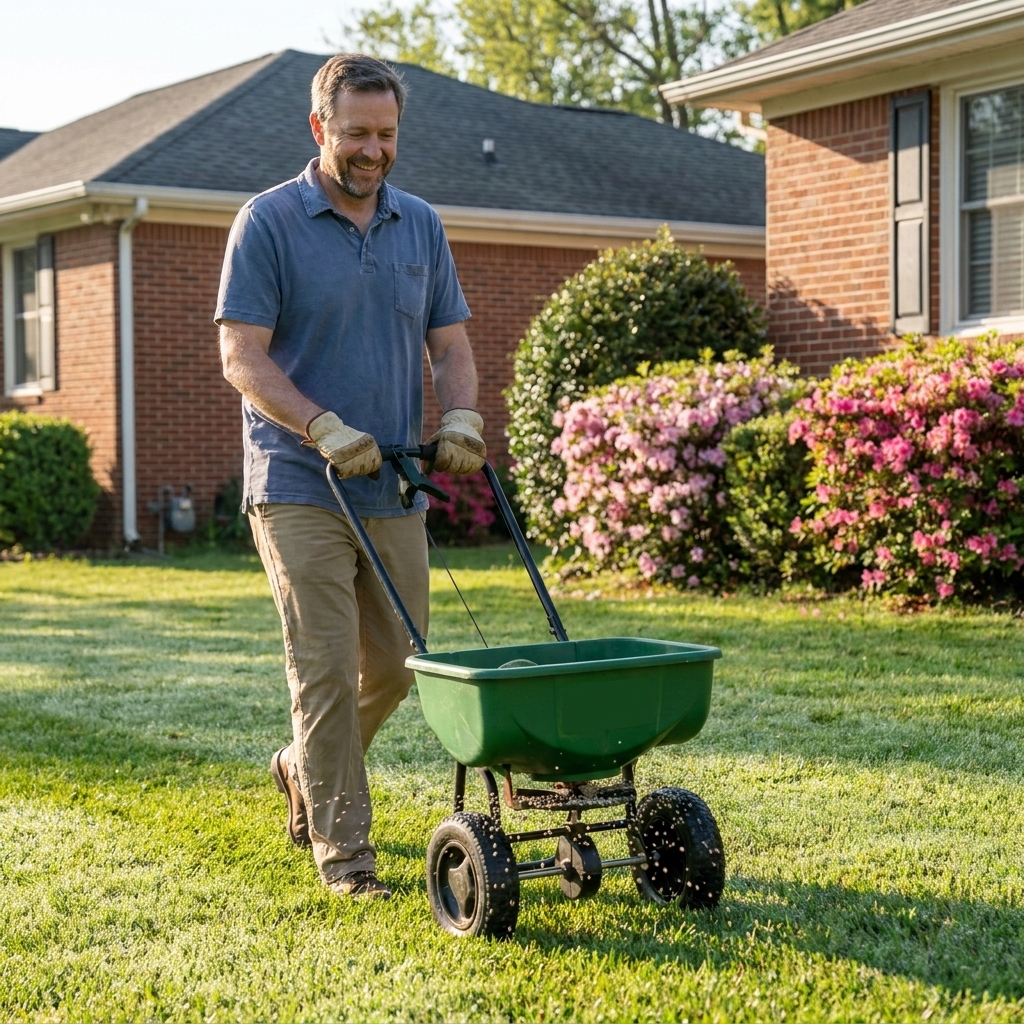
A thick, properly fertilized lawn is the best long-term herbicide there is. A basic plan:
- Cool-season lawns (fescue, bluegrass, rye): Prioritize fertilizing in early fall and late fall. Spring feeding can be lighter depending on your goals.
- Warm-season lawns (Bermuda, zoysia, centipede, St. Augustine): Fertilize during active summer growth, not when the lawn is dormant.
If your lawn is chronically thin, a soil test is worth it. Correcting pH and key nutrients helps turf fill in so weeds cannot.
Fix compaction and bare spots
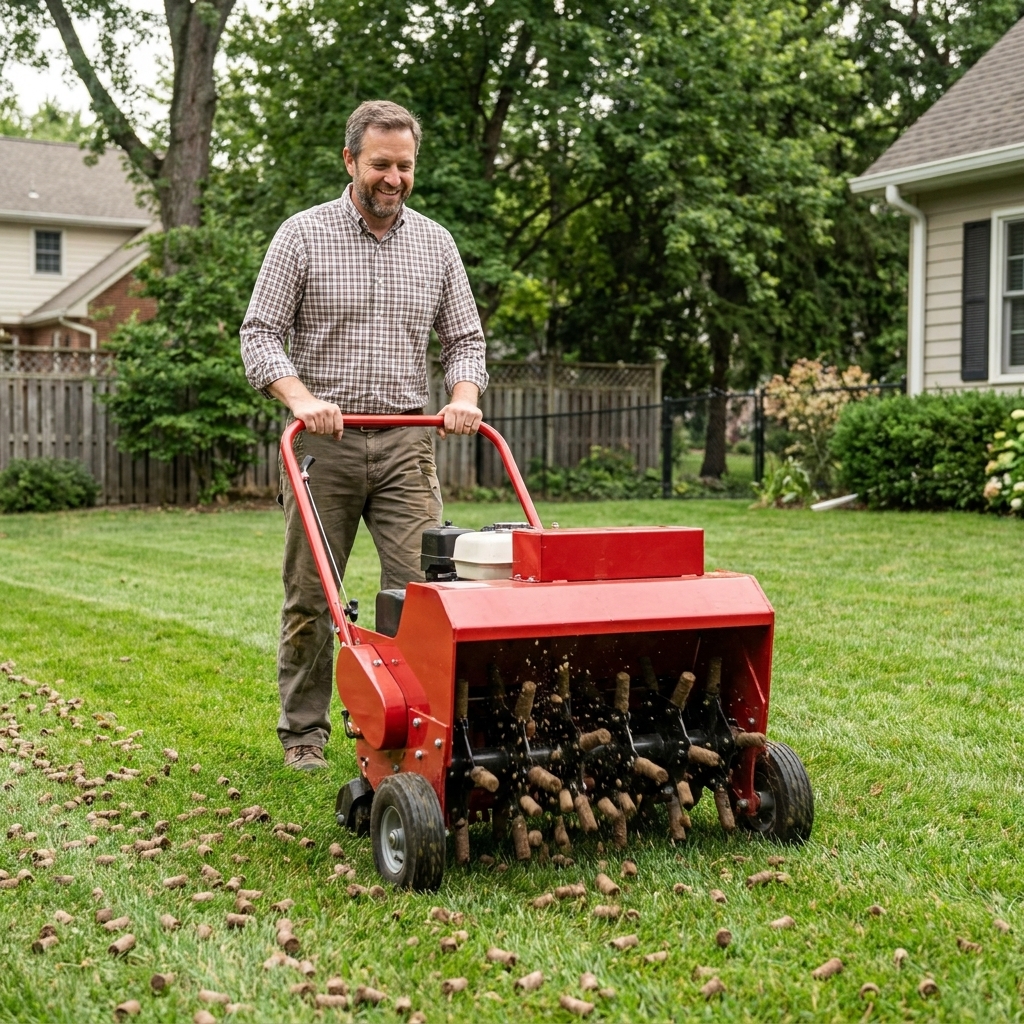
- Aerate compacted areas (especially along sidewalks, play areas, dog runs).
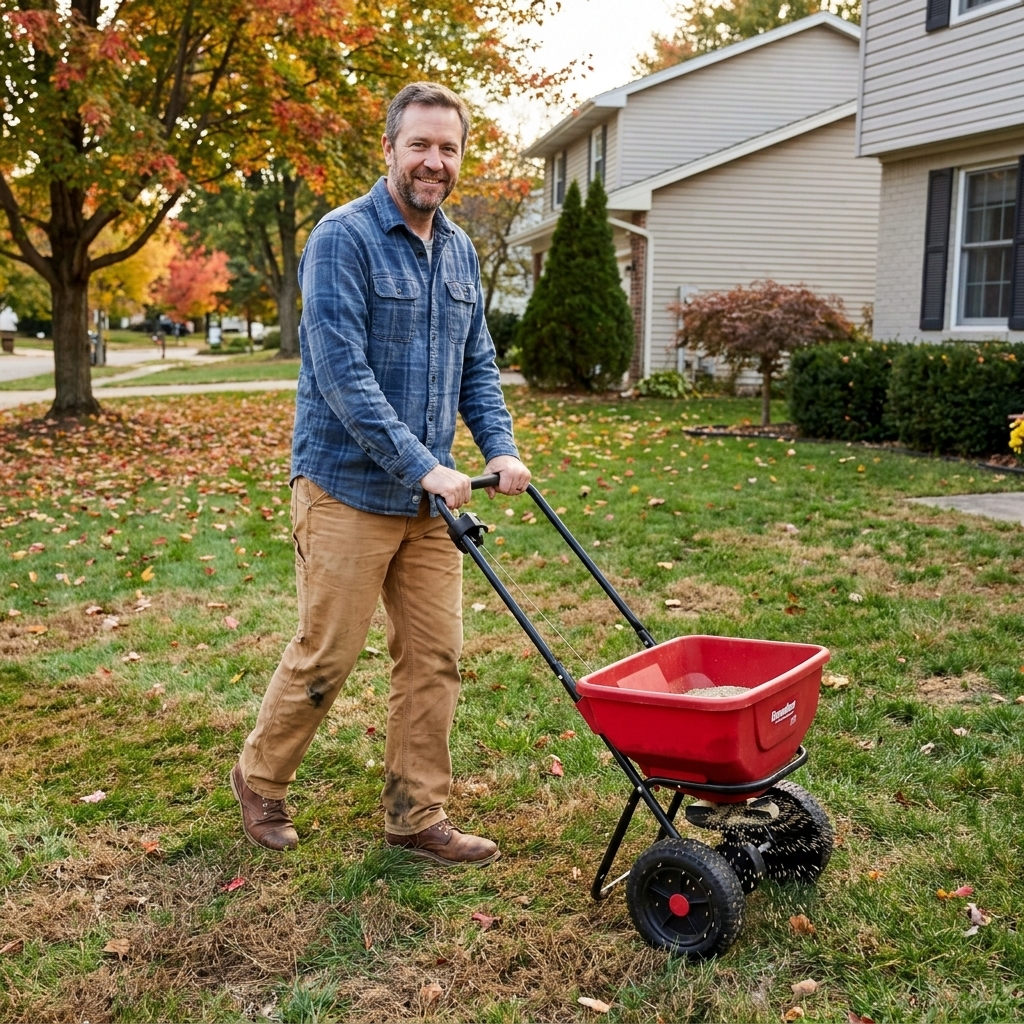
- Overseed in fall for cool-season lawns to close gaps where dandelions germinate.
- Topdress thin spots with a light layer of compost to improve soil structure.
Pulling vs herbicide
If you are standing in your yard wondering which approach to start with, here is my simple rule.
- 10 dandelions or fewer: Pull them after rain with a fishtail weeder. Done.
- Dozens spread across the lawn: Spot spray with a selective broadleaf herbicide, then follow up 2 to 3 weeks later if label allows.
- Carpet of dandelions: Blanket spray can make sense, but expect to do a second treatment and then overseed or thicken turf in the right season.
And no matter which you pick, handle the underlying lawn thinness. That is what makes results stick year after year.
Common mistakes (and fixes)
Using a non-selective herbicide
Products with glyphosate are non-selective. They will kill grass along with weeds. Save those for cracks in sidewalks or full renovations, not general lawn dandelion control.
Spraying in heat or drought stress
When turf is stressed, it is easier to injure. If it is over 85 to 90°F and your lawn is struggling, wait for a cooler window and water appropriately.
Overapplying
It is not “more is better.” Follow label rates. Overapplication increases turf injury risk and does not guarantee better root kill.
Pulling wrong
If you snap the root and leave most of it behind, you did not remove the plant. You pruned it. Get the tool deep, pry slowly, and pull when the soil is damp.
Natural and pet-friendly options
I get this question a lot. Here is the honest truth from years of working on residential lawns: most “natural weed killers” that actually burn dandelion leaves also burn grass, because they are non-selective.
- Boiling water: Non-selective, damages turf.
- Vinegar mixes: Often scorch foliage, rarely kill the full taproot, and can injure grass.
- Salt: Please do not. It can ruin soil and prevent anything from growing.
If you want the most grass-safe, kid-safe, pet-considerate approach, your best bet is usually manual removal plus thickening the lawn. If you use herbicide, follow the label for re-entry time and keep pets off until the spray has dried.
FAQ
Will dandelions die if I keep mowing them?
Not reliably. Mowing can reduce flowers and seed heads, but the taproot typically survives and keeps producing new leaves.
How long does it take for selective herbicide to kill dandelions?
Most people see leaf curling and twisting within a few days. Full dieback can take 1 to 3 weeks depending on weather, plant maturity, and product. A follow-up application is sometimes needed for older plants, as long as the label allows it.
Can I overseed after spraying for dandelions?
Maybe. It depends on the product. Many broadleaf herbicides require a waiting period before seeding, often a few weeks. Read the label carefully. If you are planning a big fall overseed, plan your dandelion treatment window around it.
Do pre-emergents stop dandelions?
Most pre-emergents people already use for crabgrass will not do anything to established dandelions. Some products can reduce broadleaf seed germination, but availability and labels vary a lot by region and grass type. In most home lawns, the reliable play is still: kill or pull existing plants, then thicken turf so seedlings cannot get started.
Do dandelions mean my soil is bad?
Not necessarily, but they do often show up where turf is thin or soil is compacted. Think of them as a signal that the lawn needs thickening, better mowing height, or improved soil conditions.
My simple long-term plan
If you want a straightforward checklist, this is the plan I use on my own lawn:
- 1) Pull what you can after rain, getting as much taproot as possible.
- 2) Spot spray what is left with a selective broadleaf herbicide when temps are mild and the product is labeled for your grass.
- 3) Recheck in 2 to 3 weeks and retreat stragglers if label permits.
- 4) Raise mowing height and keep blades sharp.
- 5) Thicken turf with proper fertilizing and overseeding or aeration in the correct season for your grass type.
Do those five steps and dandelions go from “every spring battle” to “an occasional single plant I pull while my coffee brews.”