A step-by-step plan for establishing grass in bare, shady areas under mature trees, including the best seed types, pruning tips, and soil amendments that act...
lawn care
Why Moss Is Growing in Your Lawn and How to Eliminate It
 Mark Vance
 is a former professional landscaper and the lead turf enthusiast at Yard Mentor. With over 15 years of experience in soil health, turf management, and residential landscaping, he is dedicated to helping homeowners transform frustrating dead patches into lush, healthy lawns. When he isn't testing new grass seed blends, you can find him enjoying a Saturday morning coffee looking out over his freshly striped yard.
Updated October 17, 2026
Created October 17, 2026
Mark Vance
Mark Vance is a former professional landscaper and the lead turf enthusiast at Yard Mentor. With over 15 years of experience in soil health, turf management, and residential landscaping, he is dedicated to helping homeowners transform frustrating dead patches into lush, healthy lawns. When he isn't testing new grass seed blends, you can find him enjoying a Saturday morning coffee looking out over his freshly striped yard.
Updated October 17, 2026
Created October 17, 2026
If moss is creeping across your lawn, it is not because you did anything “wrong” with grass seed. Moss is basically nature’s way of saying, “This spot is a better home for me than it is for turf.” The good news is you can absolutely turn that around. The trick is to stop treating moss like the main problem and start treating it like a symptom.
As a former landscaper, I saw moss show up in the same kinds of yards over and over: shady corners, low spots that stay damp, compacted soil near driveways and paths, and lawns with acidic, nutrient-poor soil. Fix those conditions and moss usually fades out for good.
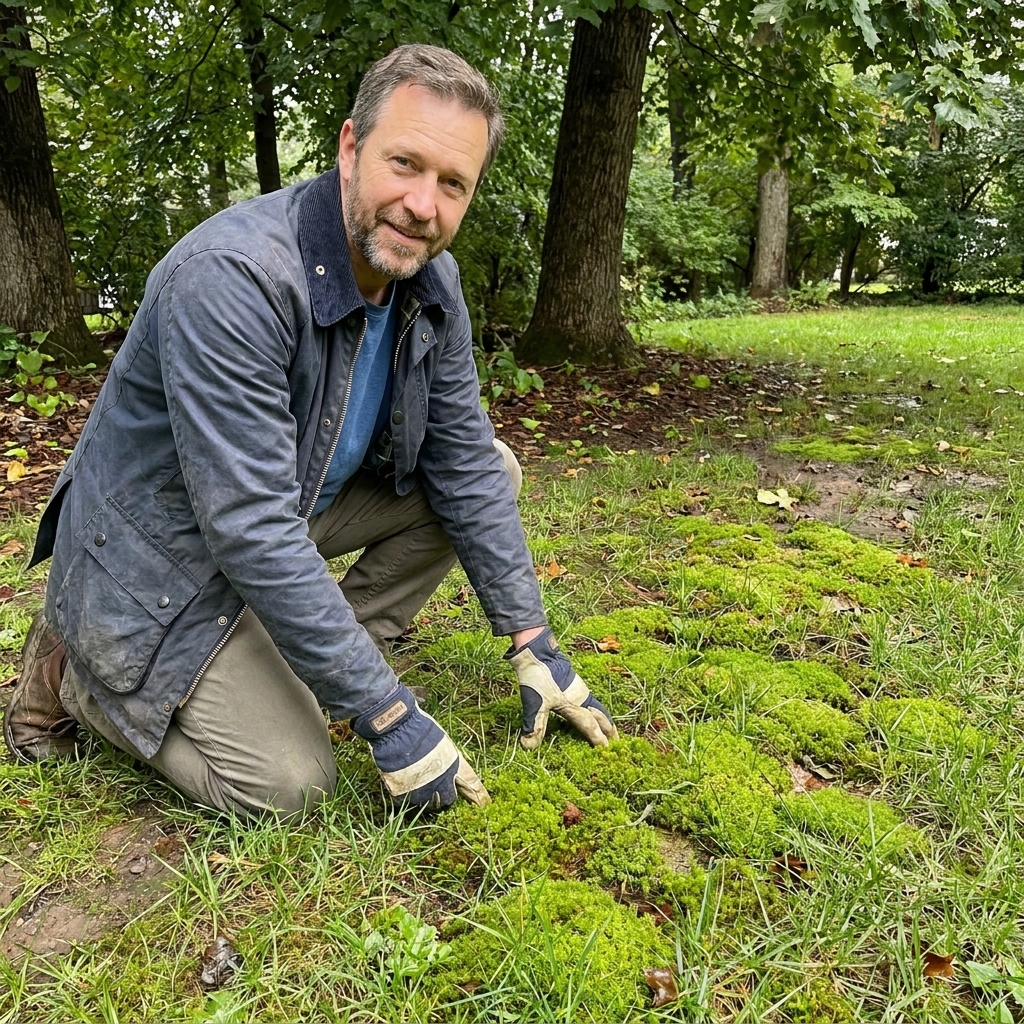
Why moss grows in lawns
Moss does not need much to survive. It does not have true roots like grass. It anchors with rhizoids and spreads when conditions make it hard for turf to compete. In most yards, moss shows up because of one or more of these:
- Too much shade
- Soil stays wet (poor drainage, compaction, low spots)
- Acidic soil (low pH)
- Thin grass from low fertility, poor mowing habits, or traffic
- Compacted soil that limits oxygen and root growth
Notice what is missing: moss does not appear because you “caught” it from a neighbor. Spores are widespread in the environment. Moss establishes where grass is struggling.
Quick diagnosis
Before you buy anything, take five minutes to read the site. Where is the moss and what is different about that spot?
Moss in deep shade
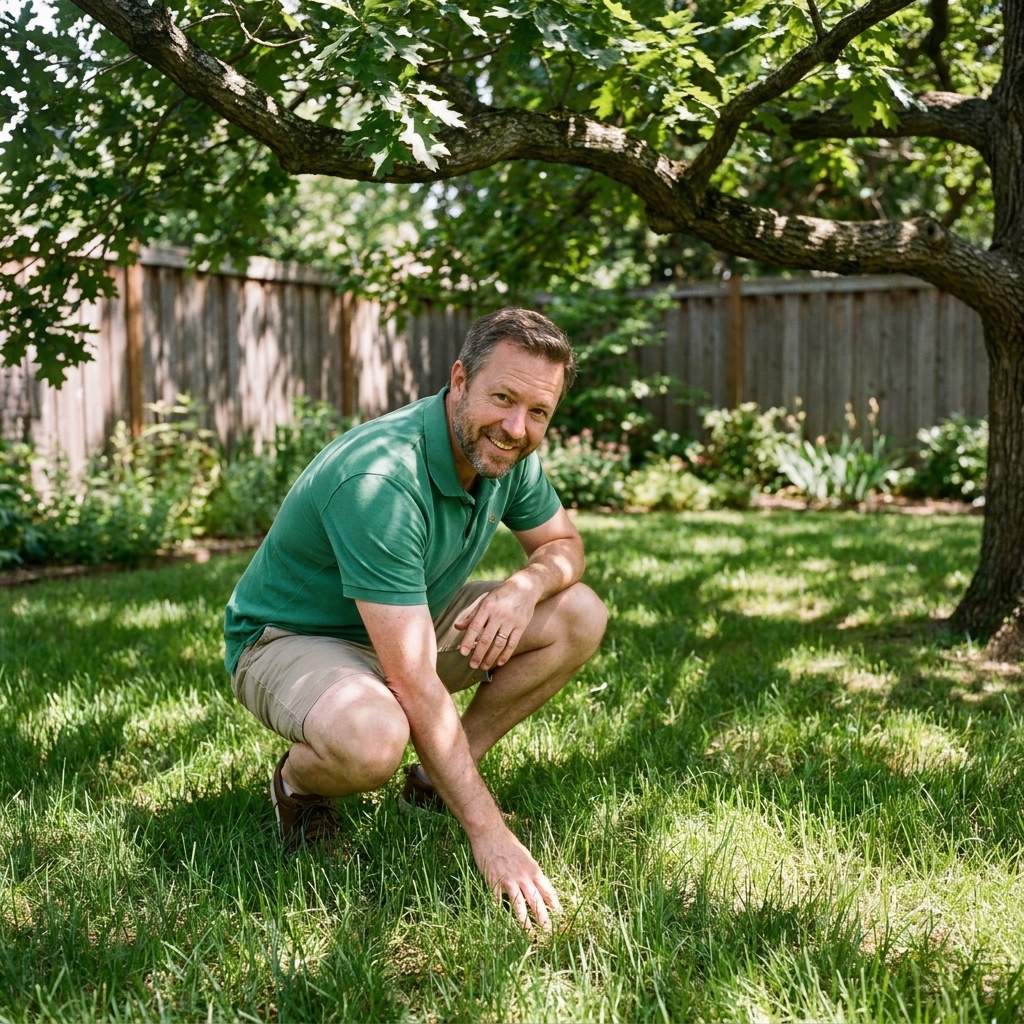
If the moss is under evergreens, between houses, or on the north side of a fence line, shade is likely the main driver. Many lawn grasses do best with at least 4 or more hours of direct sun, and more is usually better. Filtered light can help, but deep shade is tough on most turf.
Moss in low, soggy areas
Moss that shows up in a bowl-shaped spot, near downspouts, or at the bottom of a slope is usually a drainage issue. Grass roots hate sitting in waterlogged soil because they lose oxygen.
Moss near paths, patios, and dog runs
This is classic compaction. Foot traffic squeezes air out of soil and turns it into something closer to brick than sponge.
Moss that returns every year
Recurring moss often points to acidic soil or a persistent moisture problem that has not been corrected yet.
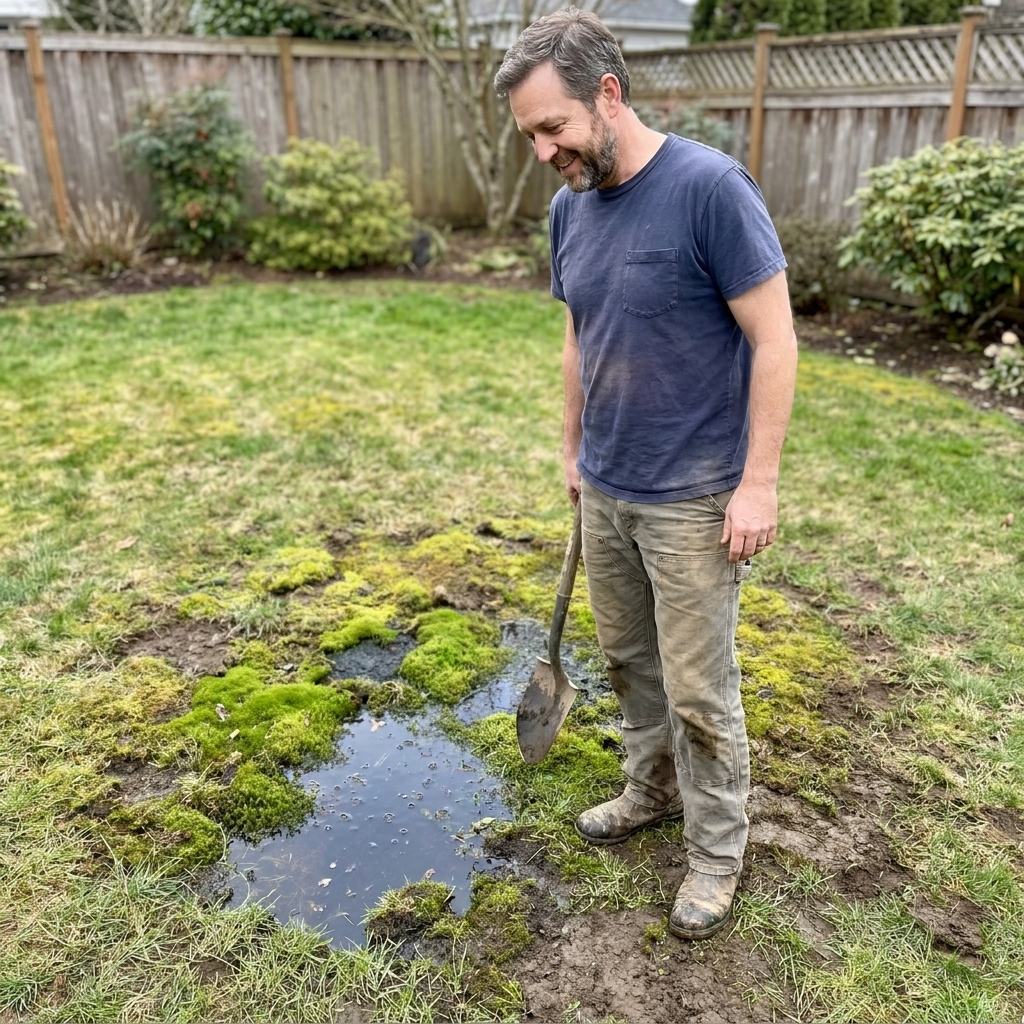
Step 1: Test soil pH
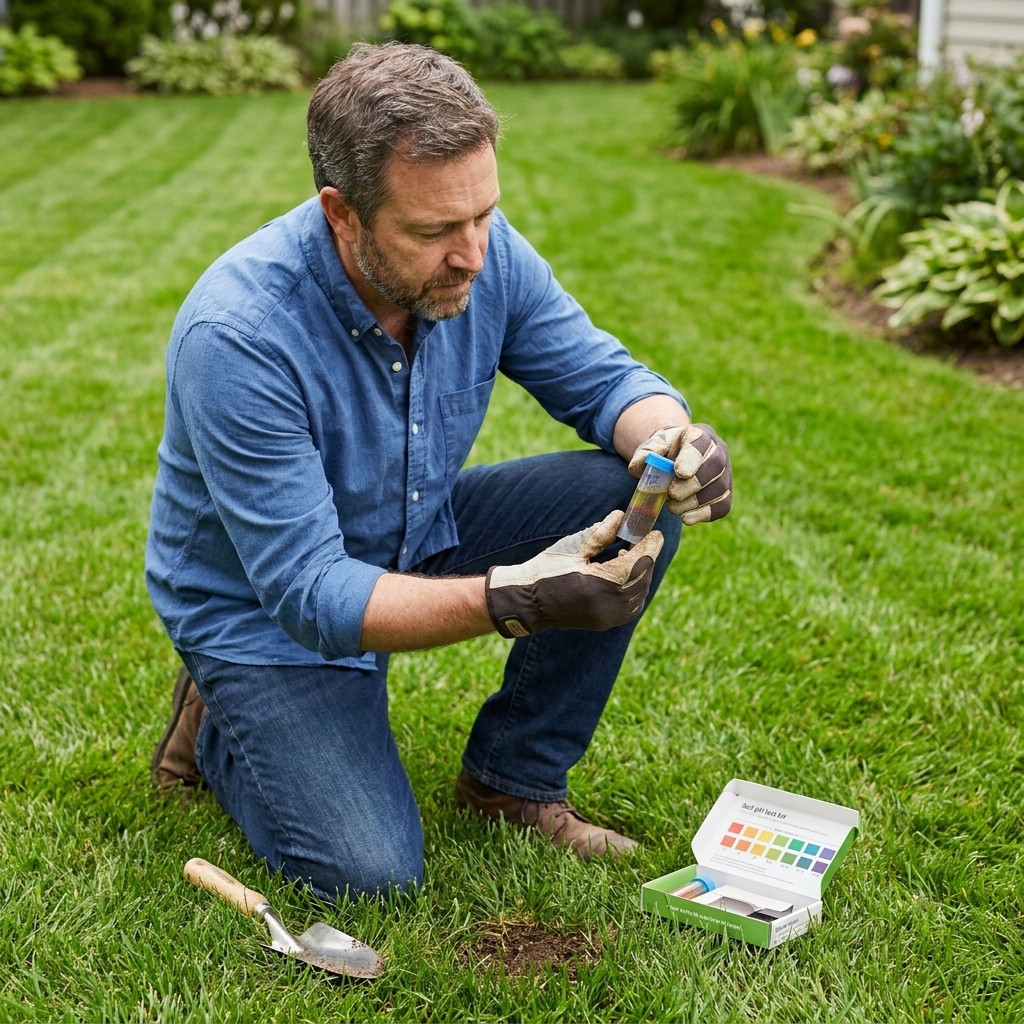
If you only do one “grown-up” thing for your lawn this season, let it be a soil test. Moss often thrives when soil pH is low (acidic), while many turfgrasses prefer a slightly acidic to near-neutral range.
- Cool-season lawns (Kentucky bluegrass, fescue, rye): often perform best around pH 6.0 to 7.0.
- Warm-season lawns (Bermuda, zoysia, centipede, St. Augustine): targets vary by grass, often somewhere in the mid 5s to near 7. Centipedegrass commonly prefers a more acidic range than many other lawns, so do not guess.
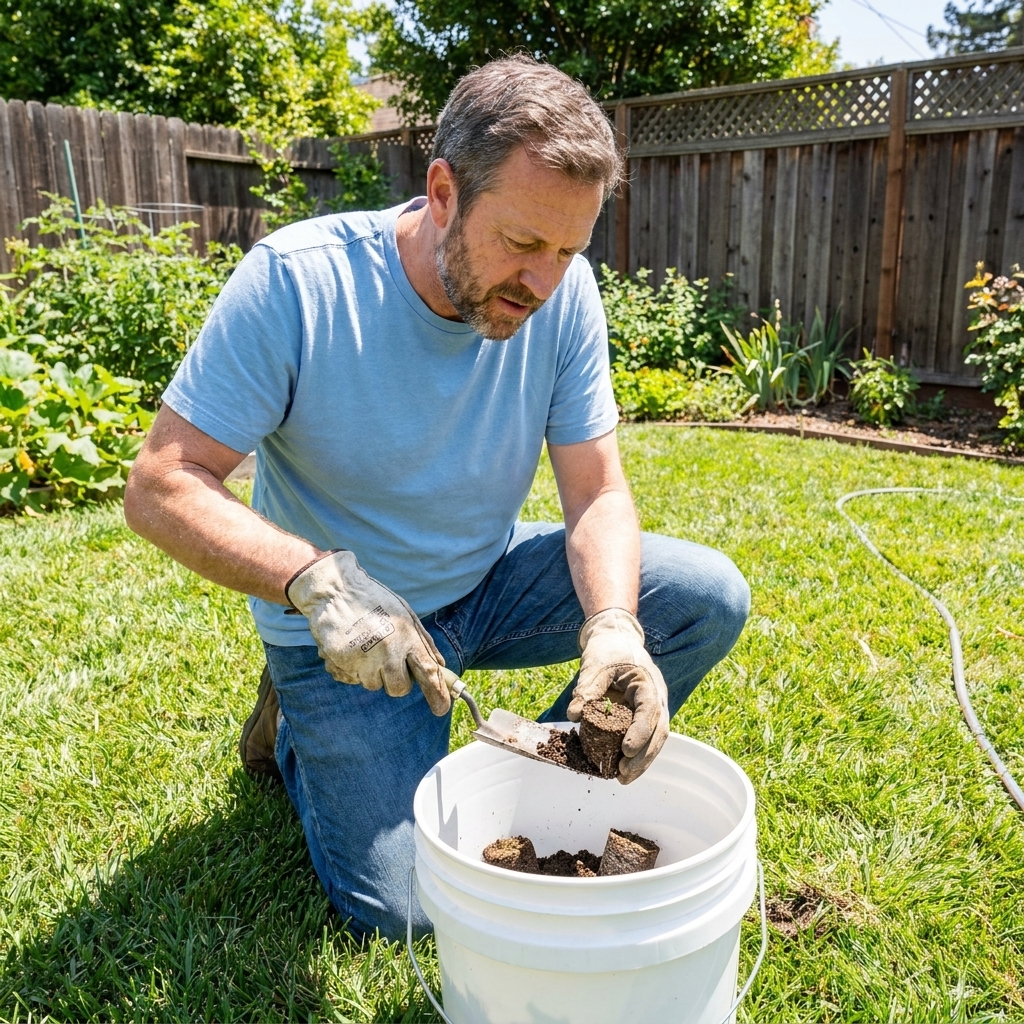
A basic lab soil test is ideal because it also tells you nutrient levels and gives lime recommendations. If you are doing a quick DIY test, use it as a screening tool, then confirm with a lab test if results look off.
If pH is low
Low pH is usually corrected with calcitic lime or dolomitic lime (dolomitic also adds magnesium). Apply based on soil test recommendations. Over-liming can cause its own problems, so more is not better here.
Step 2: Fix moisture
Moss loves consistently damp surfaces. Grass can handle wet weather, but it needs soil that drains and “breathes.” Here is how to improve that.
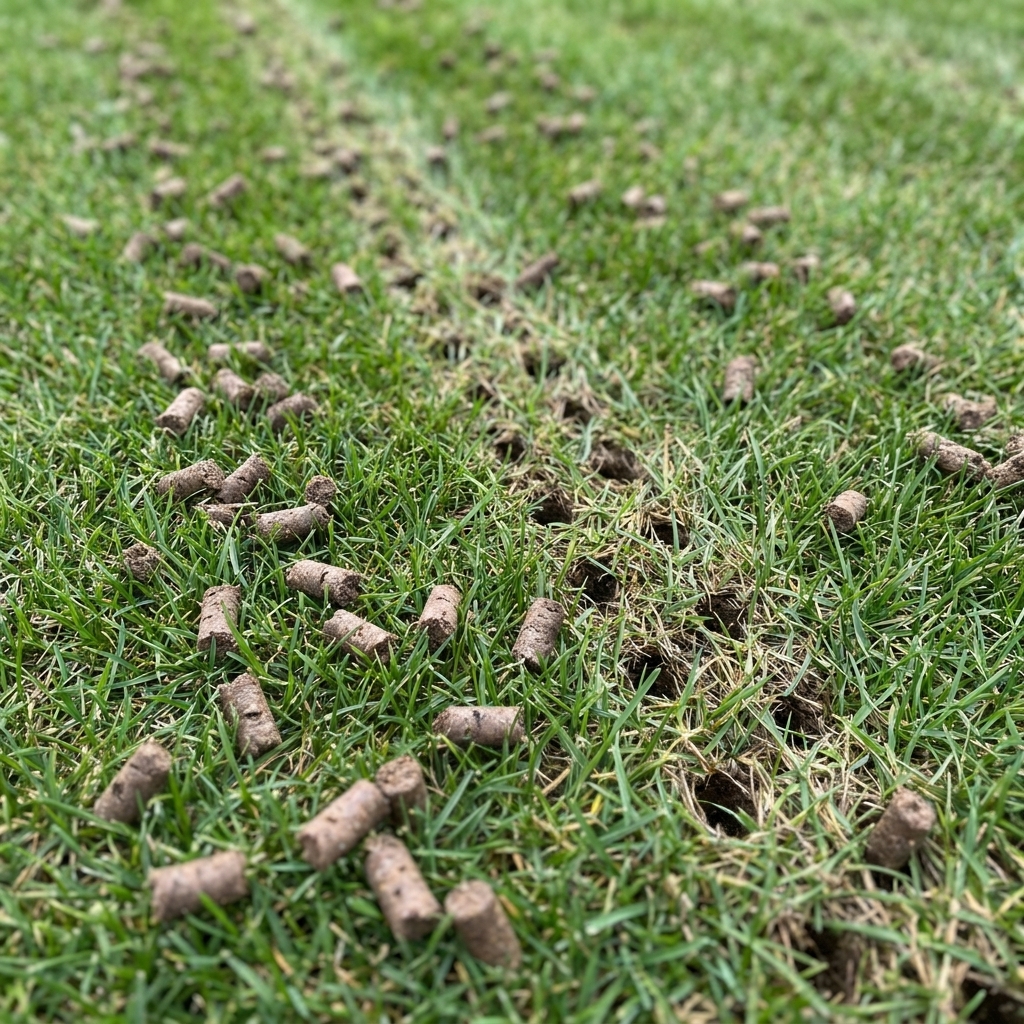
Aerate compacted soil
If the area feels hard, you see matted turf or thatch in high-traffic areas, or a screwdriver barely penetrates when the soil is moist, plan to core aerate. Core aeration removes plugs, creating channels for air and water movement and giving grass roots room to grow.
- Best timing (cool-season lawns): early fall is ideal, with a spring option if needed.
- Best timing (warm-season lawns): late spring into summer when the grass is actively growing.
- Spike aeration: typically less effective than core aeration, and it can compact the sidewalls of the holes in some soils.
If you are in a cool-season region, avoid going too aggressive with raking or renovation in late spring when hot weather is around the corner. Stressed new seedlings and exposed soil can struggle once summer heat hits.
Improve grade and water flow
If moss is in a low spot that stays wet long after rain, aeration alone may not solve it. Consider:
- Redirecting downspouts and splash blocks away from turf.
- Filling shallow depressions with quality topsoil and regrading so water sheds.
- Installing a drain solution (like a French drain) for chronic pooling.
Adjust irrigation
If you water frequently “just in case,” moss will happily take the invitation. A better target for many lawns is deep and infrequent watering. The common rule of thumb is around 1 inch per week including rainfall, but treat that as a starting point. It varies with soil type, temperature, wind, shade, and turf species. Early morning is best so blades dry quickly.
Step 3: Reduce shade
Shade is not always fixable, but you often have more options than you think.
- Prune trees to raise the canopy and thin dense branches (properly and safely). More morning sun and airflow makes a big difference.
- Trim shrubs that block light and prevent drying.
- Choose the right grass for the light you have. Fine fescues generally handle shade better than Kentucky bluegrass, and St. Augustine can outperform Bermuda in partial shade in warm-season regions.
- Change the plan in heavy shade. In truly dark areas, grass may never thrive. Mulch, shade-tolerant groundcovers, or a tidy shade bed can look better than a constant battle.
Step 4: Remove moss
Once you are correcting shade, moisture, compaction, and pH, you can remove moss so grass has space to reclaim the area.
Physical removal
For small patches, a stiff rake works well. Rake aggressively to pull moss off the soil surface, then bag it. This is my favorite approach when you are planning to seed right after.
Moss killers (iron-based products)
For larger areas, a lawn moss control product that contains ferrous sulfate (or similar iron compounds) can blacken moss so it can be raked out. Follow the label carefully.
- Apply when conditions match the label directions.
- Keep pets and kids off until the product is watered in or the area is dry, depending on the instructions.
- Expect to rake out dead moss. Killing it does not make it disappear.
- Watch for staining: iron products can stain concrete, pavers, decks, and clothing. Sweep granules off hard surfaces and avoid tracking it indoors.
Important: If you skip fixing the underlying conditions, moss killers turn into a yearly expense, not a solution.
Step 5: Rebuild turf
Moss is opportunistic. Your long-term defense is a lawn that is thick, well-fed, and growing in soil that favors grass.
Overseed or re-establish the area
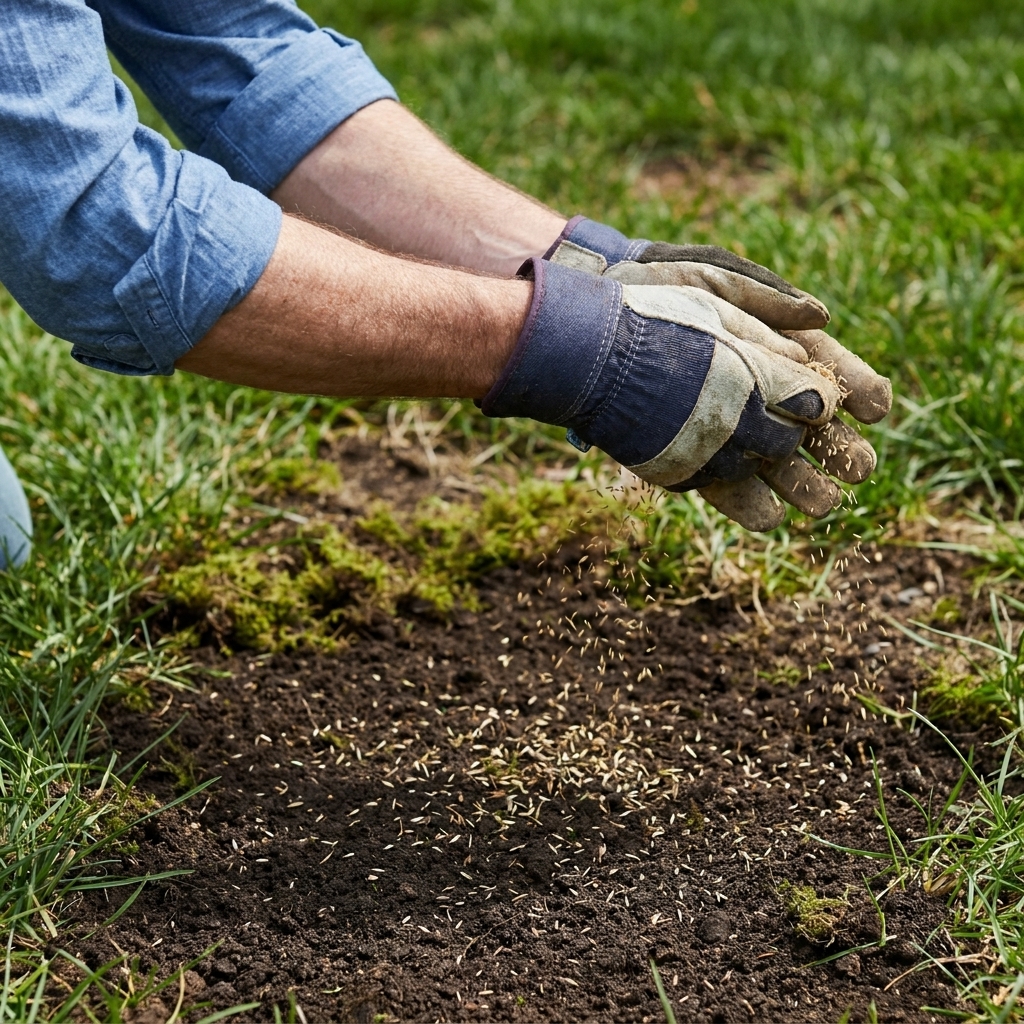
After moss is removed and the soil is opened up (ideally after aeration), re-establish grass the right way for your lawn type.
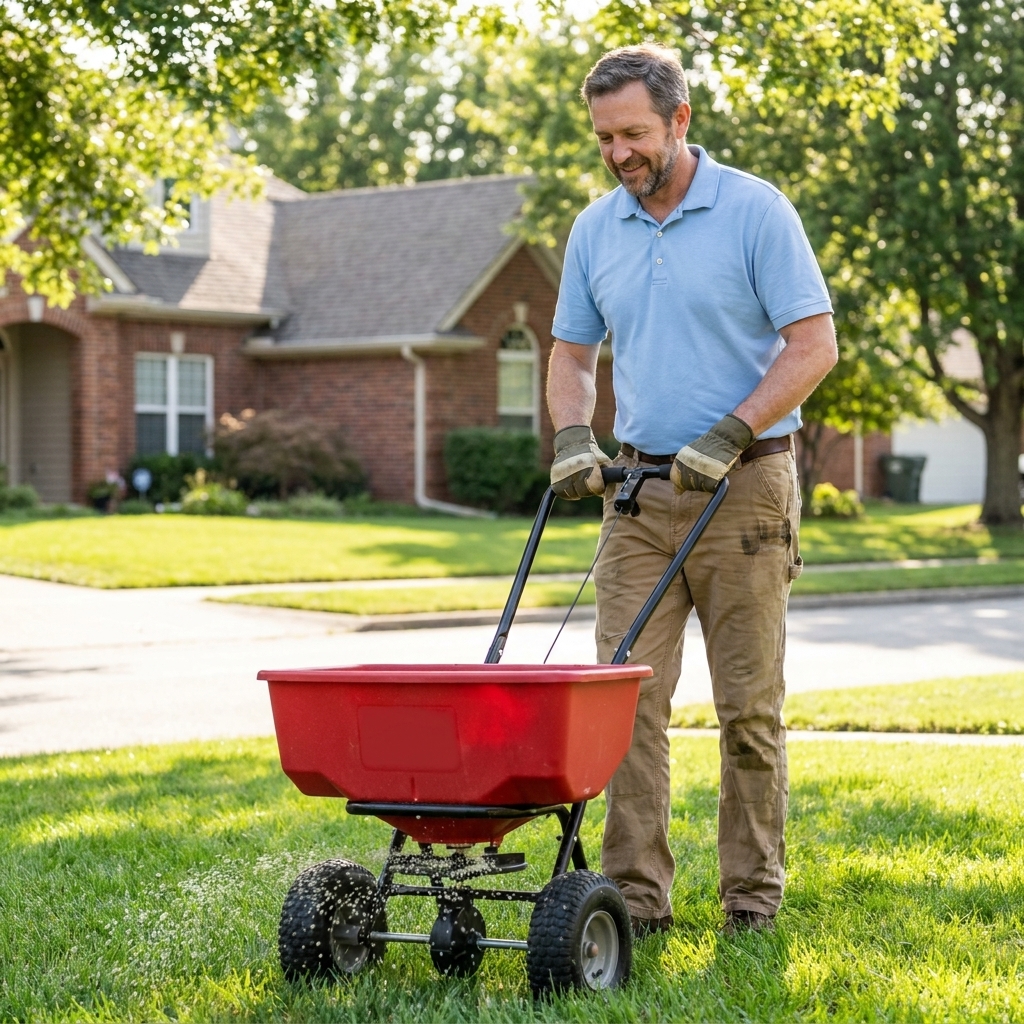
- Cool-season lawns: overseeding or reseeding in late summer to early fall is usually the easiest path to success.
- Warm-season lawns: many can be seeded (like Bermuda), but some are more commonly established with sod or plugs. St. Augustine, in particular, is typically installed as sod or plugs, not seed. Match your method to your grass.
- Pick a seed or sod that matches your site (sun vs shade, traffic, region). In shade, blends that include fine fescue are often a better bet than a single-grass approach.
- Improve seed-to-soil contact by loosening the top half inch of soil.
- Topdress lightly with compost or screened topsoil if the soil is poor or uneven, and follow product label rates so you do not bury seed.
Fertilize with purpose
Moss often thrives where fertility is low and grass is weak. A soil test will guide you, but as a general rule: feed your lawn during its active growth periods. Avoid heavy nitrogen in the wrong season, which can stress turf and thin it out later.
Mow correctly
- Do not scalp. Short mowing weakens grass and opens the door for moss.
- Follow the one-third rule. Never remove more than one-third of the blade in a single mow.
- Keep blades sharp. Torn tips lose water and invite stress.
Seasonal game plan
Early spring
- Walk the lawn and flag mossy areas.
- Check downspouts and drainage paths.
- Do a soil test if you did not in fall.
Late spring to summer
- Aerate warm-season lawns if needed.
- Prune for light and airflow.
- Fix irrigation habits and avoid daily watering.
Late summer to fall
- Core aerate compacted areas.
- Lime if the soil test recommends it.
- Rake out moss and re-establish turf (seed for cool-season lawns, seed or sod or plugs as appropriate for warm-season lawns).
- Keep new seed consistently moist until established, then transition to deeper watering.
Common questions
Will lime kill moss?
Lime can reduce moss long-term if low pH is part of the problem. It does not instantly remove moss, and it will not help much if shade and poor drainage are the real causes.
Can I just rake moss out and reseed?
You can, but if you do not fix what caused moss in the first place, it often comes right back. At minimum, address compaction and moisture. A soil test is even better.
Is moss always a bad thing?
Not necessarily. Moss is green and soft, and some people like it in shady, low-traffic areas. The issue is when you want turf. Moss usually means the site conditions are stacked against grass.
Does thatch cause moss?
Heavy thatch can hold moisture at the surface and weaken grass, which encourages moss. But in my experience, compaction, shade, and drainage are the bigger drivers in most residential lawns.
The bottom line
If you take anything from this, let it be this: moss is a messenger. When you improve sunlight, airflow, drainage, soil structure, and pH, grass gains the advantage and moss loses it. Start with a soil test, fix compaction and wet spots, then remove the moss and re-establish turf. Do that once, do it right, and you will spend a lot less time fighting moss every year.