Follow this beginner-friendly fertilizing plan for spring, summer, and fall. Includes cool-season vs warm-season timing, safe application rates, and burn-pro...
lawn care
Spring Fertilizer Schedule for Cool and Warm Season Lawns
 Mark Vance
 is a former professional landscaper and the lead turf enthusiast at Yard Mentor. With over 15 years of experience in soil health, turf management, and residential landscaping, he is dedicated to helping homeowners transform frustrating dead patches into lush, healthy lawns. When he isn't testing new grass seed blends, you can find him enjoying a Saturday morning coffee looking out over his freshly striped yard.
Updated October 17, 2026
Created October 17, 2026
Mark Vance
Mark Vance is a former professional landscaper and the lead turf enthusiast at Yard Mentor. With over 15 years of experience in soil health, turf management, and residential landscaping, he is dedicated to helping homeowners transform frustrating dead patches into lush, healthy lawns. When he isn't testing new grass seed blends, you can find him enjoying a Saturday morning coffee looking out over his freshly striped yard.
Updated October 17, 2026
Created October 17, 2026
If your lawn always looks like it is playing catch-up in spring, fertilizer timing is usually the missing piece. The goal is not to dump nitrogen the first warm weekend and hope for the best. It is to feed your grass when it can actually use it, and in a way that builds roots and density instead of creating lush, fast top growth that can increase the risk of disease and weeds.
This schedule breaks spring into two main windows, early spring and late spring, and then tailors the plan to cool-season grasses (Kentucky bluegrass, fescue, ryegrass) and warm-season grasses (Bermuda, zoysia, centipede, St. Augustine). Use it as a timeline, then fine-tune with your climate, your mowing pattern, and local extension guidance.

Before you fertilize: 5-minute spring check
I learned this the hard way on my first Midwest lawn: fertilizer is not magic. If you skip these quick checks, you can easily spend money and still end up with thin turf.
- Identify your grass type. If you are unsure, look at your region and growth pattern. Cool-season lawns green up early. Warm-season lawns stay tan longer and then explode once nights warm up.
- Confirm the lawn is actively growing. You want steady growth and mowing, not a single flush of green from stored energy.
- Check soil moisture. Fertilizer works best when the lawn is not drought-stressed and you can water it in.
- Look for compaction, drainage issues, or heavy thatch. If water puddles, think compaction, grade, or drainage first. If the lawn feels spongy underfoot, that can point to thatch. Either way, plan on core aeration or dethatching at the right time for your grass.
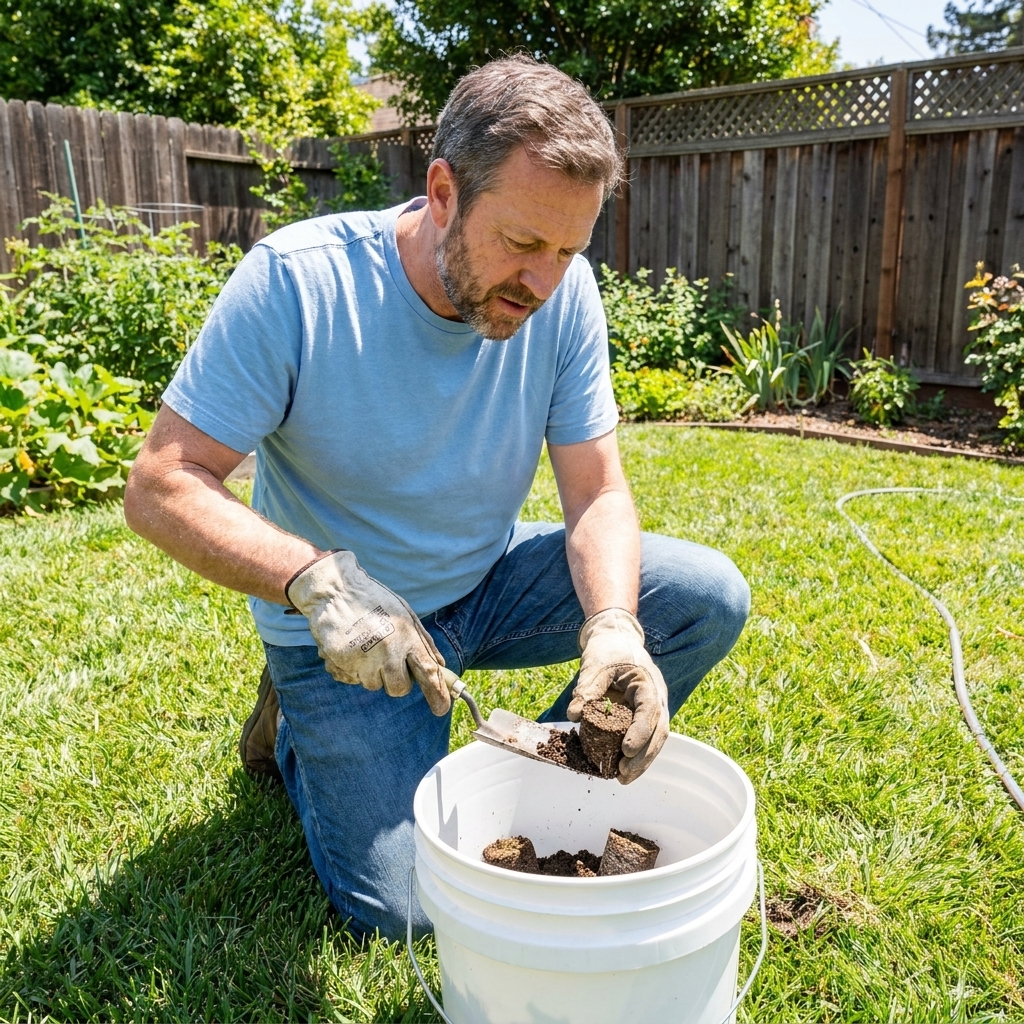
- Optional but powerful: do a soil test. Especially if your lawn struggles every year. It tells you if you need lime, sulfur, phosphorus, or potassium so you stop guessing.
The spring timeline at a glance
Think of spring fertilizing as two different jobs:
- Early spring: support steady growth and smart pre-emergent timing, not a growth explosion.
- Late spring: the main feeding as the lawn ramps up, with nitrogen rates that match your grass type.
Early spring window
Cool-season: when soil temps are rising and your lawn needs its first or second mow.
Warm-season: usually not the time for nitrogen unless you are fully green and mowing regularly.
Late spring window
Cool-season: after the lawn is growing consistently, but before sustained summer heat hits.
Warm-season: this is prime time, once the lawn is mostly green and nights are reliably warm.
Cool-season grasses: a reliable spring schedule
Cool-season grasses wake up early, but they also have a trap built in: if you push too much nitrogen too soon, you can get lush top growth with weaker roots. It may look great for two weeks and then struggle when temperatures swing.
Step 1 (very early spring): decide if you even need nitrogen
If you fertilized in fall, especially with a late-fall application, your lawn may not need much nitrogen in early spring. In many cases, spring green-up is mostly the lawn spending stored energy.
- If you did a solid fall program: consider a light feeding or even wait until late spring.
- If you skipped fall fertilizer: plan a modest early-spring application to help density and color.
Step 2 (early spring): light feeding, slow-release focus
Timing cue: you have mowed once or twice and growth looks steady, not just a sudden green tint.
What to apply: a fertilizer with a good portion of slow-release nitrogen.
- Target nitrogen rate: about 0.25 to 0.5 lb of nitrogen per 1,000 sq ft.
- Best N sources: polymer-coated urea, sulfur-coated urea, methylene urea, or blended products labeled slow-release.
- Phosphorus: only if a soil test says you need it or you are establishing new seed where allowed by your local rules.
Safety cap: unless a local extension recommendation says otherwise, avoid exceeding 1.0 lb of nitrogen per 1,000 sq ft in a single application, and keep quick-release nitrogen closer to 0.5 lb per 1,000 sq ft per application to reduce burn and surge growth risk.
My neighbor-fence advice: if you are also doing crabgrass prevention (pre-emergent), you can pair it with this early spring feeding, but keep the nitrogen modest. Pre-emergent timing is about soil temperature, not your urge to green things up.
Helpful benchmark: crabgrass typically starts to germinate when soil temperatures are around 55°F for several days. That is why people miss it by waiting for "nice weather."
Step 3 (mid spring): spot-correct, do not stack heavy nitrogen
If the lawn is uneven, fix the cause, not just the color.
- Pale everywhere: you may be underfeeding, but also check compaction and drainage.
- Patchy pale: could be dog spots, shallow soil, grub damage, or old construction debris.
- Weeds surging: often means thin turf. Fertilizer helps long-term, but do not skip mowing height and watering.
Step 4 (late spring): main spring feeding
Timing cue: consistent mowing and you are 4 to 8 weeks out from your typical stretch of sustained summer heat.
What to apply: a balanced turf fertilizer with slow-release nitrogen and enough potassium for stress tolerance.
- Target nitrogen rate: about 0.5 to 0.75 lb of nitrogen per 1,000 sq ft.
- If your lawn gets summer disease: keep this closer to the lower end and avoid heavy quick-release nitrogen.
What to avoid for cool-season lawns
- Big early-spring nitrogen dumps. They can increase mowing, weaken roots, and raise the odds of leaf diseases.
- Fertilizing right before a heavy rain. That is how nutrients move off-site.
- Overcorrecting color with constant feeding. If you want deeper green, iron is often a safer tweak than more nitrogen.

Warm-season grasses: a reliable spring schedule
Warm-season grasses play by a different calendar. The biggest mistake I see is feeding them like a cool-season lawn, meaning nitrogen goes down while the turf is still waking up. That encourages weak early growth and can feed weeds more than the grass.
Step 1 (early spring): hold nitrogen until green-up
Timing cue: your lawn is still partly dormant or you are not mowing yet.
What to do instead:
- Focus on cleanup: rake debris, sharpen your mower blade, and get irrigation ready.
- Pre-emergent for summer weeds: apply when soil temperatures start warming and before crabgrass germinates in your area. A common target is around 55°F soil temp for several days, but follow local guidance.
- Soil test if the lawn struggled last year: warm-season lawns can benefit from correcting pH and potassium, but let the soil test be the driver.
Step 2 (mid spring): first feeding after green-up
Timing cue: the lawn is at least 50 to 75 percent green and you are mowing regularly.
What to apply: a fertilizer with nitrogen plus potassium, with at least some slow-release nitrogen.
- Target nitrogen rate: about 0.5 lb of nitrogen per 1,000 sq ft for most warm-season lawns.
- St. Augustine and centipede: stay conservative. They can suffer if you push nitrogen too hard.
- Bermuda: can use more nitrogen overall through the season, but you still want to start controlled in spring.
Safety cap: as a general homeowner guardrail, avoid exceeding 1.0 lb of nitrogen per 1,000 sq ft per application, especially if much of it is quick-release.
Step 3 (late spring): the go-time application
Timing cue: full green-up, strong growth, and longer days. This is when warm-season grass can truly turn fertilizer into density and recovery.
- Target nitrogen rate: about 0.5 to 1.0 lb of nitrogen per 1,000 sq ft, depending on grass type and how intensively you maintain it.
- If you want a tighter, more carpet-like lawn: choose a product with slow-release nitrogen and avoid one huge hit of fast nitrogen.
What to avoid for warm-season lawns
- Nitrogen on dormant turf. It does not speed up green-up the way people hope.
- Fertilizing during a cold snap. Late frosts can set you back and waste the application.
- Overfeeding shade lawns. Warm-season grass in shade needs less nitrogen and more patience.

How to pick a fertilizer in spring
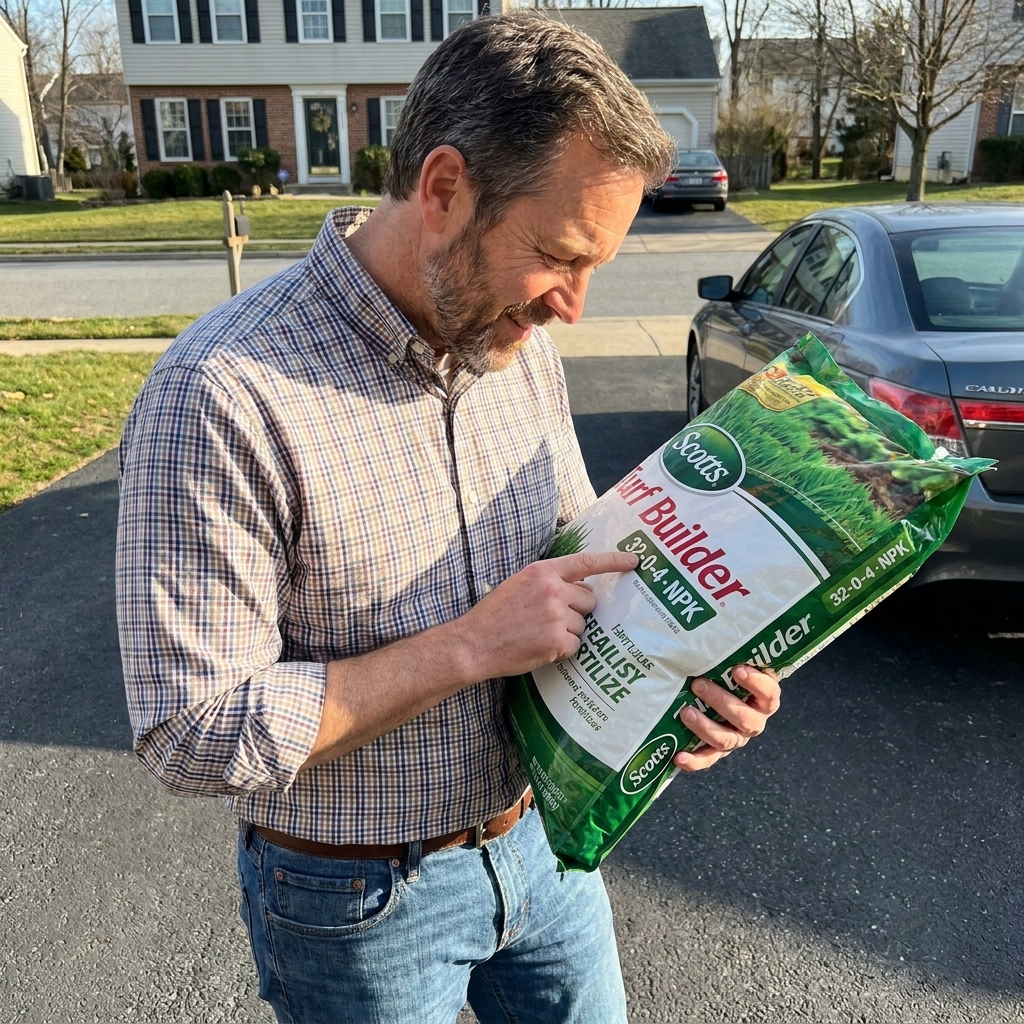
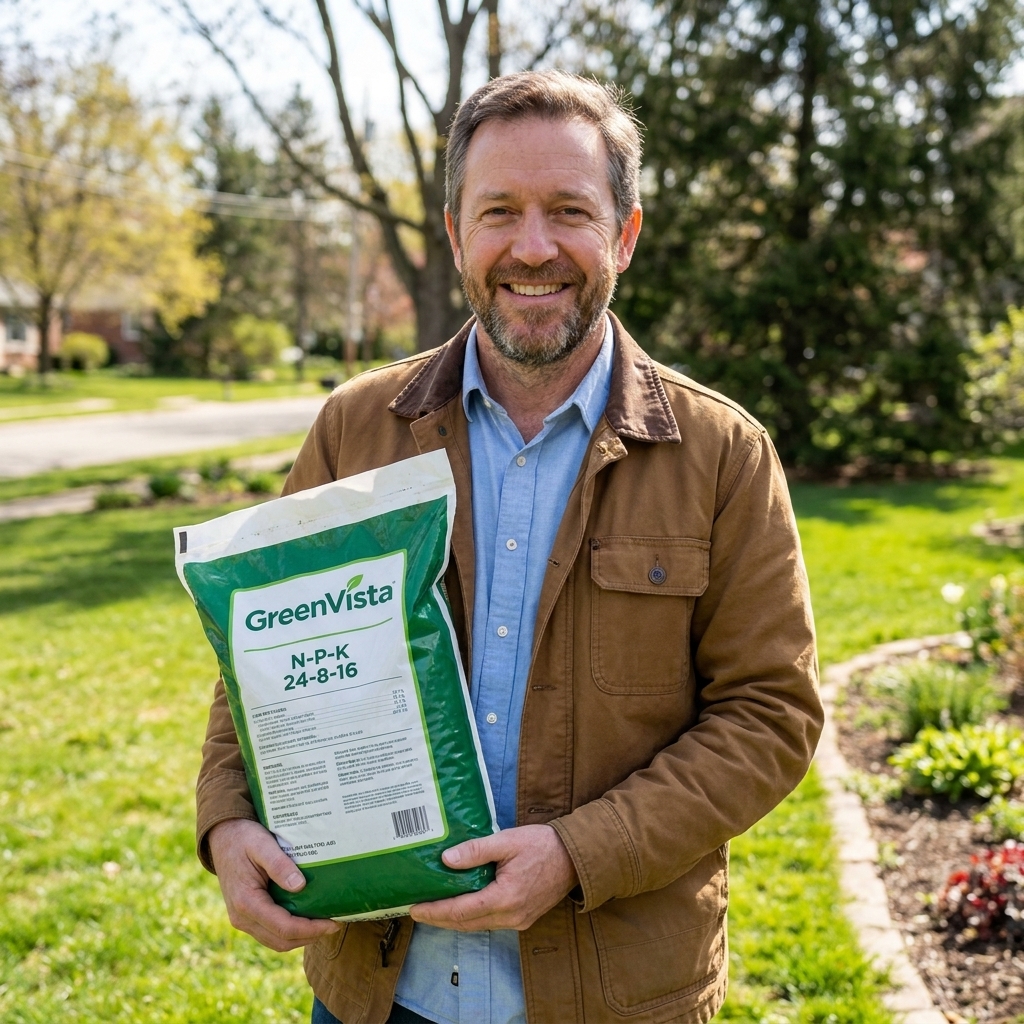
Those three numbers on the bag are N-P-K: nitrogen, phosphorus, potassium. In spring, most established lawns need nitrogen and often potassium. Phosphorus is usually a soil-test decision.
Quick picking rules
- For early spring cool-season: pick a fertilizer with modest nitrogen and slow-release content.
- For late spring warm-season: you can use a higher nitrogen fertilizer as long as the lawn is fully awake.
- Look for slow-release wording: "slow-release nitrogen," "controlled release," or coated urea sources.
- Consider iron for color: if you want green without extra growth, iron-containing products can help.
Granular vs liquid
- Granular: easier for most homeowners, longer feeding when slow-release is included.
- Liquid: faster response, but easier to overdo and usually shorter-lasting.
Watering and mowing rules
Water it in
Unless the product says otherwise, plan to water after application. A light watering helps move nutrients off the leaf and into the soil where roots can use them.
- Aim for: about 0.25 inch of water to settle granules, or follow the label if it calls for a different amount or timing (many pre-emergents are specific).
- Avoid: washing fertilizer into the street or storm drains.
Mow smart right after fertilizing
- Do not scalp. Scalp plus nitrogen is a stress combo.
- Follow the one-third rule. Never remove more than one-third of the blade at a time.
- Keep blades sharp. Ragged tips lose water and look brown faster.
Runoff and safety basics
- Sweep it up: if granules land on the driveway, sidewalk, or street, sweep them back into the grass. That one habit prevents a lot of runoff.
- Mind local rules: some areas have phosphorus restrictions and seasonal fertilizer blackout dates near waterways.
- Store smart: keep fertilizer dry and sealed, away from kids and pets.
Climate tweaks
The same grass can behave differently depending on where you live. Use these adjustments to avoid fertilizing too early.
Northern climates
- Cool-season lawns may not need much nitrogen until growth is consistent.
- Late spring feeding is often more important than very early spring feeding.
Transition zone
- Cool-season lawns can struggle in summer, so keep late spring nitrogen moderate and save the heavier feeding for fall.
- Warm-season lawns should wait for true green-up before nitrogen.
Southern climates
- Warm-season lawns ramp up earlier, but still avoid nitrogen on dormant turf.
- Leaching and runoff risk can be higher with heavy spring rains, so slow-release matters.
Simple spring fertilizer calendar
Cool-season calendar
- Early spring: 0.25 to 0.5 lb N per 1,000 sq ft, mostly slow-release
- Late spring: 0.5 to 0.75 lb N per 1,000 sq ft, slow-release, include potassium
- Optional: iron for color if needed
Warm-season calendar
- Early spring: no nitrogen until green-up, do pre-emergent and cleanup
- Mid spring after 50 to 75 percent green: about 0.5 lb N per 1,000 sq ft
- Late spring: 0.5 to 1.0 lb N per 1,000 sq ft depending on grass type and goals
If you only remember one thing, make it this: cool-season lawns like a gentle spring and a big fall, warm-season lawns like to be fed after they wake up.
FAQ
Can I fertilize right after I apply pre-emergent?
Usually yes, and many combo products exist. The key is to avoid turning that application into a heavy nitrogen feeding if your grass is not ready for it. Stick to the nitrogen targets above, and water according to the label so the pre-emergent forms an even barrier.
What if I already fertilized too early?
Do not panic and do not stack another application to "fix it." Mow at the correct height, water consistently, and wait. If growth is excessive, that is your sign to hold off on the next nitrogen round.
Should I fertilize if I plan to overseed in spring?
For cool-season lawns, spring overseeding is possible, but fall is usually easier. If you do seed in spring, use a starter fertilizer only if your soil test calls for it or you truly need phosphorus and it is allowed where you live. Also note that many crabgrass pre-emergents will interfere with new seed.
How do I calculate pounds of nitrogen per 1,000 sq ft from the bag?
Take the first number (nitrogen percentage) and do quick math. Example: a 20-0-10 fertilizer is 20% nitrogen. To apply 0.5 lb of nitrogen per 1,000 sq ft, you need 0.5 ÷ 0.20 = 2.5 lb of product per 1,000 sq ft. Your spreader setting then controls how evenly you deliver that rate.